

Tracking your health goes far beyond waiting for symptoms to appear. Blood biomarkers give you an objective measure of what is happening in your body at any given time, offering early warnings and powerful insights nobody would spot with routine checkups alone. For Americans and Canadians focused on performance and wellness, learning what these biological signals truly mean—and what they do not—provides practical control over your health journey. This guide clears up common misconceptions and shows how at-home blood biomarker testing brings science-driven self-care into your daily routine.
Table of Contents
- Blood Biomarkers Defined and Common Misconceptions
- Key Types and What They Reveal
- How At-Home Biomarker Testing Works
- Using Results for Performance and Longevity
- Limitations, Risks, and Common Pitfalls
Key Takeaways
| Point | Details |
|---|---|
| Understanding Biomarkers | Blood biomarkers provide insights into health, revealing risks and responses to treatments, allowing proactive health management. |
| Context Matters | It’s important to consider the context of biomarker readings, as one elevated marker does not provide a complete picture of health. |
| At-Home Testing Advantages | At-home biomarker testing enhances convenience and regularity in health monitoring, leading to better health management. |
| Professional Guidance is Essential | Engaging healthcare professionals for interpreting biomarker results ensures accurate understanding and appropriate health decisions. |
Blood Biomarkers Defined and Common Misconceptions
A blood biomarker is an objective measure of what is happening in your body at any given moment. Think of biomarkers as your body’s report card, revealing information about cellular processes, metabolic function, and disease risk that you cannot see or feel. These measurable indicators range from simple measurements like cholesterol levels to complex molecular changes that signal everything from nutrient deficiencies to chronic disease susceptibility.
Biomarkers serve as early health warnings, allowing you to identify potential problems before symptoms appear. A consistently elevated cholesterol level might indicate cardiovascular risk years before you experience a heart attack. High cortisol levels could signal chronic stress affecting your immune system and metabolism. Understanding these markers puts you in control of your health trajectory rather than waiting for disease to announce itself.
What Biomarkers Actually Measure
Biomarkers provide insights into three distinct areas: disease diagnosis, prognosis, and treatment monitoring. They reveal your susceptibility to certain conditions, track disease progression if present, and indicate whether interventions are working. Some biomarkers reflect your current state, while others predict your future health trajectory based on metabolic patterns and risk factors.
The relationship between your environment, biology, and disease becomes visible through biomarkers. A high homocysteine level might indicate you need more B vitamins. Elevated inflammatory markers could suggest your diet needs adjustment. Low vitamin D might explain persistent fatigue or weak immunity. These connections allow for targeted, evidence based interventions.
Common Misconceptions About Biomarkers
Many people believe a single biomarker tells the complete story. This is incorrect. One elevated marker requires context. Your cholesterol alone does not determine heart disease risk without knowing your HDL, triglycerides, and inflammation markers. A single test snapshot does not replace ongoing monitoring.
Another misconception: biomarkers are only relevant if you have symptoms or disease. False. Biomarkers are most valuable when you are healthy, revealing what needs attention before problems develop. This is the foundation of proactive health optimization rather than reactive treatment.
Some assume all biomarkers require the same interpretation. Reality is different. Genetic and environmental factors significantly influence how you should interpret your results. Your optimal ranges may differ from standard reference intervals based on your age, sex, genetics, and lifestyle.
Pro tip: Request your complete biomarker panel rather than isolated tests, and track values over time to identify meaningful trends in your personal health data.
Key Types and What They Reveal
Not all biomarkers serve the same purpose. Understanding the different types helps you interpret your results correctly and take appropriate action. Each category answers a specific question about your health, from whether you carry genetic risk to how well a treatment is working.
There are seven distinct biomarker categories that health professionals use to assess your wellness. Some reveal your baseline risk, while others diagnose existing conditions or predict how diseases will progress. Knowing which type you are looking at changes how you should respond to the information.
Here’s a summary of the main blood biomarker categories and what each reveals:
| Biomarker Category | Primary Role | Example Marker | Uses in Healthcare |
|---|---|---|---|
| Susceptibility | Identifies genetic disease risk | APOE gene variant | Guides prevention strategies |
| Diagnostic | Confirms current disease state | PSA for prostate health | Diagnoses active conditions |
| Prognostic | Predicts disease progression | Ki-67 for cancer | Estimates treatment outlook |
| Monitoring | Tracks change over time | CRP for inflammation | Assesses treatment response |
| Predictive | Forecasts treatment response | HER2 in breast cancer | Personalizes therapy selection |
| Safety | Identifies adverse drug reactions | Liver enzymes (ALT/AST) | Ensures medication safety |
| Pharmacodynamic | Measures biological effect | Glucose post-insulin | Validates intervention outcomes |
Risk and Diagnostic Biomarkers
Susceptibility biomarkers indicate your genetic predisposition to certain conditions. If you carry specific gene variations, you may have elevated risk for heart disease, diabetes, or cognitive decline. These markers tell you what you need to watch for and which lifestyle changes matter most.

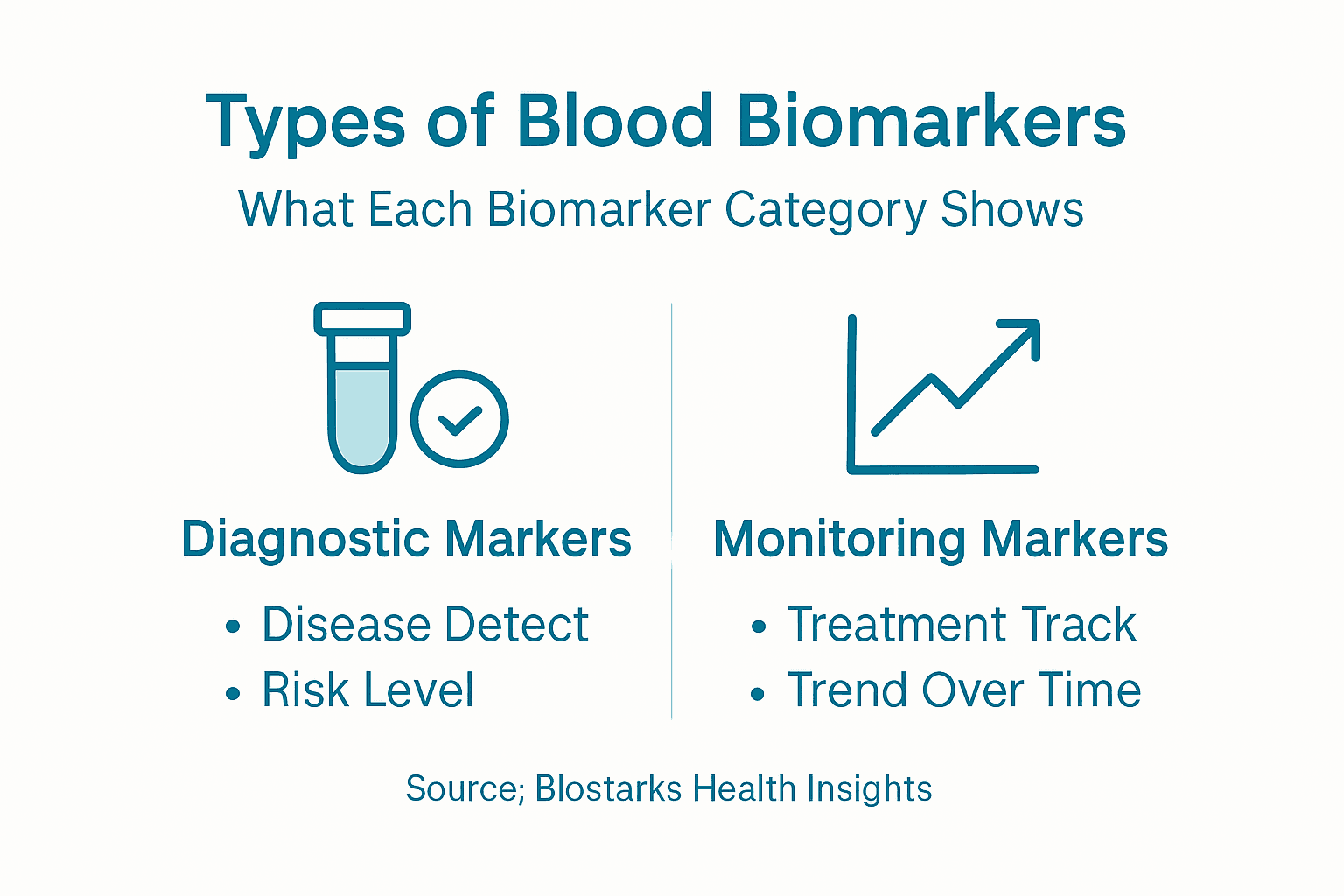
Diagnostic biomarkers confirm whether you currently have a disease or condition. Elevated PSA levels might indicate prostate health concerns. High blood glucose suggests diabetes is present. These biomarkers answer the question: do I have this condition right now?
Prognosis and Monitoring Biomarkers
Prognostic biomarkers predict how a disease will unfold if present. Ki-67 markers in cancer tissues indicate tumor aggressiveness and likely outcomes. These help determine treatment intensity and timeline. They answer: how serious is my condition and what should I expect?
Monitoring biomarkers track changes over time during treatment or lifestyle intervention. CRP inflammation markers drop when you reduce dietary triggers. Cholesterol levels improve with exercise and nutrition changes. These reveal whether your current strategy is working.
Predictive and Safety Biomarkers
Predictive biomarkers forecast how you will respond to specific treatments before you begin them. This prevents wasting time on interventions unlikely to help you personally. Safety biomarkers flag potential adverse reactions to medications or supplements, protecting you from dangerous combinations.
Pharmacodynamic biomarkers measure your body’s direct response to a drug or intervention at the molecular level. They show whether a treatment is actually creating the intended biological changes, independent of your symptoms.
Pro tip: Request biomarkers in multiple categories rather than isolated tests, so you understand both your baseline risk and current status for comprehensive health strategy.
How At-Home Biomarker Testing Works
At-home biomarker testing removes the friction from health monitoring. Instead of scheduling appointments and traveling to clinics, you collect samples in your own space and mail them to certified laboratories. The process is straightforward, private, and designed around your schedule rather than medical office hours.
The convenience factor matters more than you might think. When testing is easy, you actually do it. You track trends consistently. You catch changes early. This accessibility transforms biomarkers from occasional medical events into a regular part of your wellness routine.
Below is a comparison of in-clinic versus at-home biomarker testing:
| Testing Method | Convenience | Data Accessibility | Accuracy Standards |
|---|---|---|---|
| In-Clinic | Requires appointments & travel | Results often via provider | Typically FDA and CLIA certified |
| At-Home | Can test anytime, anywhere | Secure online portals | Increasingly FDA authorized |
| Hybrid (Telemedicine) | Remote sampling, virtual consults | Direct digital support & coaching | Leveraging certified labs for reliability |
Sample Collection and Processing
You start by collecting a small biological sample, typically blood via a finger prick or saliva depending on which biomarkers you are measuring. These self-collected samples are then packaged securely and shipped to accredited laboratories equipped with advanced analytical equipment.
Once your sample arrives, laboratory technicians follow strict protocols to analyze your biomarkers. Many advanced testing facilities use mass spectrometry and other precision techniques to measure multiple markers simultaneously. This multiplex approach gives you a comprehensive snapshot rather than isolated data points.
Analysis and Reporting
Laboratory analysis typically takes one to two weeks from sample receipt. Your results are compiled into a detailed report showing your biomarker values alongside reference ranges and personalized insights. Quality testing platforms integrate digital support systems that explain what your results mean and suggest actionable next steps.
Modern at-home testing emphasizes accuracy and reliability. FDA authorizations and certifications ensure the tests measure what they claim to measure. Results are often delivered through secure online portals where you can review them privately and share them with healthcare providers if needed.
Future of Home Testing Technology
The field is evolving rapidly. Scientists are developing compact biosensors based on advanced semiconductor and graphene technologies that could eventually provide results in minutes rather than weeks. These innovations aim to detect disease biomarkers from minimal fluid samples while maintaining laboratory accuracy.
Telemedicine integration is transforming how you interpret results. Many platforms now offer consultations with healthcare professionals who review your biomarkers and provide personalized recommendations. This bridges the gap between self-testing and professional guidance.
Pro tip: Collect samples in the morning after fasting overnight when possible, as this produces the most accurate and comparable baseline data for tracking changes over time.
Using Results for Performance and Longevity
Your biomarker results are not just numbers on a report. They are a roadmap for optimizing how you perform today and how long you live well tomorrow. When you understand what your markers reveal, you can make targeted changes that actually move the needle on your health trajectory.
The connection between biomarkers and longevity is not theoretical. Research on centenarians shows that specific biomarker profiles are observable from mid-life and correlate with exceptional lifespan. Favorable cholesterol levels, stable glucose, low inflammation, and healthy liver function markers appear consistently in people who live longest. The good news: these are modifiable through your choices.
Optimizing Your Biomarker Profile
Glucose and metabolic health form the foundation. High fasting glucose accelerates aging and impairs performance. Optimizing this single marker through carbohydrate timing and exercise intensity improves both how you feel now and your disease risk decades from now.
Inflammatory markers like CRP and homocysteine predict cognitive decline, cardiovascular disease, and accelerated aging. Reducing these through anti-inflammatory nutrition, quality sleep, and stress management directly extends your healthspan. You will notice improved recovery, mental clarity, and energy within weeks.
Performance Gains from Biomarker Management
Athletes and biohackers leverage biomarkers to optimize training response. Elevated cortisol indicates overtraining requiring recovery emphasis. Low vitamin D compromises muscle strength and injury resilience. Iron deficiency tanks endurance performance. By managing these markers within your optimal ranges, you enhance recovery speed, increase lean muscle gains, and prevent injuries that derail training cycles.
Cholesterol profiles impact more than heart disease risk. They influence hormonal production, cognitive function, and cellular repair. Optimizing your ratio of HDL to total cholesterol supports brain health and sustained energy for peak performance.
Creating Your Personalized Strategy
Generic health advice fails because it ignores your individual biomarker baseline. Your optimal ranges may differ from population standards based on genetics and goals. Managing these markers within personalized ranges through lifestyle interventions or targeted supplementation drives measurable improvements in both performance metrics and longevity markers.
This is where data driven health transforms theory into results. Track your biomarkers annually or biannually. Notice which lifestyle changes move your markers in favorable directions. Double down on what works for your biology.
Pro tip: Prioritize changing one or two biomarkers at a time through specific interventions, then retest in three months to confirm what actually works for your unique physiology.
Limitations, Risks, and Common Pitfalls
Biomarker testing is powerful, but it is not magic. Understanding what biomarkers cannot do is as important as knowing what they can. Misinterpreting results or over-relying on single markers leads to wasted effort, unnecessary interventions, and false confidence in your health status.
One critical reality: biomarkers reflect your past and present, not your future with certainty. A single elevated marker does not guarantee disease development. A normal result does not guarantee you are healthy. Context matters enormously, and context requires professional interpretation alongside your personal health history.
Variability and Standardization Issues
Not all biomarker tests are created equal. Variability in assay performance and lack of standardization across laboratories means the same biomarker measured at different facilities may yield different values. This creates confusion when comparing results over time or across testing providers.
Time of day, fasting state, stress levels, sleep quality, and menstrual cycle phase all influence biomarker values. A single snapshot can be misleading. You need multiple measurements over time to identify true trends versus normal fluctuation.
Translation and Validation Gaps
Many biomarkers discovered through advanced research never make it into clinical practice. Many biomarkers fail translation due to limited validation, reproducibility issues, and lack of clinical specificity. A biomarker that works in a research lab on a specific population may not work reliably in you or your circumstances.
This gap creates a Wild West of biomarker testing where companies promote markers that sound impressive but lack rigorous validation. Demand evidence. Ask whether a biomarker has been tested across large diverse populations and whether results are reproducible across different laboratories.
Common User Pitfalls
Overinterpretation is rampant. One slightly elevated inflammatory marker does not mean you have chronic inflammation. One low vitamin might reflect dietary timing rather than true deficiency. You must look at the full pattern, not isolated abnormalities.
Another pitfall: treating biomarkers as the goal rather than as information guiding behavior. Your goal is not perfect biomarker numbers. Your goal is feeling better, performing better, and living longer. Sometimes biomarkers stay stable while your health improves through lifestyle changes.
Finally, ignoring professional guidance. Biomarkers are tools for informed decision making, not replacements for healthcare providers. Complex results require expert interpretation tailored to your individual circumstances.
Pro tip: Request biomarker testing from facilities using certified, standardized assays, and always retest at least twice to confirm whether values represent true changes or normal variation.
Empower Your Health Journey with Precision Biomarker Insights
Understanding your blood biomarkers is essential for taking control of your health, performance, and longevity. The challenges in biomarker testing such as interpreting complex data, identifying meaningful trends, and choosing the right tests can feel overwhelming. You want clear, actionable information to optimize your metabolic function and avoid the frustration of isolated or misinterpreted results.
Biostarks offers a cutting-edge solution that simplifies this process through advanced at-home biomarker testing. Using Swiss mass spectrometry techniques, Biostarks provides detailed analysis of vitamins, hormones, amino acids, lipids, minerals, and critical metabolic markers. This comprehensive approach aligns perfectly with the article’s emphasis on monitoring multiple biomarker categories to accurately gauge disease risk, track progress, and tailor interventions.
Explore our specialized collections that fit your unique health goals including the Biostarks | Collection designed for health-conscious individuals seeking detailed internal insights.
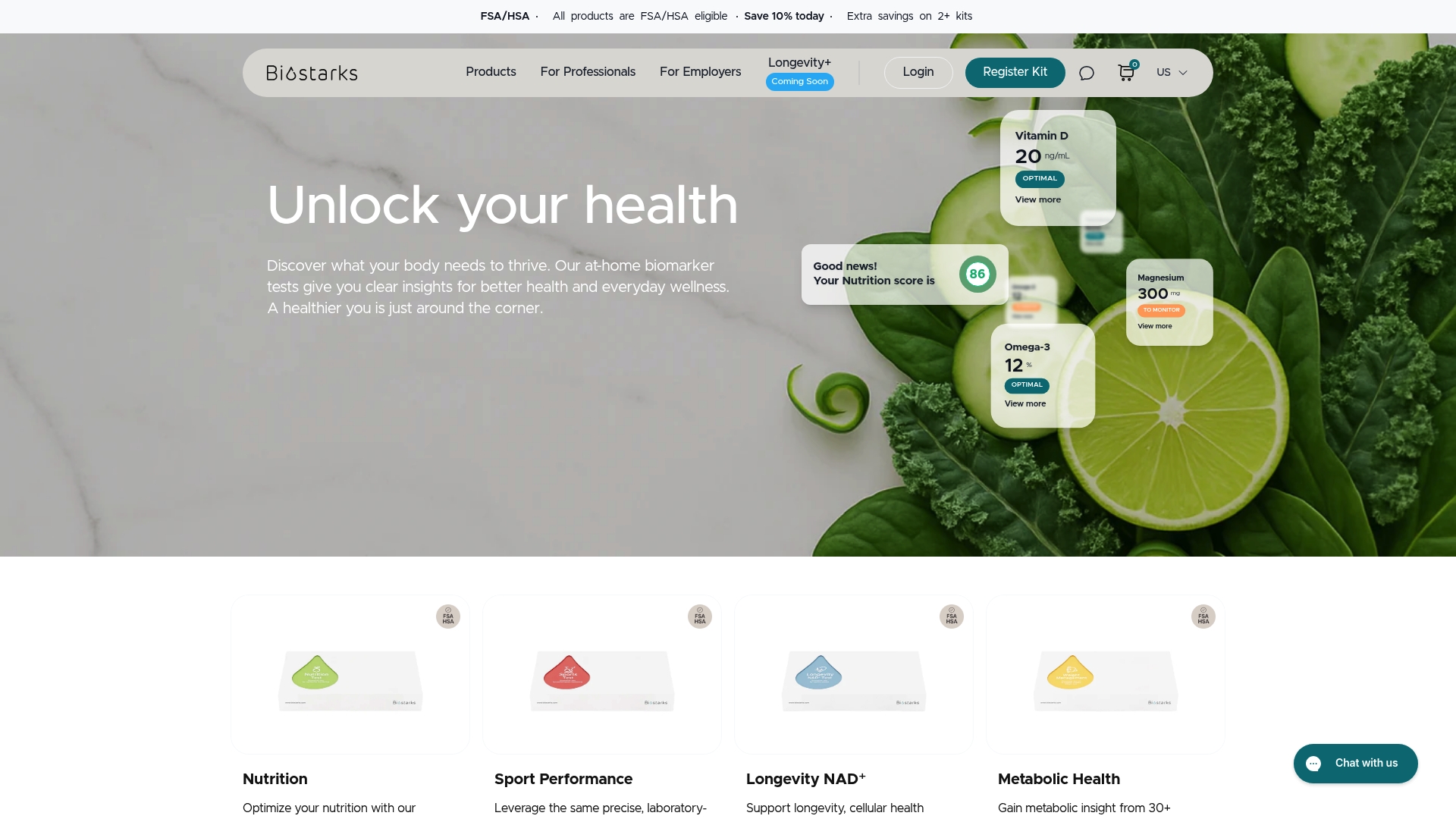
Take the first step toward personalized health optimization today by visiting Biostarks. Get started with easy sample collection at home and receive precise, trustworthy reports that empower your decisions. Don’t wait for symptoms to appear act now and transform your wellness strategy with science-backed biomarker data from Biostarks.
Discover our full range of offerings at Biostarks | Collection and explore how professional-grade biomarker testing can elevate your health management.
Frequently Asked Questions
What are blood biomarkers?
Blood biomarkers are measurable indicators that provide insights into cellular processes, metabolic function, and disease risk in your body. They can range from simple measurements like cholesterol levels to complex molecular changes.
How do blood biomarkers help in health monitoring?
Blood biomarkers allow for early identification of potential health issues before symptoms appear. They can reveal disease risks, track disease progression, and indicate whether treatments are effective, ultimately helping you proactively manage your health.
What are the main categories of blood biomarkers?
There are seven distinct categories of blood biomarkers: susceptibility, diagnostic, prognostic, monitoring, predictive, safety, and pharmacodynamic. Each category serves a different purpose, from identifying disease risk to assessing treatment efficacy.
How does at-home biomarker testing work?
At-home biomarker testing involves collecting biological samples, such as blood or saliva, in the comfort of your home and sending them to certified laboratories for analysis. The results provide personalized insights based on your biomarker levels, offering an accessible way to monitor your health.


