

Staying energized and resilient is tough when life seems to demand more every day. For many health-conscious adults, finding practical ways to support long-term wellness starts with understanding metabolic health. This vital area impacts everything from blood sugar control to cardiovascular risk, shaping your body’s internal performance and longevity. Discover how at-home biomarker testing and personalized insights can empower you to track key markers and optimize your health with science-backed strategies.
Table of Contents
- What Is Metabolic Health? Core Definition
- Five Key Biomarkers and Measurements
- How At-Home Metabolic Testing Works
- Common Causes of Poor Metabolic Health
- Improving Your Metabolic Health Outcomes
Key Takeaways
| Point | Details |
|---|---|
| Metabolic Health Definition | Metabolic health is essential for wellness, assessed through key biomarkers like blood glucose, insulin sensitivity, and cholesterol levels. |
| Key Biomarkers | Regular monitoring of biomarkers such as fasting glucose and triglycerides aids in identifying risks for chronic diseases. |
| At-Home Testing | Modern at-home testing methods allow for accessible monitoring of metabolic health through devices like Continuous Glucose Monitors and home blood testing kits. |
| Improvement Strategies | Improving metabolic health involves adopting personalized strategies that include nutritional optimization, physical activity, and behavioral modifications. |
What Is Metabolic Health? Core Definition
Metabolic health represents a critical aspect of overall wellness, characterized by the body’s optimal ability to manage energy production, regulate nutrient processing, and maintain internal balance. Understanding metabolic processes goes far beyond simple weight management or basic fitness metrics.
At its core, metabolic health encompasses several key physiological markers that indicate how efficiently your body converts food into energy, manages blood sugar, and maintains critical regulatory functions. These markers include:
- Blood glucose levels
- Insulin sensitivity
- Triglyceride concentrations
- Blood pressure
- Cholesterol profiles
- Waist circumference
Beyond traditional diagnostic approaches, modern research suggests metabolic health is a dynamic, complex system influenced by multiple interconnected factors. Metabolic adaptivity under stress reveals that individual responses can vary significantly, making personalized assessment increasingly important.
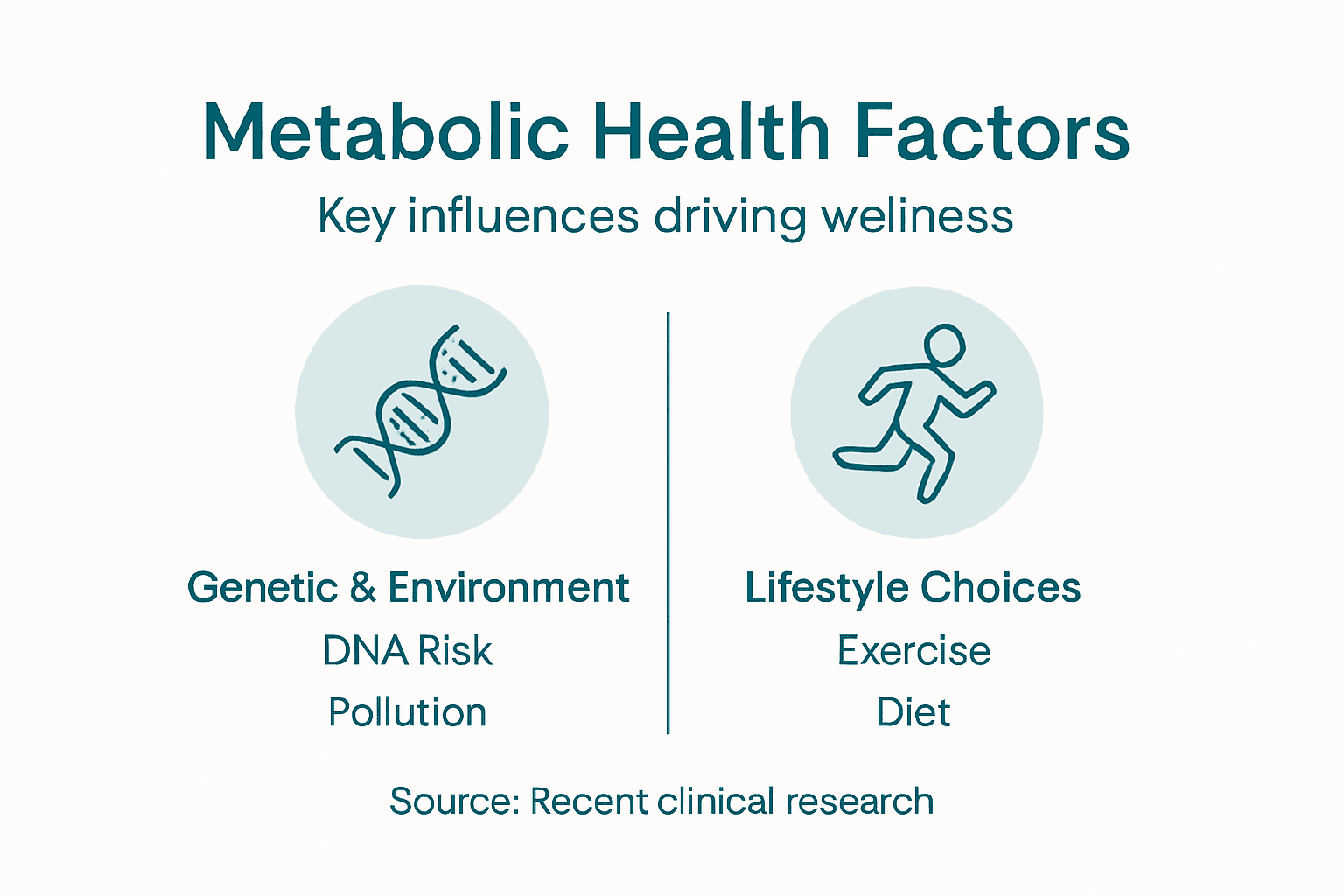
Genetic predispositions, lifestyle choices, environmental factors, physical activity levels, and gut microbiome composition all play crucial roles in determining metabolic performance. Poor metabolic health can increase risks for chronic conditions like diabetes, cardiovascular disease, and obesity, highlighting the importance of proactive management.
Pro Tip: Regularly monitor key metabolic biomarkers through comprehensive testing to gain early insights into your body’s internal metabolic functioning.
Five Key Biomarkers and Measurements
Metabolic health is fundamentally assessed through five critical biomarkers that provide comprehensive insights into your body’s internal functioning. Metabolic health indicators offer a precise snapshot of your overall physiological performance and potential chronic disease risks.
The five key biomarkers that medical professionals use to evaluate metabolic health include:
-
Fasting Glucose: Indicates how efficiently your body processes sugar
- Optimal range: Under 100 mg/dL
- Higher levels suggest potential insulin resistance
-
Triglycerides: Measures fat in the bloodstream
- Ideal level: Below 150 mg/dL
- Elevated levels can signal metabolic dysfunction
-
HDL Cholesterol: Represents “good” cholesterol levels
- Target range: Above 50 mg/dL for women, 40 mg/dL for men
- Higher levels indicate better cardiovascular health
-
Waist Circumference: Reflects abdominal fat distribution
- Healthy limits: Below 35 inches for women, 40 inches for men
- Excess abdominal fat correlates with metabolic risks
-
Blood Pressure: Measures cardiovascular system stress
- Optimal reading: Near 120/80 mmHg
- Indicates overall circulatory and metabolic efficiency
Understanding these biomarkers provides a comprehensive view of metabolic performance. Each measurement offers unique insights into how your body processes nutrients, manages energy, and maintains internal balance. Tracking these indicators allows for early detection of potential metabolic disorders and enables proactive health management.

Interestingly, these biomarkers are interconnected. For instance, high triglycerides often correlate with lower HDL cholesterol, suggesting a complex metabolic ecosystem that requires holistic evaluation. Regular monitoring and lifestyle adjustments can significantly improve these critical health indicators.
Here’s how the five main metabolic biomarkers relate to key health risks and potential interventions:
| Biomarker | Related Health Risk | Targeted Intervention |
|---|---|---|
| Fasting Glucose | Type 2 diabetes | Low-glycemic diet |
| Triglycerides | Heart disease | Increase healthy fats |
| HDL Cholesterol | Stroke risk | Aerobic exercise |
| Waist Circumference | Metabolic syndrome | Consistent physical activity |
| Blood Pressure | Cardiovascular issues | Reduce sodium intake |
Pro Tip: Schedule comprehensive metabolic health screenings annually to track your biomarkers and identify potential areas for lifestyle optimization.
How At-Home Metabolic Testing Works
Modern metabolic health assessment has evolved dramatically with advanced home testing methods, allowing individuals to gain precise insights into their body’s internal functioning without extensive clinical visits. These innovative approaches transform complex health monitoring into accessible, user-friendly experiences.
At-home metabolic testing typically involves several key methodologies:
-
Indirect Calorimetry Devices
- Measure oxygen consumption and carbon dioxide production
- Estimate resting metabolic rate (RMR)
- Provide insights into energy expenditure
-
Continuous Glucose Monitors (CGMs)
- Track real-time blood glucose levels
- Monitor metabolic responses to different foods
- Help understand insulin sensitivity
-
Bioelectrical Impedance Analysis
- Estimate body composition
- Calculate metabolic indicators
- Use electrical signals to assess fat and muscle percentages
-
Home Blood Testing Kits
- Measure critical metabolic markers
- Analyze lipid profiles
- Check fasting insulin and A1c levels
The process of at-home metabolic testing requires careful preparation. Metabolic health monitoring techniques often recommend specific pre-test conditions such as fasting, limiting physical activity, and recording baseline measurements like pulse and body temperature.
These advanced testing methods offer more than traditional diagnostics. They provide real-time data on how lifestyle factors—diet, exercise, sleep, and stress—directly influence metabolic performance. By transforming complex health data into actionable insights, at-home testing empowers individuals to make informed decisions about their wellness journey.
The table below summarizes at-home metabolic testing methods and what they reveal about your health:
| Test Type | Measures | Best For |
|---|---|---|
| Indirect Calorimetry | Energy expenditure | Assessing metabolism speed |
| Continuous Glucose Monitor | Sugar fluctuations daily | Food response tracking |
| Bioelectrical Impedance | Body composition | Fat vs. muscle assessment |
| Home Blood Testing Kit | Multiple blood markers | Broad metabolic evaluation |
Pro Tip: Maintain a consistent testing environment and follow preparation instructions precisely to ensure the most accurate metabolic health results.
Common Causes of Poor Metabolic Health
Metabolic health decline emerges from a complex interplay of biological, behavioral, and environmental factors that progressively compromise the body’s fundamental regulatory systems. Understanding these interconnected causes is crucial for developing effective prevention strategies and maintaining optimal physiological functioning.
The primary causes of poor metabolic health can be categorized into several critical domains:
-
Lifestyle Factors
- Sedentary behavior
- Chronic stress
- Inadequate sleep patterns
- Poor dietary choices
- Limited physical activity
-
Nutritional Influences
- High consumption of processed foods
- Excessive sugar intake
- Irregular meal patterns
- Micronutrient deficiencies
- Imbalanced macronutrient consumption
-
Environmental Triggers
- Exposure to environmental toxins
- Pollution
- Endocrine-disrupting chemicals
- Chronic inflammatory stimuli
- Workplace and urban stressors
-
Behavioral Risk Factors
- Smoking
- Excessive alcohol consumption
- Chronic sleep deprivation
- Prolonged sitting
- Inconsistent daily routines
Modern research highlights that metabolic health challenges are not simply individual medical conditions but complex systemic interactions. Obesogenic environments, genetic predispositions, and cumulative lifestyle choices can dramatically accelerate metabolic dysfunction, transforming what might initially seem like minor health deviations into significant long-term risks.
The compounding nature of these factors means that metabolic health decline is rarely attributed to a single cause. Chronic stress, poor nutrition, physical inactivity, and environmental exposures create a cascade of metabolic disruptions that incrementally erode the body’s natural regulatory mechanisms, increasing susceptibility to conditions like insulin resistance, type 2 diabetes, and cardiovascular diseases.
Pro Tip: Implement a holistic approach to metabolic health by addressing lifestyle factors systematically, focusing on nutrition, stress management, sleep quality, and consistent physical activity.
Improving Your Metabolic Health Outcomes
Improving metabolic health requires a strategic, multifaceted approach that integrates scientific insights with personalized lifestyle modifications. Multi-modal health interventions demonstrate remarkable potential in reversing metabolic dysfunction and optimizing overall physiological performance.
Key strategies for enhancing metabolic health include:
-
Nutritional Optimization
- Adopt Mediterranean or DASH diet principles
- Practice moderate caloric restriction
- Balance macronutrient intake
- Minimize processed food consumption
- Incorporate nutrient-dense whole foods
-
Physical Activity Interventions
- Engage in supervised aerobic exercise
- Implement consistent strength training
- Practice high-intensity interval training (HIIT)
- Reduce sedentary behavior
- Aim for minimum 150 minutes weekly activity
-
Dietary Timing Strategies
- Explore intermittent fasting protocols
- Practice time-restricted eating
- Consider alternate-day fasting approaches
- Regulate meal frequency
- Maintain consistent eating windows
-
Behavioral Modification Techniques
- Develop stress management skills
- Prioritize quality sleep
- Create sustainable lifestyle habits
- Set measurable health goals
- Track progress systematically
Research indicates that comprehensive approaches addressing capability, opportunity, and motivation yield superior metabolic health outcomes. The integration of targeted nutritional strategies, structured physical activity, and personalized behavioral interventions can dramatically improve glucose regulation, lipid profiles, and overall metabolic resilience.
Successful metabolic health transformation requires a holistic perspective that acknowledges the interconnected nature of physiological systems. By implementing evidence-based strategies and maintaining consistent lifestyle modifications, individuals can effectively reset their metabolic baseline and enhance long-term health trajectories.
Pro Tip: Develop a personalized metabolic health plan that combines dietary optimization, consistent physical activity, and strategic behavioral changes tailored to your unique physiological needs.
Unlock Your True Metabolic Potential with Precision Biomarker Testing
Struggling to understand your metabolic health and the complex biomarkers that define it such as fasting glucose, triglycerides, and HDL cholesterol can feel overwhelming. This article highlights how interconnected factors influence your metabolism and why regular, comprehensive monitoring is crucial. If your goal is to transform data-driven insights into meaningful lifestyle improvements you need tools that offer clarity and actionable results tailored for your unique health profile.

Explore our advanced range of at-home biomarker tests in the Biostarks | Collection designed to decode your metabolic function with Swiss-engineered mass spectrometry precision. Empower yourself with personalized reports that illuminate key metabolic markers and help you make confident health decisions. Start your journey to optimized energy utilization and balanced metabolic health today by visiting Biostarks. For even deeper insights and professional guidance check out our specialized Biostarks | Collection tailored for healthcare providers and wellness enthusiasts. Take control now because understanding your metabolism is the first step toward lasting health transformation.
Frequently Asked Questions
What is metabolic health?
Metabolic health refers to the body’s ability to efficiently manage energy production, process nutrients, and maintain internal balance, which is critically assessed through specific biomarkers such as blood glucose levels and insulin sensitivity.
What are the key biomarkers for assessing metabolic health?
The five key biomarkers used to assess metabolic health include fasting glucose, triglycerides, HDL cholesterol, waist circumference, and blood pressure. These indicators provide insights into how well the body is functioning metabolically.
How can at-home metabolic testing help improve my health?
At-home metabolic testing provides real-time insights into your metabolic health through methods like continuous glucose monitors and home blood testing kits, allowing you to track how diet and lifestyle choices impact your metabolism.
What lifestyle changes can improve metabolic health?
Improving metabolic health can be achieved through nutritional optimization, regular physical activity, dietary timing strategies, and behavioral modifications such as better stress management and sleep hygiene.
Recommended
- 7 Key Advantages of Metabolic Testing for Wel… | Biostarks
- 7 Key Biomarker Testing Benefits for Athletes… | Biostarks
- Why Use Biomarker Insights for Health Optimiz… | Biostarks
- Biomarker Testing: Unlocking Your Health Data | Biostarks
- Metabolic Health: Why It Matters for Fitness
- Integrate Healthspan Program | Longevity & Preventive Care Ottawa


