

Optimizing health and performance often means looking deeper than workout routines or meal plans. For driven professionals and athletes across Europe, subtle nutrient deficiencies can quietly limit progress, stamina, and recovery. Targeted at-home biomarker testing makes it possible to identify and address these hidden imbalances, using evidence-based insights rather than guesswork. Discover how science-driven testing empowers you to fine-tune your nutrition for lasting well-being and athletic longevity.
Table of Contents
- Deficiency Testing Explained And Common Misconceptions
- Categories Of Nutrient And Biomarker Deficiencies
- How At-Home Biomarker Testing Works
- Implications Of Undetected Deficiencies On Health
- Personalization, Performance, And Longevity Benefits
Key Takeaways
| Point | Details |
|---|---|
| Understanding Nutrient Deficiency Testing | Proper assessment requires comprehensive clinical evaluation, not just blood tests. Targeted testing is beneficial for specific populations. |
| Common Misconceptions | Serum levels alone do not provide a complete picture; subclinical deficiencies can exist, necessitating more thorough evaluations. |
| At-Home Testing Benefits | At-home biomarker tests allow for personalized health monitoring, but results should be discussed with healthcare professionals for accurate interpretation. |
| Impact of Undetected Deficiencies | Micronutrient shortfalls can lead to significant health challenges; regular screenings are crucial for prevention and timely intervention. |
Deficiency Testing Explained and Common Misconceptions
Understanding nutrient deficiency testing is crucial for proactively managing personal health. While many assume nutrient testing is a universal solution, the reality is far more nuanced. Nutrient deficiency assessment requires careful clinical interpretation and cannot be reduced to a simple blood test.
Most individuals do not require comprehensive micronutrient testing, as a balanced diet typically provides adequate nutrition. However, certain populations benefit from targeted screening. Clinical guidelines suggest specific groups should consider deficiency testing, including:
- Older adults with reduced nutrient absorption
- Pregnant women monitoring critical micronutrient levels
- Individuals with chronic digestive conditions
- People taking medications that impact nutrient metabolism
- Patients experiencing unexplained fatigue or neurological symptoms
Common misconceptions about deficiency testing often lead to unnecessary supplementation or misguided health interventions. Medical professionals emphasize that serum nutrient levels alone do not tell the complete health story. Subclinical deficiencies can exist even when standard blood tests appear normal, requiring comprehensive clinical evaluation.
Accurate deficiency testing involves multiple diagnostic approaches beyond simple blood work. Advanced metabolic profiling can reveal intricate nutritional status by examining:
- Cellular absorption rates
- Metabolic pathway efficiency
- Functional nutrient utilization
- Long-term nutritional trends
Pro tip: Consult a healthcare professional before initiating any self-directed nutrient testing or supplementation strategy to ensure personalized, evidence-based recommendations.
This content is for educational purposes only and does not constitute medical advice. Always consult with a healthcare professional before making changes to your health regimen.
Categories of Nutrient and Biomarker Deficiencies
Nutrient deficiencies represent complex health challenges that extend far beyond simple dietary shortfalls. Comprehensive biomarker research reveals multiple sophisticated categories of nutritional assessment that provide deeper insights into metabolic health.
Biomarker Categories are scientifically classified into three primary diagnostic domains:
Here’s a summary of diagnostic biomarker categories and their clinical significance:
| Biomarker Category | Assessment Focus | Clinical Value |
|---|---|---|
| Exposure Biomarker | Recent nutrient intake | Tracks dietary habits |
| Status Biomarker | Current tissue levels | Identifies present deficiencies |
| Functional Biomarker | Physiological effects | Reveals health impacts |
- Exposure Biomarkers: Measure recent dietary intake and nutrient consumption
- Status Biomarkers: Evaluate current nutrient levels in bodily tissues and blood
- Functional Biomarkers: Assess physiological consequences of nutrient deficiencies
Specific nutrient deficiencies can be broadly grouped into several critical classifications:
-
Micronutrient Deficiencies
- Water-soluble vitamins (B-complex, Vitamin C)
- Fat-soluble vitamins (A, D, E, K)
- Essential trace minerals (Iron, Zinc, Selenium)
-
Macronutrient Imbalance Indicators
- Protein metabolism markers
- Lipid profile assessments
- Carbohydrate metabolism indicators
Some micronutrient deficiencies have profound implications for overall health. Global prevalence studies highlight recurring nutritional gaps, particularly in vitamin D, iron, iodine, and B-complex vitamins. These deficiencies can manifest through subtle metabolic disruptions long before becoming clinically apparent, underscoring the importance of comprehensive biomarker analysis.
Precise biomarker testing transforms nutritional assessment from a static snapshot to a dynamic, personalized health evaluation.
Advanced metabolic profiling allows healthcare professionals to detect nuanced nutritional variations that traditional blood tests might miss. This approach enables targeted interventions addressing underlying metabolic inefficiencies rather than treating surface-level symptoms.
Pro tip: Request a comprehensive metabolic panel that includes multiple biomarker categories to obtain a holistic understanding of your nutritional status.
This content is for educational purposes only and does not constitute medical advice. Always consult with a healthcare professional before making changes to your health regimen.
How At-Home Biomarker Testing Works
At-home biomarker testing represents a revolutionary approach to personal health monitoring, allowing individuals to gain sophisticated insights without traditional clinical settings. Home medical testing protocols have evolved dramatically, transforming how people understand their metabolic and nutritional health.
The at-home testing process typically involves several key stages:
-
Test Kit Selection
- Choose a validated, scientifically-backed biomarker testing kit
- Verify FDA authorization and clinical accuracy
- Select tests aligned with specific health objectives
-
Sample Collection
- Follow precise kit instructions carefully
- Use sterile collection methods
- Collect appropriate biological samples (blood, saliva, urine)
-
Sample Processing
- Package samples according to provided guidelines
- Use pre-labeled shipping materials
- Ensure proper temperature and handling conditions
Modern at-home testing approaches offer multiple sample collection methods, including:
- Finger-prick blood sampling
- Saliva swab techniques
- Urine stream collection
- Dried blood spot technology
Advanced at-home testing bridges the gap between personal curiosity and professional medical diagnostics.
The technological sophistication of these tests allows for comprehensive analysis that goes beyond traditional screening. Cutting-edge mass spectrometry and molecular diagnostic techniques enable precise measurements of various biomarkers, providing nuanced insights into metabolic function, nutritional status, and potential health risks.

Pro tip: Always cross-reference at-home testing results with a healthcare professional to ensure comprehensive interpretation and personalized guidance.
This content is for educational purposes only and does not constitute medical advice. Always consult with a healthcare professional before making changes to your health regimen.
Implications of Undetected Deficiencies on Health
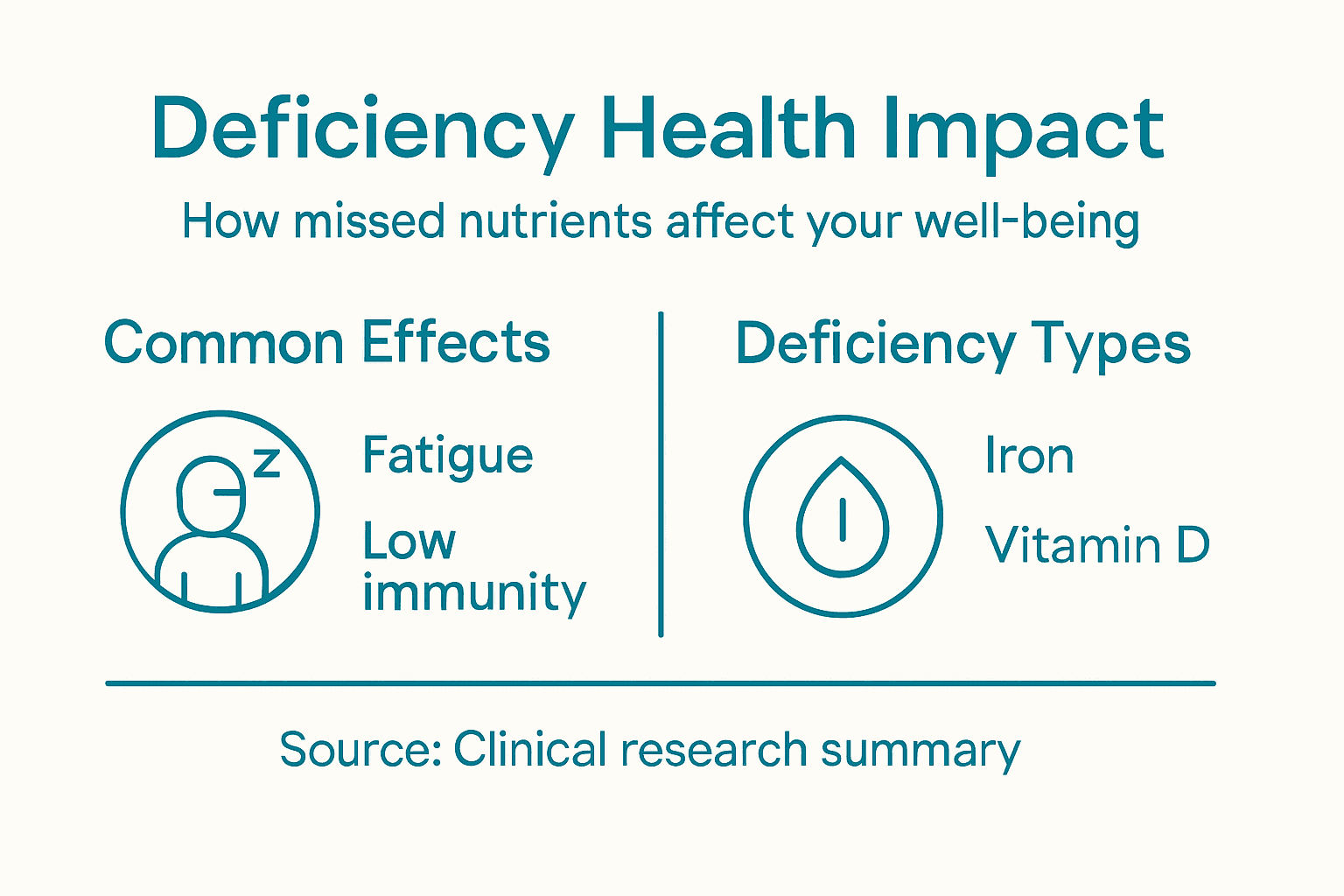
Micronutrient deficiencies represent a silent yet profound health challenge that can undermine physiological functioning without obvious symptoms. Global research highlights the widespread impact of these often-overlooked nutritional gaps.
The consequences of undetected deficiencies span multiple critical health domains:
-
Metabolic Health Impact
- Reduced energy metabolism efficiency
- Impaired insulin sensitivity
- Compromised cellular regeneration processes
-
Immune System Vulnerabilities
- Decreased immune cell production
- Slower inflammatory response
- Increased susceptibility to infections
Micronutrient shortfalls can manifest through various subtle yet significant health disruptions:
- Cognitive performance decline
- Reduced physical endurance
- Compromised wound healing capabilities
- Hormonal imbalance
- Increased oxidative stress
Undiagnosed nutritional deficiencies can silently erode long-term health, creating complex systemic challenges before obvious symptoms emerge.
Clinical research indicates that certain populations face heightened risks from undetected deficiencies. Athletes, high-stress professionals, individuals with restricted diets, and those experiencing chronic health conditions are particularly vulnerable to these metabolic disruptions.
The long-term implications extend beyond immediate health concerns. Chronic micronutrient deficiencies can contribute to:
- Accelerated cellular aging
- Increased chronic disease susceptibility
- Potential neurological complications
- Reduced overall metabolic resilience
Pro tip: Schedule regular comprehensive metabolic screenings to detect and address potential nutrient deficiencies before they develop into more serious health complications.
This content is for educational purposes only and does not constitute medical advice. Always consult with a healthcare professional before making changes to your health regimen.
Personalization, Performance, and Longevity Benefits
Personalized health testing represents a groundbreaking approach to understanding individual metabolic potential. Precision medicine strategies enable targeted interventions that optimize health outcomes far beyond traditional one-size-fits-all medical approaches.
The personalization benefits manifest through multiple critical health dimensions:
-
Performance Optimization
- Enhanced metabolic efficiency
- Targeted nutritional interventions
- Precise training and recovery strategies
-
Longevity Potential
- Proactive disease prevention
- Biological age assessment
- Customized health preservation protocols
Key advantages of personalized biomarker analysis include:
See how personalized health testing compares to traditional approaches:
| Approach | Methodology | Health Impact |
|---|---|---|
| Traditional | Standard blood screening | Generalized recommendations |
| Personalized | Comprehensive biomarker panel | Individualized strategies |
- Identifying hidden metabolic vulnerabilities
- Creating individualized nutrition plans
- Predicting potential health risks
- Designing targeted lifestyle interventions
- Monitoring physiological adaptation mechanisms
Personalized testing transforms health management from reactive treatment to strategic prevention.
Athletes, high-performance professionals, and health-conscious individuals gain unprecedented insights through comprehensive biomarker profiling. These advanced diagnostic approaches reveal intricate details about:
- Genetic predispositions
- Metabolic inefficiencies
- Nutritional absorption capacity
- Hormonal balance
- Cellular regeneration potential
Longevity clinics increasingly utilize these sophisticated testing methodologies to develop nuanced, data-driven health strategies that extend beyond traditional medical interventions.
Pro tip: Integrate periodic comprehensive biomarker assessments into your health strategy to continuously refine and optimize your personal wellness trajectory.
This content is for educational purposes only and does not constitute medical advice. Always consult with a healthcare professional before making changes to your health regimen.
Take Control of Your Nutrient Health with Precise Biomarker Testing
Understanding the silent impact of nutrient deficiencies is the first step toward optimizing your health, performance, and longevity. The article highlights the challenges of identifying subclinical deficiencies that standard blood tests often miss. You deserve clear, personalized insights into your metabolic function and nutrient status so you can prevent hidden health issues before they arise.
Experience advanced at-home biomarker testing designed to uncover your unique nutritional needs. Biostarks uses cutting-edge Swiss mass spectrometry techniques to analyze vitamins, hormones, minerals, and metabolic markers with unmatched precision. Gain actionable data that empowers informed decisions, helping you overcome fatigue, metabolic imbalances, and immune vulnerabilities.
Discover our expert solutions tailored for health-conscious individuals and athletes in the Biostarks | Collection.
Start your journey toward personalized health optimization today. Visit Biostarks to choose your test kit and unlock the power of comprehensive biomarker insights. Don’t wait for symptoms to appear. Act now to safeguard your future wellbeing with precise, data-driven analysis from a trusted partner in at-home diagnostic testing.
Explore more about the science and methodology behind our offerings in the Biostarks | Collection to understand why accuracy matters for your health.
Frequently Asked Questions
What is nutrient deficiency testing, and why is it important?
Nutrient deficiency testing assesses an individual’s nutritional status by measuring specific micronutrients and biomarkers. It is essential for preventing health issues related to deficiencies and providing tailored nutritional recommendations based on individual needs.
Who should consider undergoing nutrient deficiency testing?
Targeted groups for deficiency testing include older adults, pregnant women, individuals with chronic digestive issues, those on medications affecting nutrient metabolism, and patients experiencing unexplained fatigue or neurological symptoms.
How does at-home biomarker testing work?
At-home biomarker testing involves selecting a validated test kit, collecting biological samples (such as blood, saliva, or urine), processing the samples, and sending them to a lab for comprehensive analysis of various biomarkers related to nutritional health.
What are the implications of undetected nutrient deficiencies?
Undetected nutrient deficiencies can lead to several health issues, including compromised metabolic function, weakened immune response, cognitive decline, and increased risk of chronic diseases if not addressed promptly.


