

For athletes and health-focused individuals, generic nutrition advice often falls short of delivering real results. Personalized vitamin tracking plans take wellness to the next level by providing clear, actionable insights tailored to your body’s unique needs. With advances in at-home biomarker testing, you can now gather data-driven information and shift toward personalized nutrition strategies that support peak performance and long-term health.
Table of Contents
- Step 1: Set up a personalized vitamin tracking plan
- Step 2: Collect at-home biomarker samples accurately
- Step 3: Submit samples for advanced laboratory analysis
- Step 4: Review and interpret vitamin level reports
- Step 5: Apply actionable insights to optimize wellness
Quick Summary
| Key Insight | Explanation |
|---|---|
| 1. Assess Your Health Status | Begin by conducting thorough biomarker testing to understand your current health and nutritional profile. |
| 2. Follow Accurate Collection Protocols | Ensure proper techniques for sample collection and handling to avoid contamination and ensure reliable results. |
| 3. Submit Samples Correctly | Package and ship your biomarker samples carefully to maintain their integrity and obtain accurate analysis. |
| 4. Interpret Your Results | Analyze your vitamin level reports to gauge deficiencies, excesses, and overall health, comparing results to reference ranges. |
| 5. Make Informed Dietary Changes | Adjust your nutrition based on insights gained from your vitamin reports, prioritizing whole foods and personalized supplementation. |
Step 1: Set up a personalized vitamin tracking plan
Creating a personalized vitamin tracking plan transforms your health strategy from generic recommendations to precise, data-driven nutrition. This approach allows you to understand your unique nutritional needs by integrating comprehensive health insights tailored specifically to your body’s requirements.
To develop an effective personalized plan, you’ll need to gather critical information about your current health status and nutritional profile. Personalized nutrition strategies focus on integrating multiple data points to optimize your vitamin intake. Here are key steps to establish your tracking framework:
- Assess your baseline health status through comprehensive biomarker testing
- Review your current diet and lifestyle habits
- Identify potential vitamin deficiencies or metabolic imbalances
- Set specific health and wellness goals
- Consider genetic factors that might influence nutrient absorption
Start by consulting with a healthcare professional who can help you conduct thorough biomarker analysis. This process involves examining your genetic predispositions, metabolic markers, and current nutrient levels. Blood tests and comprehensive health screenings provide the most accurate insights into your specific vitamin requirements.
The goal is to move beyond one-size-fits-all nutrition approaches and develop a targeted vitamin tracking strategy that reflects your unique biological profile. By understanding how your body processes and utilizes nutrients, you can make precise adjustments to optimize your overall health and wellness.
Personalized nutrition is not just about supplementation—it’s about understanding your body’s specific nutritional needs and creating a tailored approach to meet those requirements.
Pro tip: Keep a detailed health journal to track your vitamin intake, energy levels, and overall well-being, which will help you fine-tune your personalized nutrition plan over time.
Step 2: Collect at-home biomarker samples accurately
Collecting at-home biomarker samples requires precision and attention to detail to ensure the most accurate representation of your vitamin levels. Understanding the correct techniques for sample collection is crucial for obtaining reliable health insights that will guide your personalized nutrition strategy.
Accurate biomarker sampling techniques demand careful preparation and meticulous handling of biological specimens. Here are essential steps to ensure your sample collection process meets professional standards:
- Clean your collection area thoroughly
- Wash hands with soap and warm water before starting
- Read all instructions carefully before beginning
- Gather all necessary collection materials in advance
- Check expiration dates on collection kit components
- Follow precise timing instructions for sample collection
Different vitamin and nutrient biomarkers require specific collection methods. Blood samples typically need finger-prick techniques, while urine and saliva samples have unique collection protocols. Pay close attention to the specific instructions provided with your testing kit, as each biomarker has unique requirements for optimal analysis.
Proper sample collection is the foundation of accurate nutritional assessment—a single mistake can compromise your entire health evaluation.
Each sample type demands careful handling to prevent contamination or degradation. Store samples exactly as instructed, typically in a cool environment and within specified time frames. Some samples might require immediate refrigeration or specific transportation conditions to maintain their integrity.

Here’s a quick overview of sample types and their handling requirements:
| Sample Type | Collection Method | Storage Condition | Common Pitfalls |
|---|---|---|---|
| Blood | Finger-prick | Refrigerate | Contamination risk |
| Urine | Sample cup | Cool/dark place | Delayed transport |
| Saliva | Swab/tube | Refrigerate | Insufficient sample volume |
| Hair | Scissors/envelope | Dry storage | Environmental contamination |
Pro tip: Double-check all collection materials and instructions before starting, and consider doing a practice run to familiarize yourself with the process and reduce anxiety during actual sample collection.
Step 3: Submit samples for advanced laboratory analysis
Submitting your biomarker samples for advanced laboratory analysis is a critical step in understanding your precise vitamin levels and overall nutritional health. This stage transforms your carefully collected specimens into meaningful health insights that can guide your personalized nutrition strategy.
Advanced laboratory testing techniques require meticulous attention to detail to ensure accurate results. Here are the key steps to successfully submit your samples:
- Package samples according to specific laboratory instructions
- Use provided shipping materials
- Maintain recommended temperature during transport
- Include all necessary documentation
- Seal packages securely
- Track your shipment for accountability
Proper sample handling is crucial for obtaining reliable results. Different vitamin biomarkers require specific storage conditions. Blood samples might need refrigeration, while other specimens could require immediate processing or specialized preservation techniques.
Precision in sample submission is not just a recommendation—it’s the foundation of obtaining accurate nutritional insights.
Understand that laboratories employ sophisticated analytical methods like High-Performance Liquid Chromatography (HPLC) and immunoassay techniques to quantify vitamin concentrations with exceptional accuracy. Each step you take in packaging and shipping directly impacts the quality of your health assessment.
Compare these analysis techniques to understand their benefits:
| Laboratory Method | Accuracy | Main Use |
|---|---|---|
| High-Performance Liquid Chromatography (HPLC) | Very high | Vitamin quantification |
| Immunoassay Techniques | High | Detecting specific vitamin forms |
| Mass Spectrometry | Extremely high | Detailed nutrient profiling |
| Spectrophotometry | Moderate | Quick, broad assessments |
Pro tip: Take clear photographs of your packaged samples and tracking information as a personal record, which can be helpful if you need to follow up on your test results.
Step 4: Review and interpret vitamin level reports
Reviewing and interpreting your vitamin level reports transforms complex laboratory data into actionable insights about your personal health status. Understanding these results empowers you to make informed decisions about nutrition, supplementation, and overall wellness.
Comprehensive lab result interpretation requires careful analysis of multiple factors beyond simple numeric values. Here are critical elements to examine when reviewing your vitamin level report:
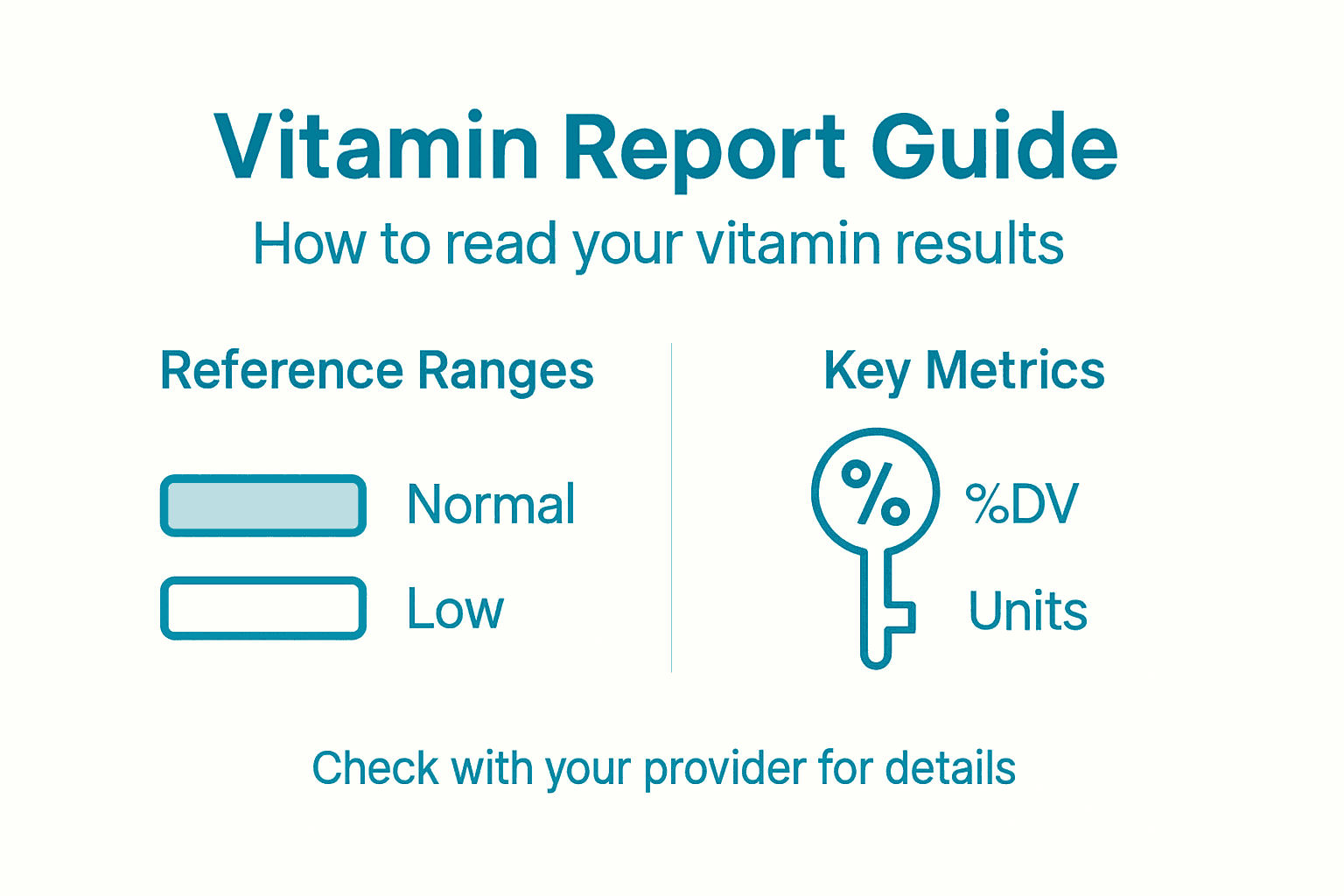
- Compare your results to established reference ranges
- Note the specific units of measurement
- Understand the percentage of Daily Value (%DV)
- Look for markers indicating deficiency or excess
- Identify trends across different vitamin measurements
- Pay attention to any supplementary clinical notes
Numeric values tell only part of the story. Contextual interpretation is crucial for understanding your true nutritional status. For instance, a vitamin level might appear within normal range but could still indicate potential absorption issues or metabolic challenges.
Vitamin reports are not just numbers—they are a personalized roadmap to optimizing your health and nutritional well-being.
The Percentage Daily Value (%DV) provides additional context for your results. Levels below 5% suggest potential deficiency, while values above 20% might indicate sufficient or potentially excessive intake. However, always consult with a healthcare professional to interpret these nuances in the context of your overall health profile.
Pro tip: Create a digital or physical folder to track your vitamin level reports over time, allowing you to visualize long-term trends and changes in your nutritional health.
Step 5: Apply actionable insights to optimize wellness
Transforming your vitamin level data into meaningful health improvements requires strategic and personalized action. Your laboratory results are not just numbers—they are a roadmap for targeted nutritional interventions that can significantly enhance your overall wellness.
Personalized nutrition strategies involve carefully interpreting your results and developing a comprehensive approach to addressing potential nutrient gaps. Here are key strategies for applying your vitamin insights:
- Prioritize whole food nutrition based on identified deficiencies
- Consider targeted supplementation under professional guidance
- Adjust dietary patterns to support nutrient absorption
- Monitor ongoing changes in your health markers
- Integrate lifestyle modifications that support nutrient metabolism
- Schedule follow-up assessments to track progress
Dietary modifications should be your first line of intervention. Nutrient-dense foods can often address mild deficiencies more effectively than supplements. For instance, if your vitamin D levels are low, increasing your intake of fatty fish, egg yolks, and fortified dairy products might be more beneficial than immediately reaching for a supplement.
Optimal wellness is not about perfect numbers, but about understanding your body’s unique nutritional landscape and responding with intelligent, personalized strategies.
Consult with a healthcare professional to develop a nuanced approach that considers your specific health conditions, medications, and metabolic profile. Some vitamins interact with medications or require specific absorption conditions, making professional guidance crucial for safe and effective optimization.
Pro tip: Create a digital health dashboard to track your vitamin levels, dietary changes, and wellness metrics, allowing you to visualize your progress and make data-driven adjustments over time.
Take Control of Your Vitamin Health with Precise At-Home Testing
Tracking vitamin levels naturally requires accurate data about your body’s unique nutritional needs. The challenge many face is obtaining reliable biomarker information without complicated clinical visits or unclear lab results. This article highlights key pain points like precise sample collection and interpreting complex vitamin reports to create a personalized nutrition plan that truly works for you.
At Biostarks, we understand these hurdles and offer a scientifically advanced solution that uses cutting-edge Swiss mass spectrometry techniques to analyze your vitamin and metabolic markers with exceptional precision. Our Biostarks | Collection provides user-friendly sample collection kits designed for at-home convenience so you can collect blood, saliva, or urine samples accurately without stress. With comprehensive, easy-to-understand reports and actionable insights, you will finally have the clarity needed to optimize your health, performance, and wellness.
Ready to move beyond guesswork and generic advice? Visit Biostarks now to explore our testing solutions that empower you with precise, personalized vitamin tracking at home. Take the first step toward smarter nutritional decisions today with our Biostarks | Collection and experience how clarity and science-driven data can transform your wellness journey.
Frequently Asked Questions
How can I create a personalized vitamin tracking plan?
Creating a personalized vitamin tracking plan involves assessing your current health status, reviewing your diet and lifestyle, and identifying any deficiencies. Start by consulting with a healthcare professional to conduct comprehensive biomarker testing and set specific health goals.
What are the best practices for collecting at-home biomarker samples?
To collect at-home biomarker samples accurately, ensure you clean your collection area, wash your hands, and read all instructions carefully. Prepare your collection materials in advance and follow precise timing instructions to improve the reliability of your results.
How should I submit my samples for laboratory analysis?
When submitting your samples for analysis, package them according to laboratory instructions while maintaining the recommended temperature during transport. Include all necessary documentation and track your shipment to ensure it arrives safely and securely.
What should I look for when interpreting my vitamin level reports?
When reviewing vitamin level reports, compare your results to established reference ranges and note the specific units of measurement. Look for signs of deficiency or excess and any notes provided by healthcare professionals to gain a more comprehensive understanding of your nutritional health.
How can I apply my vitamin level insights to improve my health?
To apply your vitamin level insights, prioritize whole food nutrition based on identified deficiencies and consider targeted supplementation if necessary. Monitor changes in your health markers and integrate lifestyle modifications to support nutrient metabolism for optimal wellness.


