

Trying to stay ahead of potential health risks often feels like a guessing game. European adults who want more control over their wellbeing are finding that at-home biomarker testing offers real answers. Biological markers can reveal hidden disease risks, personal metabolic patterns, and trends long before symptoms become noticeable. This guide explains how biomarker testing works, what types matter most for prevention, and how these powerful insights lead to smarter decisions and longer healthspan.
Table of Contents
- Defining Biomarkers And Their Importance
- Types Of Biomarkers Used In Prevention
- How Biomarker Testing Works At Home
- Real-World Applications For Early Detection
- Limitations, Risks, And Regulatory Standards
- Comparing Biomarkers To Traditional Testing
Key Takeaways
| Point | Details |
|---|---|
| Importance of Biomarkers | Biomarkers are crucial for early detection, monitoring, and personalized treatment of health conditions. They provide insights into biological processes that help assess health risks before symptoms appear. |
| Types of Biomarkers | Various biomarker types (genetic, metabolic, inflammatory, hormonal, physiological) facilitate tailored health interventions, enabling proactive disease prevention strategies. |
| Home Testing Advances | At-home biomarker testing offers convenient access to health insights, allowing individuals to monitor their health proactively. Proper sample collection and professional consultation are essential for accuracy. |
| Regulatory Considerations | Biomarker testing must meet rigorous regulatory standards to ensure reliability and accuracy, emphasizing the importance of working with healthcare professionals for optimal interpretation. |
Defining Biomarkers and Their Importance
Biomarkers represent molecular indicators of biological processes that offer critical insights into human health and disease progression. These biological markers are measurable molecular signatures traceable to specific cellular or physiological origins, allowing medical professionals to assess an individual’s health status with unprecedented precision.
At their core, biomarkers are scientific tools that help detect, monitor, and predict various biological conditions. Molecular biological markers can range from proteins and genetic sequences to metabolites and cellular components. Their significance lies in their ability to provide a window into the body’s internal environment, revealing potential health risks before traditional symptoms emerge.
Modern medical research has expanded biomarker applications across multiple domains. From cancer diagnostics to metabolic health assessments, clinical biomarkers have evolved from simple indicators like cholesterol levels to complex molecular signatures that enable personalized treatment strategies. These advanced markers help healthcare professionals understand disease mechanisms, predict patient outcomes, and develop targeted interventions.
By providing detailed molecular insights, biomarkers transform healthcare from a reactive to a proactive model. They enable early detection, personalized risk assessment, and precise monitoring of biological processes, ultimately empowering individuals to make informed decisions about their health.
Pro tip: Consider getting a comprehensive biomarker panel annually to track your health trends and detect potential issues before they become serious medical conditions.
Types of Biomarkers Used in Prevention
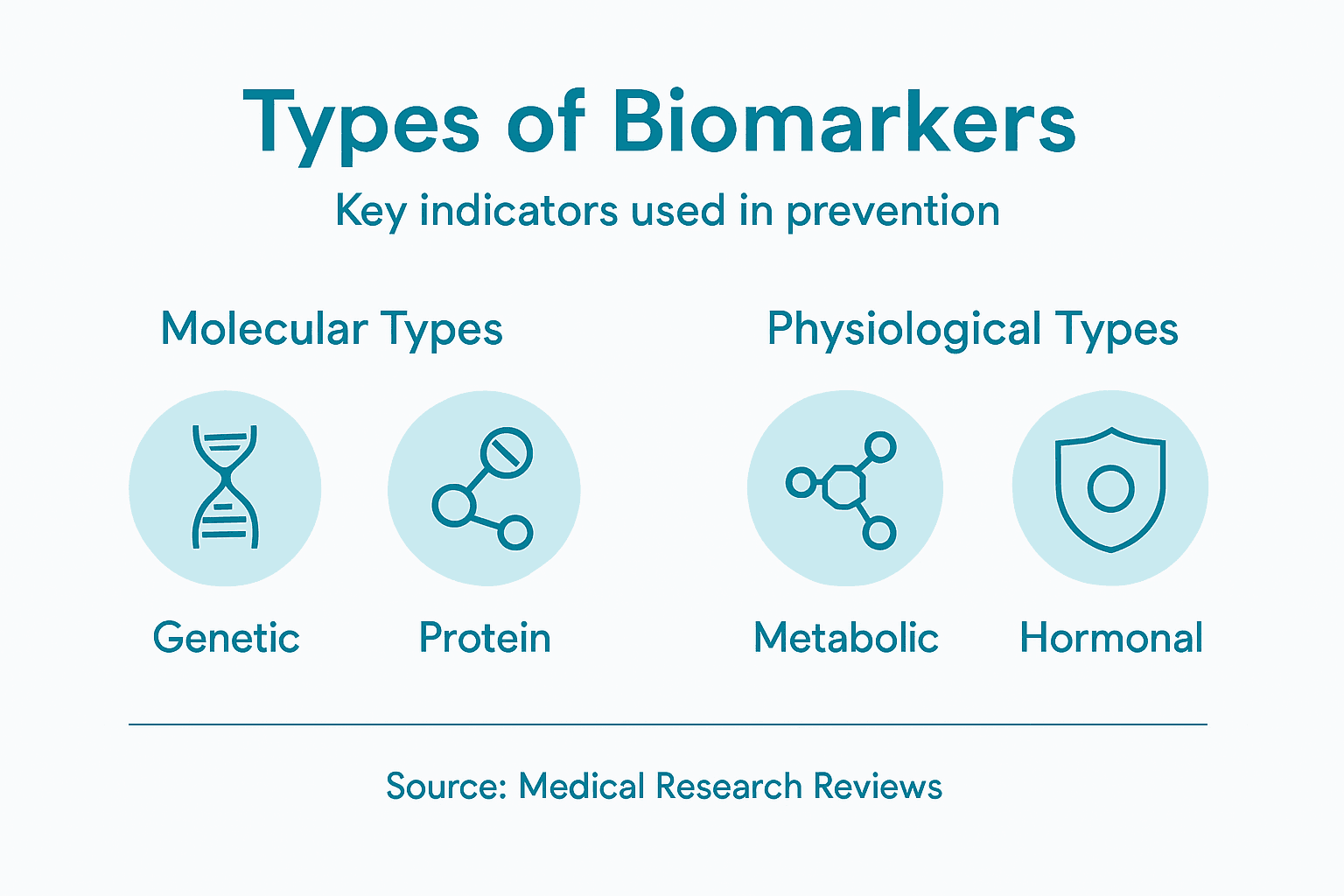
Biomarkers represent a diverse array of molecular and physiological indicators that play a crucial role in understanding and preventing potential health risks. Comprehensive biomarker classifications help medical professionals systematically track and analyze various biological processes, enabling more precise health interventions.
Scientists typically categorize biomarkers into several key types. Molecular biomarkers include genetic sequences, proteins, hormones, and metabolites that provide insights into cellular health. Physiological biomarkers measure functional indicators like blood pressure, heart rate, and metabolic performance. Biological indicator types also encompass inflammation markers, oxidative stress indicators, and nutrient-related signals that reveal underlying health conditions.
Each biomarker type offers unique insights into disease prevention. Genetic biomarkers can reveal inherited risk factors, while metabolic markers track how the body processes nutrients and energy. Inflammation markers help identify potential chronic disease risks, and hormonal biomarkers provide critical information about endocrine system functioning. These diverse indicators allow healthcare professionals to create personalized prevention strategies tailored to an individual’s specific biological profile.
By understanding and monitoring these varied biomarker types, individuals can take proactive steps toward maintaining optimal health. The integration of multiple biomarker assessments provides a comprehensive view of potential health risks, enabling early intervention and personalized wellness strategies.
Here’s a summary of major biomarker categories and their prevention benefits:
| Biomarker Type | Key Indicators | Prevention Benefit | Common Use Case |
|---|---|---|---|
| Genetic | DNA sequences, gene variants | Identify inherited risk factors | Cancer and rare disease risk |
| Metabolic | Glucose, lipid profiles | Predict metabolic disorders | Diabetes, cardiovascular |
| Inflammatory | Cytokines, CRP | Detect early chronic disease | Inflammation management |
| Hormonal | Estrogen, thyroid hormones | Assess endocrine system health | Thyroid and reproductive |
| Physiological | Blood pressure, heart rate | Monitor vital organ function | Cardiovascular health |
Pro tip: Consult with a healthcare professional about which specific biomarker panels might be most relevant for your individual health profile and risk factors.
How Biomarker Testing Works at Home
Home-based biomarker testing has revolutionized personal health monitoring, offering individuals unprecedented access to detailed biological insights. Blood-based biomarker tests have advanced to become non-invasive and highly accurate, providing comprehensive health information through simple sample collection methods.

The typical at-home biomarker testing process involves several key steps. First, individuals receive a specialized testing kit designed for easy sample collection. Blood samples, saliva, or finger-prick blood drops are common collection methods, allowing for minimal discomfort and maximum convenience. AI-designed molecular sensors have further enhanced these tests, enabling more precise detection of specific biological markers through advanced technological innovations.
Once collected, samples are securely packaged and sent to specialized laboratory facilities equipped with advanced analytical technologies. Sophisticated mass spectrometry and molecular analysis techniques then examine the samples, identifying specific biomarkers related to various health indicators. These comprehensive assessments can reveal crucial information about metabolic functioning, potential disease risks, nutritional status, and overall physiological health, providing a detailed snapshot of an individual’s current biological condition.
Modern biomarker testing transforms health monitoring from a reactive to a proactive approach. By identifying potential health risks before symptoms emerge, individuals can make informed lifestyle adjustments, work with healthcare professionals to develop personalized prevention strategies, and take meaningful steps toward optimizing their long-term wellness.
Pro tip: Read and follow sample collection instructions meticulously to ensure the most accurate and reliable biomarker test results.
Real-World Applications for Early Detection
Biomarkers have emerged as powerful tools for detecting potential health issues before they become critical medical challenges. AI-generated nanoparticle sensors represent a groundbreaking approach to early disease identification, enabling non-invasive screening methods that can potentially transform preventative healthcare.
Early detection applications span multiple complex medical conditions. Cancer screening has seen remarkable advancements, with molecular biomarkers allowing physicians to identify potential malignancies before traditional diagnostic methods. Noninvasive detection techniques have particularly revolutionized challenging diagnostic areas like endometriosis, where early intervention can prevent long-term health complications.
Different medical specialties are leveraging biomarker technologies to improve patient outcomes. Neurological disorders, metabolic conditions, cardiovascular diseases, and reproductive health all benefit from these advanced screening techniques. By detecting subtle molecular changes, healthcare professionals can develop targeted prevention strategies, personalized treatment plans, and implement proactive health interventions before symptoms become severe.
The transformative potential of biomarker testing extends beyond individual patient care. These technologies represent a paradigm shift in medical diagnostics, moving healthcare from reactive treatment to predictive and preventative models. By identifying potential health risks earlier, individuals can make informed lifestyle modifications, engage in timely medical interventions, and potentially mitigate the progression of serious medical conditions.
Pro tip: Discuss your family medical history with healthcare providers to help determine which specific biomarker screenings might be most relevant for your personal health profile.
Limitations, Risks, and Regulatory Standards
Biomarker testing represents a powerful diagnostic approach, but it is not without significant challenges and regulatory considerations. Biomarker regulatory frameworks require rigorous scientific validation to ensure accurate and meaningful health insights.
Assay variability remains a critical concern in biomarker testing. Regulatory validation processes demand strict scientific standards to minimize potential false positives or negatives. Potential limitations include variations in sample collection, storage conditions, laboratory techniques, and individual biological differences that can impact test accuracy and reliability.
Regulatory agencies like the FDA and NIH have established comprehensive guidelines to address these challenges. These standards focus on ensuring biomarkers demonstrate consistent clinical significance, reproducibility, and meaningful predictive value. Key evaluation criteria include pre-analytical factors, minimally acceptable assay performance metrics, and clear documentation of the biomarker’s intended use and potential clinical implications.
While biomarker technologies offer tremendous potential, consumers must approach these tests with informed caution. Understanding the limitations, consulting healthcare professionals for interpretation, and recognizing that biomarkers provide probabilistic insights rather than absolute diagnoses are crucial for responsible health management. The emerging field continues to evolve, with ongoing research aimed at improving test precision and expanding diagnostic capabilities.
Pro tip: Always discuss biomarker test results with a qualified healthcare professional who can provide comprehensive context and personalized medical guidance.
Comparing Biomarkers to Traditional Testing
Traditional medical testing and biomarker analysis represent two distinct yet complementary approaches to understanding human health. Blood-based biomarker testing offers a revolutionary alternative to conventional diagnostic procedures, providing more nuanced and minimally invasive health insights.
Molecular-level analysis distinguishes biomarkers from traditional testing methods. While standard blood tests typically measure broad physiological indicators like cholesterol or glucose levels, biomarker research techniques dive deeper into cellular and genetic markers. This approach enables earlier disease detection, more precise risk assessment, and personalized health monitoring that traditional tests cannot achieve.
Key differences emerge in diagnostic capabilities and patient experience. Traditional tests often require more invasive procedures like multiple blood draws or specialized imaging, whereas biomarker tests can frequently be conducted through simple blood samples or even saliva. The molecular specificity of biomarkers allows for detecting subtle physiological changes long before conventional tests would reveal symptomatic evidence, transforming healthcare from a reactive to a predictive model.
This table highlights key differences between biomarker testing and traditional testing:
| Aspect | Biomarker Testing | Traditional Testing |
|---|---|---|
| Sample Type | Blood, saliva, finger-prick | Blood draw, imaging |
| Focus | Molecular and cellular markers | General physiological parameters |
| Diagnostic Speed | Early detection possible | Often detects symptoms later |
| Personalization | Enables tailored health plans | Typically one-size-fits-all |
Integrating biomarker analysis with traditional testing creates a comprehensive health assessment strategy. Rather than replacing existing diagnostic methods, biomarkers complement them by providing additional layers of molecular insight. This holistic approach empowers healthcare professionals to develop more targeted, individualized treatment plans that consider both broad physiological indicators and specific molecular signatures.
Pro tip: Request a comprehensive consultation that combines traditional testing results with biomarker analysis for the most thorough health evaluation.
Take Control of Your Health with Advanced At-Home Biomarker Testing
Understanding the intricate role of biomarkers in disease prevention highlights the challenge of accessing precise and personalized health insights. Many people struggle with vague or delayed health indicators that do not reveal early risks or subtle changes in their metabolic or hormonal status. This article underscores the importance of identifying specific molecular markers to unlock proactive disease prevention and improve longevity with actionable data.
Biostarks offers a cutting-edge solution that empowers you to overcome these obstacles by providing detailed analysis of critical biomarkers including vitamins, hormones, amino acids, lipids, and minerals. Using advanced Swiss mass spectrometry, Biostarks transforms complex laboratory results into clear, personalized insights designed to optimize your metabolic function and overall health. Whether you seek performance enhancement, longevity, or early detection of potential risks, the Biostarks | Collection delivers user-friendly at-home tests with precise results you can trust.
Start your journey toward personalized health today. Explore the full range of premium biomarker testing services at Biostarks | Collection and join countless individuals making data-driven decisions to safeguard their future. Visit https://biostarks.com now for comprehensive reports and expert guidance tailored to your unique biological profile. Don’t wait until symptoms appear gain clarity and control over your health with Biostarks.
Frequently Asked Questions
What are biomarkers and how do they help in disease prevention?
Biomarkers are measurable molecular indicators of biological processes that provide insights into health and disease. They allow for early detection, monitoring, and predictive assessments of various health conditions, ultimately facilitating personalized disease prevention strategies.
How does biomarker testing work at home?
At-home biomarker testing typically involves using a specialized kit to collect samples such as blood or saliva. The samples are then sent to a lab for analysis, where sophisticated techniques identify specific biomarkers related to health indicators, providing detailed health information.
What are the different types of biomarkers used for prevention?
Biomarkers can be categorized into genetic, metabolic, inflammatory, hormonal, and physiological types. Each category offers unique insights that help identify risks, assess health conditions, and guide personalized prevention strategies tailored to individual biological profiles.
What limitations and risks are associated with biomarker testing?
Limitations of biomarker testing include assay variability, potential false positives or negatives, and individual biological differences that can affect accuracy. Regulatory standards are in place to ensure the tests are validated, but users should always consult healthcare professionals for interpretation and guidance.


