

Finding reliable wellness answers can feel confusing when traditional clinic visits clash with busy schedules. For health-minded Americans eager to take charge of metabolic performance and personal fitness, at-home testing brings meaningful change. Backed by technological advances in at-home health diagnostics, these self-tests now let you track key biomarkers privately and efficiently. This guide clarifies how modern home testing works, explains its science, and helps you identify which tests deliver actionable, trustworthy health data tailored to your goals.
Table of Contents
- At-Home Health Testing Defined and Debunked
- Key Biomarker Test Types and Their Uses
- How At-Home Testing Works Step-By-Step
- Accuracy, Security, and Clinical Validity Standards
- Risks, Limitations, and Regulatory Landscape
Key Takeaways
| Point | Details |
|---|---|
| At-Home Testing Convenience | At-home health testing allows individuals to obtain critical health insights without visiting a medical facility, enhancing personal wellness. |
| Importance of Professional Guidance | Results from at-home tests should always be interpreted with the assistance of healthcare professionals to ensure comprehensive understanding. |
| Test Accuracy and Reliability | At-home health tests must meet FDA standards for accuracy, ensuring reliable health insights are delivered to consumers. |
| Awareness of Limitations | Users should remain aware of the risks and limitations of at-home testing, including potential misinterpretation and the absence of professional context. |
At-Home Health Testing Defined and Debunked
At-home health testing represents a groundbreaking approach to personal wellness, enabling individuals to gather critical health insights without visiting a medical facility. Consumer-driven health diagnostics have rapidly evolved, transforming how people monitor their personal health status.
These self-administered tests allow individuals to collect biological samples like blood, saliva, or urine in the privacy of their homes, then send them to specialized laboratories for comprehensive analysis. The COVID-19 pandemic significantly accelerated this trend, demonstrating the potential for convenient, accessible diagnostic technologies. Modern at-home tests now cover an impressive range of health markers, including:
- Metabolic function indicators
- Hormone levels
- Nutritional deficiencies
- Genetic predispositions
- Performance and fitness biomarkers
While at-home testing offers unprecedented convenience, understanding its limitations is crucial. Technological advances in diagnostic methods have significantly improved test accuracy, but professional medical interpretation remains essential. Not all tests provide comprehensive insights, and results should always be discussed with healthcare professionals who can contextualize the data within your broader health profile.
Pro Tip: Always cross-reference at-home test results with a qualified healthcare provider to ensure comprehensive health understanding and appropriate follow-up.
Key Biomarker Test Types and Their Uses
Biomarker testing represents a sophisticated approach to understanding individual health through precise biological indicators. Advanced diagnostic technologies have revolutionized our ability to detect and monitor critical health parameters without extensive medical intervention.
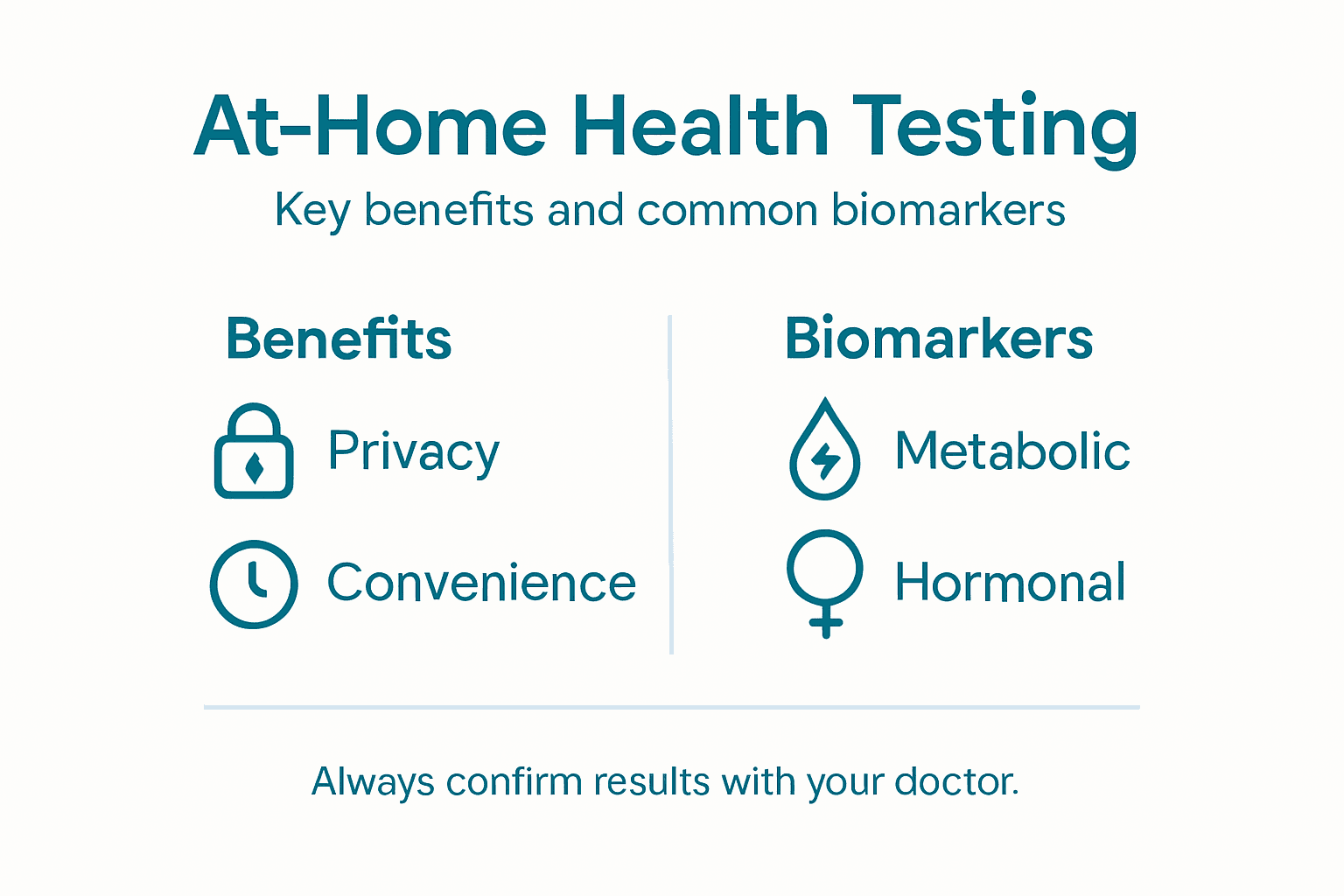
Modern biomarker tests typically analyze various essential health indicators across multiple categories:
Here’s how key types of at-home biomarker tests differ in their main focus and example applications:
| Test Category | Main Focus | Common Uses |
|---|---|---|
| Metabolic Biomarkers | Glucose, cholesterol, insulin | Diabetes risk, heart health |
| Hormonal Biomarkers | Testosterone, estrogen, thyroid | Fertility, mood, metabolism |
| Inflammatory Markers | C-reactive protein, interleukins | Detecting inflammation, autoimmunity |
| Genetic Indicators | Disease predisposition genes | Ancestry, hereditary risks |
| Performance Markers | Muscle recovery, oxidative stress | Fitness tracking, training optimization |
- Metabolic Biomarkers: Glucose levels, insulin sensitivity, cholesterol profiles
- Hormonal Biomarkers: Testosterone, estrogen, cortisol, thyroid function
- Inflammatory Biomarkers: C-reactive protein, interleukins
- Genetic Risk Indicators: Predispositions to specific health conditions
- Performance Biomarkers: Muscle recovery markers, oxidative stress indicators
These comprehensive tests enable individuals to gain deeper insights into their physiological functioning. By tracking specific biological signals, people can detect potential health risks early, understand their metabolic efficiency, and make data-driven lifestyle modifications. The precision of modern metabolic health screening allows for targeted interventions that can significantly improve overall wellness and prevent chronic disease progression.

While at-home biomarker testing offers unprecedented accessibility, it is crucial to interpret results with professional medical guidance. Each biomarker provides a snapshot of a complex biological system, and comprehensive understanding requires expert analysis and contextualization within an individual’s broader health profile.
Pro Tip: Collect and store your biomarker test results systematically, creating a personal health timeline that can help you and your healthcare provider track long-term health trends.
How At-Home Testing Works Step-By-Step
At-home health testing has transformed personal diagnostics by enabling individuals to collect and analyze biological samples with remarkable ease and precision. Home diagnostic procedures have evolved to provide user-friendly, scientifically validated methods for understanding personal health metrics.
The typical at-home testing process follows a structured, straightforward workflow:
- Purchase and Preparation
- Select an FDA-authorized test kit
- Read instructions thoroughly
- Gather all necessary testing materials
- Create a clean, private testing environment
- Sample Collection
- Follow specific instructions for sample type (blood, saliva, urine)
- Use provided collection tools precisely
- Ensure proper sample quantity and quality
- Avoid contamination during collection
- Test Processing
- Apply sample to designated test device
- Follow exact waiting times
- Use included timing mechanisms
- Avoid external disruptions during testing
- Result Interpretation
- Read results according to kit guidelines
- Note result indicators carefully
- Understand potential limitations of the test
- Consider follow-up testing if recommended
Modern sport performance biomarker testing demonstrates how sophisticated these home diagnostic technologies have become. The ability to obtain precise health insights without clinical visits represents a significant advancement in personal health monitoring, empowering individuals to take proactive steps in managing their wellness.
Pro Tip: Always photograph or digitally record your test results for accurate tracking and potential future medical consultations.
Accuracy, Security, and Clinical Validity Standards
Ensuring the highest standards of precision and reliability is paramount in at-home health testing. Diagnostic test validation represents a critical process that safeguards patient health by maintaining rigorous quality control mechanisms.
The accuracy of at-home testing hinges on several key validation parameters:
- Analytical Sensitivity: Detecting minimum detectable quantities of biomarkers
- Specificity: Distinguishing target markers from similar compounds
- Reproducibility: Consistent results across multiple test iterations
- Clinical Validity: Demonstrating meaningful correlation with health outcomes
Regulatory agencies like the FDA and Clinical Laboratory Improvement Amendments (CLIA) mandate stringent verification and validation protocols. These standards ensure that approximately 70% of healthcare decisions based on laboratory tests maintain the highest degree of scientific integrity. Comprehensive testing involves multiple layers of quality assurance, including:
- Initial test development and design review
- Extensive laboratory validation
- Continuous performance monitoring
- Ongoing proficiency testing
Modern at-home testing technologies incorporate advanced methodologies to minimize potential errors. Precision engineering, sophisticated detection algorithms, and robust quality control processes work together to deliver reliable, actionable health insights directly to consumers.
The following table summarizes primary safeguards that protect reliability and privacy in at-home testing:
| Safeguard | Purpose | Impact on Users |
|---|---|---|
| FDA Authorization | Ensures safety and validity | Trust in results |
| Lab Quality Controls | Confirms consistent processing | Accurate health insights |
| User Education Materials | Promotes proper sample collection | Reduces user errors |
| Privacy Protections | Securely manages health data | Protects personal information |
Pro Tip: Always verify that your at-home test kit is FDA-authorized and check the manufacturer’s validation documentation before use.
Risks, Limitations, and Regulatory Landscape
Home diagnostics represent a complex terrain where technological innovation intersects with critical patient safety considerations. Direct-to-consumer testing challenges highlight the intricate balance between accessibility and potential medical risks.
Key risks and limitations in at-home testing include:
- Result Misinterpretation: Potential for incorrect understanding of complex medical data
- False Reassurance: Risk of overlooking serious health conditions
- Limited Clinical Context: Absence of professional medical guidance
- Privacy Concerns: Potential data security vulnerabilities
The regulatory landscape for home testing continues to evolve, with emerging policy frameworks addressing critical oversight challenges. Regulatory bodies are developing risk-based approaches to ensure:
- Accurate test development protocols
- Comprehensive user education
- Robust privacy protections
- Clear communication of test limitations
To mitigate potential risks, consumers must approach at-home testing with informed skepticism. Understanding test capabilities, recognizing potential limitations, and using results as supplementary information rather than definitive medical diagnoses are crucial strategies for responsible health monitoring.
Pro Tip: Always consult a healthcare professional to interpret and contextualize your at-home test results, treating them as informative tools rather than absolute medical verdicts.
Take Control of Your Health with At-Home Biomarker Testing
Understanding your internal health can feel overwhelming especially when faced with complex test results and limited access to professional guidance. This article highlights common challenges like result misinterpretation and the need for precise, actionable insights to optimize wellness. At Biostarks, we address these pain points by offering high-resolution biomarker analysis that covers vitamins, hormones, metabolic markers, and more using advanced Swiss mass spectrometry. Our solutions help you decode your health story with clarity and empower you to make informed decisions about your metabolic function, performance, and longevity.
Discover how easy it is to start your personalized health journey with our Biostarks | Collection.
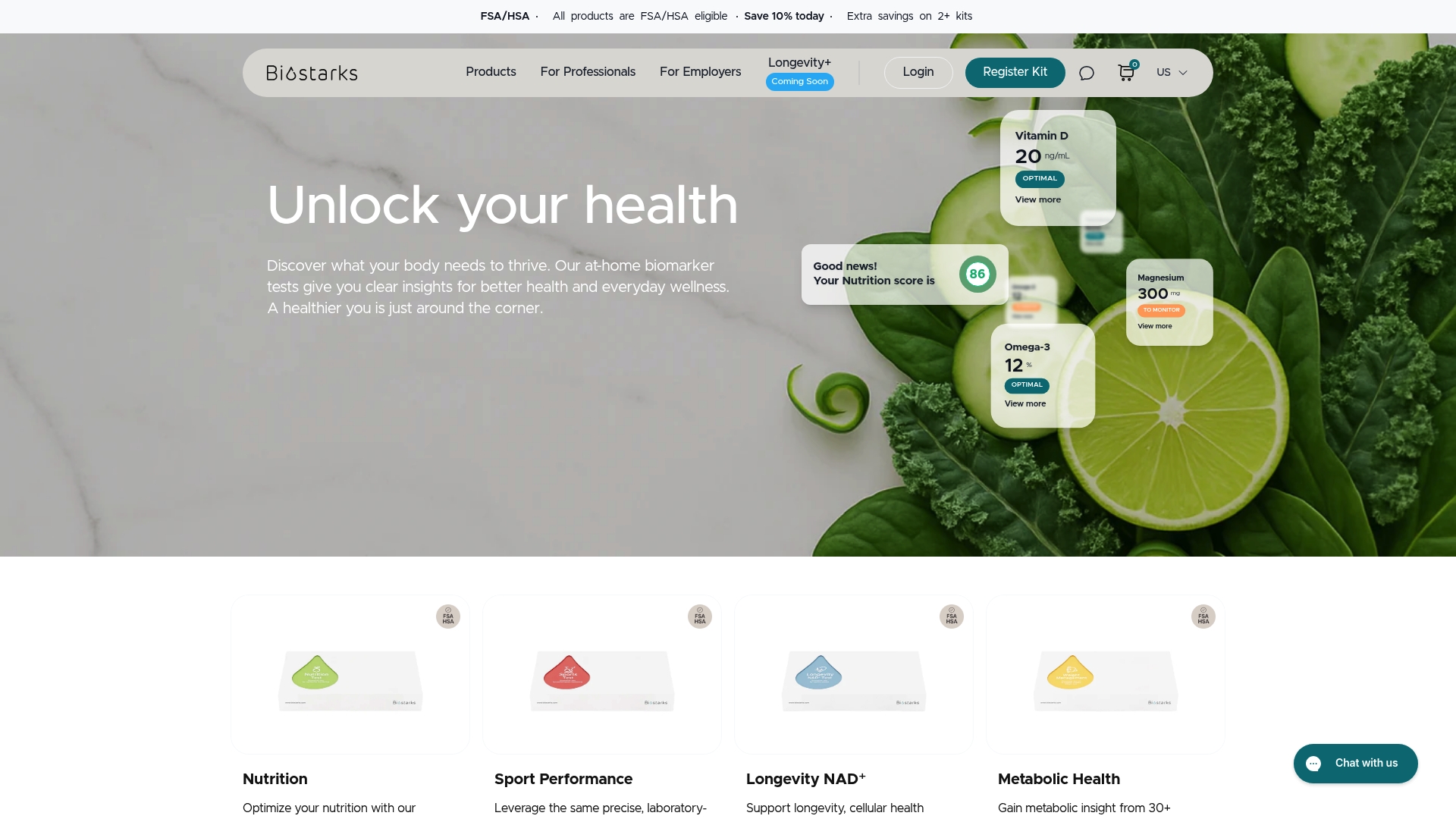
Ready to gain detailed insights into your unique health status and go beyond traditional at-home testing? Visit Biostarks today and explore our premium Biostarks | Collection designed for those serious about health optimization. Take proactive steps now to transform data into real wellness improvements with precision diagnostics built for you.
Frequently Asked Questions
What is at-home health testing?
At-home health testing involves self-administration of tests that allow individuals to collect biological samples, such as blood or saliva, and send them to specialized laboratories for analysis, offering insights into personal health without the need for medical facility visits.
What are the main types of biomarkers tested in at-home health testing?
Key types of biomarkers typically tested include metabolic biomarkers (like glucose and cholesterol), hormonal biomarkers (such as testosterone and estrogen), inflammatory markers (like C-reactive protein), genetic indicators (for disease predispositions), and performance markers for fitness tracking.
How does the at-home testing process work?
The at-home testing process involves purchasing an FDA-authorized test kit, preparing the testing environment, collecting the sample according to specific instructions, processing the test, and then interpreting the results while considering any limitations.
What should I do if I receive an abnormal result from an at-home test?
If you receive an abnormal result from an at-home test, it’s essential to consult a qualified healthcare professional who can provide context to the results, discuss potential implications, and suggest appropriate follow-up actions.
Recommended
- Biostarks | Biomarker Testing for Longevity, Metabolic Health, Nutrition & Weight Loss
- Biostarks | Sport Performance
- Consumer Health Data Privacy Notice | Page
- Biostarks | Nutrition
- Monitor Blood Pressure At Home - Home Remedy Shop
- Understanding Why Test Drinking Water for Safety - Coway Water Purifier


