

TL;DR:
- Raw health data is meaningless without context, requiring personalized interpretation for genuine optimization.
- Using multi-biomarker analysis and tailored testing schedules enhances risk stratification and performance insights.
Most people assume that buying a fitness tracker or ordering a blood panel puts them on the fast track to better health. It doesn’t. Raw numbers without context are just noise. A ferritin reading of 45 ng/mL or a resting heart rate of 58 bpm tells you almost nothing unless you know your baseline, your trend, and what goal you’re actually chasing. The real power of health data comes from understanding what your biomarkers mean relative to your physiology, your history, and your priorities. That’s the shift from data collection to genuine health optimization.
Table of Contents
- Why data matters in health optimization
- Types of health data: From wearables to at-home biomarker testing
- Smart testing: Choosing, baseline setting, and scheduling for meaningful results
- The limits and nuances of biomarker interpretation
- Performance optimization: VO2 max and trending for athletes
- What most health guides miss about using data for wellness
- Bridge your data to real health action
- Frequently asked questions
Key Takeaways
| Point | Details |
|---|---|
| Biomedical data enables insight | Large datasets and multi-modal measurement allow for predictive modeling and risk stratification in health optimization. |
| Sources trade precision for convenience | Wearables and at-home kits are ideal for tracking trends, but laboratory tests provide true baselines. |
| Context is crucial for accuracy | Biomarker tests must be interpreted within clinical and lifestyle context, not used as stand-alone answers. |
| Meaningful change drives action | Scheduled testing and baseline calibration help detect true health improvements instead of day-to-day noise. |
| Privacy must not be overlooked | Raw data from wearables can reveal personal identity, emphasizing the need for robust privacy protections. |
Why data matters in health optimization
Health optimization has moved far beyond “eat well and exercise.” Modern science now uses large, multi-modal datasets to identify who is at risk before symptoms appear, which interventions work for specific physiological profiles, and where to focus prevention resources most efficiently. This isn’t just academic. It directly affects how you should think about your own testing strategy.
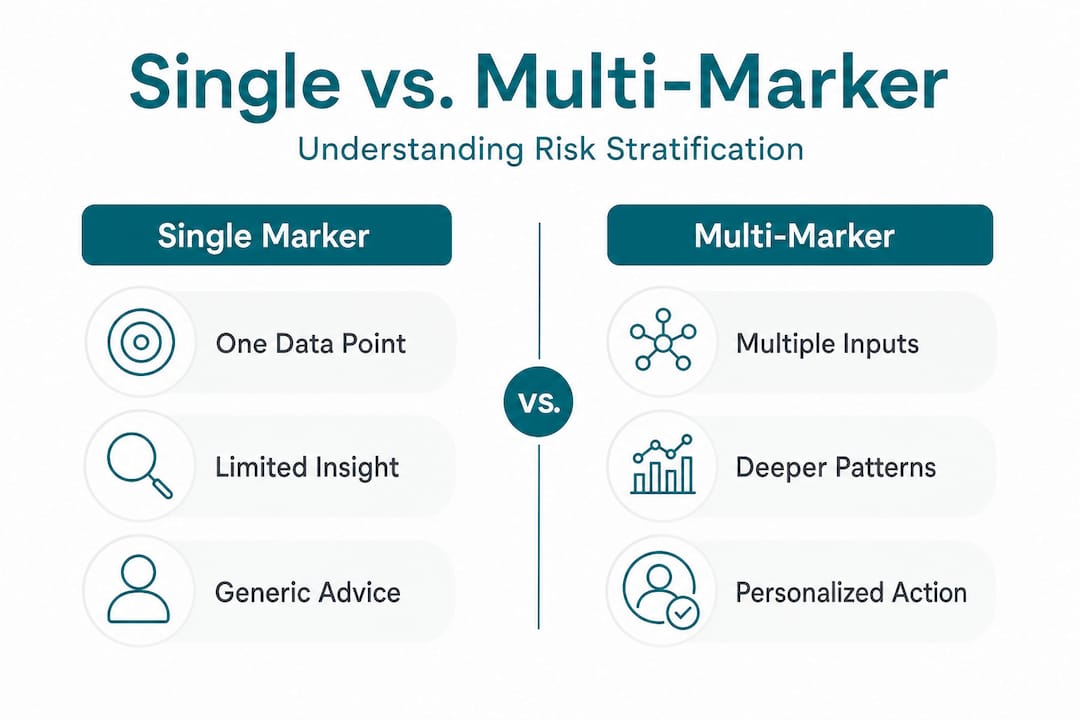
The concept at the center of this shift is risk stratification: using multiple exposures and biomarkers simultaneously to rank individuals by likelihood of a specific health outcome. Think of it as building a personalized risk map rather than a one-size-fits-all health checklist. Large biomedical datasets involving multi-modal measurements have made predictive modeling genuinely practical, allowing researchers and clinicians to personalize prevention and intervention in ways that weren’t possible a decade ago.
The UK Biobank project, with data from roughly 500,000 individuals, is one of the most powerful examples. Researchers have used it to identify biomarker combinations that predict cardiovascular disease, metabolic syndrome, and cognitive decline years before clinical symptoms emerge. What this means for you is that understanding health data at a personalized level isn’t just useful, it’s increasingly the standard for anyone serious about longevity or performance.
Here’s a simplified look at why biomarkers outperform single metrics:
| Optimization goal | Single metric limitation | Multi-biomarker advantage |
|---|---|---|
| Metabolic health | Fasting glucose alone misses insulin resistance | Glucose + insulin + HbA1c + triglycerides together reveal insulin sensitivity trajectory |
| Recovery and performance | Resting heart rate varies with hydration | Cortisol + CRP + ferritin shows true recovery stress load |
| Cardiovascular risk | LDL alone is incomplete | LDL + ApoB + Lp(a) + hs-CRP gives a full atherogenic picture |
The core takeaway: single-point measurements are better than nothing, but patterned, multi-marker analysis is where meaningful risk stratification happens.
Types of health data: From wearables to at-home biomarker testing
Now that we know why data is critical, let’s compare the main sources for collecting personal health insights.
There are two broad categories most health-conscious individuals use: wearables and digital biomarkers (think continuous heart rate monitors, sleep trackers, and GPS-based fitness devices) and laboratory biomarker panels (including at-home blood, urine, or saliva collection kits analyzed in certified labs).

Both have genuine value. But they’re not interchangeable, and confusing their roles is one of the most common mistakes in personal health optimization.
Wearables shine at trend detection. They generate high-frequency data, often thousands of data points per day, which makes them ideal for spotting changes in sleep quality, activity patterns, or resting heart rate over weeks and months. Their weakness is precision. A consumer wrist tracker may estimate VO2 max or SpO2 with acceptable accuracy on average, but wearable validity depends heavily on methodology, evaluation framework, and responsible interpretation. Privacy is another real concern: raw accelerometry data from a single day’s wrist movement can re-identify individuals with up to 96% accuracy, a significant risk most users never consider.
At-home biomarker panels, by contrast, provide snapshot precision. A high-quality mass spectrometry panel gives you exact concentrations of vitamins, hormones, amino acids, lipids, and metabolic markers measured under controlled analytical conditions. The limitation is frequency: you’re not testing every day, so you need to be strategic about timing and context.
“Wearables and digital biomarkers can support health optimization, but their validity depends on methodology, evaluation framework, and responsible interpretation, including privacy protections.”
Key strengths and weaknesses side by side:
- Wearables: High frequency, convenient, great for trend tracking, low per-use cost, privacy risks, lower precision
- At-home lab kits: High precision, clinically validated methods, context-rich snapshots, less frequent, requires deliberate scheduling
- Clinical lab visits: Gold standard accuracy, least convenient, typically reactive rather than proactive
For at-home testing explained properly, the key is knowing which tool answers which question.
Pro Tip: Use your wearable data to spot a trend that raises a question (e.g., sleep quality declining over three weeks), then use an at-home lab panel to find the biochemical answer (e.g., elevated cortisol or low magnesium).
Smart testing: Choosing, baseline setting, and scheduling for meaningful results
Understanding your data sources is vital; the next step is learning how to test and interpret effectively.
Most people who start biomarker testing make one critical error: they choose panels based on what sounds important rather than what maps directly to their goals. A marathon runner and a 45-year-old focused on metabolic health need very different biomarker sets. Getting this right from the start saves money, reduces confusion, and produces genuinely actionable data.
Here’s a practical framework for building a meaningful testing protocol:
- Define your specific goal first. Are you optimizing for athletic recovery, metabolic function, hormonal balance, or long-term cardiovascular health? Each goal has a primary biomarker set that reflects real physiological progress.
- Establish your baseline under consistent conditions. Test at the same time of day (ideally fasted in the morning), after a typical training or lifestyle week, and before introducing any new supplements or dietary changes. This baseline is your reference point for everything that follows.
- Prioritize the markers that directly reflect your target. For metabolic health, that means insulin, glucose, HbA1c, and triglycerides. For inflammation and recovery, focus on CRP, ferritin, and cortisol. For hormonal optimization, start with testosterone, DHEA-S, and thyroid markers.
- Build a retesting schedule that detects real change. Precision diagnostics guidelines recommend repeating tests on a schedule designed to catch meaningful shifts, not day-to-day noise. For most metabolic markers, a 90-day retest cycle aligns with the biological timescales involved. HbA1c, for example, reflects average glucose over roughly three months, so testing it monthly gives you overlapping, confusing data rather than clarity.
- Track your interventions alongside your tests. Note any dietary changes, training shifts, supplement additions, or major stressors between tests. Without this context, even a clear result change is hard to interpret.
Following protocols for at-home testing and improving profiling requires this kind of disciplined structure. It’s the difference between having data and having insight.
Pro Tip: If you see a dramatic result change between tests, don’t immediately adjust your protocol. First, check whether the test conditions were truly consistent. A single high-stress week, illness, or disrupted sleep pattern before collection can shift cortisol, ferritin, and immune markers significantly, producing a false alarm.
The limits and nuances of biomarker interpretation
Once you have testing protocols in place, it’s essential to know the limits and interpret data with expert caution.
No biomarker is perfect. Every test has a sensitivity (how well it catches true positives) and a specificity (how rarely it produces false positives), and these values vary across different brands, collection methods, and cutoff thresholds. What looks like a clear signal can be noise when you factor in analytical variation, biological variability, and the clinical context that a number alone cannot capture.
Expert guidelines consistently emphasize that test accuracy varies across brands and cutoffs, and that interpretation must account for clinical context. The same guideline framework that covers advanced diagnostics applies directly to personal biomarker use: don’t make major health decisions from a single panel result.
Common pitfalls to avoid:
- Interpreting one result in isolation. A low testosterone reading means very little without knowing SHBG levels, free testosterone fraction, and whether the sample was collected at the right time of day.
- Ignoring biological variability. Many hormones fluctuate by 20 to 40% within a single day. A cortisol reading taken at 4 pm is not comparable to one taken at 8 am.
- Over-relying on population reference ranges. Standard lab reference ranges are built on population averages, not optimized health targets. “Normal” doesn’t mean optimal for your physiology or your goals.
- Missing the interaction effects. Markers interact. Low vitamin D combined with high inflammation tells a different story than either marker alone.
“Biomarkers should not be treated as stand-alone answers. Test accuracy varies, and interpretation must always consider clinical context alongside the data.”
For personalized metabolic insights to actually be actionable, you need to read each marker in relation to the full panel, your baseline, and your recent lifestyle context.
Performance optimization: VO2 max and trending for athletes
For athletes and fitness-minded readers, let’s drill down with a popular biomarker-driven performance tool.
VO2 max is the maximum volume of oxygen your body can use during intense exercise. It’s one of the strongest single predictors of long-term cardiovascular health and a direct reflection of aerobic capacity. In elite endurance sport, it separates competitive tiers. For recreational athletes and health-focused individuals, it tracks fitness progression and predicts longevity risk with remarkable accuracy.
Here’s where the lab vs. wearable distinction becomes concrete. Laboratory VO2 max testing involves a graded exercise protocol on a treadmill or cycle ergometer with direct gas exchange measurement. It’s the gold standard for accuracy. Wearable estimates use heart rate variability algorithms and movement data to approximate the same number. They’re convenient and useful for watching your fitness trend climb over a training block, but they can differ from lab measurements by anywhere from 5 to 15% depending on the device and individual.
Key distinctions for athletes:
- Use lab testing to set your true VO2 max baseline, validate training zone thresholds, and calibrate any wearable estimates you’re relying on for daily training
- Use wearable estimates to track directional progress between lab visits, stay motivated during a training block, and catch meaningful drops that might indicate overtraining or illness
- Combine both with metabolic blood markers (ferritin, hemoglobin, testosterone, and cortisol) for a full physiological picture of performance readiness
Convenience and scale from at-home kits and wearables are genuinely valuable for longitudinal tracking, but they trade off precision. Treating your wearable VO2 max as gospel and setting race targets from it is a mistake. Treating it as a directional trend while using lab data as your calibration anchor? That’s smart optimization.
For a full picture of which metabolic markers feed into athletic performance, the story goes well beyond VO2 max alone.
What most health guides miss about using data for wellness
Having seen the practical and technical sides, here’s a perspective built on real-world data-driven health optimization.
The dominant message in the consumer health space right now is: track more, test more, optimize everything. More sensors, more panels, more dashboards. But this advice misses something fundamental. Volume of data is not the bottleneck for most people. Purposeful interpretation is.
We see this pattern constantly. Someone tests 80 biomarkers, receives a report full of numbers in or near normal ranges, feels vaguely reassured, and changes nothing. Or worse, they fixate on one mildly low value and spend months adjusting supplements without ever rechecking the markers that actually map to their real risk profile.
The actual breakthrough comes when you stop asking “what does this number mean?” and start asking “does this number tell me whether my intervention is working?” That reframe turns passive monitoring into active experimentation. It’s the mindset shift that separates people who collect health data from people who actually change their health trajectory.
The wellness optimization checklist approach aligns with this: start with goal clarity, define a small set of primary markers that directly reflect that goal, establish a clean baseline, introduce one change, and retest at the biologically appropriate interval. It sounds simple, but almost nobody does it this systematically.
The other thing most guides miss: expert interpretation multiplies the value of every data point. A good clinician, nutritionist, or sports scientist looking at your panel doesn’t just check whether your numbers fall in range. They look at the pattern, the direction of change, the markers that interact, and the lifestyle context you’ve provided. That layered reading turns a blood report into a real action plan. Data alone doesn’t do that. Context does.
Bridge your data to real health action
Ready to transform your health data insights into concrete progress? Here’s where to start.
Biostarks offers advanced at-home biomarker testing powered by Swiss mass spectrometry, giving you precision-grade data without a clinic visit. Whether you’re an athlete dialing in recovery markers, someone managing metabolic risk, or simply building your first health baseline, the right panel turns your questions into answers. Explore the Pro biomarker tests for comprehensive performance and metabolic profiling, or check the NHS at-home health tests for foundational panels built around evidence-based priorities. Every report is designed to be actionable, not just informational, giving you the context and direction that raw numbers alone never can.
Frequently asked questions
What are the most important biomarkers for health optimization?
The best biomarkers depend entirely on your goal. For metabolic risk and recovery, start with insulin, glucose, HbA1c, CRP, and ferritin, then expand based on what those markers reveal.
Can I rely on at-home biomarker tests for clinical diagnosis?
No. Expert guidelines consistently stress that biomarker accuracy varies by brand and context, and that no single panel result should drive a clinical decision without professional interpretation.
How do wearable devices compare to lab testing for tracking fitness?
Wearables are ideal for tracking directional trends over weeks and months, but lab VO2 max and blood panels provide the accurate baselines you need for serious calibration and goal setting.
How often should I repeat biomarker testing?
Match your retest frequency to the biological timescale of your markers. Most metabolic panels benefit from a 90-day retesting cycle that detects real change rather than daily biological noise.
What privacy concerns exist with wearable health trackers?
Raw wearable data carries a real re-identification risk. PLOS Digital Health research shows that a single day of wrist accelerometry data can identify an individual with up to 96% accuracy, making robust privacy frameworks non-negotiable for any platform handling this data.


