

Navigating at-home hormone testing can feel overwhelming, especially when up to 30% of samples fail due to collection errors. This guide walks you through a proven, evidence-based process to accurately measure your hormone levels and unlock personalized metabolic health insights. You’ll learn exactly how to prepare, collect, interpret, and apply your results with confidence.
Table of Contents
- Introduction To Hormone Analysis And Its Benefits
- Prerequisites For Accurate Hormone Testing
- Step-By-Step Hormone Analysis Procedure
- Interpreting And Applying Hormone Test Results
- Common Mistakes And Troubleshooting Tips
- Expected Timelines, Costs, And Success Metrics
- Comparison Of Hormone Testing Methods And Safety Considerations
- Summary And Next Steps
- Explore Professional Hormone Testing Kits With Biostarks
- FAQ
Key takeaways
| Point | Details |
|---|---|
| Certified kits and proper preparation are essential | Using validated sample collection kits and avoiding hormone-altering substances 48-72 hours before testing ensures accurate results. |
| Mass spectrometry provides superior detection | Advanced lab analysis offers up to 10x greater sensitivity than standard methods for precise hormone quantification. |
| Common timing and contamination errors invalidate results | Following kit instructions carefully and proper sample handling prevents the 30% sample rejection rate. |
| Multiple hormone markers enable personalized optimization | Evaluating hormone panels together rather than isolated markers reveals actionable metabolic health patterns. |
| Testing method choice balances accuracy and convenience | Dried blood spot, saliva, and urine methods each offer distinct tradeoffs in precision, ease, and stability. |
Introduction to hormone analysis and its benefits
Hormone analysis measures specific hormone concentrations in your body to assess health status and identify imbalances. Hormones regulate critical functions including metabolism, energy production, mood, sleep quality, and reproductive health. When these chemical messengers fall out of balance, you may experience fatigue, weight fluctuations, brain fog, or reduced athletic performance.
Personalized hormone data empowers you to make targeted improvements. Athletes optimize training recovery and performance by tracking testosterone and cortisol rhythms. Biohackers fine-tune their metabolic function by monitoring insulin sensitivity and thyroid markers. Health-conscious individuals identify hidden imbalances affecting their energy and longevity goals.
Accurate hormone profiling reveals which specific interventions will work best for your unique biology. Instead of guessing about diet changes or supplement protocols, you gain concrete data showing exactly what your body needs. This precision approach eliminates trial and error, saving time and money while accelerating results.
Key benefits of hormone analysis include:
- Identifying metabolic inefficiencies affecting weight and energy
- Optimizing athletic performance through recovery monitoring
- Detecting early signs of hormonal decline or imbalance
- Personalizing nutrition and lifestyle interventions based on data
- Tracking improvements over time to validate protocol effectiveness
Prerequisites for accurate hormone testing
Successful hormone testing starts with proper preparation and materials. You need certified sample collection kits designed specifically for hormone analysis. These kits include sterile collection devices, preservatives, and detailed instructions validated for accurate results. Reputable providers ensure their kits meet laboratory standards and maintain sample integrity during shipping.

Avoid substances that interfere with hormone levels for 48-72 hours before collection. Medications like corticosteroids, birth control pills, and thyroid replacements directly affect hormone concentrations. Supplements including DHEA, melatonin, and adaptogens also alter readings. Alcohol, caffeine, and intense exercise can temporarily spike or suppress hormone production. Disclose all substances to your testing provider for accurate interpretation.
Timing matters critically for hormone sampling. Cortisol peaks in the morning and declines throughout the day, while testosterone shows similar diurnal patterns. Collecting samples at the wrong time captures atypical levels that misrepresent your baseline status. Most protocols specify morning collection between 7-9 AM for consistency. Menstruating individuals should time collection according to cycle phase for reproductive hormones.
Storage and shipping requirements preserve sample stability. Blood spot cards must air dry completely before sealing to prevent microbial growth. Saliva samples often require refrigeration within hours of collection. Urine specimens need specific preservatives added immediately. Ship samples on the same day or next business day using provided expedited shipping to prevent degradation.
| Sample Type | Accuracy Level | Collection Ease | Stability | Best For |
|---|---|---|---|---|
| Dried Blood Spot | High | Moderate | Excellent | Comprehensive hormone panels |
| Saliva | Moderate | Very Easy | Good | Cortisol rhythm testing |
| Urine | Moderate-High | Easy | Good with preservative | Hormone metabolites |
Step-by-step hormone analysis procedure
Follow this systematic approach to ensure accurate hormone testing from start to finish. Each step builds on the previous one to maintain sample quality and generate reliable results.
-
Prepare your body 48-72 hours before collection by eliminating hormone-interfering substances. Stop non-essential medications after consulting your healthcare provider. Avoid alcohol, limit caffeine intake, and skip intense workouts during this window. Maintain normal sleep patterns and hydration levels.
-
Collect samples using your certified kit according to precise instructions. Wash hands thoroughly and allow them to dry completely. For blood spots, warm hands under running water to improve circulation before finger prick. Fill collection circles completely without smudging. For saliva, avoid eating or drinking 30 minutes prior and collect passive drool without stimulating saliva production. Label all samples immediately with date and time.
-
Store and ship samples under specified conditions without delay. Allow blood spot cards to dry for at least 4 hours at room temperature away from direct sunlight. Place dried samples in provided biohazard bags with desiccant packets. Refrigerate saliva tubes if not shipping same day. Use included prepaid shipping labels and drop samples at designated courier locations within 24 hours of collection.
-
Laboratory analysis uses advanced mass spectrometry for precise hormone quantification. This gold-standard technique offers detection sensitivity up to 10x greater than standard immunoassays. Mass spectrometry directly measures hormone molecules rather than relying on antibody reactions, reducing false positives and capturing low concentrations accurately.
-
Review results with healthcare professionals or expert platforms for personalized insights. Raw hormone values mean little without proper context considering your age, sex, symptoms, and health goals. Comprehensive interpretation evaluates multiple markers together to identify patterns and root causes. Expert guidance translates data into specific nutrition, supplement, lifestyle, and medical interventions.
Pro Tip: Schedule sample collection to align with your target hormone’s circadian rhythm. Cortisol testing works best first thing in the morning, while melatonin should be measured in the evening. This timing captures peak or trough levels most relevant for assessing function.
Interpreting and applying hormone test results
Understanding your hormone panel requires evaluating multiple markers together rather than focusing on isolated values. A single low testosterone reading might seem alarming, but analyzing it alongside cortisol, thyroid hormones, and DHEA reveals whether stress, thyroid dysfunction, or adrenal issues are the root cause. This comprehensive view prevents treating symptoms while missing underlying problems.
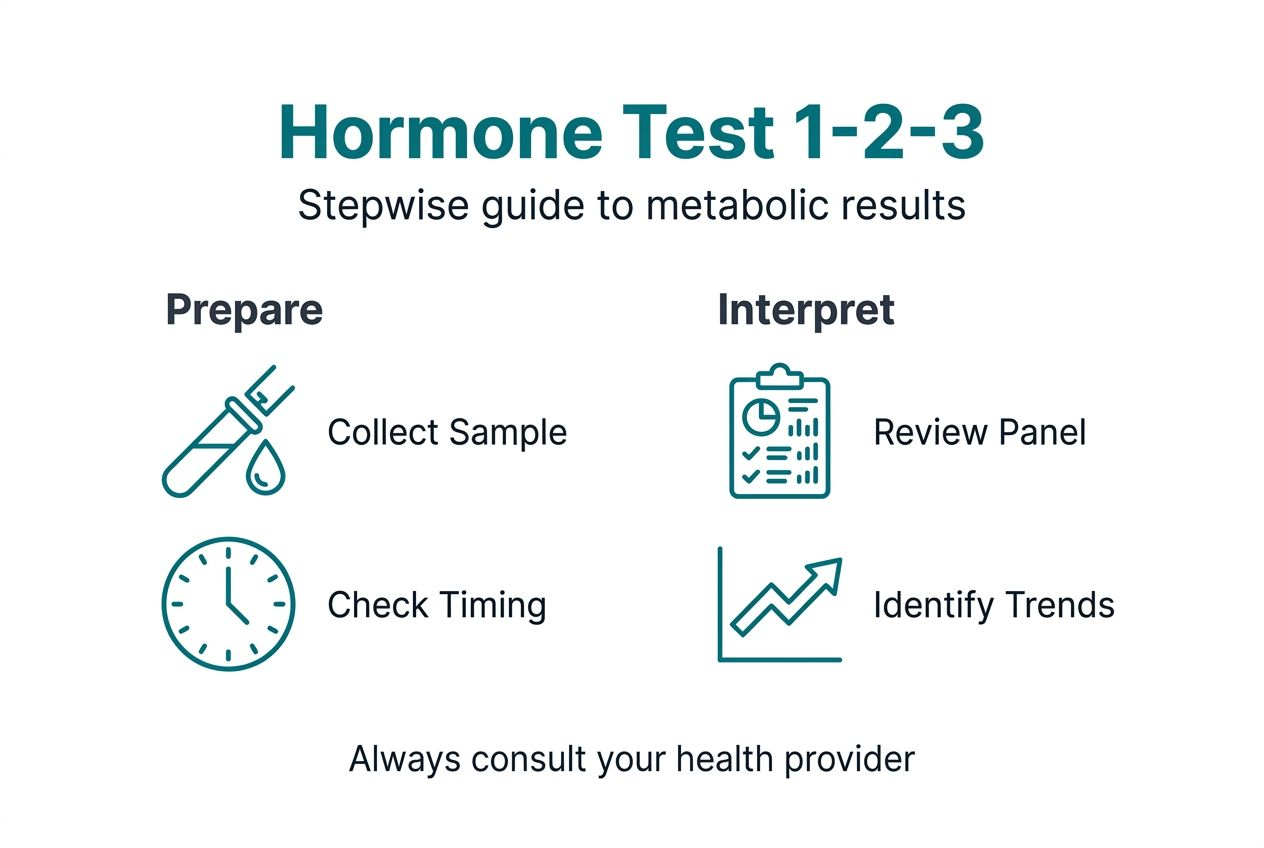
Common metabolic health biomarkers provide actionable insights. Cortisol patterns throughout the day reveal stress resilience and energy regulation. Elevated morning cortisol with afternoon crashes suggests adrenal dysfunction affecting metabolism. Insulin and glucose markers show metabolic flexibility and diabetes risk. Thyroid hormones (TSH, free T3, free T4) govern metabolic rate, body temperature, and energy production. Sex hormones including testosterone, estrogen, and progesterone influence body composition, mood, and vitality.
Translate results into practical lifestyle changes for measurable improvements. High cortisol calls for stress management techniques like meditation, adequate sleep, and reduced caffeine. Low thyroid function responds to selenium and zinc optimization, along with addressing gut health. Suboptimal testosterone benefits from resistance training, sufficient dietary fats, and improved sleep quality. Poor insulin sensitivity improves through carbohydrate timing, increased fiber intake, and regular movement.
Continuous tracking validates your interventions and guides ongoing optimization. Retest every 3-6 months after implementing changes to measure progress objectively. Seeing cortisol normalize or testosterone increase confirms your protocol works. Stagnant markers indicate the need to adjust your approach. This feedback loop accelerates results by eliminating ineffective strategies quickly.
Explore comprehensive resources on ways to track metabolic health naturally and understand the role of biomarkers in health optimization. Deep dive into biomarker interpretation health insights to maximize the value of your testing data.
Key interpretation principles include:
- Compare your values against optimal ranges, not just normal lab ranges
- Look for hormone ratios and patterns rather than isolated numbers
- Consider symptoms alongside lab values for clinical context
- Track trends over time instead of fixating on single test results
- Work with practitioners experienced in functional hormone optimization
Common mistakes and troubleshooting tips
Incorrect timing ranks among the most frequent errors in at-home hormone collection. Collecting cortisol samples in the afternoon instead of morning dramatically alters results, showing artificially low levels that misrepresent your actual stress response. Testosterone measured in the evening appears lower than your true baseline. These timing errors lead to incorrect diagnoses and wasted intervention efforts.
Contamination compromises sample integrity and triggers rejection by laboratories. Touching the inside of collection tubes, using lotions before finger pricks, or exposing samples to moisture introduces foreign substances that interfere with analysis. Food particles in saliva samples from eating too soon before collection skew results. Even microscopic contamination can render expensive tests useless.
Neglecting pre-test preparation guidelines causes systemic errors. Continuing hormone-influencing medications or supplements right up until collection day produces readings that don’t reflect your true baseline status. Intense exercise 24 hours before testing temporarily alters testosterone and cortisol. Poor sleep the night before collection affects virtually all hormone levels measured.
The combined impact of these mistakes explains why up to 30% of samples are discarded due to improper collection errors. This high failure rate delays results, wastes money, and frustrates users who must retest. Following protocols precisely prevents these issues.
Troubleshooting strategies to ensure success:
- Set phone reminders for prep timeline, collection timing, and shipping deadlines
- Prepare your collection area in advance with all materials organized
- Read complete instructions twice before starting the collection process
- Double-check sample labels immediately after collection
- Document your collection time, medications, and any deviations from protocol
- Disclose ALL supplements, medications, and health conditions to testing provider
Pro Tip: Create a collection day checklist covering each step from hand washing through sample packaging. Physical checklists reduce errors by up to 40% compared to relying on memory alone. Include reminder items like removing jewelry that might contaminate samples.
Expected timelines, costs, and success metrics
Typical laboratory turnaround for hormone panels ranges from 5-10 business days after sample receipt. This timeline includes sample processing, mass spectrometry analysis, quality control verification, and report generation. Specialized hormone tests requiring additional analysis may take up to 14 days. Expedited processing is sometimes available for urgent clinical needs at additional cost.
Cost for comprehensive hormone panels typically ranges between $150-$400 depending on the number of markers analyzed. Basic cortisol or testosterone tests start around $100-$150. Complete metabolic hormone panels including thyroid, adrenal, and sex hormones cost $300-$400. Insurance rarely covers at-home testing, so expect out-of-pocket payment. The investment pays off through precise data that eliminates guesswork in health optimization.
Success metrics help you evaluate testing quality and health outcomes. First, you should receive valid, uncontaminated results that weren’t rejected for collection errors. Second, your panel should include multiple relevant hormone markers, not just one or two isolated values. Third, results should come with reference ranges and interpretation guidance, not just raw numbers.
Measurable health improvements validate your testing investment. Within 3 months of implementing data-driven interventions, you should see 20-25% improvement in off-range biomarkers. Energy levels, sleep quality, and body composition show noticeable positive changes. Athletic performance metrics like recovery time and strength gains accelerate. These tangible improvements confirm your hormone optimization strategy works.
| Timeline Phase | Duration | Cost Range | Expected Outcome |
|---|---|---|---|
| Preparation | 2-3 days | $0 | Body ready for accurate sampling |
| Sample Collection | 15-30 minutes | Included in kit | Properly collected specimens |
| Lab Analysis | 5-10 business days | $150-$400 | Comprehensive hormone panel results |
| Initial Intervention | 3 months | Varies | 20-25% biomarker improvement |
| Follow-up Testing | Ongoing every 3-6 months | $150-$400 per test | Validated progress and optimization |
Comparison of hormone testing methods and safety considerations
Saliva testing offers the easiest, most non-invasive collection method for measuring free hormone levels. You simply collect passive drool in tubes without needles or blood. However, saliva shows 15-20% less accuracy compared to dried blood spot methods. Oral health significantly impacts reliability, with accuracy reduced by up to 25% in individuals with gum disease or recent dental work. Food contamination easily compromises samples if timing protocols aren’t followed strictly.
Dried blood spot testing provides the gold standard for at-home hormone analysis. A simple finger prick produces capillary blood absorbed onto specialized filter paper. This method offers superior stability, allowing samples to remain viable for weeks at room temperature. The dried matrix protects hormones from degradation during shipping. Accuracy matches venous blood draws for most hormone markers. The slight learning curve for proper finger prick technique is easily overcome with practice.
Urine testing measures hormone metabolites rather than active hormones, providing insights into how your body processes and eliminates these compounds. This method works well for tracking estrogen metabolism patterns and cortisol throughout the day. Collection requires timing multiple samples or 24-hour pooling. Some invasiveness exists compared to saliva, and preservatives must be added immediately to prevent bacterial growth that alters results.
Safety considerations include sample chain of custody and data privacy protections. Reputable laboratories maintain strict tracking of specimens from receipt through analysis to disposal. Samples are handled only by certified technicians in regulated facilities. Your personal health data is protected under HIPAA regulations or equivalent international privacy laws. Look for labs with CLIA certification and CAP accreditation ensuring quality standards.
| Testing Method | Accuracy | Convenience | Sample Stability | Limitations | Best Use Cases |
|---|---|---|---|---|---|
| Dried Blood Spot | High (95-98%) | Moderate | Excellent (weeks) | Requires finger prick skill | Comprehensive hormone panels, testosterone, thyroid |
| Saliva | Moderate (80-85%) | Very High | Good (days) | Affected by oral health, food | Cortisol rhythm, DHEA |
| Urine | Moderate-High (85-92%) | Moderate | Good with preservative | Requires timing, metabolite focus | Estrogen metabolism, 24-hour cortisol |
Summary and next steps
Accurate hormone analysis empowers you to optimize metabolic health through personalized data rather than guesswork. Success requires proper preparation including avoiding hormone-interfering substances for 48-72 hours before collection. Certified sample kits and precise timing ensure valid results. Advanced mass spectrometry laboratory analysis provides sensitivity up to 10x greater than standard methods, detecting subtle hormone imbalances missed by conventional testing.
Avoid the common mistakes that cause up to 30% sample rejection rates. Follow kit instructions meticulously, especially regarding collection timing and storage conditions. Disclose all medications and supplements to your testing provider for accurate interpretation. Proper technique prevents frustrating delays and wasted money on retesting.
Integrate hormone testing into your personalized health routine for continuous metabolic optimization. Retest every 3-6 months to validate interventions and track measurable improvements. Pair hormone data with lifestyle modifications in nutrition, exercise, sleep, and stress management. This precision approach accelerates results by targeting your unique biology.
Take action today by scheduling your hormone test with a trusted provider. The insights you gain will transform your approach to health optimization, eliminating trial and error while accelerating your progress toward peak metabolic function and vitality.
Key action steps:
- Choose a certified testing provider with advanced laboratory capabilities
- Schedule your test timing around hormone circadian rhythms
- Prepare your body by eliminating interfering substances 48-72 hours prior
- Follow collection protocols precisely to ensure valid results
- Work with experts to interpret results and implement targeted interventions
Explore professional hormone testing kits with Biostarks
Biostarks offers professional hormone testing kits that combine Swiss engineering precision with user-friendly at-home collection. Each kit includes certified materials analyzed using advanced mass spectrometry for accuracy up to 10x greater than standard methods. Clear instructions guide you through proper sample collection, storage, and shipping to ensure valid results.
Expert resources support your testing journey from preparation through result interpretation. Detailed guides help you avoid the common errors that cause sample rejection. Comprehensive reports present your hormone levels with optimal reference ranges and personalized insights. Using a trusted provider reduces risk while ensuring timely, reliable data you can act on immediately.
Pro Tip: Pair your hormone test with metabolic health tracking to gain holistic insights into how your biomarkers interact. Combining hormone data with other metabolic markers reveals root causes and optimizes intervention strategies.
Biostarks maintains strict quality and privacy standards, ensuring your health data remains secure while delivering precision insights that empower your wellness journey. Start optimizing your metabolic health today by exploring Biostarks hormone testing solutions designed for health-conscious individuals seeking measurable results.
FAQ
What types of hormone samples are best for accurate testing?
Dried blood spot samples generally offer the best accuracy and stability for hormone testing at home. This method provides precision comparable to venous blood draws while maintaining sample integrity for weeks during shipping. Blood spots work well for comprehensive hormone panels including thyroid, sex hormones, and cortisol.
How can I avoid common errors during at-home hormone collection?
Follow the kit instructions carefully, especially regarding timing of sample collection and storage conditions. Avoid hormone-interfering substances for 48-72 hours before sampling. Disclose all medications and supplements to your provider. Set reminders for collection timing and prepare your workspace in advance to prevent contamination.
How long does it usually take to get hormone test results?
Most advanced laboratories return hormone panel results within 5 to 10 business days after receiving your samples. Turnaround may vary depending on the provider, testing method, and number of markers analyzed. Specialized tests requiring additional quality control may take up to 14 days.
Are at-home hormone tests safe and private?
Reputable at-home hormone test kits comply with strict safety and privacy standards, ensuring secure sample handling and data protection. Always verify that your provider follows established chain of custody protocols and maintains CLIA certification or equivalent accreditation. Your health information should be protected under HIPAA or international privacy regulations.


