

TL;DR:
- Minerals are essential for regulating body systems, supporting enzyme activity, and maintaining skeletal health. Many people suffer from hidden deficiencies that can cause chronic health issues, yet testing and personalized correction are often overlooked. Using food sources and biomarker-guided assessments can optimize mineral balance, improving overall health and resilience.
Minerals are not the dramatic headliners of nutrition science. That role goes to superfoods, protein shakes, and vitamin C. But the role of minerals in health is arguably more foundational than any of them. These inorganic compounds regulate your heartbeat, activate enzymes that power every metabolic reaction, build the skeleton that holds you upright, and keep your immune system sharp enough to fight off infection. Most people cannot name more than three or four minerals they need, and fewer still know whether they are getting enough. That gap between awareness and reality is where chronic, invisible health problems take root.
Table of Contents
- Key Takeaways
- The role of minerals in health: core biological functions
- How mineral deficiencies undermine health worldwide
- Getting minerals from food and supplements
- Precision diagnostics and personalized mineral nutrition
- Practical steps for maintaining mineral balance
- My perspective on minerals and precision health
- Know your mineral status with Biostarks
- FAQ
Key Takeaways
| Point | Details |
|---|---|
| Minerals run core body systems | They regulate nerve transmission, muscle contraction, enzyme function, and hormone production simultaneously. |
| Deficiency is more common than assumed | Over 2 billion people globally have at least one mineral deficiency, often without obvious symptoms. |
| Food beats supplements for most people | Whole-food mineral sources carry lower risk and better bioavailability than isolated supplements for the general population. |
| Mineral interactions matter | High-dose zinc blocks copper absorption; excess calcium competes with iron, making unsupervised supplementation genuinely risky. |
| Biomarker testing reveals what diet cannot | Serum and functional markers give you an accurate picture of your actual mineral status, not just what you ate last week. |
The role of minerals in health: core biological functions
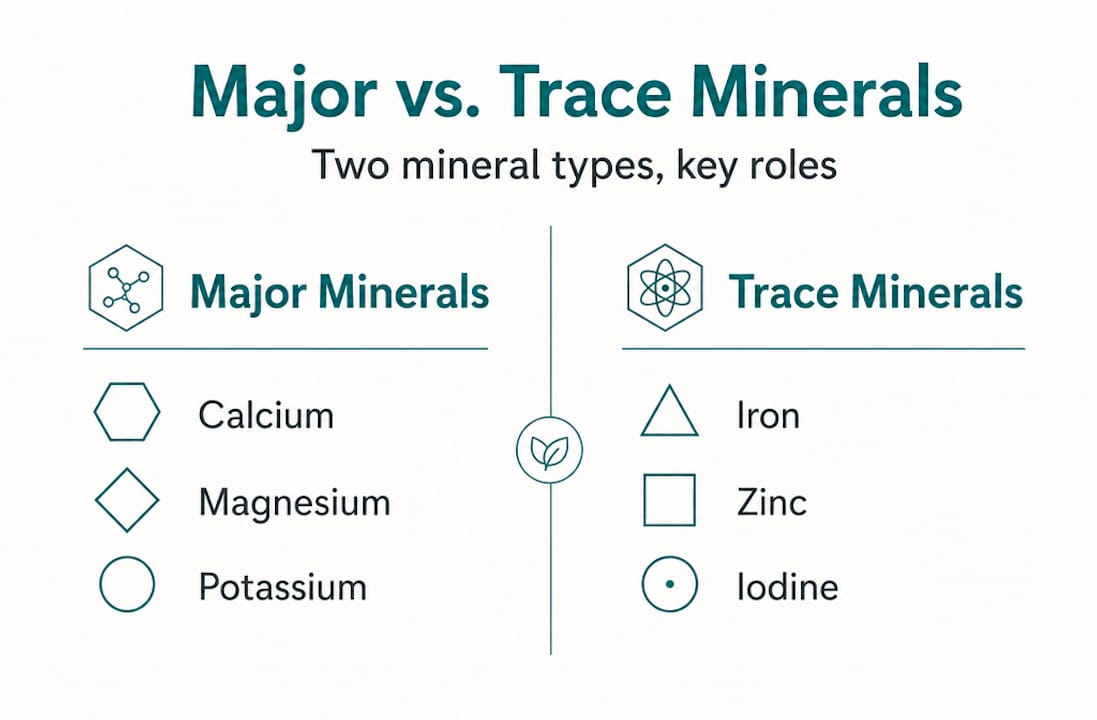
Think of major minerals as the structural engineers of the body and trace minerals as the precision technicians. Both categories are non-negotiable.
Calcium and phosphorus form the crystalline matrix of bone and dental enamel. About 99% of your body’s calcium lives in bone tissue, where it also serves as a reservoir that blood draws from when dietary intake drops. Phosphorus partners with calcium in bone mineralization but also anchors DNA and RNA structure, meaning every cell division depends on it.
Beyond structure, minerals operate as the switches and catalysts that make biochemistry possible:
- Magnesium acts as a cofactor in over 300 enzymatic reactions, including ATP synthesis. Without adequate magnesium, your cells cannot efficiently generate energy.
- Zinc is required for the activity of more than 200 enzymes and is indispensable for wound healing, DNA repair, and immune cell development.
- Iron sits at the center of hemoglobin, the molecule that transports oxygen from your lungs to every tissue in your body.
- Potassium and sodium maintain the electrochemical gradients across cell membranes that make nerve impulses and muscle contractions possible.
- Iodine is the raw material for thyroid hormones, which regulate metabolic rate, body temperature, and brain development in fetuses and infants.
- Selenium anchors antioxidant enzymes like glutathione peroxidase, protecting cells from oxidative damage.
The distinction between major and trace minerals is purely about quantity, not importance. Your body needs calcium in gram quantities daily. It needs selenium in micrograms. But a selenium deficit still crashes your antioxidant defenses just as decisively as a calcium deficit weakens bone.
Pro Tip: When reading a nutrition label, pay attention to minerals listed as a percentage of daily value. Reaching 100% across key minerals through food alone consistently across the week is harder than most people expect, particularly for magnesium, zinc, and potassium.
How mineral deficiencies undermine health worldwide
The scale of mineral deficiency is striking. Hidden hunger refers to micronutrient deficits that exist without visible signs of starvation. Iron deficiency anemia alone affects close to 30% of the global population. Separately, roughly 31% of people fail to meet recommended magnesium intake levels, a figure that holds even in high-income countries with abundant food access.
What makes subclinical deficiencies particularly insidious is the gradual nature of their symptoms. You do not feel iron-deficient the morning after a low-iron meal. You feel it months later as fatigue that does not resolve with sleep, as reduced cognitive sharpness, as a heart that races too easily on a flight of stairs.
“The most dangerous deficiencies are the ones that feel like something else entirely. Fatigue gets blamed on stress. Muscle cramps get blamed on dehydration. Poor focus gets blamed on poor sleep. Meanwhile, a correctable mineral gap goes undetected for years.”
The populations carrying the highest risk deserve specific attention:
- Children face developmental consequences from iron, zinc, and iodine deficits that affect cognition and growth, often irreversibly if unaddressed early.
- Pregnant women have dramatically elevated iron and calcium needs. Even marginal shortfalls raise the risk of preterm birth and impaired fetal bone development.
- Older adults absorb calcium and magnesium less efficiently as gut function declines with age, compounding skeletal and neuromuscular risk.
- Endurance athletes lose significant sodium, potassium, magnesium, and zinc through sweat, creating ongoing depletion that standard diets frequently do not replace.
Despite decades of global nutrition programs, iron deficiency remains a persistent, unresolved challenge even as iodine and vitamin A deficiencies have improved. This reflects how complex the nutritional gap truly is, and why population-level interventions rarely replace individual assessment.
Getting minerals from food and supplements
What whole foods actually deliver
The richest dietary mineral sources are not exotic or expensive. Leafy greens like spinach and Swiss chard supply magnesium and calcium. Red meat and shellfish provide iron and zinc in their most bioavailable forms. Dairy delivers calcium with solid absorption rates. Legumes, nuts, and seeds cover magnesium, zinc, and phosphorus. Seafood, particularly oysters, is the single richest zinc source in the human diet.

| Mineral | Top food sources | Key absorption factor |
|---|---|---|
| Iron | Red meat, lentils, spinach | Vitamin C increases non-heme absorption |
| Magnesium | Pumpkin seeds, dark chocolate, black beans | Phytates in grains reduce absorption |
| Zinc | Oysters, beef, chickpeas | Animal sources absorbed 2x better than plant |
| Calcium | Dairy, sardines, kale | Vitamin D is required for intestinal uptake |
| Iodine | Seaweed, fish, iodized salt | Goitrogens in raw cruciferous vegetables interfere |
Whole-food mineral sources are consistently linked to lower risk of heart disease and cancer in large-scale studies. The same benefits do not reliably transfer to isolated mineral supplements in populations without confirmed deficiency. This is not a philosophical preference for “natural” sources. It is a practical recognition that food delivers minerals alongside fiber, phytonutrients, and cofactors that influence how those minerals are absorbed and used.
When supplements become necessary and the risks to know
Supplements have a legitimate place, but that place is narrower than supplement marketing suggests. Zinc supplementation genuinely helps people with confirmed deficiency. For everyone else, high-dose zinc above 5 mg per day over extended periods causes nausea, dizziness, and, critically, inhibits copper absorption, which can produce a secondary copper deficiency.
Tolerable Upper Intake Levels exist precisely to define where benefit ends and harm begins. The UL for iron sits at 45 mg per day for adults, roughly 5 times the RDA for men. For supplemental magnesium, doses above 350 mg per day frequently cause diarrhea, yet the same amount consumed through food carries no such risk. The form of intake changes the physiology.
Pro Tip: If you take multiple mineral supplements, stagger calcium and iron supplements by at least two hours. Calcium actively competes with iron for absorption at the gut level, and taking them together can cut iron absorption significantly.
Precision diagnostics and personalized mineral nutrition
Dietary recall has a fundamental limitation: it tells you what went into your mouth, not what made it into your cells. Absorption rates vary based on gut health, stress levels, competing dietary compounds, and genetic factors affecting transporter proteins. Two people eating identical diets can have meaningfully different mineral status.
This is where serum biomarker testing changes the clinical picture. Markers like serum ferritin (a reliable proxy for total iron stores), red blood cell magnesium (more informative than serum magnesium for intracellular status), and urinary iodine excretion give a functionally accurate view of mineral status rather than an estimated intake view.
The practical advantages of biomarker-guided protocols include:
- Identifying deficiencies before they become symptomatic, allowing earlier correction
- Confirming true deficiency before prescribing supplements, which avoids unnecessary mineral load and interaction risks
- Tracking restoration progress over time, because correcting iron deficiency takes approximately six months of consistent supplementation even after red blood cell production improves within the first two weeks
- Revealing imbalances created by existing supplement regimens that feel intuitively healthy but are biochemically disruptive
The move toward precision mineral nutrition reflects a broader shift in how proactive health management works. One-size-fits-all supplementation advice assumes everyone shares the same absorption profile, lifestyle, and starting point. None of those assumptions hold up at the individual level.
Practical steps for maintaining mineral balance
Maintaining optimal mineral status does not require obsessive tracking or expensive protocols. It requires consistent, informed habits applied across time.
- Prioritize mineral-dense whole foods daily. Build meals around leafy greens, legumes, lean meat, fish, nuts, seeds, and dairy. These foods collectively cover the widest range of essential minerals for health without requiring supplementation for most healthy adults.
- Get a baseline mineral assessment. Before adding any mineral supplement to your routine, know your actual status. Testing serum ferritin, magnesium, zinc, and iodine at least once gives you a real foundation for decisions rather than educated guessing.
- Respect mineral interactions. Never casually combine high-dose calcium, iron, zinc, and magnesium supplements without understanding how they compete. Spread timing throughout the day if multiple minerals are necessary.
- Account for lifestyle factors. Heavy exercise increases sweat losses of sodium, potassium, and magnesium. Chronic psychological stress depletes magnesium faster through elevated urinary excretion. These variables shift your requirements beyond standard RDA figures.
- Retest after correcting a deficiency. Symptoms improving does not mean stores are fully restored. Full biochemical recovery from iron deficiency takes roughly six months. Testing confirms when repletion is complete and supplementation can safely be reduced or stopped.
Pro Tip: Cooking in a cast iron skillet meaningfully increases the iron content of acidic foods like tomato sauce. It is a simple, practical way to raise dietary iron without supplements.
My perspective on minerals and precision health
I have watched the nutrition conversation cycle through macros, intermittent fasting, and various supplement trends for years. What strikes me is how rarely minerals get serious attention until something goes visibly wrong. People discover their ferritin is low after months of unexplained fatigue. They find out their magnesium is inadequate when muscle cramps become chronic. The deficiency had to announce itself loudly before anyone looked.
In my experience, the most underappreciated concept in mineral nutrition is the gap between adequate and optimal. Serum levels can sit within the reference range and still be nowhere near the level where cognitive performance, athletic recovery, and immune resilience are fully supported. Reference ranges are built on population averages, not on what your body specifically needs to operate at its best.
I also think the supplement industry has done real damage by making people believe that supplementing more is inherently safer than supplementing less. The mineral competition data is unambiguous. Excess zinc impairs copper. Excess calcium competes with iron. These are not theoretical concerns. They show up in bloodwork when people take high doses of multiple minerals without testing.
What has actually worked in practice is pairing real dietary quality with periodic biomarker measurement. You get data on what is actually happening in your body, not what should theoretically be happening based on a food diary. That combination of food-first philosophy and biomarker-guided micronutrient correction is where mineral health optimization genuinely lives.
— Romain
Know your mineral status with Biostarks
Most people are managing their mineral health on assumptions. Biostarks gives you something better: precise, validated data from advanced Swiss mass spectrometry analysis performed on a sample you collect at home.

Biostarks tests a wide panel of biomarkers, including serum ferritin, magnesium, zinc, and other key minerals, alongside vitamins, hormones, and metabolic markers. The result is a personalized health report that shows exactly where your mineral status stands and where to focus. Whether you are managing fatigue, optimizing athletic performance, or simply building a proactive health picture, Biostarks turns complex lab results into clear, specific guidance. Explore what data-driven mineral health management looks like at Biostarks.
FAQ
What is the main role of minerals in the human body?
Minerals support bone structure, enzyme activation, nerve transmission, muscle function, hormone production, and immune response. Their functions span virtually every system in the body simultaneously.
Which mineral deficiencies are most common worldwide?
Iron deficiency is the most widespread, affecting nearly 30% of the global population. Magnesium, zinc, and iodine deficiencies are also highly prevalent, including in high-income countries.
Are mineral supplements safe to take without testing first?
Supplementing without confirmed deficiency carries real risks, particularly because minerals compete for absorption. High-dose zinc impairs copper status; excess calcium reduces iron absorption. Testing first identifies what you actually need.
How long does it take to correct a mineral deficiency?
It depends on the mineral and the severity of the deficit. For iron deficiency anemia, symptom improvement can begin within days, but full store restoration typically takes approximately six months of consistent supplementation.
Is it better to get minerals from food or supplements?
For most people without confirmed deficiency, whole-food sources are preferable. Whole-food mineral intake is linked to lower chronic disease risk in a way that isolated supplement use in non-deficient populations has not demonstrated.
This content is for educational purposes only and does not constitute medical advice. Always consult with a healthcare professional before making changes to your health regimen.


