

You check the label, count the calories, and think you’re on track. But research shows over 60% of people underestimate serving sizes, leading to major miscalculations in nutrient intake. Nutrition panels offer standardized data to guide your food choices, yet many consumers misread them daily. This guide clarifies how to interpret these labels effectively, empowering you to optimize your diet and fitness goals with confidence.
Table of Contents
- Introduction To Nutrition Panels
- Key Components Of A Nutrition Panel
- How To Correctly Interpret Nutrition Panels
- Common Misconceptions And Errors With Nutrition Panels
- Comparison Of Global Nutrition Labeling Standards
- The Role Of Nutrition Panels In Health And Fitness Optimization
- Limitations And Edge Cases Of Nutrition Panels
- Practical Tips For Using Nutrition Panels Effectively
- Optimize Your Nutrition With Biomarker Insights
- FAQ
Key Takeaways
| Point | Details |
|---|---|
| Nutrition panels are standardized labels | They present key nutrient data and serving sizes required by regulations like FDA and EU FIC. |
| Calories, macros, micros, and % Daily Values inform choices | These metrics guide dietary decisions but don’t reflect individual metabolic needs. |
| Misinterpretation of serving sizes is widespread | Over 60% underestimate portions, affecting dietary accuracy and health outcomes. |
| Global labeling standards vary | US, EU, and Canadian formats differ, influencing how consumers understand nutrition info. |
| Panels have limitations without biomarker data | They lack bioavailability and personalized metabolic context for true optimization. |
Introduction to Nutrition Panels
A nutrition panel is a standardized label on packaged foods listing predefined nutrient information per serving. Mandated by regulations such as the U.S. FDA and EU Food Information to Consumers, these labels ensure consistent disclosure for consumer protection. They typically present:
- Calories per serving
- Macronutrients including total fat, protein, and carbohydrates
- Select micronutrients like vitamins and minerals
- % Daily Values based on a 2000 calorie diet
- Serving size and servings per container
Format and required nutrients vary slightly by region, but all serve the same purpose: empowering you to make informed dietary and health decisions through transparent nutrient disclosure. Understanding these labels is the first step toward taking control of your nutrition.
Key Components of a Nutrition Panel
Every nutrition panel contains critical data points that shape your dietary choices. Knowing what each component means helps you decode the numbers effectively.
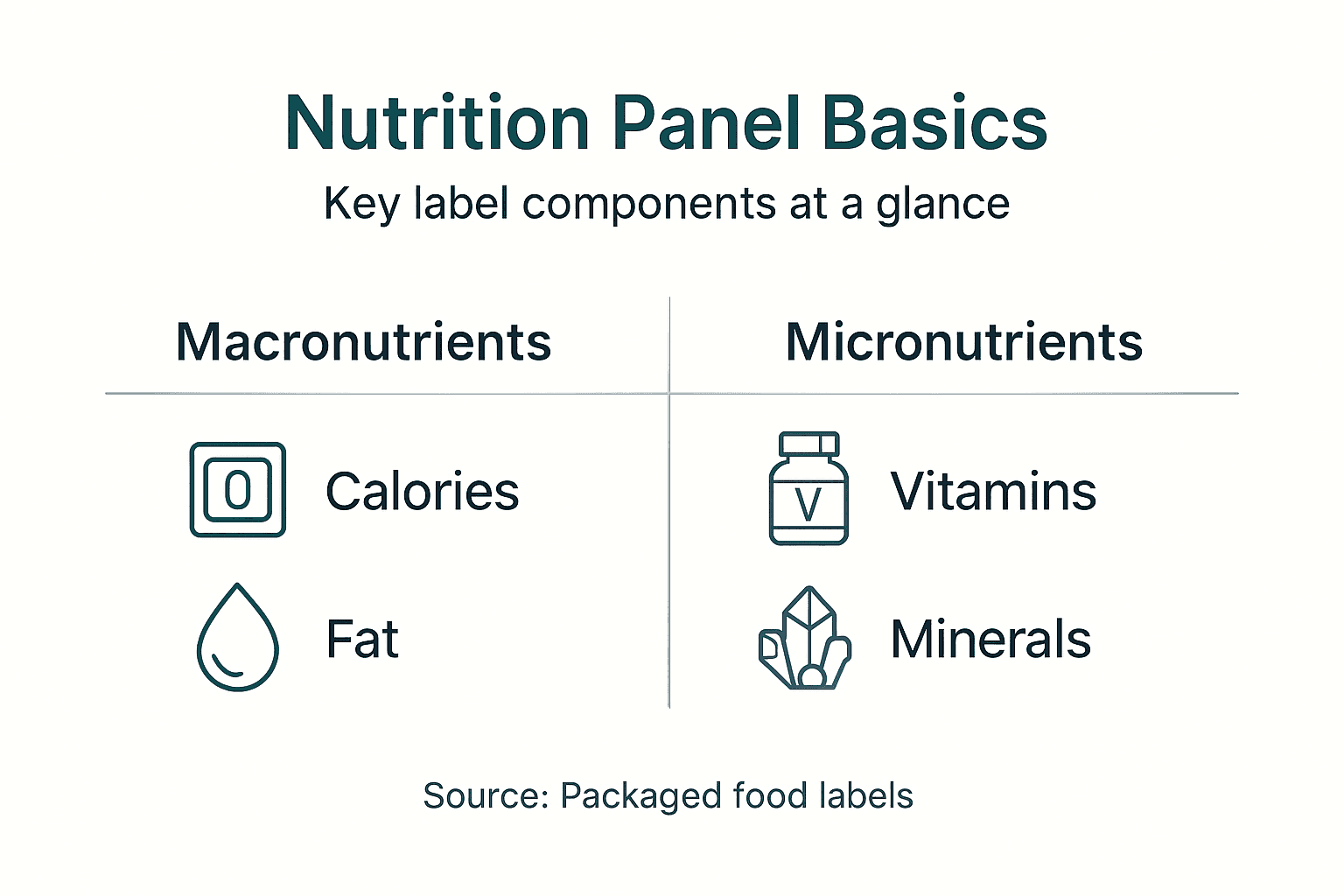
Calories indicate energy per serving but remain estimates. They don’t account for individual metabolic differences or how your body absorbs nutrients. Serving size affects all nutrient amounts listed, so you must compare what’s on the label to what you actually consume.
Macronutrients break down into total fat, protein, and total carbohydrates. Fat includes saturated, trans, and sometimes polyunsaturated or monounsaturated types. Carbohydrates show fiber and sugars separately, which matters for blood sugar management and satiety.
Micronutrients listed typically include vitamins like A, C, D, and minerals such as calcium and iron. These appear as % Daily Value relative to a 2000 kcal diet, helping you gauge whether a food contributes meaningfully to your daily needs.
% Daily Values simplify comparison across products, guiding nutritional balance. A 5% DV is low, while 20% or more is high for a given nutrient. However, panels do not show nutrient bioavailability or interactions, which can affect how well your body uses these nutrients.
Without this context, you’re working with incomplete information. That’s why understanding the numbers on the label is just the beginning.
How to Correctly Interpret Nutrition Panels
Reading a nutrition panel correctly requires more than glancing at calorie counts. Follow this step by step approach to extract maximum value:
- Check serving size and servings per container first. This tells you how much of the package equals one serving.
- Examine calories and macronutrients. Note whether the amounts align with your daily targets for fat, protein, and carbs.
- Use % Daily Values to assess nutrient sufficiency. Aim for high %DV in fiber, vitamins, and minerals you need more of.
- Consider nutrient quality beyond quantity. Not all fats or carbs are equal; focus on unsaturated fats and complex carbs.
- Account for label format differences. FDA labels differ from EU formats, so adapt your reading approach based on region.
Always scale nutrient amounts when you eat multiple servings. If a package contains two servings but you consume the whole thing, double every number on the panel. Over 60% of consumers underestimate serving size, affecting calorie and nutrient intake calculations.
Remember that % Daily Values are general guides, not personalized targets. Your needs may differ based on age, activity level, and metabolic health. Front of package labeling offers quick summaries, but always check the full panel for detailed info.
Pro Tip: Cross reference panel data with personal biomarker interpretation to understand how the nutrients you consume affect your internal health markers for true dietary relevance.
Common Misconceptions and Errors with Nutrition Panels
Many consumers fall into predictable traps when reading nutrition labels, leading to dietary missteps.
Calories on labels are estimates and don’t reflect individual metabolic differences. Your body may extract more or less energy depending on gut health, enzyme activity, and nutrient bioavailability. Nutrition labels can vary by up to 20% from actual nutrient content due to testing methods and natural food variability.

Focusing only on calories ignores nutrient quality. A 200 calorie snack of almonds delivers healthy fats, protein, and micronutrients, while a 200 calorie candy bar offers mostly sugar and little nutritional value. The calorie count looks the same, but the health impact differs drastically.
Consumers often overlook micronutrient info beyond common vitamins and minerals, missing critical elements for metabolic health and athletic performance optimization. Trace minerals like selenium or magnesium may not always appear but play vital roles in energy production and recovery.
Low % Daily Value on a nutrient doesn’t mean it’s unimportant. Some nutrients matter even in small amounts, especially if you have specific deficiencies. Panels do not show bioavailability or nutrient interactions, so they provide an incomplete picture of what your body actually absorbs.
Pro Tip: Combine panel reading with biomarker testing to get a fuller picture of your personal nutrition needs and how dietary choices impact your internal health markers.
Comparison of Global Nutrition Labeling Standards
Nutrition labeling varies worldwide, affecting how you interpret packaged foods depending on where you shop.
| Region | Label Type | Key Features |
|---|---|---|
| United States | FDA Nutrition Facts Panel | Detailed nutrient lists, % Daily Values, mandatory on most packaged foods |
| European Union | Nutri Score & Standard Label | Color coded front of pack summary (A to E), detailed back label with energy in kJ and kcal |
| Canada | Nutrition Facts Table | Bilingual labeling, similar to FDA but some nutrient differences, % Daily Value based on Canadian standards |
The US FDA Nutrition Facts Panel is detailed, listing full nutrients with % Daily Values mandatory on packaged foods. This format prioritizes transparency and allows side by side product comparison.
European Union Nutri Score is a color coded front of pack label summarizing overall nutritional quality visually. It grades foods from A (healthiest) to E (least healthy) but is used alongside detailed back labels. This system aims for at a glance understanding but may oversimplify complex nutritional profiles.
The Canadian Nutrition Facts Table resembles the US FDA format but includes bilingual labeling and some differences in required nutrients. Canada mandates certain vitamins and minerals not always listed in the US.
These differences influence how you interpret nutrition info and make choices in different markets. Understanding these distinctions helps you adapt your panel reading approach based on local regulations, ensuring accurate dietary decisions no matter where you travel or shop.
The Role of Nutrition Panels in Health and Fitness Optimization
Nutrition panels provide critical nutrient info that guides food choices aligned with your fitness and health goals. They help you:
- Track macronutrient ratios to support muscle building, fat loss, or endurance training
- Monitor micronutrient intake relevant for performance and recovery, like iron for oxygen transport and B vitamins for energy metabolism
- Compare products quickly to select options that match your dietary priorities
- Plan meals with precise calorie and nutrient targets in mind
However, panels have limitations. They lack individual metabolic and biomarker data to tailor dietary plans precisely to your body’s needs. Two people eating the same food absorb and utilize nutrients differently based on gut health, genetics, and current deficiencies.
Integrating nutrition panel data with biomarker testing platforms enhances personalization and effectiveness. Using biomarker insights allows you to see how dietary choices affect internal markers like vitamin D levels, lipid profiles, or amino acid balance. Nutritionists using biomarkers achieve better client outcomes by combining label data with lab results.
Practical use includes selecting foods based on panel info while monitoring biomarkers to adjust your diet dynamically. For example, if a biomarker test reveals low iron, you prioritize iron rich foods and verify their iron content on nutrition panels. This integration turns static label reading into a responsive, personalized nutrition strategy.
Biomarker data for precision health offers the context nutrition panels alone cannot provide, making them far more powerful when used together.
Limitations and Edge Cases of Nutrition Panels
Nutrition panels are valuable tools, but they have boundaries you must recognize for accurate dietary planning.
Nutrient content can vary naturally in foods and differ from label values by up to 20%. Fresh produce, meats, and even packaged goods show variability due to soil quality, growing conditions, and processing methods. Testing methods influence accuracy, so consumers should interpret labels as guides, not exact measures.
Panels do not reflect individual metabolic differences affecting nutrient absorption and utilization. Your gut microbiome, enzyme activity, and existing nutrient levels determine how much you actually absorb. Panels do not include bioavailability or nutrient interaction data, which can mislead you regarding actual nutrient absorption and utility.
Without biomarker data, panels cannot provide full insight into personalized nutritional needs. You might consume adequate calcium according to the label but still have low blood calcium due to poor absorption or vitamin D deficiency.
Edge cases include:
- Supplements with incomplete labeling or bioavailability info
- Artisan or homemade foods lacking standardized panels
- Complex meals combining multiple ingredients where labels are often incomplete or absent
- Foods with added fortificants that may not be absorbed as well as naturally occurring nutrients
These limitations mean nutrition panels serve best as one data point within a comprehensive nutrition and health tracking strategy, not the sole source of dietary decision making.
Practical Tips for Using Nutrition Panels Effectively
Mastering nutrition panels requires smart habits and integration with broader health data. Here’s how to apply label information effectively:
- Always verify serving size and adjust nutrient values based on actual consumption amounts. Weigh or measure your portions until you develop accurate visual estimation.
- Compare foods using % Daily Values to prioritize nutrients aligned with your personal goals. If you need more fiber, choose products with higher %DV for fiber.
- Don’t rely solely on calorie counts. Consider nutrient quality like fat type (favor unsaturated) and carbohydrate sources (prioritize complex carbs and fiber).
- Integrate nutrition panel info with biomarker insights to tailor food choices to your metabolic needs. This combination reveals whether your dietary intake translates to healthy internal levels.
- Beware of underestimating micronutrients that impact performance, like iron for oxygen delivery, vitamin D for immune function, and amino acids for muscle recovery.
- Read ingredient lists alongside nutrition panels. Sometimes added sugars or unhealthy fats hide behind acceptable looking nutrient numbers.
Pro Tip: Use label info as one data point within a comprehensive nutrition and health tracking strategy. Combine it with food diaries, biomarker testing, and professional guidance for maximum dietary precision and health optimization.
Optimize Your Nutrition with Biomarker Insights
Understanding nutrition panels is essential, but it’s only part of the equation. Your body’s internal nutrient status and metabolic health go far beyond what any label can reveal.
Leverage biomarker testing to uncover your true nutrient levels, hormone balance, and metabolic markers. Biostarks offers easy to use at home testing with advanced Swiss mass spectrometry, delivering comprehensive reports that personalize your nutrition and fitness plans.
Combine your newfound knowledge of nutrition panels with expert biomarker insights for maximum health impact. See exactly how dietary choices affect your internal markers, adjust in real time, and achieve precision you can’t get from labels alone. Explore the Biostarks website to start your personalized health optimization journey today.
FAQ
What is a nutrition panel?
A nutrition panel is a standardized label on packaged foods listing nutrient content per serving. It informs you about calories, macronutrients, micronutrients, and % Daily Values to guide dietary choices. Regulations in the US, EU, and other regions mandate these labels for consumer transparency.
How can I use % Daily Values on nutrition panels?
% Daily Values indicate how much a nutrient in one serving contributes to a 2000 calorie daily diet. Use them to identify whether you’re getting enough of a nutrient or need more. A 5% DV is considered low, while 20% or higher is high, helping you balance your intake across meals.
Why might nutrition panel calorie counts be inaccurate?
Calorie counts are estimates influenced by food variability and testing methods, sometimes differing by up to 20% from actual content. Individual metabolism and nutrient bioavailability also affect the actual energy your body obtains. Labels provide a useful baseline but not a precise measure for every person.
How do nutrition panels help fitness enthusiasts?
Panels provide detailed macro and micronutrient info to tailor your diet to fitness needs, supporting muscle growth, recovery, and energy. Combining panels with biomarker testing offers deeper personalized nutrition for optimal performance. Learn more about biomarker benefits for athletes to maximize your training outcomes.


