

TL;DR:
- Biohacking is a DIY approach to optimizing health, performance, and longevity through science, data, and lifestyle changes. Most practitioners focus on evidence-based methods like sleep tracking, biomarker testing, and personalized adjustments rather than extreme risks or implants. Starting with simple, measurable steps and objective data enables safe, effective health improvements.
Biohacking gets a bad reputation. Most people picture tech millionaires injecting experimental compounds or implanting chips under their skin, but that fringe image misses the bigger story. In reality, biohacking is a DIY approach to optimizing health, performance, and longevity through science, technology, self-experimentation, lifestyle changes, and data tracking. It’s what happens when a runner starts analyzing sleep stages, or when someone uses a continuous glucose monitor (CGM) to see how their body actually handles oatmeal. This article cuts through the noise, explains the real methods, and shows you how to get started with measurable results.
Table of Contents
- What is biohacking? Cutting through the hype
- Biohacking methods: From sleep hacks to biomarker testing
- Types of biohacking: DIY biology, nutrigenomics, and more
- Does biohacking work? Evidence, risks, and common pitfalls
- How to start biohacking: A practical guide for safe optimization
- Why true biohacking is about balance, not extremes
- Unlocking next-level insights: Start your at-home biohacking journey
- Frequently asked questions
Key Takeaways
| Point | Details |
|---|---|
| Biohacking is science-driven | It leverages data, experimentation, and lifestyle changes for personal wellness improvement. |
| Start with fundamentals | Track your sleep, diet, and activity before exploring advanced tools or supplements. |
| Use data for personalization | At-home biomarker testing helps tailor changes to your unique biology. |
| Hype vs. evidence | Focus on science-backed methods and be cautious of unproven or risky hacks. |
| Consult pros for safety | Always talk to a healthcare expert before trying advanced or invasive techniques. |
What is biohacking? Cutting through the hype
The word “biohacking” blends biology with the hacker mindset: find the system, understand its rules, and optimize it. That’s it. No lab coat required. No implants. No extreme risk-taking. At its core, biohacking is about using data and intentional experiments to understand your body better than you ever could by guessing.
The problem is that media coverage tends to spotlight the radical end of the spectrum. Headlines focus on billionaires transfusing young blood or founders taking 100 supplements per day. That makes the entire field seem inaccessible, dangerous, or just plain weird. In reality, separating biohacking facts from myths reveals a much more grounded landscape where most practitioners focus on evidence-based improvements to sleep, nutrition, movement, and stress management.
The spectrum is wide:
- Foundational level: Improving sleep hygiene, adjusting meal timing, reducing alcohol, and tracking steps
- Intermediate level: Using wearables to monitor heart rate variability (HRV), sleep cycles, and recovery scores
- Advanced level: Running blood biomarker panels, testing gut microbiome composition, using CGMs to monitor glucose in real time
“The goal of biohacking isn’t to turn yourself into a machine. It’s to stop flying blind and start making decisions based on what your biology actually tells you.”
For anyone already tracking their health optimization insights, this framing will feel familiar. You’re not experimenting recklessly. You’re testing systematically. There is a real and important difference.
Biohacking methods: From sleep hacks to biomarker testing
The practical toolkit for biohacking has expanded significantly in recent years. Common methodologies include diet optimization, exercise, sleep tracking, intermittent fasting, cold exposure, supplements, and at-home biomarker testing like CGMs, blood panels, wearables, DNA kits, and microbiome analysis. Each of these tools offers a different resolution of data.
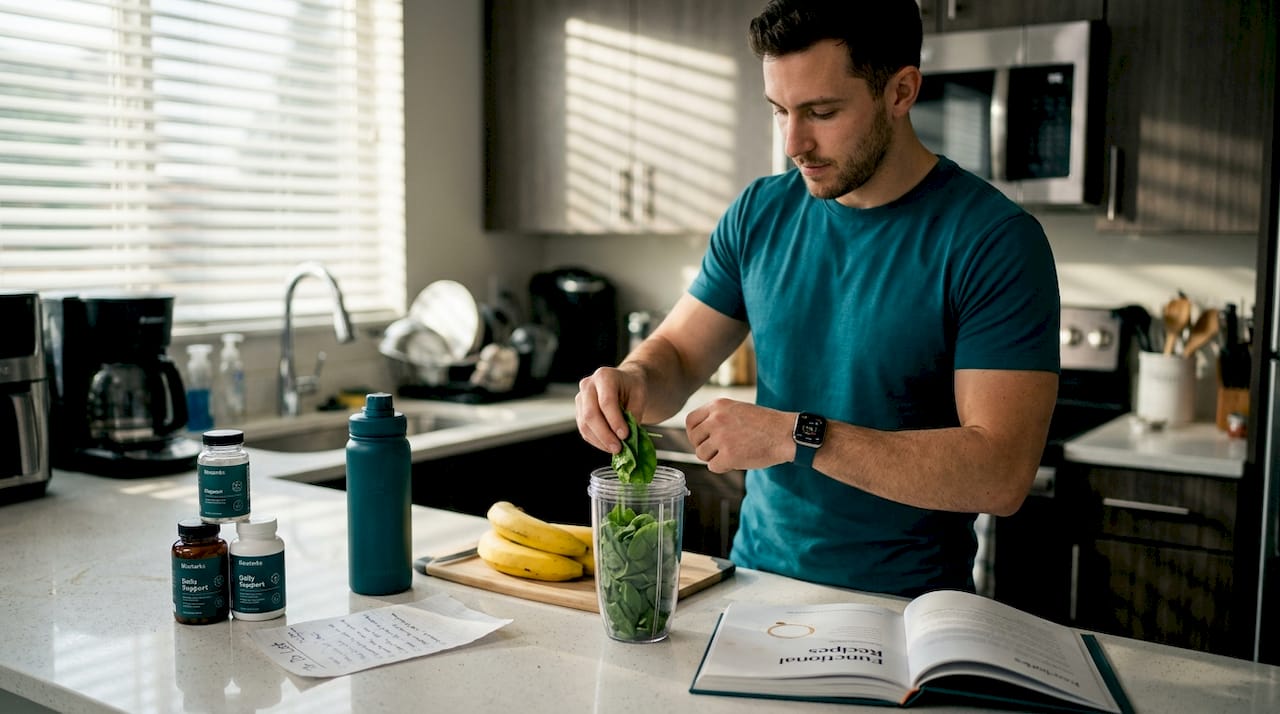
Here’s how the main methods stack up:
| Method | Data type | Entry cost | Actionability |
|---|---|---|---|
| Sleep tracking (Oura, Whoop) | HRV, REM, deep sleep stages | Medium | High |
| CGM (continuous glucose monitor) | Real-time glucose variability | Medium | Very high |
| At-home blood panel | Vitamins, hormones, lipids, metabolics | Medium to high | Very high |
| Intermittent fasting | Subjective energy, weight changes | Low | Medium |
| Cold exposure | Subjective recovery, mood | Low | Medium |
| DNA testing | Genetic variants for nutrition, metabolism | Medium | Medium to long-term |
The step-by-step approach most practitioners recommend looks like this:
- Establish a baseline. You can’t improve what you haven’t measured. Start with a sleep tracker and a basic biomarker testing guide to understand your current state.
- Pick one variable. Change one thing at a time. If you adjust your sleep schedule and start intermittent fasting simultaneously, you won’t know which one moved the needle.
- Track the outcome. Use objective data wherever possible. Wearables, blood tests, or even a structured symptom journal count.
- Evaluate and iterate. Give any intervention at least four to six weeks before drawing conclusions.
Pro Tip: The single fastest upgrade most biohackers overlook is sleep consistency. Going to bed and waking at the same time every day, even on weekends, improves deep sleep efficiency faster than most supplements. Confirm it with a tracker and you’ll see the data shift within two weeks.
The at-home lab test checklist for fitness-focused individuals often highlights markers like cortisol, ferritin, vitamin D, testosterone, and fasting insulin as top priorities because these directly affect training response, recovery, and body composition. Starting there gives you more actionable information than most generic panels.
Use your wellness optimization checklist to cross-reference which markers matter most for your specific goals, whether that’s fat loss, cognitive performance, or athletic recovery.
Types of biohacking: DIY biology, nutrigenomics, and more
Biohacking isn’t monolithic. It branches into distinct subfields, each with a different mechanism and a different risk profile. Understanding which type you’re engaging with helps you calibrate both your expectations and your caution level.
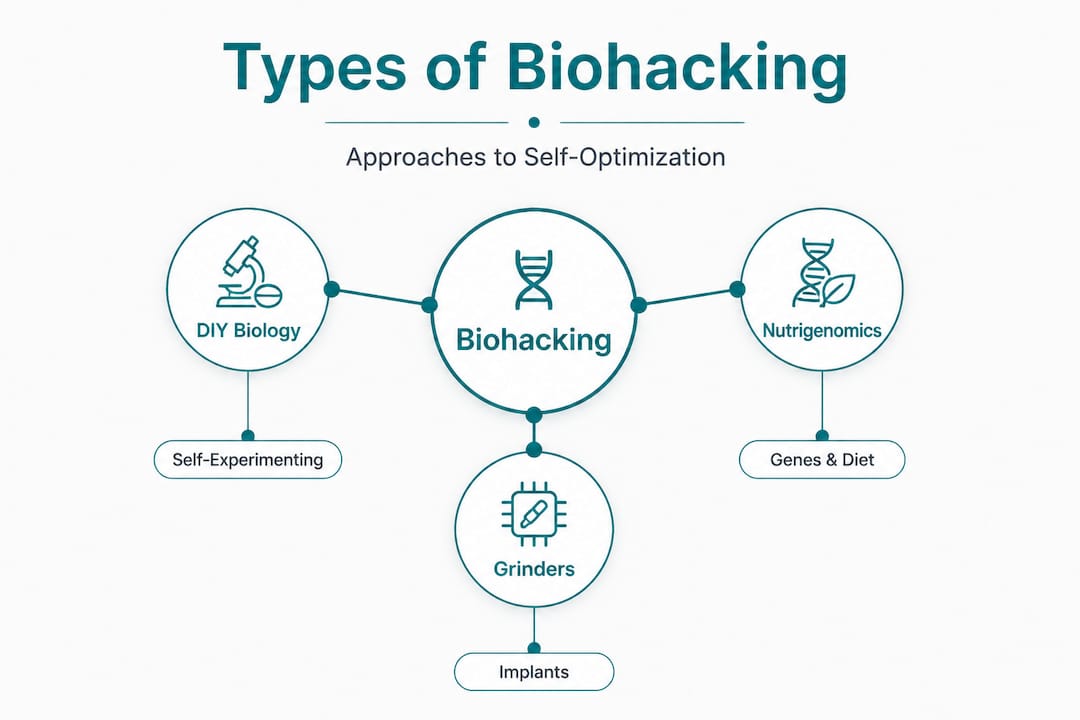
The main types include DIY biology, nutrigenomics, and grinders, covering everything from structured self-experiments to gene-diet interactions (like the CYP1A2 variant that determines how fast you metabolize caffeine) to body modification through implants.
| Type | Core approach | Example | Risk level |
|---|---|---|---|
| DIY biology | Controlled self-experimentation | Tracking glucose response to specific foods | Low to medium |
| Nutrigenomics | Matching diet to genetic variants | Adjusting caffeine intake based on CYP1A2 | Low |
| Grinders | Physical modification through implants | RFID chips, magnet implants | High |
| Quantified self | Using wearables and data logs | HRV tracking with Oura Ring | Low |
The most accessible entry point for most readers is DIY biology combined with quantified self practices. You run a personal experiment. You set a hypothesis. You measure an outcome. It’s the scientific method applied to your own body.
Nutrigenomics deserves special attention because it bridges genetics and nutrition in a way that’s now genuinely usable. Understanding nutrigenomics diet insights reveals how your genes influence nutrient absorption, food sensitivities, and metabolic tendencies. For example, people with certain MTHFR variants struggle to convert folate from food efficiently, making methylfolate supplementation a specific and evidence-based intervention rather than a shot in the dark.
The key biomarker insights benefits here are clear: when you combine genetic data with live biomarker tracking, you move from generic advice to truly personalized optimization.
Grinders represent the far end of the spectrum. They implant magnets, NFC chips, and other hardware into their bodies to extend sensory input or automate daily tasks. While the biohacking community debates the value of this, the risk profile is significant and there’s very limited evidence of health benefits. For most people, this category is worth knowing about and then ignoring.
The most productive path is building on key functional biomarkers that directly inform your daily decisions about sleep, nutrition, and recovery.
- Know your vitamin D status before supplementing
- Check ferritin before assuming fatigue means low iron
- Measure fasting insulin before concluding your diet is working
- Track HRV trends before adding more training volume
Does biohacking work? Evidence, risks, and common pitfalls
Here’s the honest answer: it depends entirely on what you’re hacking and how you’re measuring it. Some methods have solid evidence. Others are riding hype with almost no scientific backing.
On the evidence-positive side, one mouth taping study across 91 participants and 1,300 nights showed measurable benefits for mouth breathers, including improved subjective sleep quality, increased REM time, and longer total sleep duration. That’s a simple, low-cost intervention with real data behind it. CGMs have demonstrated that two people eating the exact same meal can show wildly different glucose responses, which is a powerful argument for personalized nutrition over population-based dietary guidelines.
The risks, however, are real. Obsession can lead to disordered eating, unproven supplements can cause harm, and DIY gene therapy or injections have resulted in infections and FDA warnings. Biological complexity also means you can’t control everything. Random mutations, environmental exposures, and genetic predispositions operate independently of even the most disciplined biohacking practice.
Common pitfalls to avoid:
- Supplement stacking without testing first. Taking five to ten supplements daily without knowing your baseline levels is wasteful at best and harmful at worst. At-home testing basics exist precisely to solve this problem.
- Chasing metrics instead of outcomes. Optimizing your HRV score can become its own trap if you’re losing sleep worrying about your sleep data.
- Skipping professional consultation. Expert biohacking advice consistently points to the same guidance: consult a healthcare provider before adding any advanced protocol, especially hormonal interventions, fasting regimens beyond 24 hours, or any injectable treatments.
- Confusing correlation with causation. You started cold showers and felt more energetic. Was it the cold water or the fact that you’re going to bed earlier? Control your variables.
Pro Tip: If you’re evaluating any biohacking intervention, ask yourself three questions before starting: Is there peer-reviewed research on this? Can I measure its effect objectively? Is the risk proportional to the potential benefit? If you can’t answer yes to at least two of these, reconsider.
The foundational hacks remain the most evidence-backed by a wide margin: sleep quality, dietary protein adequacy, resistance training, and stress reduction. Data tracking amplifies all of these by showing you exactly where you’re leaking performance.
How to start biohacking: A practical guide for safe optimization
Starting doesn’t require expensive equipment or advanced protocols. It requires honesty about your current baseline and a willingness to run structured experiments. At-home testing now enables data-driven insights at scale, with services offering 160-plus lab tests for around $365 per year, including biological age markers and toxin panels. CGMs show personalized glucose responses that vary significantly between individuals eating identical diets.
Here’s a structured starting framework:
- Week 1 to 2: Track sleep, energy levels, and food intake manually or with a basic app. No intervention yet. Just observe.
- Week 3 to 4: Get a personalized health data baseline through at-home biomarker testing. Prioritize vitamin D, magnesium, ferritin, cortisol, and fasting glucose to start.
- Month 2: Introduce one change based on your results. If vitamin D is low, supplement. If fasting glucose is elevated, adjust carbohydrate timing.
- Month 3: Re-test key markers to verify the intervention worked. This closes the feedback loop and makes your next decision more informed.
To track metabolic health effectively, prioritize markers that reflect real-time function over static snapshots. Insulin, triglycerides, and HbA1c together tell a richer story about metabolic flexibility than any single number in isolation.
A holistic health improvement approach also means not ignoring the psychological dimension. Stress biomarkers like cortisol, dehydroepiandrosterone sulfate (DHEA-S), and even resting HRV all reflect whether your nervous system has the capacity to benefit from physical interventions.
Pro Tip: Run an N-of-1 experiment. That means treating yourself as both the researcher and the subject. Test one variable for four weeks, measure an objective outcome, and then decide whether to keep the change or drop it. This approach beats following any generalized protocol because it’s tuned to your actual biology.
Why true biohacking is about balance, not extremes
We’ve seen both sides of biohacking play out in the data and in practice. The optimistic view frames it as proactive optimization through data, while the skeptical view calls out hype, unactionable metrics like biological age, and products that sell guilt rather than genuine improvement. Both perspectives contain real truth.
The most effective biohackers we observe aren’t chasing the newest trend or stacking interventions they don’t understand. They’re doing a small number of things very well, measuring the outcomes carefully, and adjusting based on what the data actually shows. That’s a fundamentally different mindset from the “optimize everything immediately” culture that dominates a lot of online biohacking communities.
The risk of obsession is real. When the pursuit of optimization becomes a source of anxiety rather than empowerment, you’ve lost the thread. Biomarkers are tools, not verdicts. A low vitamin D reading isn’t a failure. It’s a signal.
There’s also an important distinction between personalized optimization and trend-chasing. Grinder implants, expensive intravenous (IV) drip protocols, and unregulated peptide injections all represent high-risk interventions with limited peer-reviewed support. Meanwhile, the fundamentals, tracked consistently with valid feedback loops, continue to deliver outsized returns. Better sleep alone can improve insulin sensitivity, reduce inflammatory markers, and enhance cognitive performance. No injectable required.
Our perspective is that personalized optimization strategies work because they respect the complexity of human biology rather than trying to override it. The goal isn’t to game your body. It’s to understand it clearly enough to support it intelligently.
Unlocking next-level insights: Start your at-home biohacking journey
You now have the framework to approach biohacking like a scientist, not a subject. The next step is putting real data behind your decisions.

Biostarks offers precision at-home biomarker testing powered by Swiss mass spectrometry, analyzing vitamins, hormones, amino acids, lipids, minerals, and metabolic markers in a single panel. No clinic visit. No ambiguity. Just high-resolution data that tells you exactly where to focus your energy. Whether you’re fine-tuning athletic performance, addressing fatigue, or building a long-term longevity protocol, our reports turn complex lab results into clear, actionable steps. Start with your baseline, track your response, and optimize with confidence. Visit biostarks.com to explore your testing options today.
Frequently asked questions
What is the simplest way to start biohacking?
Begin by tracking your sleep, daily energy, and meals for two weeks, then add a wearable or at-home blood test for deeper, objective insights into what’s actually driving your performance.
Are there risks in trying biohacking at home?
Yes. Unproven supplements, disordered habits, and DIY treatments can cause real harm; always prioritize evidence-based methods and consult a healthcare professional before starting any advanced protocol.
How does at-home biomarker testing help with biohacking?
It provides personalized data to verify whether your diet, exercise, or sleep changes are actually working, with CGMs showing individual glucose responses that vary even when two people eat the same meal.
What’s the difference between nutrigenomics and general biohacking?
Nutrigenomics focuses on gene-diet interactions, like how CYP1A2 variants affect caffeine metabolism, while general biohacking covers a broader range of lifestyle, technology, and biological interventions without a genetic focus.
Can biohacking really improve my health or longevity?
Most documented benefits come from consistent evidence-based habits like exercise, quality sleep, and targeted nutrition, not from extreme or unproven hacks, which often lack meaningful peer-reviewed support.
Recommended
- Why choose data-driven wellness for optimal h… | Biostarks
- How data transforms personalized wellness: 28… | Biostarks
- What is Health Optimization? 60% Biomarker In… | Biostarks
- Wellness optimization strategies for personal… | Biostarks
- Personalized medicine explained: Your path to optimized health
- How to support brain health: step-by-step habits that work – SuperNatural


