

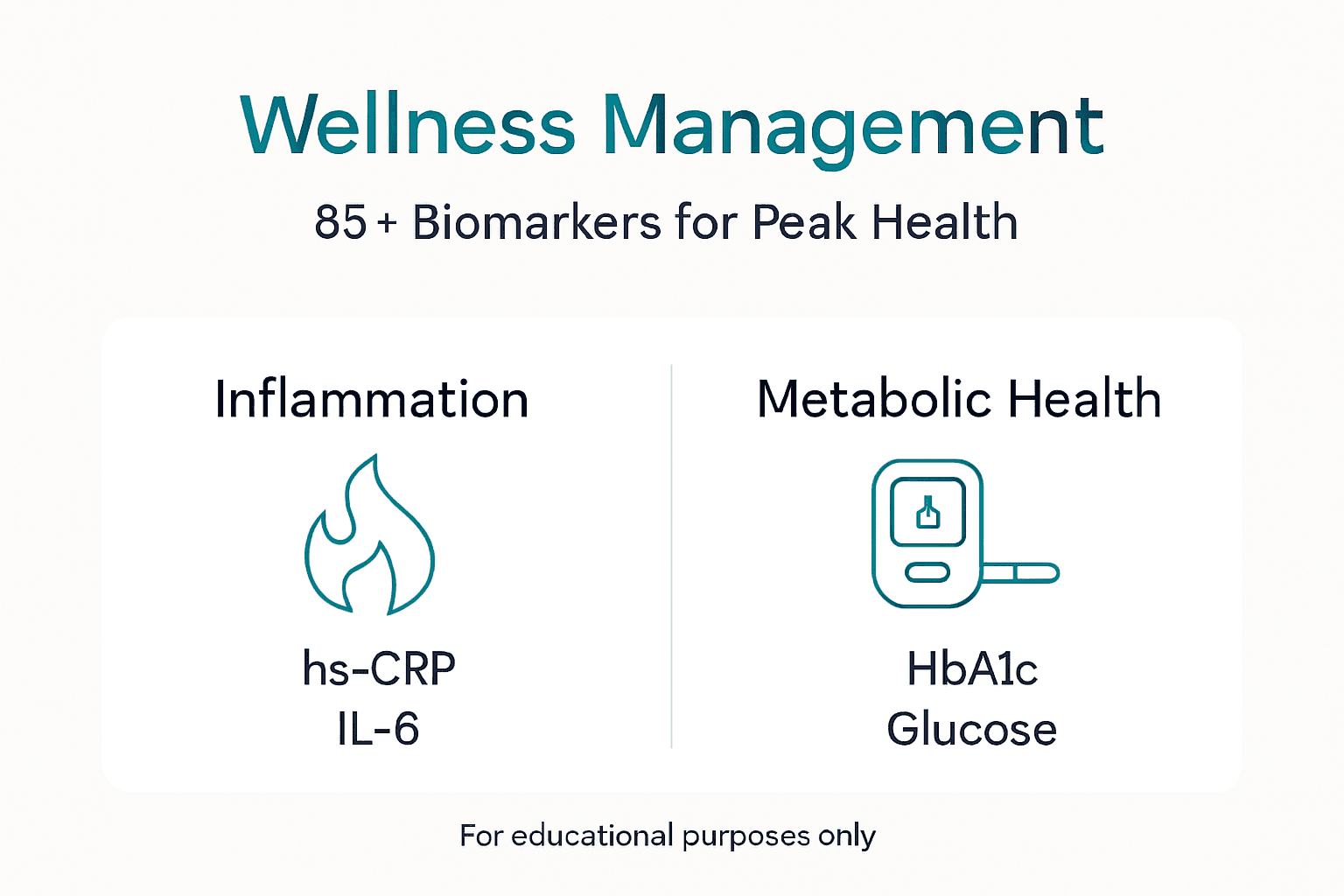
Most people assume routine blood work captures everything needed for optimal health. That’s rarely true for athletes and health-conscious individuals seeking peak performance and longevity. Wellness management uses personalized biomarker testing to reveal subtle imbalances standard tests miss, empowering you to optimize training, recovery, and healthspan with actionable data-driven insights.
Table of Contents
- Introduction To Wellness Management And Its Importance
- Key Biomarkers For Performance And Longevity
- Common Misconceptions About Wellness Management And Biomarker Testing
Key takeaways
| Point | Details |
|---|---|
| Comprehensive biomarker panels | Wellness management analyzes 85+ biomarkers including hormones, metabolites, vitamins, and inflammation markers for precision health optimization. |
| Athlete-specific reference ranges | Standard clinical ranges often mask performance-relevant imbalances; athlete-optimized ranges reveal actionable insights for training and recovery. |
| Chronic inflammation monitoring | Persistent low-level inflammation measured by hs-CRP undermines longevity and athletic recovery when left unaddressed. |
| At-home testing convenience | Modern platforms enable frequent, non-invasive biomarker tracking with Swiss mass spectrometry precision without clinic visits. |
| Expert interpretation essential | Translating biomarker data into effective personalized wellness plans requires collaboration with qualified health professionals. |
Introduction to wellness management and its importance
Wellness management is an ongoing, data-driven approach optimizing health, performance, and longevity through personal biomarker analysis. Unlike reactive healthcare that treats symptoms, this proactive model uses objective internal metrics to prevent problems before they surface. Athletes and health-conscious consumers increasingly adopt biomarker testing to fine-tune their bodies for peak function.
The appeal lies in targeted interventions based on your unique biology. Standard annual physicals provide snapshots, but metabolic health tracking reveals trends over time. You gain visibility into inflammation, hormone balance, nutrient status, and organ function that routine clinical checks overlook.
Key benefits include:
- Optimized training loads adjusted to recovery capacity
- Injury prevention through early detection of stress markers
- Enhanced longevity by addressing subclinical inflammation
- Personalized nutrition matching your metabolic needs
- Performance gains from correcting hidden deficiencies
At-home health testing removes barriers to frequent monitoring. You collect samples conveniently, receive lab-grade analysis, and track changes month over month. This continuous feedback loop enables rapid adjustments when biomarkers drift from optimal ranges.
Pro Tip: Start with a comprehensive baseline panel covering inflammation, metabolism, hormones, and micronutrients. Retest every 8-12 weeks to catch trends early.
Research confirms biomarkers for longevity extend beyond cholesterol and glucose. Emerging markers like NAD+ levels, inflammatory cytokines, and hormonal ratios predict healthspan more accurately than traditional panels. Wellness management integrates these advanced metrics into actionable plans.
Key biomarkers for performance and longevity
Understanding which biomarkers matter most helps prioritize testing and interventions. Chronic low-grade inflammation measured by hs-CRP correlates with aging and disease risk, undermining athlete recovery and longevity. Optimal hs-CRP sits below 1.0 mg/L, but many athletes operate above 2.0 mg/L chronically due to training stress.

Metabolic markers govern energy production and body composition. HbA1c reflects average glucose control over three months, with athlete-optimized targets around 5.0-5.3%. Lipid profiles including LDL particle size, triglycerides, and HDL ratios predict cardiovascular health more accurately than total cholesterol alone.
Hormonal balance drives performance across every domain. Testosterone, cortisol, thyroid hormones (TSH, free T3, free T4), and DHEA regulate muscle growth, stress response, metabolism, and recovery. Micronutrients like vitamin D, magnesium, iron, and B vitamins support enzymatic reactions essential for endurance and resilience.
Athlete-specific optimal ranges differ substantially from clinical norms. A hemoglobin level considered normal for sedentary populations may indicate relative anemia in endurance athletes. Blood biomarkers require context from training load, diet, and performance goals.
| Biomarker | Function | Optimal Range |
|---|---|---|
| hs-CRP | Systemic inflammation | <1.0 mg/L |
| HbA1c | Glucose control | 5.0-5.3% |
| Vitamin D | Immune function, bone health | 50-70 ng/mL |
| Testosterone | Muscle synthesis, recovery | 600-1000 ng/dL (men) |
| Ferritin | Iron storage, oxygen transport | 50-150 ng/mL |
| Cortisol | Stress response, recovery | 10-20 mcg/dL (AM) |
Pro Tip: Track ratio markers like testosterone-to-cortisol alongside individual values. Ratios often reveal imbalances before individual markers fall outside reference ranges.
Understanding importance of hs-CRP transforms how you approach recovery. Persistently elevated inflammation signals inadequate rest, poor nutrition, or underlying infection. Addressing it improves training adaptation and reduces injury risk.
Common misconceptions about wellness management and biomarker testing
Several myths prevent people from maximizing biomarker data. First misconception: standard clinical ranges work for everyone. Reality: standard clinical diagnostic blood test ranges are often inadequate for athletes, masking subtle but important health signals. A ferritin level at 30 ng/mL might be


