

TL;DR:
- Metabolite monitoring detects early signs of metabolic issues before symptoms or standard tests appear.
- Tracking metabolites offers personalized insights for athletes and supports tailored nutrition and training.
- Combining periodic lab panels with real-time sensors helps optimize health behaviors and prevent chronic diseases.
Your annual blood panel can look perfectly normal while your metabolism is quietly shifting in the wrong direction. That gap between “healthy” and truly optimized is exactly where metabolite monitoring lives. Metabolite monitoring enables early detection of dysfunction like insulin resistance and fat accumulation years before conditions like type 2 diabetes become diagnosable. This guide breaks down what metabolites are, what tracking them actually reveals, and how to turn that data into smarter, more personalized health and performance decisions.
Table of Contents
- What are metabolites and why do they matter?
- What can metabolite monitoring really reveal?
- Personalized nutrition and optimizing your interventions
- Types of monitoring: methods, limits, and practical strategies
- Our take: What most guides miss about monitoring metabolites
- Ready to harness your data for better health?
- Frequently asked questions
Key Takeaways
| Point | Details |
|---|---|
| Early warning system | Metabolite monitoring can reveal metabolic issues long before diseases develop. |
| Personalized performance | Athletes and individuals can use metabolite data to tailor training and nutrition for maximum results. |
| Better nutrition choices | Metabolite insights help personalize diets and predict individual food responses. |
| Choose the right method | Each monitoring technique has unique pros and cons—pick based on your goals and context. |
| Application over numbers | Real health improvements come from acting on data, not just collecting more metrics. |
What are metabolites and why do they matter?
Metabolites are small molecules your body produces as a byproduct of its biochemical reactions. Think of them as exhaust from your cellular engine. Every time you digest food, exercise, sleep, or manage stress, your cells generate hundreds of these molecules. Some are well-known, like glucose and lactate. Others, like trimethylamine N-oxide or short-chain fatty acids, are less familiar but equally informative.
What makes metabolites so valuable is their sensitivity. They shift before symptoms appear, before organs show damage, and often before standard labs flag anything unusual. Metabolic dysfunction detection through real-time metabolite data gives you a biological early warning system that a once-a-year cholesterol check simply cannot provide.
Here is what metabolites can reflect about your health status:
- Energy metabolism: How efficiently your cells convert fuel into energy
- Oxidative stress: The balance between free radical production and your antioxidant defenses
- Inflammatory load: Subtle, chronic inflammation that precedes many diseases
- Hormonal activity: Downstream markers of cortisol, insulin, and sex hormone signaling
- Gut microbiome function: Metabolites produced by gut bacteria that influence brain and immune health
- Nutrient status: Actual utilization of vitamins, amino acids, and fatty acids at the cellular level
Athletes especially benefit from this granularity. Endurance runners, strength athletes, and sprinters each display distinct metabolite patterns tied to their training demands. Reviewing examples of metabolic markers makes clear just how sport-specific and individual these patterns can be.
One important caveat: metabolites fluctuate throughout the day based on meals, sleep, and activity. A morning fasted reading tells a very different story than a post-workout measurement.
Pro Tip: Always collect samples at the same time of day and under the same conditions, ideally fasted in the morning, to make your results comparable over time.
What can metabolite monitoring really reveal?
Once you understand what metabolites are, the real question becomes: what can you actually learn from tracking them? The answer is more specific and more actionable than most people expect.
For athletes, the depth is striking. Training-induced metabolic adaptations show up as distinct metabolite signatures across endurance, strength, and sprint disciplines. This means your metabolite profile is not just a health snapshot. It is a performance fingerprint unique to your sport and your body.
Exercise alone can shift over 130 metabolites in the bloodstream. Energy, lipid, and oxidative stress pathways are all trackable through specific post-exercise metabolite changes. This opens the door to knowing whether your training is actually improving fat oxidation, whether your recovery is complete, and whether your fueling strategy is working.
Here is a quick look at how metabolite signatures differ by sport:
| Sport type | Key metabolite patterns |
|---|---|
| Endurance (running, cycling) | Elevated fatty acid oxidation markers, lower lactate clearance time |
| Strength training | Higher branched-chain amino acid turnover, creatine pathway activity |
| Sprint/power sports | Rapid lactate accumulation, purine degradation byproducts |
| Mixed sports (soccer, tennis) | Combined glycolytic and oxidative shifts, high oxidative stress markers |
Beyond athletics, metabolite monitoring flags early metabolic dysfunction in people who feel fine. Elevated fasting lactate, disrupted amino acid ratios, or unusual lipid metabolites can signal that something is off long before your doctor raises a concern.

Non-invasive tools like sweat biosensors and continuous lactate monitors (CLM) are making this kind of tracking more accessible. Paired with periodic at-home metabolite testing, they give you a multi-layered view of your metabolic state across different timescales. For those interested in going deeper, precision health testing platforms can quantify dozens of markers simultaneously using advanced lab techniques.
Personalized nutrition and optimizing your interventions
Data without direction is just noise. The real power of metabolite monitoring emerges when you use it to shape your food choices, training load, and recovery habits with precision.
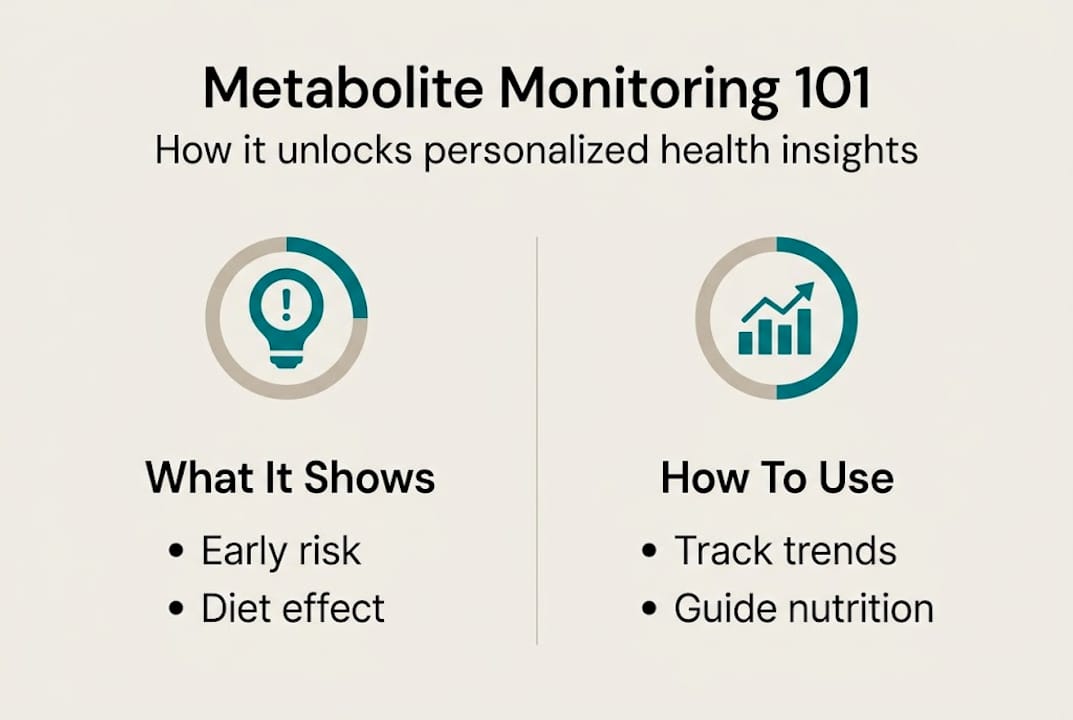
Personalized nutrition through biomarkers works because metabolites can assess what you are actually absorbing, not just what you are eating. Urinary biomarkers for fruits and vegetables, for example, give a far more accurate picture of your dietary intake than a food diary ever could. Glycemic variability, tracked through glucose metabolites, shows how your body responds to specific foods in ways that generic dietary advice simply cannot capture.
Here is a practical framework for turning metabolite data into action:
- Establish your baseline. Run a comprehensive metabolite panel before making any changes. This is your reference point.
- Identify your highest-leverage gaps. Focus on two or three markers that are meaningfully out of range, not every single deviation.
- Make one targeted intervention at a time. Change your carbohydrate timing, adjust protein intake, or add a specific micronutrient. Keep variables isolated.
- Retest after 6 to 8 weeks. This gives enough time for meaningful metabolic shifts to appear.
- Interpret results in context. A number moving in the right direction alongside improved energy or recovery confirms you are on track.
- Adjust and repeat. This feedback loop compounds over time into real, lasting metabolic improvement.
For food quality specifically, tracking natural metabolic health indicators alongside your lab data helps you connect lifestyle choices to biochemical outcomes. And if you work with a nutritionist, sharing your metabolite data gives them a level of precision that transforms the advice they can offer. More on how nutritionists use biomarkers to sharpen their client strategies is worth exploring if you want professional guidance.
Pro Tip: More testing is not always better. Retesting too frequently, especially before an intervention has had time to work, creates confusion rather than clarity. Give each change at least six weeks before you retest.
Types of monitoring: methods, limits, and practical strategies
Not all monitoring tools work the same way, and choosing the right one depends on your goals, budget, and tolerance for complexity.
| Method | Best for | Limitations |
|---|---|---|
| Continuous glucose monitor (CGM) | Daily glycemic patterns | Less accurate during intense exercise |
| Continuous lactate monitor (CLM) | Exercise intensity and recovery | Still emerging; fewer consumer options |
| Sweat biosensors | Non-invasive real-time tracking | Limited metabolite range currently |
| At-home blood panels | Deep, validated metabolite profiling | Snapshot in time; not continuous |
Continuous lactate monitoring detects meaningful spikes after meals and exercise, and sweat biosensors are rapidly expanding what can be tracked non-invasively. These tools work best when you understand their edge cases.
Key limitations to keep in mind:
- Sensor lag: Wearable readings may trail actual blood levels by several minutes during rapid metabolic shifts
- Diurnal variability: Metabolite levels fluctuate 15 to 40% across the day, making timing standardization critical
- Context gaps: A single elevated reading means little without knowing your sleep, stress, and meal history
“Untargeted metabolomics excels in biomarker discovery but requires rigorous validation before clinical use. CGM data in athletes carries validity concerns, and overtesting without interpretive context can lead to counterproductive decisions.” Current challenges in biomarker monitoring
Best practices for any monitoring approach include pairing real-time wearable data with periodic deep-panel lab testing, standardizing your collection conditions, and always interpreting results alongside your lifestyle context. Understanding the full spectrum of types of metabolic biomarkers available helps you build a smarter testing stack. For a broader view of how to approach metabolic health optimization using biomarkers, the guidance available goes well beyond what any single tool can offer.
Our take: What most guides miss about monitoring metabolites
Most articles on metabolite monitoring celebrate the data. We want to caution against worshipping it.
Chasing perfect numbers without behavioral follow-through is one of the most common traps we see. You can have a beautifully detailed metabolite report and still make zero progress if the insights do not translate into consistent, small behavior changes. The feedback loop that actually works looks like this: test, interpret, adjust one thing, re-test, and act on what you learn.
CGM validity issues in athletes and the validation gaps in untargeted metabolomics are real reminders that data quality matters as much as data volume. More monitoring does not equal more clarity.
The advantages of metabolic testing become clear only when you pair them with the discipline to act on findings, not just collect them. Sustainable metabolic improvement is built through iteration, not obsession. The most effective monitoring programs we have seen combine periodic deep-panel testing with a handful of targeted, real-world changes, reviewed and adjusted every couple of months.
Ready to harness your data for better health?
Understanding your metabolites is one thing. Knowing what to do with that knowledge is where real change begins.
At Biostarks, we built our at-home testing platform around exactly this challenge: giving you high-resolution metabolite data that is clear enough to act on, not just impressive enough to screenshot. Using advanced Swiss mass spectrometry, we analyze dozens of biomarkers including amino acids, lipids, hormones, and metabolic markers, and translate them into personalized, prioritized recommendations. If you are ready to go beyond guesswork, explore our personalized metabolic health insights and take the first step toward a health strategy that is genuinely built around your biology.
Frequently asked questions
What are the main benefits of monitoring metabolites regularly?
Early metabolite monitoring detects metabolic dysfunction years before disease symptoms appear, giving you time to intervene with lifestyle changes rather than medications.
How does metabolite testing support athletes?
Training-induced metabolic adaptations are measurable through metabolite profiles, allowing athletes to personalize their nutrition, training load, and recovery with precision.
What methods are used to monitor metabolites at home?
Continuous lactate monitors and sweat biosensors enable non-invasive real-time tracking, while periodic at-home blood panels provide deeper, validated metabolite profiling.
Are there drawbacks to real-time metabolite tracking?
CGM and lactate sensors can lose accuracy during high-intensity exercise, and collecting data without interpretive context increases the risk of misreading results.
Can metabolite tracking really improve personalized nutrition?
Metabolite tracking goes beyond food diaries by measuring what your body actually absorbs and how it responds, enabling truly individualized dietary interventions.


