

Millions struggle with stubborn weight, low energy, and mysterious health issues that standard checkups fail to explain. Traditional lab tests often miss the early warning signs of metabolic dysfunction, leaving you guessing about what’s really happening inside your body. Personalized biomarker testing changes this by revealing the hidden drivers of metabolic health, from inflammation to hormone imbalances. This guide shows you how to leverage advanced biomarker insights, precision nutrition, and proven lifestyle strategies to optimize your metabolic health and unlock lasting wellness in 2026.
Table of Contents
- Understanding Metabolic Health Biomarkers
- Key Metabolic Health Metrics: LBM/VF Ratio, HbA1c, And Metabolic Flexibility
- Precision Nutrition And Lifestyle Strategies For Metabolic Optimization
- Optimize Your Metabolic Health With Biostarks
- FAQ
Key takeaways
| Point | Details |
|---|---|
| Standard ranges mislead | Normal lab ranges reflect sick populations, not optimal health targets for longevity. |
| LBM/VF ratio matters most | Higher muscle to visceral fat ratios cut cardiometabolic disease risks dramatically. |
| Microbiome drives metabolism | Personalized microbiome data improves glycemic control and dietary adherence significantly. |
| Intermittent fasting works | Time-restricted eating reduces body fat by 16% and improves lipid profiles beyond weight loss. |
| Root cause focus wins | Targeting inflammation, mitochondrial health, and circadian rhythm beats symptom management. |
Understanding metabolic health biomarkers
Your lab results might say normal, but that doesn’t mean optimal. Conventional reference ranges reflect population averages of sick people, not the levels associated with peak performance and longevity. Most standard ranges capture the middle 95% of tested individuals, many of whom already have metabolic dysfunction. This means you could be trending toward disease while still falling within acceptable limits.
Liver enzymes reveal critical metabolic insights often overlooked in routine checkups. Elevated ALT often indicates liver damage or inflammation, with optimal targets below 20 U/L rather than the standard upper limit of 40 U/L. AST levels provide additional context about liver health and cellular damage. When both enzymes rise together, it signals metabolic stress that demands immediate attention through dietary changes and lifestyle modifications.
Understanding biomarker interpretation for health insights requires looking beyond individual numbers to identify root causes. Four core dysfunctions drive most metabolic problems:
- Mitochondrial dysfunction reduces energy production and metabolic efficiency
- Chronic inflammation damages tissues and disrupts hormone signaling
- Hormone imbalances affect everything from appetite to fat storage patterns
- Circadian rhythm disruption impairs glucose metabolism and recovery processes
These underlying issues explain why two people with identical cholesterol numbers may have completely different health trajectories. One person’s elevated LDL might stem from thyroid dysfunction, while another’s comes from insulin resistance. Blood biomarkers for personal health insights become actionable only when interpreted through this root cause lens.
Pro Tip: Track biomarker trends over time rather than fixating on single test results. A gradual rise in fasting glucose from 85 to 95 mg/dL over two years signals declining metabolic flexibility, even though both values fall within normal ranges.
Personalized interpretation transforms generic health data into strategic wisdom. Instead of following one-size-fits-all protocols, you address your specific metabolic bottlenecks. Understanding the role of biomarkers in health optimization means moving from reactive symptom management to proactive wellness engineering based on your unique biology.
Key metabolic health metrics: LBM/VF ratio, HbA1c, and metabolic flexibility
Body mass index fails as a metabolic health predictor because it ignores body composition entirely. A muscular athlete and an overweight sedentary person can share the same BMI despite vastly different health risks. The lean body mass to visceral fat ratio provides far superior insight into cardiometabolic health by distinguishing protective muscle from dangerous abdominal fat.

Higher LBM/VF ratios strongly inversely associate with dyslipidemia, high blood pressure, and insulin resistance across diverse populations. This metric captures the metabolic advantage of maintaining muscle mass while minimizing visceral adiposity. Visceral fat actively secretes inflammatory cytokines and hormones that disrupt glucose metabolism, while lean muscle acts as a metabolic sink that improves insulin sensitivity.
The protective effect of muscle mass extends beyond simple calorie burning. Every 1% increase in relative muscle mass decreases metabolic disease risk by approximately 20%, independent of total body weight. This explains why strength training produces metabolic benefits that cardio alone cannot match. Building and preserving muscle becomes a primary strategy for long-term metabolic health, especially as natural muscle loss accelerates after age 40.
| Metric | Optimal Range | Standard Range | Health Impact | | — | — | — | | HbA1c | <5.3% | <5.7% | Lower mortality risk | | Fasting Glucose | 75-85 mg/dL | <100 mg/dL | Better metabolic flexibility | | LBM/VF Ratio | >2.5 | Not tracked | Reduced cardiometabolic risk | | Fasting Insulin | <5 μIU/mL | <25 μIU/mL | Improved insulin sensitivity |
HbA1c reflects your average blood sugar control over the past three months, making it a powerful indicator of metabolic flexibility. Small differences in this biomarker carry enormous health implications. For every 1% increase in HbA1c, all-cause mortality risk rises 12% in men and 22% in women, even within the non-diabetic range. This means an HbA1c of 5.6% carries significantly higher risk than 5.2%, despite both being considered normal.
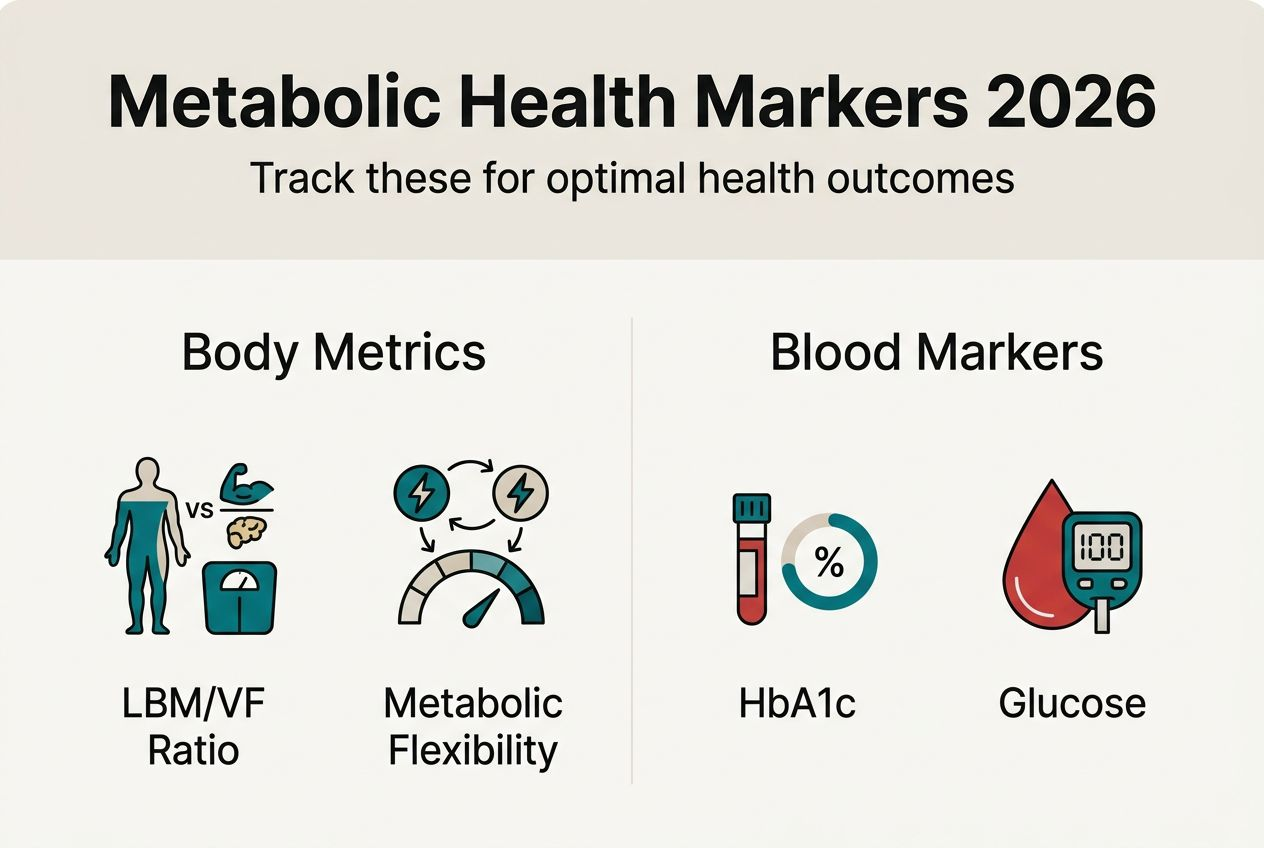
Metabolic flexibility describes your body’s ability to efficiently switch between burning glucose and fat for fuel. People with poor metabolic flexibility struggle to access stored fat, leading to energy crashes between meals and constant hunger. Testing metabolic flexibility involves measuring how quickly your body returns to fat burning after a carbohydrate meal, typically assessed through continuous glucose monitoring or respiratory quotient measurements.
Pro Tip: Combine strength training with strategic protein timing to maximize muscle protein synthesis. Consuming 30-40 grams of protein within two hours post-workout optimizes the muscle-building response, directly improving your LBM/VF ratio over time.
Improving these metrics requires targeted interventions based on biomarkers in health optimization. Resistance training three times weekly builds lean mass, while time-restricted eating improves insulin sensitivity. Understanding types of biomarkers for personal health insight helps you track progress accurately and adjust strategies based on objective data rather than guesswork.
Precision nutrition and lifestyle strategies for metabolic optimization
Generic dietary advice fails because individual metabolic responses to the same foods vary wildly. One person’s blood sugar might spike from rice while another handles it perfectly, depending on genetics, microbiome composition, and metabolic health status. Advanced computational models predict individual metabolic responses to diet with over 90% accuracy by integrating multi-omics data including genomics, metabolomics, and microbiome profiles.
Precision nutrition leverages these insights to create truly personalized dietary strategies. Instead of following popular diet trends, you eat according to your unique biology. This approach considers how your body processes different macronutrients, which foods trigger inflammation, and what meal timing optimizes your circadian rhythm. The result is sustainable metabolic improvements that generic plans cannot deliver.
Intermittent fasting emerges as one of the most powerful metabolic optimization tools when properly implemented. Intermittent fasting led to 8% body weight reduction and 16% body fat decrease while significantly improving lipid profiles in recent studies. These benefits extend beyond simple calorie restriction, affecting molecular pathways involved in autophagy, mitochondrial biogenesis, and hormone regulation.
The metabolic benefits of fasting include:
- Enhanced insulin sensitivity through reduced meal frequency
- Increased growth hormone production during fasted states
- Improved mitochondrial efficiency and cellular cleanup processes
- Better circadian rhythm alignment through consistent eating windows
- Reduced inflammation markers and oxidative stress
Your gut microbiome plays a surprisingly large role in determining metabolic health outcomes. Microbiome-informed personalization improves glycemic control and dietary adherence compared to generic recommendations. Certain bacterial strains enhance nutrient extraction, produce beneficial short-chain fatty acids, or trigger inflammatory responses that impair insulin sensitivity. Testing your microbiome composition reveals which dietary patterns will optimize your unique bacterial ecosystem.
Precision nutrition transforms one-size-fits-all dietary advice into personalized metabolic optimization strategies that account for your unique genetic makeup, microbiome composition, and current biomarker status.
Implementing these strategies requires a systematic approach:
- Establish baseline metrics through comprehensive biomarker testing including glucose, insulin, lipids, inflammatory markers, and body composition analysis
- Identify your specific metabolic weaknesses such as insulin resistance, poor fat oxidation, or chronic inflammation
- Design personalized interventions targeting root causes rather than symptoms, using microbiome data and genetic insights when available
- Implement time-restricted eating protocols matched to your schedule and metabolic goals, starting with a 12-hour eating window
- Track progress through regular biomarker retesting every 8-12 weeks, adjusting strategies based on objective improvements
- Address lifestyle factors including sleep quality, stress management, and exercise timing that amplify or undermine dietary interventions
Pro Tip: Start intermittent fasting gradually by simply stopping late-night snacking and delaying breakfast by one hour. This gentle 13-14 hour overnight fast builds metabolic flexibility without the stress of aggressive protocols.
Focusing on root causes produces dramatically better outcomes than symptom management. Chronic inflammation often stems from gut dysbiosis, food sensitivities, or circadian disruption rather than dietary fat intake. Addressing these underlying issues through advanced lab testing for optimization creates lasting metabolic improvements. Athletes particularly benefit from this approach, using athlete blood testing for performance to fine-tune recovery and training adaptations.
The integration of multiple data streams creates synergistic effects. Combining microbiome optimization with intermittent fasting and personalized macronutrient ratios produces results that exceed the sum of individual interventions. Understanding why to use biomarker insights for optimization helps you make informed decisions about which strategies will move your specific metabolic markers in the right direction.
Optimize your metabolic health with Biostarks
Transforming biomarker knowledge into metabolic optimization requires accurate testing and expert interpretation. Biostarks delivers comprehensive biomarker panels specifically designed for metabolic health assessment, analyzing everything from glucose metabolism markers to inflammatory cytokines using advanced Swiss mass spectrometry. You receive detailed reports that translate complex lab data into clear, actionable recommendations tailored to your unique biology.

The platform makes advanced biomarker testing and personalized reports accessible through convenient at-home sample collection. No clinic visits or insurance hassles. Simply collect your sample, ship it to the lab, and receive expert analysis within days. This streamlined process removes barriers that prevent most people from accessing the precision health insights they need to optimize metabolic function and achieve lasting wellness. Explore how Biostarks can support your metabolic health journey with cutting-edge testing technology and personalized guidance.
FAQ
What is the lean body mass to visceral fat ratio, and why is it important?
The LBM/VF ratio measures the amount of metabolically active muscle tissue compared to harmful visceral fat surrounding your organs. Higher ratios indicate lower risks of metabolic diseases including type 2 diabetes, cardiovascular disease, and metabolic syndrome. This metric captures metabolic health far more accurately than BMI because it distinguishes protective lean tissue from dangerous abdominal fat deposits.
How can biomarker testing guide my personal metabolic health plan?
Biomarker tests identify root causes like chronic inflammation, mitochondrial dysfunction, or hormone imbalances that generic health assessments miss entirely. This information allows you to create customized diet, lifestyle, and supplementation plans targeting your specific metabolic bottlenecks rather than following one-size-fits-all advice. Regular retesting tracks progress objectively and reveals which interventions actually move your markers toward optimal ranges.
What role does the microbiome play in metabolic health?
Your gut microbiome composition directly affects glucose metabolism, insulin sensitivity, and systemic inflammation through multiple pathways. Certain bacterial strains produce beneficial short-chain fatty acids that improve metabolic function, while others trigger inflammatory responses that impair insulin signaling. Personalized diets informed by microbiome data improve both glycemic control and long-term dietary adherence compared to generic recommendations.
Is intermittent fasting safe and effective for metabolic health?
Intermittent fasting reduces body fat by 16% and significantly improves lipid profiles when implemented properly, affecting molecular pathways beyond simple calorie restriction. It enhances insulin sensitivity, promotes cellular cleanup through autophagy, and aligns eating patterns with natural circadian rhythms. However, fasting protocols should be personalized based on your current metabolic health, activity level, and specific goals rather than following rigid rules that ignore individual differences.


