

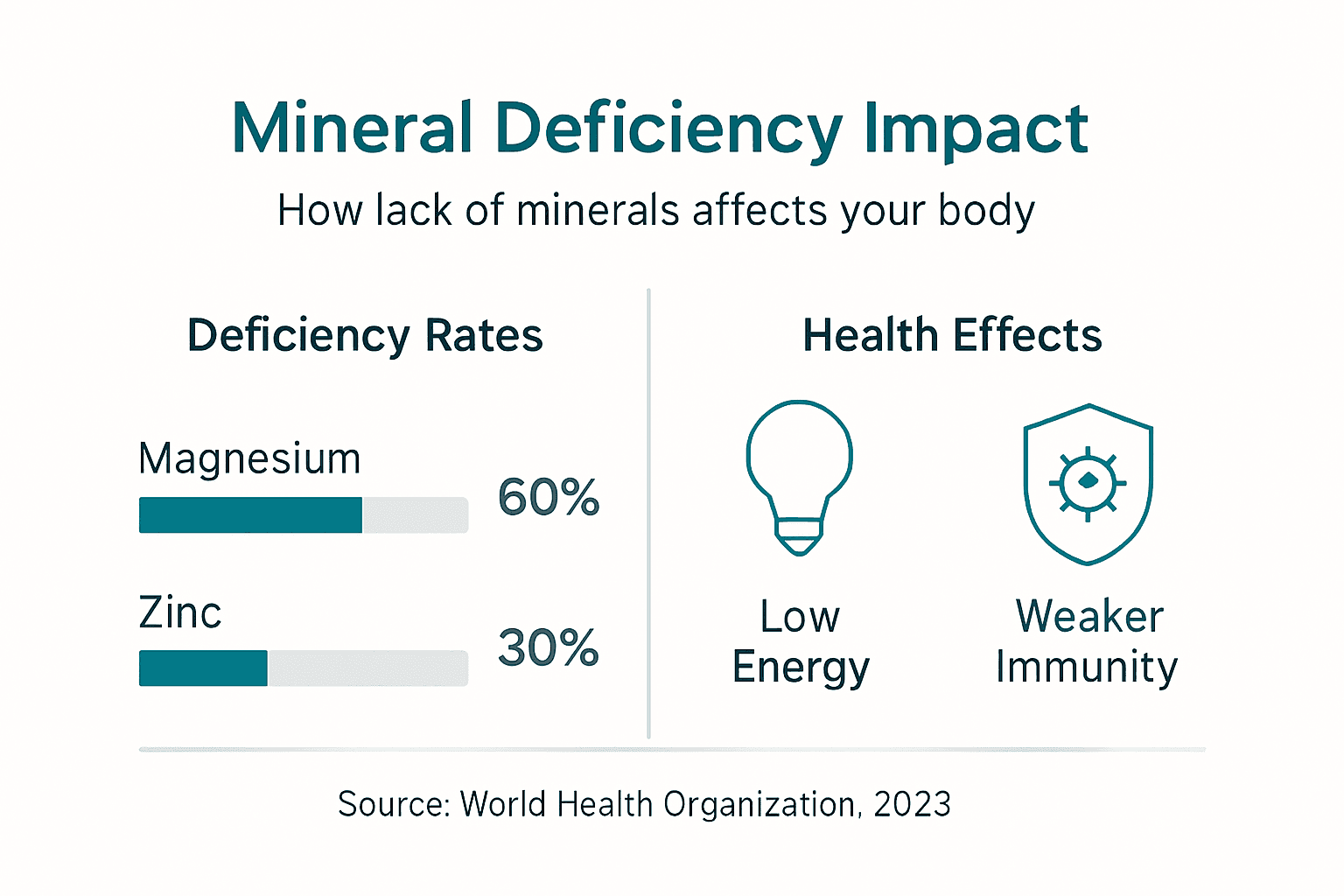
Over 60% of adults worldwide suffer from magnesium deficiency, affecting energy production and nerve function. Standard health tests often fail to detect critical mineral imbalances that silently undermine your metabolism, immunity, and cognitive performance. Advanced biomarker testing reveals your unique mineral status, enabling precise interventions to optimize wellness and prevent chronic disease.
Table of Contents
- Introduction To Mineral Importance
- Physiological Roles Of Key Minerals
- Common Mineral Imbalances And Health Impacts
- Limitations Of Standard Mineral Testing
- Advanced Mineral Biomarker Testing Techniques
- Common Misconceptions About Mineral Monitoring And Supplementation
- Practical Application: Using Mineral Monitoring Data
- Enhance Your Health With Advanced Mineral Monitoring
- Frequently Asked Questions About Mineral Monitoring
Key Takeaways
| Point | Details |
|---|---|
| Enzymatic cofactors | Minerals are vital cofactors for over 300 enzymes critical to metabolism and immunity. |
| Hidden deficiencies | Standard serum tests often miss intracellular mineral deficiencies leading to hidden health risks. |
| Advanced detection | Mass spectrometry testing detects subtle mineral imbalances with high accuracy. |
| Health consequences | Mineral imbalances contribute to chronic inflammation, fatigue, and metabolic dysfunction. |
| Personalized action | Precise mineral monitoring enables targeted supplementation and improved health outcomes. |
Introduction to Mineral Importance
Minerals function as essential cofactors for hundreds of enzymatic reactions that drive metabolism, immune defense, and cellular energy production. Without adequate mineral levels, these critical biochemical processes slow or fail entirely, compromising your health in ways that often go undetected for years.
Magnesium, zinc, and iron play critical roles as cofactors in over 300 enzymatic reactions essential for metabolism, immune function, and cognitive performance. Each mineral serves unique biological functions that collectively maintain your body’s operational efficiency.
Key minerals and their primary functions include:
- Magnesium: Powers ATP synthesis in mitochondria, regulates nerve transmission, and maintains muscle function
- Zinc: Modulates immune cell activity, supports wound healing, and enables protein synthesis
- Iron: Transports oxygen via hemoglobin, supports cellular respiration, and maintains cognitive function
- Calcium: Builds bone density, triggers muscle contractions, and facilitates neurotransmitter release
- Selenium: Activates antioxidant enzymes, regulates thyroid hormones, and protects cellular membranes
Mineral balance forms the foundation for energy production, mental clarity, and metabolic health. When you optimize your mineral status through sport performance products and targeted interventions, you unlock improvements across multiple physiological systems simultaneously.
Understanding the benefits of metabolic testing helps you appreciate why monitoring these essential nutrients matters for long term wellness. Your metabolic health insights depend heavily on maintaining optimal mineral concentrations that standard testing often fails to assess accurately.
Physiological Roles of Key Minerals
Each essential mineral performs specific physiological functions that directly impact your daily energy, immune resilience, and metabolic efficiency. Understanding these roles clarifies why deficiencies create such widespread health consequences.
Magnesium serves as a cofactor for over 300 enzymatic reactions, particularly those involved in ATP production within mitochondria. This mineral stabilizes nerve membranes, preventing excessive excitability that leads to anxiety, muscle cramps, and sleep disturbances. Magnesium supports energy generation while simultaneously regulating calcium channels and neurotransmitter release.
Zinc modulates immune cell differentiation and activity, directly controlling inflammatory responses. This mineral activates over 100 enzymes involved in DNA synthesis, wound healing, and taste perception. Low zinc levels compromise your ability to fight infections and recover from physical stress.
Iron forms the core of hemoglobin molecules that transport oxygen from lungs to tissues throughout your body. Beyond oxygen delivery, iron enables electron transport chain function in mitochondria, making it essential for cellular energy production. Insufficient iron manifests as persistent fatigue and reduced exercise capacity.
Calcium does more than build bones. This mineral triggers muscle fiber contractions, enables blood clotting, and facilitates nerve signal transmission. Calcium also regulates enzyme activity and hormone secretion across multiple organ systems.
Critical mineral functions include:
- Energy metabolism and mitochondrial ATP synthesis
- Immune cell activation and inflammatory response regulation
- Oxygen transport and cellular respiration efficiency
- Bone mineralization and skeletal structural integrity
- Neurotransmitter synthesis and nerve signal propagation
Pro Tip: Mineral requirements increase during periods of physical training, stress, or illness. Regular monitoring helps you adjust intake before deficiencies impact performance.
The importance of mineral testing becomes clear when you recognize how many vital processes depend on adequate mineral availability. Interpreting biomarker results requires understanding these physiological roles to make informed supplementation decisions.
Common Mineral Imbalances and Health Impacts
Mineral deficiencies affect the majority of adults worldwide, creating widespread health consequences that often remain undiagnosed until symptoms become severe. These imbalances contribute to chronic inflammation, metabolic dysfunction, and accelerated disease progression.

Over 60% of adults worldwide are estimated to be magnesium deficient, a critical mineral impacting nerve function and energy metabolism. This staggering prevalence means most people operate below their physiological potential without realizing mineral status drives their symptoms.
Chronic inflammation and oxidative stress are strongly linked to mineral imbalances such as low zinc and magnesium, which impair antioxidant enzyme systems and elevate disease risk. When these protective minerals fall below optimal levels, your cells become vulnerable to damage from reactive oxygen species.
Common mineral imbalances and their consequences:
- Magnesium deficiency: Impairs ATP production, causes muscle cramps, anxiety, and irregular heart rhythms
- Zinc deficiency: Weakens immune function, slows wound healing, and reduces taste sensation
- Iron deficiency: Creates persistent fatigue, reduces oxygen delivery, and impairs cognitive function
- Calcium excess: Increases cardiovascular disease risk and may impair magnesium absorption
- Copper imbalance: Disrupts iron metabolism and can cause neurological symptoms
Imbalanced minerals disrupt mitochondrial function, leading to persistent fatigue and metabolic syndrome characterized by insulin resistance and weight gain. These metabolic disruptions create a cascade of health problems that worsen over time without intervention.
Excess mineral intake poses significant risks too. Iron overload damages organs through oxidative stress, while excessive calcium supplementation without adequate vitamin K2 may promote arterial calcification. This reality underscores why testing before supplementing protects your health.
Statistic Alert: Studies show that up to 75% of individuals with unexplained fatigue have underlying mineral deficiencies that standard blood panels miss entirely.
Timely identification of imbalances through advanced testing prevents chronic disease progression and enables targeted correction before irreversible damage occurs. Understanding mineral imbalance consequences motivates proactive monitoring as a foundational wellness strategy.
Limitations of Standard Mineral Testing
Routine serum mineral tests frequently provide misleading information because blood concentrations do not reflect true intracellular status where minerals perform their enzymatic functions. This diagnostic gap leaves many deficiencies undetected despite clear clinical symptoms.
Standard health checkups often miss subclinical mineral imbalances because routine serum levels do not reflect intracellular mineral status crucial for enzymatic functions. Your body tightly regulates blood mineral concentrations, maintaining them within narrow ranges even when intracellular stores become depleted.
Up to 40% of patients with normal serum mineral tests have underlying intracellular deficiencies that impair cellular metabolism and enzyme activity. This means standard testing creates false reassurance while actual deficiencies continue damaging your health.
Key limitations of routine mineral testing:
- Homeostatic regulation: Blood levels remain stable by depleting tissue stores, masking true deficiency
- Timing sensitivity: Serum concentrations fluctuate based on recent meals and diurnal rhythms
- Compartmentalization: Most minerals function inside cells, not in blood plasma
- Limited panel scope: Standard tests measure only 3 to 5 minerals, missing trace element imbalances
- Poor clinical correlation: Serum results often fail to match symptom presentation
Serum magnesium testing exemplifies these limitations perfectly. Normal serum magnesium (1.7 to 2.2 mg/dL) can coexist with severe intracellular deficiency because only 1% of total body magnesium circulates in blood. Your body sacrifices tissue stores to maintain blood levels, making serum tests unreliable indicators of true status.
Routine blood tests lack sensitivity to detect subtle or subclinical mineral imbalances that significantly impact metabolic function and energy production. By the time serum levels drop below normal ranges, tissue depletion has already progressed to severe stages.
Advanced testing methods that measure intracellular or tissue mineral concentrations provide clinically relevant data for precise intervention. Understanding serum test limitations helps you demand better diagnostic tools that actually reveal your mineral status.
Advanced Mineral Biomarker Testing Techniques
Cutting edge analytical technologies enable precise measurement of mineral status at cellular levels, revealing deficiencies and toxicities invisible to standard testing methods. These advanced techniques provide actionable data for personalized health optimization.
Advanced biomarker testing using mass spectrometry provides high sensitivity and specificity to detect trace mineral deficiencies and toxicities unobservable in standard blood panels. This technology measures mineral concentrations with parts per billion precision, catching subtle imbalances before clinical symptoms emerge.
Mass spectrometry analyzes mineral content by ionizing samples and measuring mass to charge ratios of resulting particles. This approach distinguishes different mineral isotopes and detects contaminants like heavy metals with exceptional accuracy.
| Testing Method | Sample Type | Sensitivity | Clinical Relevance | Limitations |
|---|---|---|---|---|
| Serum Blood Test | Blood plasma | Moderate | Low for most minerals | Misses intracellular deficiency |
| RBC Intracellular | Red blood cells | High | High for functional status | Requires specialized labs |
| Mass Spectrometry | Blood/tissue | Very high | Excellent for trace elements | Higher cost |
| Hair Mineral Analysis | Hair sample | Variable | Poor clinical correlation | Unreliable, contamination prone |
Intracellular testing using red blood cells provides more clinically relevant data than serum because RBCs contain the same mineral dependent enzymes found in other tissues. Measuring RBC mineral content reveals true functional status that correlates with symptoms and metabolic performance.
Hair mineral analysis lacks accuracy and clinical reliability compared to advanced mass spectrometry tests. External contamination, varied growth rates, and poor correlation with tissue status make hair testing unsuitable for clinical decision making.
Pro Tip: Choose testing methods that measure intracellular or tissue mineral concentrations rather than serum levels. This approach reveals functional deficiencies that actually impact your health.
At home advanced mineral biomarker testing enables convenient, precise tracking for personalized interventions without requiring clinic visits. These services use dried blood spot collection methods that maintain sample stability while providing laboratory grade accuracy.
Understanding biomarker data interpretation helps you translate test results into effective action plans. Regular tracking of mineral status optimizes your supplementation strategy and prevents both deficiency and excess.
Common Misconceptions About Mineral Monitoring and Supplementation
Widespread myths about mineral supplementation and testing reliability lead to dangerous practices that compromise health rather than enhance it. Debunking these misconceptions protects you from common pitfalls.
Many people believe high dose mineral supplements are universally safe because minerals are natural and essential. Reality check: excessive intake of iron and calcium can cause toxicity and adverse health outcomes. Iron overload damages liver, heart, and pancreas through oxidative stress, while calcium excess without adequate vitamin K2 may accelerate arterial calcification.
Key misconceptions to avoid:
- Myth: More minerals are always better for health
- Reality: Each mineral has an optimal range; excess creates toxicity and imbalances other minerals
- Myth: You can feel if you have a mineral deficiency
- Reality: Many deficiencies remain asymptomatic until severe, while symptoms are often nonspecific
- Myth: Hair mineral analysis provides accurate health information
- Reality: Hair testing lacks clinical validity due to contamination and poor tissue correlation
- Myth: Serum blood tests definitively rule out deficiency
- Reality: Normal serum levels often coexist with significant intracellular depletion
- Myth: Multivitamins provide adequate mineral repletion
- Reality: Generic formulas rarely match individual deficiency patterns or provide therapeutic doses
Misunderstanding mineral test results leads to misguided supplementation decisions that waste money and potentially harm health. For example, supplementing calcium without checking vitamin D, magnesium, and K2 status may increase cardiovascular risk rather than strengthen bones.
Hair mineral analysis appeals to consumers seeking convenient testing but should not replace intracellular or advanced serum testing for clinical decisions. External contamination from shampoos, treatments, and environmental exposure makes hair results unreliable.
Testing before supplementation is critical for safety and efficacy. This approach identifies your actual deficiencies, prevents toxic overload, and enables precise dose adjustments based on response monitoring.
Education on mineral monitoring nuances helps you avoid common pitfalls and make informed decisions. Recognizing mineral supplementation myths protects your health while optimizing your intervention strategy.
Practical Application: Using Mineral Monitoring Data
Translating advanced mineral test results into effective interventions requires a systematic approach that combines data interpretation with personalized supplementation and dietary adjustments. This process transforms raw numbers into improved energy, performance, and metabolic health.
Follow this stepwise approach for optimal results:
- Establish baseline: Order comprehensive advanced mineral testing that measures intracellular or tissue concentrations using mass spectrometry
- Interpret results contextually: Compare your mineral levels to optimal ranges while considering symptoms, diet patterns, and health goals
- Design personalized protocol: Select specific mineral forms and doses targeting your identified deficiencies while avoiding excess
- Implement interventions: Adjust diet to include mineral rich foods and add targeted supplements at therapeutic doses
- Monitor response: Track symptom changes and retest minerals after 8 to 12 weeks to assess repletion progress
- Adjust and optimize: Modify supplementation based on follow up results, reducing doses as levels normalize
Regular mineral monitoring through advanced assays enables early detection and targeted correction of mineral imbalances, improving clinical outcomes in metabolic syndrome and fatigue related conditions. Research shows early intervention improves fatigue symptoms by approximately 30% and enhances metabolic parameters within three months.
Interpreting reports requires understanding mineral interactions and diagnostic thresholds. Magnesium and calcium compete for absorption, while zinc and copper maintain reciprocal balance. High iron can deplete copper, and excessive calcium may impair magnesium and zinc status.
Pro Tip: Start mineral supplementation at moderate doses and increase gradually while monitoring symptoms. Rapid high dose correction can trigger rebalancing reactions as your body adjusts to improved mineral availability.
Personalized supplementation minimizes toxicity risks and maximizes efficacy by matching interventions to your unique biochemistry. Generic approaches waste resources on minerals you don’t need while potentially creating new imbalances.
Continuous monitoring supports sustained health optimization by catching new deficiencies early and preventing overcorrection. Plan retesting every 3 to 6 months during active correction, then annually for maintenance once optimal status is achieved.
Learning proper interpretation of mineral tests empowers informed decisions. Combining testing data with personalized nutrition plans creates synergistic improvements. Discover additional benefits of biomarker monitoring for comprehensive health optimization.
Enhance Your Health with Advanced Mineral Monitoring
Take control of your mineral status and unlock your full health potential with precision biomarker testing that reveals what standard tests miss. Biostarks provides advanced at home testing using Swiss mass spectrometry technology, delivering detailed reports that guide personalized interventions for optimal wellness.

Access comprehensive mineral analysis that measures intracellular concentrations and trace elements with exceptional accuracy. Your detailed report translates complex laboratory data into clear, actionable insights for targeted supplementation and dietary optimization.
Join a community of biohackers and health conscious individuals leveraging data driven strategies to enhance energy, performance, and metabolic function. Explore advanced lab testing resources that explain the science behind precision diagnostics. Review personal biomarker reports to understand how comprehensive testing transforms wellness management. Learn more about testing benefits and start your optimization journey today.
Frequently Asked Questions About Mineral Monitoring
What minerals should I monitor for optimal health?
Prioritize testing magnesium, zinc, iron, calcium, selenium, and copper as these minerals drive critical metabolic and immune functions. Include testing for toxic heavy metals like lead and mercury that disrupt mineral metabolism and enzyme function.
How often should I test my mineral levels?
Test every 3 to 6 months during active correction of deficiencies, then annually for maintenance once optimal levels are achieved. Increase testing frequency during periods of high stress, intense training, or dietary changes that affect mineral intake.
Can I trust at home mineral testing kits?
At home kits using advanced mass spectrometry and intracellular analysis provide laboratory grade accuracy when processed by certified labs. Avoid hair mineral analysis kits due to poor reliability, and verify your chosen service uses validated analytical methods.
Is it safe to supplement minerals without testing?
Supplementing without testing risks toxicity from excess intake and fails to address your actual deficiencies effectively. Minerals like iron and copper cause organ damage at high levels, while imbalanced supplementation disrupts other minerals through competitive absorption.
What are signs I might have a mineral imbalance?
Common symptoms include persistent fatigue despite adequate sleep, muscle cramps or weakness, frequent infections, brain fog, anxiety, and poor exercise recovery. However, many deficiencies remain asymptomatic until severe, making testing essential regardless of how you feel.


