

TL;DR:
- Most people lack a clear understanding of their nutritional status until health issues arise, despite eating what seems like a healthy diet. A structured nutrition assessment combines food intake, body measurements, lab data, and physical signs to provide evidence-based insights, guiding better decisions. Regularly reassessing these components over time helps track trends and optimize nutritional health beyond single snapshots.
Most people have no clear picture of their nutritional status until something goes wrong. You might eat what feels like a healthy diet, take a few supplements, and still deal with fatigue, poor recovery, or unexplained weight changes. A structured nutrition assessment checklist changes that. It gives you a systematic way to evaluate your food intake, body composition, physical symptoms, and lab data, so you stop guessing and start making decisions grounded in actual evidence. This guide walks you through every major component of a credible nutritional evaluation tool, from dietary screening to biomarker interpretation.
Table of Contents
- Key takeaways
- 1. What a nutrition assessment checklist actually covers
- 2. Food intake assessment: the core of your dietary evaluation
- 3. Anthropometric measurements and physical signs
- 4. Biomarkers and clinical lab data
- 5. Comparing validated nutrition screening tools
- 6. Contextual and lifestyle factors your checklist must not skip
- My take on what most nutrition checklists get wrong
- How Biostarks supports your nutrition assessment
- FAQ
Key takeaways
| Point | Details |
|---|---|
| Use multiple data types | Effective nutrition assessment combines food intake, anthropometrics, and clinical context to avoid misreading any single number. |
| No single tool is perfect | Different dietary assessment tools serve different purposes; choosing one depends on your goals and how much time you can commit. |
| Screening tools flag risk, not diagnosis | A high score on a nutrition screening form tells you to seek professional guidance, not that you have a condition. |
| Biomarkers add precision | Lab data on vitamins, minerals, and metabolic markers fills the gaps that food diaries and physical signs miss. |
| Reassess on a schedule | One-time evaluation gives you a snapshot; trends tracked over time give you something you can actually act on. |
1. What a nutrition assessment checklist actually covers
Before you start ticking boxes, it helps to understand what a thorough nutrition assessment checklist is actually measuring. It is not just a food log. Registered dietitians and clinical researchers recognize that effective assessment integrates three distinct data streams: intake history, anthropometric measurements, and clinical or contextual factors. Relying on any one stream alone risks misinterpreting your nutritional status entirely.
Think of it like diagnosing a mechanical problem. The sounds the engine makes, the readings on the dashboard, and the physical wear on the parts all tell you something different. You need all three to get the full picture.
Here are the core domains every solid nutrition assessment checklist should address:
- Food and nutrient intake patterns: What you eat, how much, how often, and what is missing.
- Anthropometric data: Weight, height, BMI, waist circumference, and changes over time.
- Biomarkers and lab values: Blood levels of vitamins, minerals, lipids, amino acids, and metabolic markers.
- Nutrition-focused physical signs: Hair loss, brittle nails, skin changes, fatigue, and muscle wasting.
- Contextual factors: Medications, supplements, food access, cooking habits, stress, and sleep.
- Trend monitoring: Whether measurements are improving, declining, or stable over weeks and months.
Pro Tip: Set a calendar reminder every three months to revisit your checklist. A single assessment is a photograph. Repeated assessments are a film reel, and the motion matters more than any still frame.
2. Food intake assessment: the core of your dietary evaluation
The food intake portion of your checklist is where most people begin, and where most people also make their biggest mistakes. The goal is not perfection. It is accuracy, and those are two different things.
A complete dietary assessment guide should account for the four main methods used in nutrition science, each with real trade-offs:
- 24-hour dietary recall: You report everything eaten and drunk in the previous 24 hours, ideally with a trained interviewer. Highly accurate for a single day, but one day rarely represents your usual pattern. Best used two or three times on non-consecutive days.
- Food frequency questionnaire (FFQ): A structured form asking how often you eat specific foods over a set period, typically a month or year. Faster and easier to complete, but it captures habits rather than precise quantities.
- Food record or diary: You log everything in real time for three to seven days. More accurate than recall for portion sizes but requires consistent discipline and tends to change eating behavior during the recording period.
- Validated screeners: Short questionnaires targeting specific nutrients or food groups, such as fruit and vegetable intake or added sugar. Quick but limited in scope.
The dietary assessment primer published by the National Cancer Institute is clear: no perfect diet assessment exists. Tool selection should balance your goal, the nutrients you want to focus on, and how much time you can realistically commit.
When tracking food intake, you also need to capture things people routinely forget: cooking oils, condiments, beverages including alcohol, and the actual portion size of what you are eating rather than the serving size on the label. AI photo recognition methods now achieve within 1.2% accuracy compared to traditional food weighing, making app-based tracking far more reliable than it was even five years ago.
Pro Tip: Log three weekdays and one weekend day rather than four consecutive days. Weekend eating patterns differ significantly for most people, and missing them skews your averages.
Pair your food log data with your nutrient tracking checklist to make sure you are not just counting calories but also monitoring the micronutrients most likely to be deficient in your specific eating pattern.
3. Anthropometric measurements and physical signs
Numbers on a scale tell you very little on their own. Your nutrition assessment checklist should include a structured set of body measurements, tracked consistently, so you can identify meaningful trends rather than reacting to daily fluctuations.
Key measurements to include:
- Body weight: Weighed at the same time of day, ideally in the morning after using the bathroom, and on the same scale.
- Body mass index (BMI): A rough screening indicator. Useful for population-level data but limited for individuals with high muscle mass or specific body compositions.
- Waist circumference: A stronger predictor of metabolic risk than BMI alone. Measure at the narrowest point between your ribcage and hip bone.
- Weight trend over time: Unintentional weight loss of more than 5% of body weight in one month or more than 10% in six months is a red flag requiring professional evaluation.
Beyond measurements, your checklist should include a physical signs review. These are visible or felt signals that specific nutrients may be insufficient:
| Physical sign | Possible nutrient connection |
|---|---|
| Brittle or spoon-shaped nails | Iron deficiency |
| Cracked corners of the mouth | Riboflavin (B2) or B12 deficiency |
| Bleeding or swollen gums | Vitamin C insufficiency |
| Hair thinning or shedding | Zinc, biotin, or protein deficiency |
| Muscle cramps or twitching | Magnesium or calcium imbalance |
| Persistent fatigue | Iron, B12, vitamin D, or folate |
Physical signs are not diagnostic on their own. They are flags that warrant further investigation through lab testing. When symptoms appear alongside poor dietary patterns or significant weight changes, that combination justifies prompt professional consultation.

4. Biomarkers and clinical lab data
This is the layer of your nutrition assessment checklist that most people skip, and it is the layer that fills in everything the other methods miss. You can eat what appears to be a nutritionally complete diet and still have functional deficiencies in vitamin D, magnesium, or B12 due to absorption issues, genetic variants, or medication interactions.
A thorough food intake assessment should be paired with validated lab data. The biomarkers worth including in a baseline nutrition panel include:
- Vitamins: D, B12, folate, A, and E
- Minerals: Iron (plus ferritin and transferrin saturation), zinc, magnesium, selenium
- Metabolic markers: Fasting glucose, insulin, HbA1c, lipid panel
- Amino acid profile: Particularly relevant for athletes, vegetarians, and older adults
- Inflammation markers: High-sensitivity CRP, homocysteine
Modern biomarker-driven assessment turns what used to require a clinical referral into something you can manage proactively. At-home testing platforms now use mass spectrometry to analyze dozens of markers simultaneously, giving you data-grade precision without a hospital visit.
The shift toward holistic nutritional evaluation is also reflected in tools like the Food Compass scoring system, which scores foods across 54 attributes in 9 health-relevant domains. It accounts for processing level, additives, phytochemicals, and nutrient density rather than reducing food quality to a single number.
5. Comparing validated nutrition screening tools
Your checklist should reference at least one validated nutrition screening form to flag your risk level, particularly if you are managing a chronic condition, recovering from illness, or are over 60. Using multiple tools together provides a more complete view than any single tool alone.
Here is how the most widely used tools compare:
| Tool | Best suited for | Key components | Risk output |
|---|---|---|---|
| DETERMINE | Older adults (community setting) | 10-item checklist covering disease, eating, income, mobility | Score 0-2: good; 3-5: moderate; 6+: high |
| MST (Malnutrition Screening Tool) | Hospital or outpatient adults | Weight loss, reduced appetite | Binary: at risk or not |
| MNA (Mini Nutritional Assessment) | Older adults (clinical or community) | BMI, mobility, cognition, dietary intake | Full and short forms available |
| NUTRISCORE | Cancer and clinical patients | Multi-parameter clinical score | Numeric risk rating |
The differences in detection rates between tools are striking. When tested against the same group of ambulatory cancer patients, MST detected risk in 37.5% of patients, while NUTRISCORE detected risk in only 17.3%. Tool sensitivity matters, and context determines which tool is appropriate.
The DETERMINE checklist provides a practical example of stratified follow-up: a score of 0 to 2 suggests reassessment in six months, a score of 3 to 5 warrants a check-in within three months, and a score of 6 or higher calls for immediate professional consultation.
A critical point: Screening tools are risk flags, not diagnoses. A high score signals the need for further evaluation by a qualified professional, not a self-treatment plan. Use these tools to prioritize action, not to replace clinical judgment.
6. Contextual and lifestyle factors your checklist must not skip
Food and lab data mean little without context. Two people with identical nutrient intakes can have very different nutritional outcomes based on lifestyle factors that a basic checklist misses.
Your nutrition assessment checklist should include a structured review of the following:
Medications and supplements: Several common medications deplete specific nutrients. Metformin reduces B12 absorption. Proton pump inhibitors lower magnesium and calcium. Long-term corticosteroid use accelerates bone loss. If you take any regular medications, your checklist should flag their known nutritional interactions.
Supplement use: Tracking what you supplement is just as important as tracking what you eat. Over-supplementing fat-soluble vitamins like A, D, E, and K carries real toxicity risk. A complete personalized nutrition guide should map your supplement stack against your lab data to identify both gaps and excess.
Social and environmental determinants: Food access, cooking skills, household income, time constraints, and social eating patterns all shape nutritional outcomes. A checklist that ignores these factors will generate recommendations that are technically correct but practically useless.
Sleep and stress: Chronic sleep deprivation increases cortisol, which drives cravings for calorie-dense foods and disrupts blood sugar regulation. These indirect pathways affect nutritional status in ways that food logs alone will never capture.
My take on what most nutrition checklists get wrong
I’ve reviewed a lot of nutrition assessment tools over the years, and the pattern I keep seeing is the same. People focus almost entirely on macros and calories, do a single assessment, and call it done. That approach misses the point entirely.
In my experience, the most useful thing a nutrition checklist can do is force you to confront the gap between what you think you eat and what you actually consume. Most people are surprised. The food diary portion alone, done honestly for just four days, tends to reveal something meaningful every time.
What I’ve learned is that biomarker data changes the conversation completely. You can have a diet that looks good on paper and still have ferritin levels that explain why you’re exhausted by 3 p.m. The physical and dietary components of a checklist tell you what you’re doing. The lab data tells you what’s actually happening inside. You need both.
My biggest caution is this: do not use a checklist as a one-time event and then file it away. The real value comes from tracking the same variables over time. Trends are what matter. A single measurement tells you where you are. Repeated measurements tell you where you’re going.
— Romain
How Biostarks supports your nutrition assessment
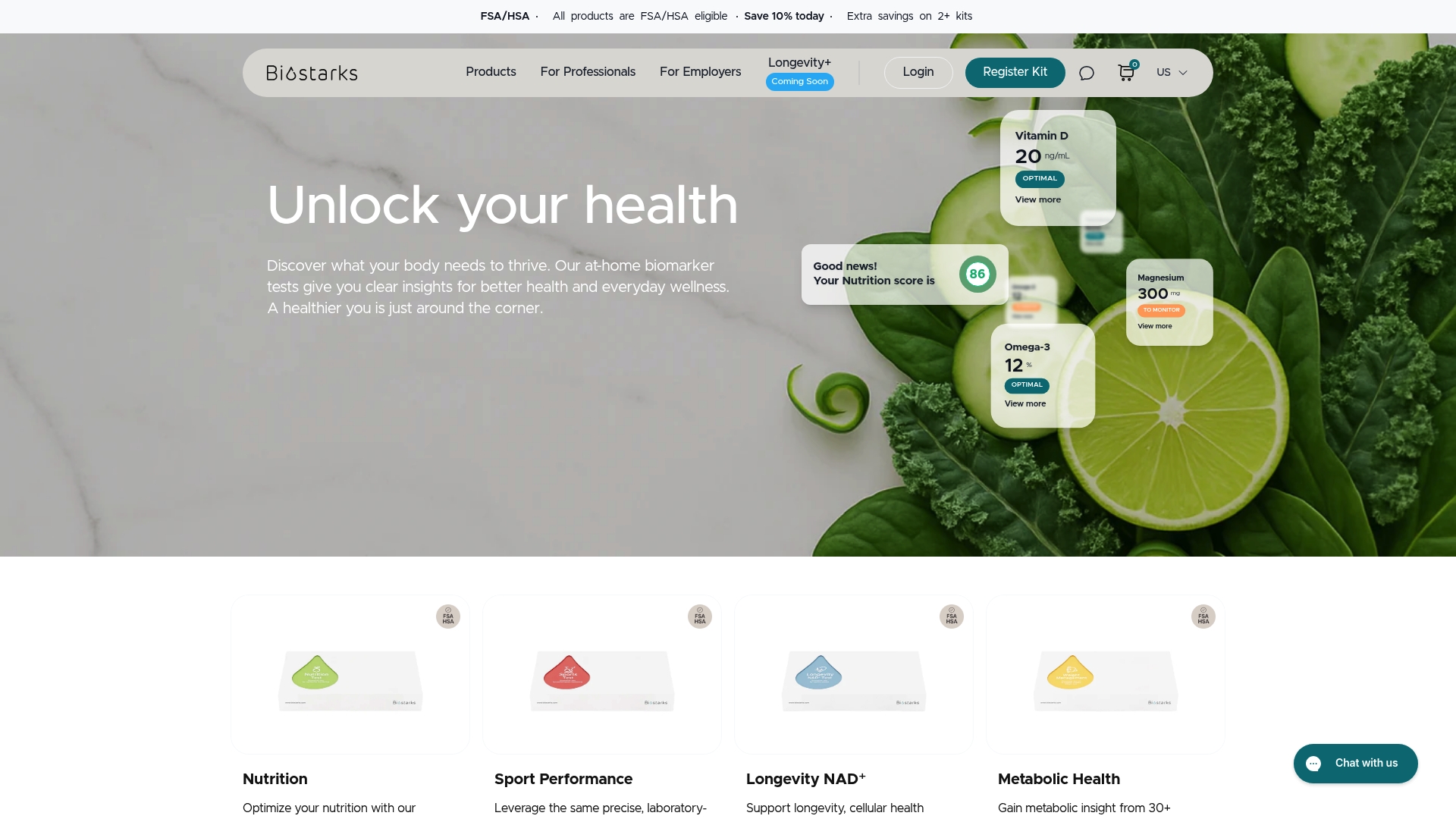
A well-structured nutrition assessment checklist is only as powerful as the data you bring to it. Biostarks, an AMR Labs SA company based in Switzerland, offers at-home biomarker testing that directly fills the lab data gap in any personal nutrition evaluation. Using advanced Swiss mass spectrometry, Biostarks analyzes vitamins, minerals, amino acids, hormones, lipids, and metabolic markers from a single at-home sample collection.
Rather than guessing at micronutrient sufficiency or relying on generic dietary reference values, you get precise individual data tied to your actual physiology. The reports are designed to be read without a science degree but carry the accuracy of clinical-grade diagnostics. Whether you are building a baseline assessment or tracking the impact of dietary changes over months, Biostarks gives you the biomarker layer that makes the rest of your checklist meaningful. Explore your options at Biostarks.
FAQ
What is a nutrition assessment checklist?
A nutrition assessment checklist is a structured tool used to evaluate multiple dimensions of nutritional health, including food intake, body measurements, physical symptoms, biomarkers, and lifestyle factors. It helps individuals identify nutritional gaps and risks before they develop into clinical problems.
How do I assess my nutrition accurately at home?
Accurate home-based nutrition assessment combines a four-to-seven day food diary, consistent body measurements, a validated screening form like DETERMINE or MST, and at-home biomarker testing to verify nutrient levels that dietary data alone cannot confirm.
What is the difference between nutrition screening and nutrition assessment?
Nutrition screening is a quick process using standardized forms to identify individuals at potential nutritional risk. Full nutrition assessment goes deeper, integrating dietary intake data, anthropometric measurements, lab results, and clinical context to characterize actual nutritional status.
How often should I complete a nutrition assessment checklist?
For most healthy adults, a full reassessment every three to six months is practical. Higher-risk individuals, including those managing chronic conditions or significant weight changes, benefit from more frequent check-ins aligned with the follow-up schedules recommended by tools like DETERMINE.
Can screening tools diagnose nutritional deficiencies?
No. Screening tools identify risk levels and prompt further evaluation. A high score on a nutrition screening form means you should consult a qualified professional or run targeted lab tests. It does not confirm a diagnosis on its own.
This content is for educational purposes only and does not constitute medical advice. Always consult with a healthcare professional before making changes to your health regimen.


