

TL;DR:
- Effective health tracking focuses on selecting meaningful metrics, using validated tools consistently, and analyzing long-term trends rather than daily fluctuations. Combining wearable data with quarterly blood biomarkers provides comprehensive insights that inform better health decisions while safeguarding mental well-being through structured reviews and privacy awareness. Building a sustainable, goal-driven system ensures consistent progress without obsession, leveraging simplicity over excessive complexity.
Health tracking best practices are defined as the systematic selection of meaningful metrics, consistent data capture using validated tools, and interpretation focused on long-term trends rather than daily fluctuations. Wearables like the Apple Watch, Fitbit, and Oura Ring have made effective health monitoring accessible to millions, while platforms like Biostarks add a deeper layer through blood biomarker analysis. The real challenge is not collecting data. It is collecting the right data, reading it correctly, and acting on it without letting the numbers control your mental state.
1. How to choose and prioritize key health metrics
The most effective approach to tracking health metrics starts with a lean dashboard of 5 to 8 vital signs, not a sprawling list of 30 variables you check every morning. A lean dashboard approach with vital signs tracked weekly and biomarker panels reviewed every 3 to 6 months delivers cost-effective monitoring without data fatigue. That balance matters because more data does not automatically mean better decisions.
The core metrics worth tracking for most adults include:
- Heart rate variability (HRV): A proxy for autonomic nervous system recovery and stress load
- Resting heart rate: Trends upward during illness, overtraining, or poor sleep
- Sleep quality and duration: Directly tied to cognitive performance, metabolic health, and immune function
- Active minutes per day: A more meaningful measure than raw step count for cardiovascular health
- Subjective energy score: A simple 1 to 10 self-rating that catches what devices miss
Blood biomarkers reviewed quarterly add a layer that wearables cannot provide. Markers like fasting glucose, ferritin, vitamin D, and cortisol reveal internal metabolic shifts weeks before symptoms appear. Biostarks offers at-home testing for exactly this type of metabolic health monitoring, using Swiss mass spectrometry for precision results.
Pro Tip: Start with three metrics you already understand and track them for 30 days before adding more. Expanding a working system is far easier than fixing an overwhelming one.

2. Best practices for selecting and using wearable devices
Wearable accuracy is not uniform across devices or metrics. A PLOS ONE study found that step counts are consistent across the Apple Watch, Fitbit, and Oura Ring, but accuracy varies significantly for moderate-to-vigorous physical activity (MVPA) and physical activity energy expenditure (PAEE). This means the calorie burn figure on your wrist may be misleading even when your step count is accurate.
Choosing the right device depends on your primary health focus:
- Apple Watch: Strong for ECG, blood oxygen, and activity tracking; integrates well with Apple Health and third-party apps
- Fitbit: Reliable for sleep staging and resting heart rate; good battery life for continuous wear
- Oura Ring: Excellent for HRV, temperature trending, and readiness scores; low-profile design improves overnight compliance
Wear your device consistently, including during sleep, to generate the baseline data that makes trend analysis meaningful. A device worn only during workouts captures roughly 30% of the physiological picture. User compliance and comfort directly affect long-term adherence, and frictionless designs encourage continued use over months and years.
Pro Tip: Match device features to your top two health goals before buying. A runner focused on cardiovascular fitness needs different sensors than someone managing sleep quality or metabolic recovery.
3. How to interpret health data by focusing on trends
A single bad night of sleep does not indicate a health problem. A 10-day pattern of fragmented sleep absolutely does. Long-term trend analysis provides better insight than individual daily readings, and ColumbiaDoctors recommends weekly or monthly reviews for accurate health understanding. Reacting to one data point is the fastest way to make poor decisions.
Use this framework to decide when a data signal warrants attention:
| Time frame | Signal type | Recommended action |
|---|---|---|
| 1 day | Isolated outlier | Log it, take no action |
| 3 to 5 days | Short-term pattern | Investigate sleep, stress, or nutrition |
| 2 or more weeks | Sustained trend | Adjust behavior or consult a professional |
| Quarterly | Biomarker shift | Review with a clinician or health coach |
Separating data capture frequency from decision-making cadence reduces false alarms and anxiety while keeping your responses grounded in real evidence. Checking your HRV every morning is fine. Changing your training plan based on one low reading is not.
Combining wearable data with quarterly blood biomarker results creates a composite picture that neither source can provide alone. For example, a wearable might flag declining sleep quality while a biomarker panel reveals low ferritin. That combination points directly to an iron deficiency, not overtraining. This is the kind of multi-source health insight that transforms raw numbers into decisions.
Pro Tip: Set a weekly 15-minute review appointment with yourself. Treat it like a standing meeting. Reviewing data in a structured session prevents the compulsive checking that erodes mental well-being.
4. Strategies to protect mental well-being while tracking
Obsessive health tracking causes measurable psychological harm. Excessive tracking leads to cyberchondria, a pattern where constant self-monitoring amplifies health anxiety rather than reducing it. ColumbiaDoctors specifically recommends disabling non-critical notifications and reducing the frequency of self-checks to maintain mental balance. The goal of wellness tracking is to feel better, not to feel watched.
Practical steps to protect your mental health while tracking:
- Disable non-essential alerts: Turn off notifications for metrics you are not actively managing. Constant pings create a stress response that undermines the health you are trying to protect.
- Set review windows: Check your data at one or two scheduled times per day, not continuously. This builds healthy distance between you and the numbers.
- Use subjective anchors: Pair objective data with a daily energy or mood rating. When the numbers and your felt experience diverge, the divergence itself is informative.
- Take tracking breaks: A one-week break from wearables every few months resets your relationship with the data and clarifies which metrics you actually miss.
Privacy is a parallel concern. A KFF Health Tracking Poll found that majorities worry about health data privacy regardless of who controls it, whether that is a hospital, an insurer, or a consumer app. Review the data sharing settings in every health app you use. Understand what is sold, what is anonymized, and what is shared with third parties before you commit to a platform. The telehealth space is evolving rapidly, and resources like The TeleHealth Dr can help you navigate privacy considerations as regulations develop.
5. Comparison of popular tracking tools and how to build your setup
No single device or method covers every dimension of health. The most effective personal health monitoring systems combine wearables, blood biomarker testing, and lifestyle self-reporting into one integrated view. Here is how the major options compare:
| Tool | Best for | Accuracy level | Price range | Key limitation |
|---|---|---|---|---|
| Apple Watch | ECG, activity, oxygen | High for steps and HR | $$$$ | Battery life; optical HR limits |
| Fitbit (Charge 6) | Sleep, resting HR | High for sleep staging | $$ | MVPA and PAEE less reliable |
| Oura Ring (Gen 4) | HRV, readiness, temperature | High for recovery metrics | $$$ | No GPS; limited activity detail |
| At-home biomarker test | Vitamins, hormones, metabolic markers | Lab-grade precision | $$ to $$$ | Snapshot only; needs quarterly repeats |
| Manual logging (apps) | Nutrition, mood, symptoms | User-dependent | Free to $ | Requires consistent self-discipline |
Device selection should be driven by which health metrics matter most to you, since performance varies significantly across devices, especially for advanced activity measures. A person managing cardiovascular risk needs different tools than an athlete optimizing recovery or someone tracking hormonal health.
Blood biomarker testing fills the gap that no wearable can close. Biomarkers reveal what is happening at the cellular and metabolic level, giving context to the behavioral signals your wearable captures. Platforms like Biostarks make this layer accessible without a clinic visit, which removes the friction that historically kept biomarker data out of personal wellness routines. Building a personalized wellness plan that integrates both streams is now realistic for any motivated individual.
Key takeaways
Effective health tracking requires selecting the right metrics, using validated tools consistently, and interpreting data through long-term trends rather than daily noise.
| Point | Details |
|---|---|
| Build a lean dashboard | Track 5 to 8 vital signs weekly; add quarterly blood biomarkers for metabolic depth. |
| Match device to your goals | Choose wearables based on the specific metrics you need, since accuracy varies by device and measure. |
| Analyze trends, not days | Act on patterns lasting 3 to 5 days or longer; treat single-day outliers as data points only. |
| Protect your mental health | Disable non-essential notifications and schedule structured data reviews to prevent tracking anxiety. |
| Combine data sources | Wearable plus biomarker data together reveal what neither source can show independently. |
Why sustainable tracking beats perfect tracking
I have worked with enough health data to know that the biggest mistake people make is not choosing the wrong device. It is expecting the device to do the thinking for them. When someone starts tracking HRV, sleep, and activity simultaneously without a clear framework, the data becomes noise within two weeks. They either stop wearing the device or start obsessing over every dip in their readiness score.
The approach that actually holds up over years is simpler than most people expect. Pick two or three metrics that connect directly to a goal you care about. Track them long enough to establish your personal baseline, because your normal is not the same as the population average printed in an app. Then review quarterly biomarker data to check what the wearable cannot see. That combination gives you signal without the static.
I am also skeptical of the idea that more precision always means better outcomes. A wearable that gives you weekly health reports you actually read and act on is worth more than a clinical-grade device generating data you ignore. Compliance beats accuracy every time. The best tracking system is the one you sustain for 18 months, not the one with the most sensors.
The other thing I would push back on is the assumption that tracking is inherently self-sufficient. Blood biomarker results, in particular, benefit from professional interpretation. Self-measured data shared with a clinician is more effective than data reviewed alone. Build a relationship with a practitioner who understands your tracking data. That partnership multiplies the value of everything you collect.
— Romain
Take your tracking further with Biostarks
If your wearable is giving you behavioral data but you want to understand what is happening beneath the surface, Biostarks provides the missing layer. Biostarks, an AMR Labs SA company, analyzes over 100 biomarkers including vitamins, hormones, amino acids, lipids, and metabolic markers using Swiss mass spectrometry. Results arrive as clear, personalized reports designed for people who take their health seriously.
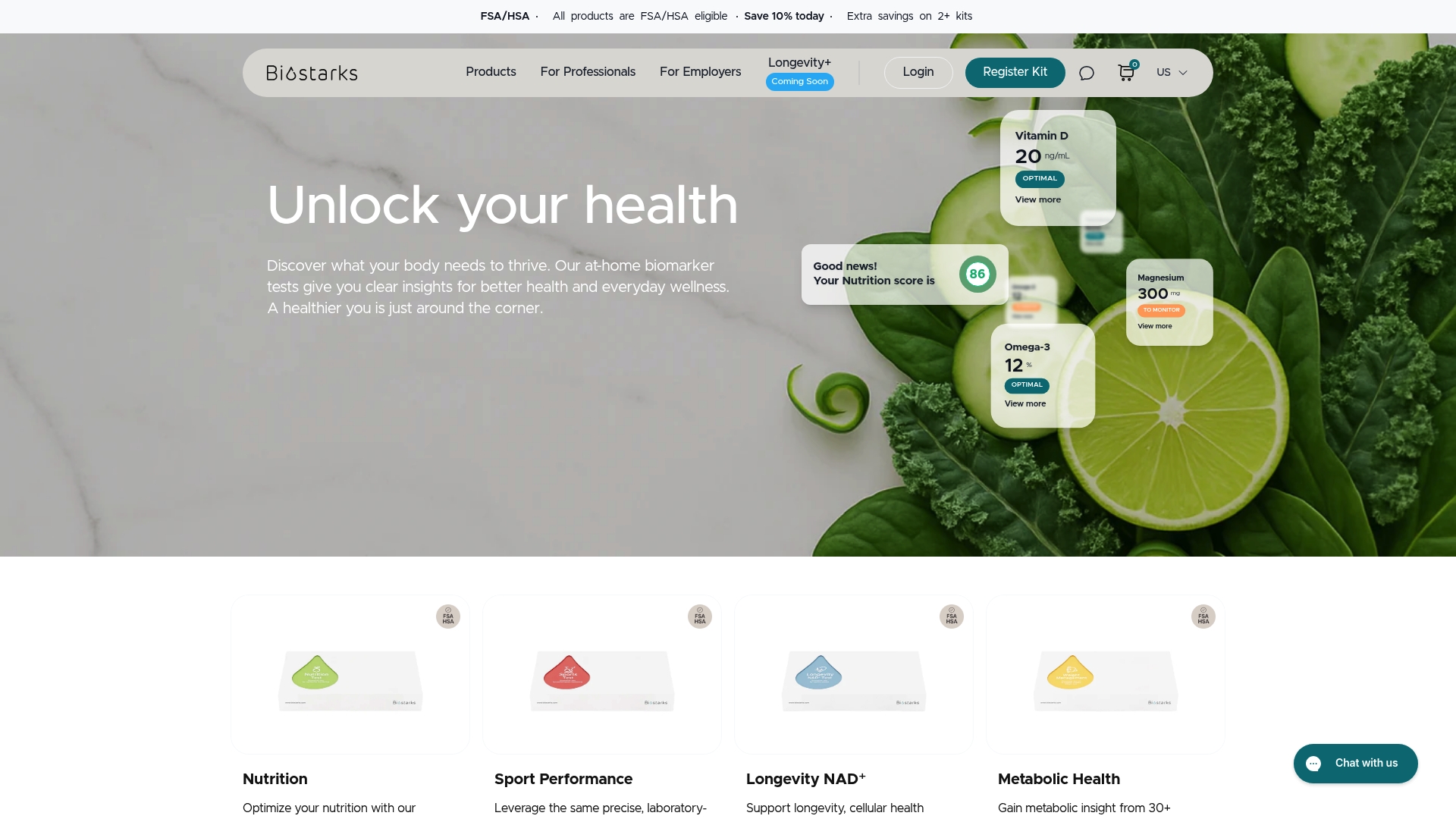
The process is straightforward: collect your sample at home, send it to the lab, and receive a detailed report that connects your internal biology to the metrics your wearable already tracks. Whether you are an athlete optimizing recovery, someone managing metabolic health, or simply committed to longevity, Biostarks gives you the precision biomarker data that turns good tracking habits into genuinely informed decisions.
FAQ
What are the most important health metrics to track?
Heart rate variability, resting heart rate, sleep quality, active minutes, and subjective energy form a strong core dashboard for most adults. Blood biomarkers reviewed quarterly add metabolic depth that wearables cannot provide.
How accurate are consumer wearables like Apple Watch and Fitbit?
Step counts are consistent across major devices, but accuracy varies significantly for MVPA and energy expenditure. Choose your device based on the specific metrics you plan to monitor most closely.
How often should I review my health tracking data?
Daily data capture is fine, but decision-making should be based on weekly or monthly trends. ColumbiaDoctors recommends weekly or monthly reviews rather than reacting to individual daily readings.
Can health tracking cause anxiety?
Yes. Excessive monitoring is linked to cyberchondria and heightened health anxiety. Disabling non-essential notifications and limiting data checks to scheduled review windows significantly reduces this risk.
How do I protect my health data privacy?
Review the data sharing settings in every health app you use and understand what is shared with third parties. A KFF Health Tracking Poll confirmed that health data privacy concerns are widespread, making active privacy management a core part of any tracking practice.
This content is for educational purposes only and does not constitute medical advice. Always consult with a healthcare professional before making changes to your health regimen.


