

TL;DR:
- Personalized nutrition uses biomarkers like blood panels, genetics, and microbiome analysis to tailor dietary advice to individual biology. It improves metabolic health markers and cellular outcomes more effectively than generic plans, especially when focusing on core blood metrics first. Biomarker testing guides precise dietary adjustments, but fundamental healthy habits remain essential for optimal health and performance.
You eat well, you train consistently, and you track your meals, yet your energy flatlines, your bloodwork stays stubbornly off, and your body composition refuses to budge. The frustrating reality is that most people are following generic nutrition advice designed for an average person who doesn’t exist. Personalized nutrition uses biomarkers including blood panels, genetic profiles, metabolomics, and microbiome analysis to tailor dietary recommendations specifically to your biology, giving you a genuine path to optimizing health, performance, and metabolic function.
Table of Contents
- Why personalized nutrition matters
- Key tools: Biomarker testing and genetic insights
- Step-by-step: Designing your personalized nutrition plan
- Troubleshooting: Common pitfalls and solutions in personalized nutrition
- Making sense of the research: Limitations and future directions
- The uncomfortable truth about personalized nutrition
- Start your personalized nutrition journey today
- Frequently asked questions
Key Takeaways
| Point | Details |
|---|---|
| Start with key biomarkers | Testing your blood glucose, lipids, and inflammation markers lays the foundation for crafting a personalized nutrition plan. |
| Personalization beats generic diets | Tailoring your diet using biomarker and genetic insights leads to better metabolic health compared to one-size-fits-all approaches. |
| Gene tests reveal tendency—not destiny | Genetic testing uncovers potential risks and needs, but ongoing habits and choices drive most health outcomes. |
| Avoid overreliance on technology | New tests and apps support informed choices, but lasting change requires consistent lifestyle improvement. |
| Science is evolving | Recent studies show real benefits, but results are stronger for diet quality than for weight loss or disease prevention. |
Why personalized nutrition matters
The human body is not a uniform machine. Two people eating the identical meal will produce wildly different blood glucose responses, inflammatory reactions, and lipid shifts. This is not anecdotal. It is grounded in decades of research on phenotypic and genotypic variation. What works brilliantly for one person can actively undermine another’s metabolic health, and that fundamental truth exposes why one-size-fits-all dietary guidelines have a ceiling.
Biomarker-driven nutrition removes that ceiling. By mapping your current metabolic state, genetic predispositions, and microbiome composition, you can make targeted dietary choices rather than educated guesses. The evidence is building. RCTs confirm personalized nutrition improves dietary quality, HbA1c, triglycerides, and insulin sensitivity, even if the effects on weight loss and blood pressure remain modest compared to standard programs.
“The goal of personalized nutrition is not always dramatic weight loss. The real wins are metabolic, cellular, and long-term. That’s where the science is strongest.”
Here is what biomarker-informed nutrition actually targets:
- Glycemic regulation: Identifying how your body handles carbohydrates, specifically post-meal glucose spikes that drive insulin resistance
- Lipid metabolism: Understanding your LDL particle size, triglycerides, and HDL function rather than just total cholesterol
- Inflammatory load: Measuring markers like CRP and IL-6 that reveal whether your current diet is fueling chronic inflammation
- Micronutrient status: Spotting deficiencies in vitamins D, B12, magnesium, and zinc that silently impair energy and cognition
- Hormonal balance: Assessing cortisol, insulin, and thyroid markers that interact directly with how you process food
Reviewing wellness and performance data consistently shows that individuals who combine objective biomarker tracking with dietary adjustments report better sustained energy, faster recovery, and stronger metabolic numbers than those relying on generic plans alone.
| Outcome measure | Standard dietary advice | Personalized nutrition (biomarker-guided) |
|---|---|---|
| Dietary quality score | Moderate improvement | Significant improvement |
| HbA1c reduction | Minimal | Clinically meaningful |
| Triglyceride reduction | Variable | Consistent |
| Weight loss | Comparable | Comparable (not superior) |
| Insulin sensitivity | Modest | Strong improvement |
The table above clarifies something important: personalized nutrition does not reliably beat generic programs for scale weight alone. But if your goal extends beyond the number on the scale, specifically into metabolic health, performance, and longevity, the advantage becomes clear.
Key tools: Biomarker testing and genetic insights
Understanding why personalized nutrition works is half the battle. Knowing which tools to use is the other half. There are four main categories of biomarker testing used in nutrition personalization, and each tells a different story about your body.
1. Blood-based metabolic panels measure your current state. Fasting glucose, HbA1c, lipid fractions, liver enzymes, and inflammatory markers give you a real-time snapshot of how your diet is affecting your physiology right now. These are the most actionable tests for most people because they reflect what is actually happening in your body today.
2. Nutrigenomic (DNA) testing reveals long-term predispositions coded in your genes. Genotype-based nutrition testing focuses on single nucleotide polymorphisms (SNPs) like MTHFR for folate metabolism, FTO for obesity risk, and TCF7L2 for type 2 diabetes predisposition. These tests require CLIA-certified labs and evidence-graded reports to be clinically meaningful. DNA does not change, so you test once and use those insights to inform lifelong dietary strategy.
3. Metabolomics analyzes the small molecules your metabolism produces, including amino acids, organic acids, and fatty acid metabolites. It bridges the gap between your genes and your actual biochemical function. Where DNA testing shows what could happen, metabolomics shows what is happening at the cellular level.
4. Microbiome analysis maps the trillions of bacteria in your gut that influence nutrient absorption, immune function, and even mood. Certain microbiome profiles respond better to fiber-rich diets; others benefit from targeted probiotic interventions. This is the newest frontier in personalized nutrition and the most variable between individuals.
| Testing type | What it reveals | Best for | Limitation |
|---|---|---|---|
| Blood panels | Current metabolic state | Immediate dietary adjustments | Snapshot only, needs repeating |
| DNA/Nutrigenomics | Genetic predispositions | Long-term dietary strategy | Does not reflect current state |
| Metabolomics | Cellular biochemistry | Deep performance optimization | Higher cost, complex interpretation |
| Microbiome | Gut bacteria composition | Digestive and immune health | Highly variable day to day |
Understanding the types of biomarkers available for personal health insight helps you prioritize which tests make sense for your specific goals. Not everyone needs all four categories. A focused, well-interpreted panel beats a scattershot approach every time.
Pro Tip: Start with blood-based markers before investing in advanced tests like metabolomics. They give you the clearest, most actionable data at the lowest cost, and they tell you whether more specialized testing is actually warranted for your situation.
When evaluating any testing service, look for labs that use validated methodologies, provide reference ranges adjusted for age and sex, and offer clinician-reviewed reports. Unlocking your health data through reputable testing is what separates actionable insight from marketing noise.
Step-by-step: Designing your personalized nutrition plan
Knowing your biomarkers matters only if you translate them into real dietary changes. Here is a practical, sequential process that works for health-conscious individuals who want results, not complexity.
Step 1: Establish a baseline panel. Before changing anything, measure fasting glucose, HbA1c, a full lipid panel (including triglycerides and HDL), CRP for inflammation, and key vitamins like D and B12. Starting with these key biomarkers through affordable at-home panels gives you a metabolic fingerprint that will guide every nutritional decision downstream.

Step 2: Identify your priority targets. Review which markers are out of range or trending in the wrong direction. Elevated fasting glucose points toward carbohydrate sensitivity. High triglycerides often indicate excessive refined carbohydrate or alcohol intake. Low vitamin D suggests supplementation and UV exposure adjustments.
Step 3: Adjust your macronutrient ratios. If your glucose response is elevated, shift toward lower-glycemic carbohydrate sources, increase fiber, and prioritize protein for satiety. If your lipids are compromised, target saturated fat reduction and increase omega-3 rich foods. These are not universal prescriptions. They are individualized responses to your specific numbers.
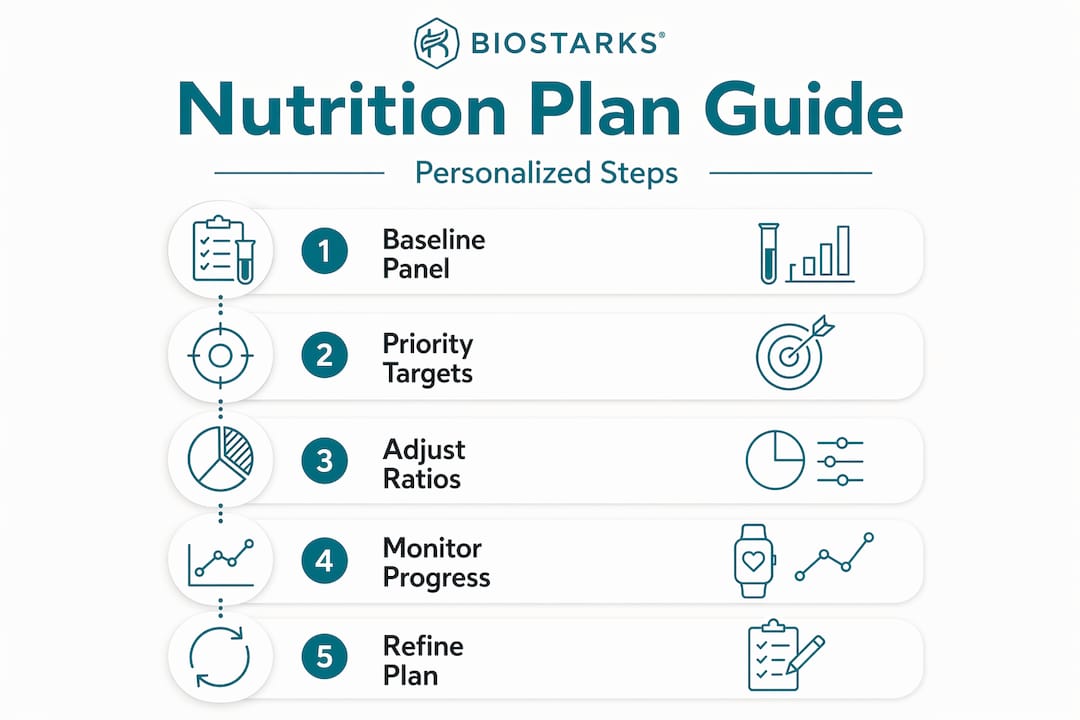
Step 4: Layer in continuous glucose monitoring (CGM). Wearing a CGM for two to four weeks gives you granular, real-time feedback on how specific foods affect your blood sugar. You will likely discover that some “healthy” foods spike your glucose dramatically while others you expected to be problematic barely move the needle. This data is among the most transformative personalized nutrition tools available.
Step 5: Retest and refine. Personalization is not a one-time event. Retest your core biomarker panel every three to six months, especially during periods of dietary change, high stress, or new training demands. Your physiology shifts with age, season, and lifestyle, and your nutrition plan should shift with it.
Statistic callout: Studies show that CGM-guided dietary adjustments can reduce post-meal glucose excursions by up to 20 to 30 percent in non-diabetic individuals, meaningfully lowering long-term metabolic risk without caloric restriction.
Pro Tip: When you first get your results, focus on your two or three most significant out-of-range markers rather than trying to fix everything simultaneously. Targeted changes produce cleaner data on what is actually working. Check the biomarker interpretation guide to build confidence reading your own reports.
Troubleshooting: Common pitfalls and solutions in personalized nutrition
Even with excellent data, people make predictable mistakes that undermine their results. Knowing these traps in advance keeps you from wasting months chasing the wrong variables.
Over-relying on technology without changing behavior. A biomarker report is only as valuable as the behavioral changes it drives. Knowing your MTHFR variant affects folate processing means nothing if you are not consistently eating leafy greens or adjusting your supplementation. Data informs habits. It does not replace them.
Ignoring sleep and stress. Cortisol dysregulation from chronic poor sleep can raise fasting glucose and blunt insulin sensitivity as effectively as a bad diet. If your metabolic markers are not improving despite dietary adjustments, assess sleep quality and stress load before assuming your diet is wrong.
Using non-validated tests. The direct-to-consumer testing market contains genuinely useful products and some that offer impressive-looking reports with limited scientific validity. Key challenges in personalized nutrition include study heterogeneity, replication issues, privacy concerns, the ongoing need for long-term randomized trials, and rigorous cost-effectiveness analysis. Not every test on the market meets these standards.
- Always verify that labs are CLIA-certified or use equivalent European standards
- Ask whether the biomarkers tested have peer-reviewed evidence linking them to dietary interventions
- Confirm that reports include reference ranges and are reviewed by qualified practitioners
- Understand what happens to your genetic or biometric data after testing
Misinterpreting genetic results as destiny. DNA predisposes, it does not determine. A high-risk FTO variant does not mean you will become obese. It means you may need to be more deliberate about energy density and satiety signaling. Nutritionists using biomarker data consistently report that lifestyle intervention produces stronger outcomes than genetic risk scores alone predict.
Neglecting special considerations. Individuals with a history of disordered eating should approach detailed macro-tracking and repeated body composition measurement with caution. Anyone on medications that affect lipid metabolism, blood glucose, or hormonal function should interpret biomarker changes in consultation with a qualified clinician.
“The most dangerous belief in personalized nutrition is that the right test will give you the right answer without requiring meaningful effort. The data tells you where to focus. The effort is still entirely yours.”
Making sense of the research: Limitations and future directions
The personalized nutrition field is genuinely exciting. It is also genuinely overhyped in parts. Critical evaluation helps you invest in what works and avoid what sounds impressive but lacks real-world validation.
The landmark Food4Me study, one of the largest European RCTs on personalized nutrition, found that basic personalized dietary advice improved diet quality and health markers meaningfully. Adding layers of biomarker or genetic data on top of simple personalization produced no statistically significant additional benefit in most outcomes. That is a humbling finding worth taking seriously.
At the same time, artificial intelligence and machine learning are changing the equation. AI integrated with multi-omics data shows a standardized mean difference of 1.67 versus 1.08 for algorithmic-only approaches in meta-analysis, suggesting that combining AI with comprehensive biological data may genuinely outperform simpler methods in coming years.
| Approach | Current evidence strength | Key limitation |
|---|---|---|
| Basic personalized advice | Strong (Food4Me, multiple RCTs) | May not need advanced testing |
| Blood biomarker-guided diet | Strong for metabolic markers | Limited long-term RCT data |
| Nutrigenomic-guided diet | Moderate | Population-level, not individual validation |
| AI/multi-omics integration | Emerging, promising | Validation and accessibility gaps |
Pro Tip: Treat current personalized nutrition science as a precise tool, not a crystal ball. Use well-validated blood panels as your primary data source and treat genetic or microbiome insights as supporting context rather than hard directives.
Understanding how data transforms personalized wellness means embracing both its power and its honest limitations. The researchers advancing this field are the first to say more long-term validation is needed before every commercial claim can be trusted.
The uncomfortable truth about personalized nutrition
Here is what most guides quietly skip over: the gap between knowing your biomarkers and actually transforming your health is still filled by unglamorous, non-negotiable fundamentals. Sleep. Consistent movement. Stress management. Whole food dietary patterns. Biomarker testing does not replace any of these. It sharpens them.
The contrasting views within personalized nutrition research tell a clear story if you are willing to hear it. Promising RCTs show real clinical improvements. But the Food4Me data shows that simple, personalized dietary guidance without advanced testing can be enough for many people. AI and multi-omics approaches look powerful on paper, but they need far more real-world validation before they deserve the hype they receive.
What this means practically is that many people would gain more from consistent adherence to evidence-based basics, informed by periodic blood testing, than from spending heavily on comprehensive genomic or metabolomic panels before they have their fundamentals solid. The role of biomarkers in health optimization is to give you precision within a framework of healthy living, not to substitute for it.
The most honest use of personalized nutrition data is as a feedback mechanism. You eat well, you sleep, you train, and you use biomarker data to identify the specific adjustments that will move your specific numbers. That is a tool with genuine power. But it is a tool, not a transformation by itself.
Start your personalized nutrition journey today
You now have a clear framework for using biomarker data to build a nutrition plan that actually fits your biology. The next step is getting objective data to work with.
Biostarks makes it straightforward to get started with at-home biomarker testing that uses advanced Swiss mass spectrometry, delivering the kind of precision data that used to require clinical lab visits. Whether you are focused on metabolic health, athletic performance, or long-term longevity, having your core blood markers analyzed gives you the foundation every personalized nutrition strategy needs. Athletes and biohackers are already using biomarker testing benefits to make sharper, faster dietary decisions. Explore the Biostarks testing panels at biostarks.com and get the data your nutrition plan has been missing.
Frequently asked questions
Which biomarkers should I test first for personalized nutrition?
Start with blood glucose, lipids, and inflammation markers for the most actionable insights at the lowest cost and complexity.
Can personalized nutrition help me lose weight?
It can, but RCTs show personalized nutrition produces the strongest results for metabolic markers like HbA1c and triglycerides rather than scale weight, which tends to be comparable to standard programs.
Does DNA testing override my lifestyle choices?
No. Genetics reveal predispositions, but the Food4Me data confirms that plant-based dietary shifts and consistent lifestyle habits have a major influence on outcomes regardless of genetic risk scores.
Is personalized nutrition worth the cost?
For most people, a focused blood panel is enough to generate meaningful improvements. The Food4Me Study found that basic personalized guidance improved diet quality and health without requiring advanced genomic or metabolomic layers.
What are the privacy risks of biomarker or genetic testing?
Data privacy is a real consideration. Challenges in personalized nutrition research include privacy concerns alongside cost and study replication issues, so always use trusted, certified labs and review their data handling policies before testing.


