

TL;DR:
- Minerals are crucial for athletic performance, governing processes like oxygen delivery, nerve signaling, and muscle contraction. Assessing individual mineral status through biomarker testing and tailoring intake ensures optimal recovery, endurance, and muscle function. Personalized strategies and data-driven adjustments prevent deficiencies that subtly impair performance despite apparent dietary adequacy.
Most athletes have their protein intake dialed in and their training load carefully planned, but minerals are where performance quietly breaks down. The role of minerals for athletes extends far beyond preventing cramps. These micronutrients govern oxygen delivery, nerve signaling, muscle contraction, and antioxidant defense at the cellular level. Sweat loss, high metabolic demand, and training-induced stress mean your mineral requirements differ substantially from those of a sedentary person. The importance of minerals for athletes is not a matter of simply taking a multivitamin and moving on. This guide gives you the science and the strategy.
Table of Contents
- Key Takeaways
- The role of minerals for athletes in physiology
- Common deficiencies that hurt performance
- Personalizing mineral intake and supplementation
- Electrolyte balance during training and competition
- Integrating minerals into your training plan
- My take on why minerals get underestimated
- Know your mineral status with Biostarks
- FAQ
Key Takeaways
| Point | Details |
|---|---|
| Minerals drive performance fundamentals | Electrolytes, iron, and trace minerals directly affect energy output, muscle function, and recovery speed. |
| Deficiency hits before symptoms appear | Non-anemic iron deficiency and low magnesium impair performance before clinical symptoms are obvious. |
| Sweat loss is highly individual | Sodium losses range from 200 to 1800 mg per liter of sweat, making generic replacement strategies unreliable. |
| Testing beats guessing | Biomarker tracking for ferritin, serum magnesium, and electrolytes provides the data needed to personalize intake. |
| Supplements follow deficiency, not routine | Supplementation improves performance only when a confirmed deficiency exists, not as a blanket protocol. |
The role of minerals for athletes in physiology
Minerals are inorganic elements that your body cannot synthesize. Every action that makes athletic output possible, from firing a motor neuron to generating ATP, depends on them. Understanding which minerals do what gives you a clear framework for why deficiencies translate directly into performance losses.
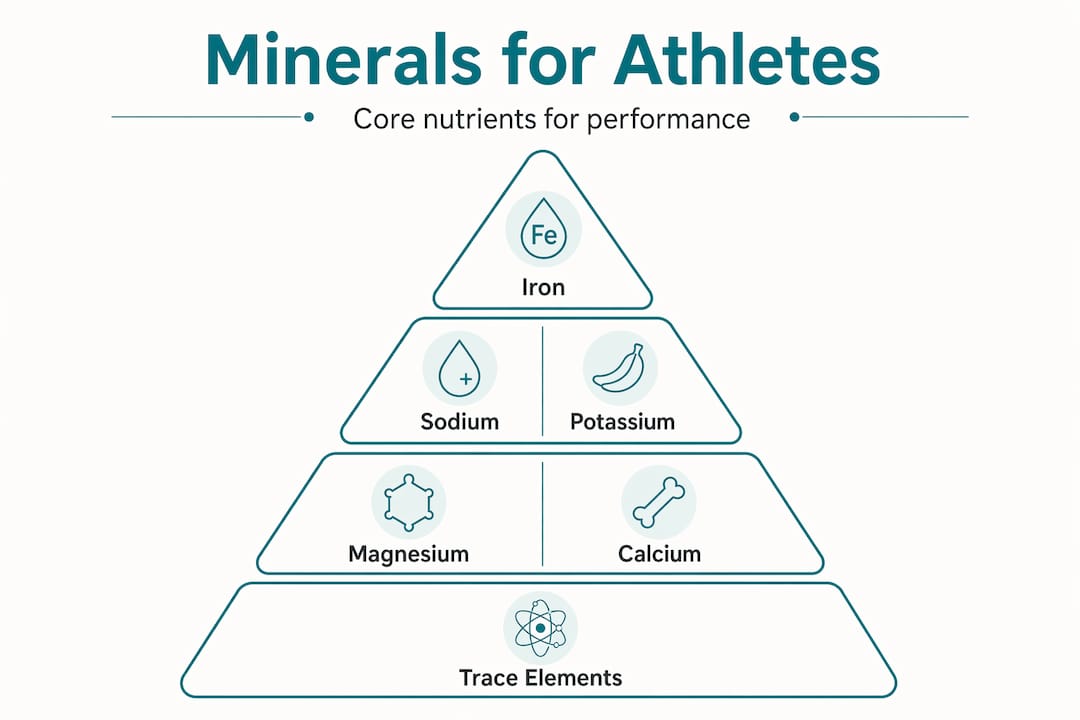
The electrolyte group carries the most immediate impact during training:
- Sodium regulates fluid balance across cell membranes and drives muscle action potentials. Without adequate sodium, nerve impulse transmission slows and fluid distribution across tissues becomes dysregulated.
- Potassium works alongside sodium to maintain the electrochemical gradient that enables muscle contraction. Low potassium accelerates fatigue during sustained effort.
- Magnesium participates in over 300 enzymatic reactions, including ATP synthesis and protein production. It also modulates calcium entry into muscle cells, which directly controls contraction and relaxation cycles.
- Calcium triggers the cross-bridge mechanism in muscle fibers that produces force. Beyond contraction, calcium supports bone density adaptation to mechanical loading from training.
Trace minerals carry equal weight in a different set of processes. Iron sits inside hemoglobin and myoglobin, determining how much oxygen your working muscles actually receive. Zinc anchors enzymes involved in immune function and protein synthesis, both critical for recovery between sessions. Selenium functions as a core component of glutathione peroxidase, your primary intracellular antioxidant enzyme. Exercise alters selenium metabolism, and intracellular depletion can occur in athletes with regular training loads, leaving muscle cells more exposed to oxidative damage.
Mineral needs also shift with context. Training in heat, competing at altitude, or moving through a high-volume training block each changes the rates at which specific minerals are lost or consumed. A flat maintenance recommendation misses this reality entirely.
Common deficiencies that hurt performance
Athletes face a specific vulnerability that non-athletes do not: high physiological throughput means both higher mineral consumption and higher loss through sweat. The result is that deficiencies appear earlier and hit harder.
Iron deficiency is the most studied and arguably the most consequential. Non-anemic iron deficiency affects up to 60% of female athletes. The critical insight here is that performance drops before hemoglobin falls low enough to diagnose anemia. Ferritin levels below 20 to 40 µg/L are commonly associated with reduced endurance and elevated perceived effort, even when red blood cell counts look normal. Female endurance athletes are particularly exposed due to menstrual iron losses compounding training demands.

Magnesium deficiency follows a similarly hidden pattern. Most athletes with low magnesium fall into a gray zone where serum levels appear borderline rather than clearly deficient, but neuromuscular symptoms are already present. Hypomagnesemia is widespread but underdiagnosed in athletic populations, showing up as muscle cramps, impaired sleep quality, and reduced recovery capacity.
Electrolyte imbalances from sweat loss create a different category of risk. Sodium is the dominant electrolyte in sweat at an average of 900 mg per liter, and during intense exercise in warm conditions, sweat rates can reach 2.5 liters per hour. That represents a potential sodium deficit exceeding 2000 mg per hour. Drinking plain water to replace this loss dilutes remaining blood sodium and can trigger hyponatremia, a condition with serious neurological consequences.
Selenium imbalance occupies an often-overlooked corner of athlete nutrition. Both deficiency and excess are problematic. Insufficient selenium compromises oxidative stress defense during hard training. Excessive supplementation without confirmed need creates toxicity risk. This is a mineral where the margin matters enormously.
Personalizing mineral intake and supplementation
Generic mineral recommendations built for the general population do not map onto athletic physiology with any reliability. Personalizing your approach requires answering a specific set of questions about your own training and physiology.
- Assess your training context. Sweat rate, sport type, training volume, and environmental conditions all determine your mineral losses. A marathon runner training in summer heat has dramatically different needs from a weight-room-focused athlete in a climate-controlled gym.
- Get baseline biomarker data. Serum ferritin is the most clinically useful marker for iron status in athletes. A single hemoglobin test misses early iron deficiency entirely. Tracking ferritin longitudinally captures the trajectory before deficiency becomes severe enough to impair training. Serum magnesium provides a starting point for magnesium assessment, though red blood cell magnesium offers greater sensitivity.
- Prioritize food sources first. Red meat, shellfish, legumes, nuts, seeds, leafy greens, and dairy provide concentrated mineral content within a matrix of complementary nutrients that improves absorption. Building meals around these foods is more effective than correcting a poor diet with supplements.
- Supplement only what testing confirms. There is little evidence that mineral supplements improve performance in athletes already meeting their needs. Supplementation becomes appropriate when deficiency is confirmed or when dietary intake consistently falls short of demand, not as routine insurance.
- Match supplement form to clinical need. For iron deficiency, targeted supplementation at around 100 mg elemental iron per day for six to eight weeks significantly improves endurance performance in deficient female athletes. For magnesium, oral organic salts such as magnesium glycinate or citrate are appropriate for mild deficiency, while intravenous magnesium sulfate is reserved for severe clinical cases.
Pro Tip: If you are a female endurance athlete, check ferritin specifically, not just a standard iron panel. A ferritin result below 30 µg/L warrants attention even if everything else in the panel looks normal.
Hydration strategy connects directly to mineral management. Drinking to thirst during exercise of moderate duration works reasonably well, but high-output efforts lasting beyond 90 minutes require a more deliberate electrolyte plan.
Electrolyte balance during training and competition
Managing the role of electrolytes in sports performance comes down to one core challenge: your losses are not the same as anyone else’s. Individual sweat sodium concentration ranges from 200 to 1800 mg per liter, a ninefold difference. A generic electrolyte drink calibrated to average losses will either undersupply a heavy salt sweater or oversupply a light one.
| Electrolyte | Typical sweat loss | Consequence of under-replacement |
|---|---|---|
| Sodium | 500 to 1500 mg/hour | Hyponatremia, fatigue, muscle dysfunction |
| Potassium | 150 to 400 mg/hour | Increased cramping, reduced contractile force |
| Magnesium | 4 to 15 mg/hour | Neuromuscular irritability, impaired recovery |
The table reflects ranges, not fixed values. Your position within that range depends on genetics, heat acclimatization status, and fitness level. Well-trained athletes typically have lower sodium concentrations in their sweat because adaptation improves electrolyte conservation.
Pre-hydration sets the starting point for any training session or competition. Arriving mildly hyponatremic because you drank too much plain water the night before a race puts you at an immediate deficit. Targeting urine color consistent with pale yellow before exercise starts is a practical check.
During exercise, matching fluid intake to sweat rate without exceeding it prevents both dehydration and dilutional hyponatremia. For efforts lasting longer than two hours, sodium intake of 500 to 1000 mg per hour represents a reasonable baseline, adjusted up for heavy sweaters or hot conditions.
Pro Tip: Salty foods and electrolyte drinks before a long workout prime your fluid balance more effectively than loading water alone. The sodium stimulus drives thirst appropriately and helps retain the fluid you consume.
Post-exercise recovery is where magnesium’s role in minerals and muscle recovery becomes most practical. Magnesium participates in the relaxation phase of muscle contraction and supports sleep quality, both of which accelerate adaptation between sessions.
Integrating minerals into your training plan
Knowledge about minerals only creates value when it is applied consistently across the training cycle. Here is how to build mineral awareness into your daily practice:
- Track what you actually eat, not what you plan to eat. Apps like Cronometer give you elemental mineral breakdowns, which reveals gaps that are invisible when you are just following a general meal plan.
- Adjust around training phases. High-volume blocks increase iron turnover through hemolysis from foot strike and muscle damage. Increase iron-rich food frequency proactively, not reactively after a performance plateau.
- Use athlete blood testing at the start of each training season and when performance stagnates unexpectedly. Mineral panels provide objective data that removes the guesswork from supplementation decisions.
- Review your electrolyte strategy for each competition context separately. A sprint triathlon in cool weather demands a different approach than a 100-mile ultramarathon in summer heat.
- Avoid the mistake of treating mineral supplementation as a static protocol. Mineral needs are not static; they shift with training intensity and environmental stress, requiring flexible dietary and supplementation responses.
Pairing your nutrient tracking checklist with regular biomarker monitoring creates a feedback loop that general supplement advice can never replicate.
My take on why minerals get underestimated
I have looked at a lot of athlete health data over the years, and the pattern that stands out most consistently is not dramatic deficiency. It is the subclinical gap. Athletes who are eating well by every conventional standard, training hard, and sleeping adequately but still hitting a ceiling they cannot explain. When you run the numbers, ferritin at 18, magnesium at the low end of normal, and sodium replacement built around generic guidance rather than their actual sweat rate. None of these are emergencies. All of them are limiting.
What I have learned is that the minerals-for-sports-performance conversation needs to stop being about whether to take a multivitamin. It should be about understanding your specific physiology well enough to know where your gaps actually are. That requires data, not assumptions.
The athletes I have seen respond best to mineral optimization are the ones who treat it the same way they treat their training load: they measure, they adjust, and they track the response. They do not load up on supplements hoping something sticks. They find out what their body specifically needs at this point in the training cycle, and they address that. That precision is what separates mineral management that actually moves the needle from the generic approach that does nothing.
— Romain
Know your mineral status with Biostarks

Understanding the best minerals for endurance athletes and how they interact with your specific physiology is a question that diet apps and general guidelines cannot answer with precision. Biostarks, an AMR Labs SA company, provides at-home biomarker testing using advanced Swiss mass spectrometry to analyze your mineral status alongside vitamins, hormones, amino acids, and metabolic markers. The results come with clear, personalized interpretation so you know exactly where to act. Whether you want to screen for iron deficiency, assess your electrolyte baseline, or build a data-informed supplementation plan, Biostarks Nutrition testing gives you the foundation. Athletes using real biomarker data make more precise decisions and avoid both the risk of deficiency and the waste of supplementing what you do not need.
FAQ
What minerals are most important for athletic performance?
Sodium, potassium, magnesium, calcium, and iron are the highest-priority minerals for sports performance. Each governs a distinct process including fluid balance, muscle contraction, ATP synthesis, and oxygen delivery.
How does iron deficiency affect athletes without causing anemia?
Subclinical iron deficiency reduces ferritin stores and limits oxygen delivery to muscles, causing fatigue and reduced endurance capacity before hemoglobin drops to anemic levels. Ferritin below 20 µg/L is a meaningful threshold even when a standard blood count appears normal.
Can mineral supplements improve athletic performance?
Mineral supplements improve performance only when a confirmed deficiency exists. Research shows that supplementation in athletes already meeting their mineral needs through diet provides no measurable performance benefit.
How do I know if I am losing too much sodium during exercise?
Sweat sodium loss varies widely between individuals, ranging from 200 to 1800 mg per liter. Symptoms like excessive salt deposits on skin, strong thirst relative to other athletes, or cramping despite adequate hydration suggest higher-than-average sodium losses worth quantifying.
How often should athletes test their mineral levels?
Testing at the beginning of each training season and whenever performance plateaus unexpectedly is a practical baseline. Athletes in high-volume training or hot-weather conditions may benefit from more frequent monitoring of ferritin, serum magnesium, and electrolyte panels.
This content is for educational purposes only and does not constitute medical advice. Always consult with a healthcare professional before making changes to your health regimen.


