

Health-conscious individuals and athletes collect biomarker data but struggle to transform complex lab reports into clear wellness improvements. You need a structured wellness optimization checklist to bridge raw numbers and actionable steps. Following a science-backed checklist using at-home biomarker testing delivers measurable gains in metabolic health and athletic performance, empowering you to take control of your personal optimization journey with confidence and precision.
Table of Contents
- Selection Criteria For Wellness Optimization Checklists
- Key Biomarkers To Monitor For Optimal Wellness And Athletic Performance
- Comparing Testing Technologies For Home Use
- Comparing Leading At-Home Testing Services
- Actionable Next Steps Based On Biomarker Results
- Combining Performance Tracking With Biomarker Data For Enhanced Results
- Optimize Your Wellness With Biostarks At-Home Biomarker Testing
- Frequently Asked Questions
Key takeaways
| Point | Details |
|---|---|
| Effective checklist selection prioritizes report clarity and personalized recommendations | Users rated report clarity and personalized recommendations as top 2 decision criteria with over 85% satisfaction. |
| Critical biomarkers include vitamin D, testosterone, and cortisol linked to performance | These markers regulate energy, recovery, immune function, and stress balance affecting athletic output. |
| Swiss mass spectrometry tests provide highest accuracy for home use | Mass spectrometry offers 99% accuracy versus traditional immunoassays’ 85 to 90%. |
| Personalized actions based on biomarkers improve metabolic health significantly | Personalized interventions can improve metabolic markers by 25% in 3 to 6 months. |
| Integrating performance tracking with biomarkers boosts training outcomes | Combined biomarker and performance tracking improves training outcomes by 20%. |
Selection criteria for wellness optimization checklists
Choosing the right wellness optimization checklist and biomarker testing service determines whether you get actionable insights or overwhelming data. Start by evaluating report clarity and personalized recommendations, which users rated as the top 2 decision criteria with over 85% satisfaction. Clear reports transform complex lab values into specific next steps you can implement immediately.
Your checklist should prioritize services offering comprehensive biomarker panels aligned with your specific goals. Athletes need hormone profiles and recovery markers, while longevity-focused individuals benefit from metabolic and inflammatory biomarkers. Select panels measuring 30 or more biomarkers to capture the full picture of your internal health status and identify optimization opportunities across multiple systems.
Accuracy benchmarks matter significantly when selecting testing technologies. Mass spectrometry-based tests deliver near-clinical precision, ensuring you base decisions on reliable data rather than measurement noise. Turnaround times ranging from 1 to 7 days impact how quickly you can act on results and adjust your wellness protocols.
Expert support availability enhances correct interpretation and practical application of your biomarker data. Services providing personalized guidance help you avoid common misinterpretations and implement changes effectively. This support becomes especially valuable when tracking complex hormone ratios or metabolic markers requiring nuanced understanding.
Consider these essential selection factors:
- Comprehensive biomarker coverage matching your wellness and performance objectives
- Report formats emphasizing visual clarity and actionable recommendations over raw numbers
- Testing technology accuracy validated against clinical laboratory standards
- Turnaround time enabling timely interventions and protocol adjustments
- Access to expert interpretation support for complex biomarker relationships
Pro Tip: Request sample reports before committing to a testing service to evaluate whether the presentation style matches your learning preferences and provides genuinely actionable guidance.
Exploring health optimization with biomarker insights helps you understand how data-driven approaches transform wellness outcomes. Learning about at-home biomarker testing benefits clarifies how convenient testing fits into busy lifestyles while maintaining clinical-grade accuracy.
Key biomarkers to monitor for optimal wellness and athletic performance
Focusing on the right biomarkers drives meaningful improvements rather than chasing irrelevant metrics. Vitamin D stands out as a foundational marker influencing immune function, bone health, and muscle performance. Deficiency affects over 40% of athletes and compromises both training adaptations and recovery capacity.

Testosterone and cortisol regulate your energy availability, recovery speed, and stress response. The testosterone to cortisol ratio reveals whether your training load exceeds recovery capacity, signaling when to adjust intensity or volume. Cortisol elevation without adequate testosterone signals overtraining risk and impaired adaptation to physical stress.
Lipid profiles reveal cardiovascular health and metabolic efficiency beyond simple cholesterol numbers. Advanced lipid testing measures particle sizes and counts, identifying cardiovascular risk invisible to standard panels. Triglyceride to HDL ratio serves as a powerful metabolic health indicator, with optimal ratios below 2:1 suggesting excellent insulin sensitivity.
Advanced testing technologies now measure over 30 biomarkers simultaneously, including amino acid profiles, mineral status, and hormone ratios linked to longevity. This comprehensive view identifies subtle imbalances before they manifest as symptoms or performance declines. Tracking multiple systems reveals how interventions in one area ripple through your entire physiology.
Prioritize biomarkers aligned with your specific goals and current health status:
- Vitamin D for immune function, bone health, and muscle performance optimization
- Testosterone and cortisol for energy regulation, recovery capacity, and stress balance
- Advanced lipid panels for cardiovascular health and metabolic status assessment
- Amino acid profiles revealing protein metabolism and recovery efficiency
- Inflammatory markers identifying chronic stress and tissue damage
- Mineral status affecting enzyme function and cellular energy production
Understanding key biomarkers for athletes helps you select the most impactful markers for performance gains. Knowing which critical metabolic biomarkers to track ensures you monitor the markers driving long-term health outcomes.
Comparing testing technologies for home use
Testing technology accuracy determines whether you optimize based on truth or measurement error. Mass spectrometry delivers 99% accuracy compared to traditional immunoassays’ 85 to 90%, making it the gold standard for precise biomarker quantification. This accuracy difference matters significantly when tracking small changes or optimizing markers within narrow ranges.
Swiss mass spectrometry technology provides high-resolution measurement of multiple biomarkers simultaneously from tiny blood samples. The method separates molecules by mass and charge, then counts individual molecules with exceptional precision. This approach eliminates the cross-reactivity issues plaguing antibody-based immunoassays, especially for hormone measurement.
Traditional immunoassays remain more common due to lower equipment costs and faster processing. These antibody-based tests work well for abundant markers like vitamins but struggle with low-concentration hormones and structurally similar molecules. The 85 to 90% accuracy suffices for detecting major deficiencies but misses subtle optimization opportunities.
Finger-prick blood samples enable convenient collection while maintaining reliability. Studies show finger-prick samples demonstrate greater than 98% concordance with traditional venous draws for most biomarkers. You collect samples at home on your schedule, avoiding clinic visits and enabling more frequent monitoring.
Turnaround time varies from 1 to 7 days depending on technology complexity and laboratory logistics. Mass spectrometry requires specialized equipment and trained technicians, sometimes extending processing time. Balancing accuracy needs against urgency helps you select appropriate testing frequencies and technologies.
| Technology | Accuracy | Sample Type | Turnaround | Best For |
|---|---|---|---|---|
| Mass Spectrometry | 99% | Finger-prick | 3 to 7 days | Precision hormone and metabolic optimization |
| Immunoassay | 85 to 90% | Finger-prick or venous | 1 to 3 days | Basic vitamin and mineral screening |
| Point-of-Care Devices | 80 to 85% | Finger-prick | Immediate | Rapid screening and trend monitoring |
Pro Tip: Use mass spectrometry for baseline comprehensive testing and optimization decisions, then supplement with faster immunoassays for monitoring specific markers between detailed assessments.
The wellness testing process guide walks you through sample collection and result interpretation steps, ensuring you maximize value from at-home testing.
Comparing leading at-home testing services
Real-world provider differences significantly impact your optimization outcomes and user experience. Biomarker panel comprehensiveness varies from 20 to 50 markers, affecting how completely you understand your health status. Broader panels reveal connections between systems that targeted tests miss, enabling more effective interventions.
Report clarity and actionable insights differ dramatically between providers. Some services deliver raw lab values with reference ranges, leaving interpretation entirely to you. Others provide visual dashboards, trend analysis, and specific recommendations linked to your results. This presentation difference determines whether you immediately know what actions to take.
Turnaround time ranges between 1 and 7 days across providers, impacting intervention timing. Faster results let you adjust protocols promptly, while longer waits may mean continuing suboptimal practices. Consider whether you need rapid feedback for training adjustments or prefer comprehensive analysis depth.
Personalized recommendation availability separates premium services from basic reporting. Some providers include expert review and customized guidance as standard, while others charge extra or omit this entirely. Access to interpretation support becomes invaluable when optimizing complex hormone ratios or metabolic markers.
| Provider Feature | Basic Service | Mid-Tier Service | Premium Service |
|---|---|---|---|
| Biomarker Count | 20 to 25 | 30 to 35 | 40 to 50 |
| Report Clarity | Raw values only | Visual dashboard | Interactive insights |
| Turnaround Time | 5 to 7 days | 3 to 5 days | 1 to 3 days |
| Personalized Recommendations | Not included | Basic suggestions | Detailed action plans |
| Expert Support | Extra fee | Email support | Phone and chat access |
| Testing Technology | Immunoassay | Mixed methods | Mass spectrometry |
Key comparison factors include:
- Panel breadth covering your priority health and performance markers
- Report format matching your learning style and technical background
- Turnaround speed aligned with your optimization timeline and training cycles
- Recommendation depth providing actionable guidance versus raw data
- Support availability for interpretation questions and protocol adjustments
- Cost reflecting value delivered across all service dimensions
Reviewing biomarker testing services comparison details helps you evaluate options systematically. Understanding biomarker report clarity standards ensures you select services delivering truly useful insights.
Actionable next steps based on biomarker results
Transforming biomarker data into measurable improvements requires systematic action planning. Review results carefully and identify markers outside optimal ranges, not just clinical reference ranges. Optimal ranges for performance and longevity often differ from disease-prevention thresholds, demanding higher standards for wellness optimization.
Use personalized recommendations to adjust your diet, sleep schedule, training volume, and recovery practices. Personalized interventions can improve metabolic markers by 25% in 3 to 6 months when consistently applied. Small, targeted changes compound into significant health improvements over time.
Adhere consistently to your optimization plan rather than making sporadic changes. Biomarker responses lag interventions by weeks or months, requiring patience and persistence. Track adherence alongside biomarker changes to identify which interventions drive your results versus those providing minimal benefit.
Integrate training modifications based on hormone levels, vitamin status, and recovery markers. Low testosterone or elevated cortisol signals need for reduced training volume or intensity. Vitamin D deficiency impairs muscle function and adaptation, limiting training gains until corrected.
Follow these optimization steps:
- Identify biomarkers outside optimal ranges and prioritize based on health impact
- Implement targeted interventions addressing root causes rather than symptoms
- Track adherence to interventions using apps or journals for accountability
- Monitor subjective markers like energy, sleep quality, and recovery alongside biomarkers
- Retest after 3 to 6 months to measure intervention effectiveness objectively
- Adjust protocols based on results, intensifying successful interventions and modifying ineffective ones
Pro Tip: Focus on optimizing one or two biomarkers at a time rather than attempting simultaneous changes across all markers, making it easier to identify which interventions work for your physiology.
Mastering biomarker data interpretation skills enables you to extract maximum value from testing and make confident optimization decisions.
Combining performance tracking with biomarker data for enhanced results
Integrating real-time performance metrics with periodic biomarker testing creates powerful synergy for optimization. Wearable devices track daily training load, recovery status, and physiological stress, contextualizing biomarker changes dynamically. This combination reveals how internal biochemistry responds to external training and lifestyle demands.
Analytical platforms synthesizing both data streams provide actionable training adjustments impossible from either source alone. You see how elevated cortisol correlates with reduced heart rate variability, confirming overtraining before performance declines. Vitamin D optimization coinciding with improved training response validates intervention effectiveness.
Athletes achieve 20% better performance outcomes using integrated biomarker and performance tracking approaches. The combination enables precise periodization adjustments, optimal taper timing, and individualized recovery protocols. You stop guessing whether training adaptations occur and start measuring biochemical confirmation.
Synergy between biomarkers and performance metrics enhances recovery monitoring and adaptation tracking. Declining testosterone to cortisol ratio paired with rising resting heart rate signals inadequate recovery before missed workouts occur. Normalizing inflammatory markers alongside improved power output confirms successful training block completion.
Integration strategies include:
- Baseline biomarker testing before training phase starts to establish personalized optimal ranges
- Daily performance metric tracking revealing acute training responses and recovery needs
- Mid-phase biomarker retesting to validate training load appropriateness and recovery adequacy
- Post-phase comprehensive testing to measure adaptation success and plan next training block
- Correlation analysis identifying which biomarkers predict your performance changes most reliably
Learning about combining biomarkers with performance tracking reveals practical integration methods used by elite athletes and serious wellness optimizers.
Optimize your wellness with Biostarks at-home biomarker testing
Ready to transform biomarker insights into measurable wellness improvements? Biostarks delivers Swiss mass spectrometry-based at-home testing measuring over 30 critical biomarkers with 99% accuracy. You collect samples conveniently at home, then receive personalized reports designed for actionable clarity rather than overwhelming data.
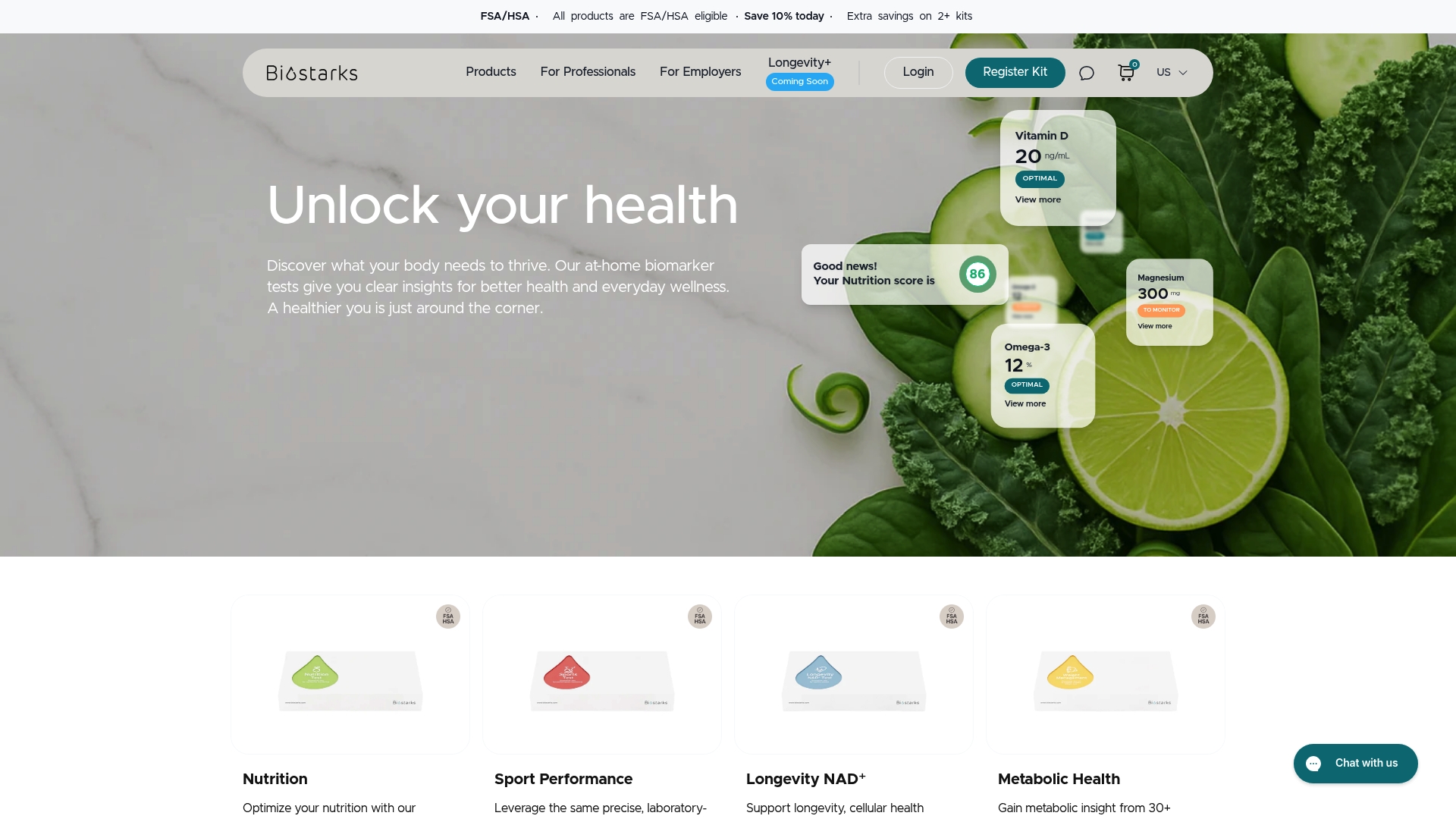
Our comprehensive panels cover hormones, vitamins, amino acids, lipids, minerals, and metabolic markers driving your health and performance. Visual dashboards highlight optimization opportunities, while detailed recommendations guide specific diet, training, and lifestyle adjustments. You see exactly which interventions to prioritize for maximum impact on your unique physiology.
Integrate your Biostarks results with training data and lifestyle tracking for complete wellness optimization. Expert support helps you interpret complex biomarker relationships and adjust protocols as you progress. Regular retesting tracks your improvements objectively, validating successful interventions and identifying areas needing refinement.
Explore Biostarks biomarker testing options to find the panel matching your wellness and performance goals. Review detailed biomarker reports from Biostarks to see how clear presentation drives effective action. Master the biomarker data interpretation guide to maximize value from your testing investment.
Frequently asked questions
How accurate are at-home biomarker tests compared to clinical labs?
Mass spectrometry-based at-home tests deliver 99% accuracy matching clinical laboratory standards. Finger-prick samples show greater than 98% concordance with venous draws for most biomarkers. Choose providers using validated collection methods and accredited laboratories to ensure reliable results you can confidently use for optimization decisions.
Can I interpret my biomarker results without a specialist?
High-quality services provide clear reports with visual indicators and specific recommendations, enabling independent interpretation for straightforward markers. Complex hormone ratios and metabolic patterns benefit from expert guidance to avoid misinterpretation. Many providers include interpretation support, making specialist consultation accessible and practical for optimizing nuanced biomarkers.
How often should I retest my biomarkers for wellness optimization?
Retest every 3 to 6 months when actively optimizing specific markers to measure intervention effectiveness. Once markers stabilize in optimal ranges, extend testing to every 6 to 12 months for maintenance monitoring. Increase frequency during training phase changes or major lifestyle modifications to ensure adaptations proceed as expected.
What factors should guide my choice of biomarker testing service?
Prioritize comprehensive biomarker panels covering your specific health and performance goals. Evaluate report clarity, ensuring visual presentation and actionable recommendations rather than raw data dumps. Verify testing technology accuracy, preferring mass spectrometry for hormone and metabolic optimization. Consider turnaround time, expert support availability, and total value across all service dimensions.
Can biomarker testing really improve athletic performance?
Yes, studies show athletes using integrated biomarker and performance tracking achieve 20% better training outcomes. Biomarker-guided interventions improve metabolic markers by 25% in 3 to 6 months. Testing reveals hidden deficiencies limiting adaptation, enables precise recovery monitoring, and validates training load appropriateness. The data-driven approach eliminates guesswork, helping you train smarter rather than just harder.
Find answers to common questions in our comprehensive at-home health testing FAQ covering collection, accuracy, and result interpretation.
Recommended
- What is Health Optimization? 60% Biomarker In… | Biostarks
- 7 Ways to Track Metabolic Health Naturally fo… | Biostarks
- What Is Metabolic Health? Data-Driven Insights | Biostarks
- Metabolic Markers: Optimizing Health with Pre… | Biostarks
- Snus und deine Mundgesundheit: So schützt du dein Lächeln – Snustrend - Snus, Vapes & Schnupf


