

Micronutrient deficiencies affect about one third of the world’s population, yet many people remain unaware they’re experiencing them. These shortages of essential vitamins and minerals silently compromise immune function, energy production, and overall health. Understanding what micronutrient deficiencies are, who faces the highest risk, and how personalized biomarker testing can reveal hidden nutritional gaps empowers you to take control of your wellness. This guide explores the causes, consequences, detection methods, and personalized approaches to managing these widespread yet often overlooked health challenges.
Table of Contents
- What Are Micronutrient Deficiencies And Who Is Affected?
- Causes And Consequences Of Micronutrient Deficiencies
- How Are Micronutrient Deficiencies Detected? Understanding Biomarker Testing
- Nuances, Challenges, And Personalized Approaches In Managing Micronutrient Deficiencies
- Optimize Your Health With Personalized Biomarker Testing
- Frequently Asked Questions
Key takeaways
| Point | Details |
|---|---|
| High global prevalence | Micronutrient deficiencies impact roughly one third of people worldwide, especially children, pregnant women, and women of reproductive age. |
| Common deficiencies | Iron, vitamin A, iodine, zinc, and vitamin D deficiencies are most widespread, causing anemia, immune dysfunction, and bone issues. |
| Multiple causes | Poor dietary intake, absorption problems, increased physiological demands, and infections all contribute to deficiencies. |
| Biomarker testing reveals gaps | Advanced blood and urine biomarkers detect both clinical and subclinical deficiencies for personalized management. |
| Personalized interventions matter | Tailored supplementation based on individual biomarker profiles prevents imbalances and optimizes health outcomes safely. |
What are micronutrient deficiencies and who is affected?
Micronutrient deficiencies are shortages of essential vitamins and minerals required in small amounts for critical physiological functions like immune response, energy metabolism, and cellular repair. Unlike macronutrients such as proteins and carbohydrates needed in large quantities, micronutrients work behind the scenes to enable thousands of biochemical reactions that keep your body functioning optimally.
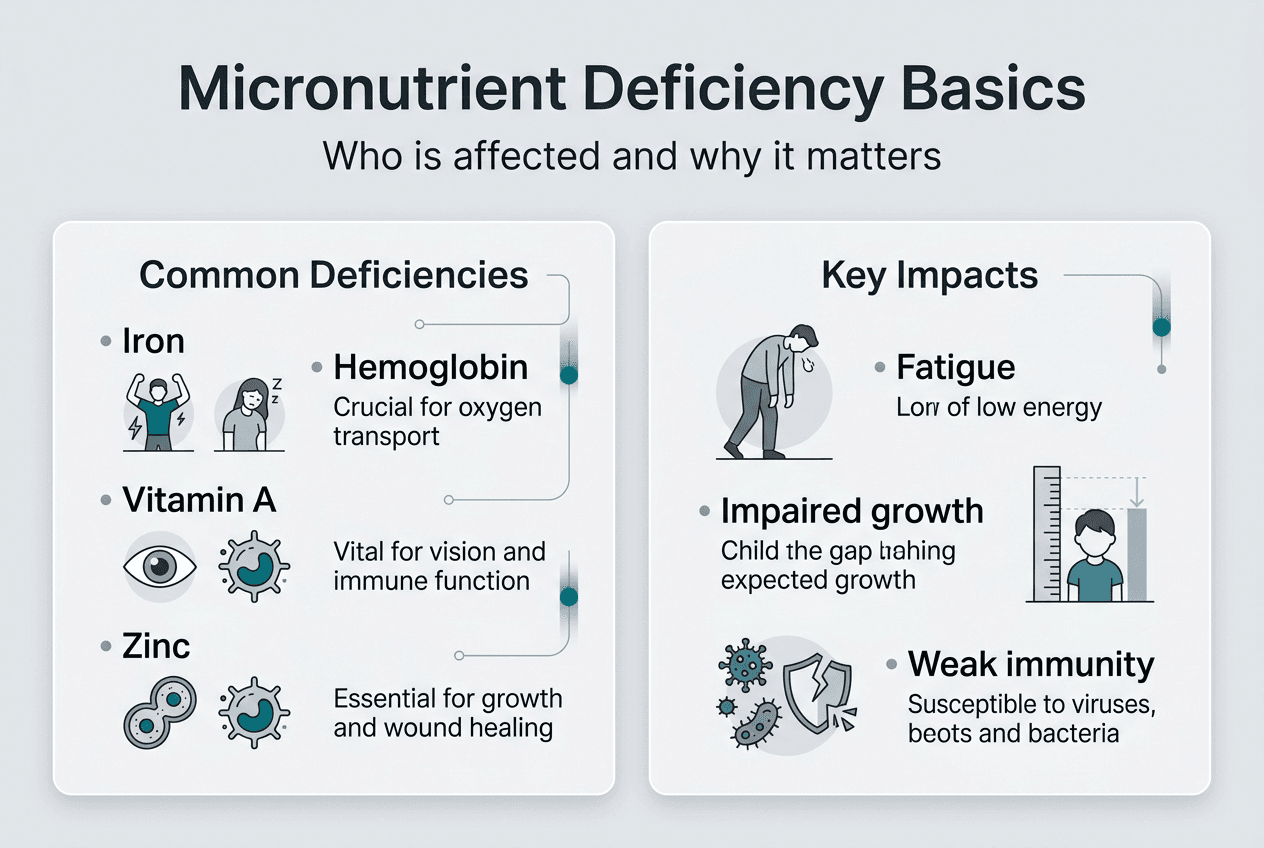
The most common deficiencies include iron, vitamin A, iodine, zinc, and vitamin D, each playing distinct roles in health maintenance. Iron supports oxygen transport in red blood cells, preventing anemia and fatigue. Vitamin A is crucial for vision, immune function, and skin health. Iodine enables proper thyroid hormone production, regulating metabolism and growth. Zinc strengthens immune defenses and supports wound healing. Vitamin D facilitates calcium absorption for bone strength and modulates immune responses.
Certain populations face disproportionately higher risk. Children under five need adequate micronutrients for rapid growth and brain development, making deficiencies particularly harmful during these formative years. Pregnant women require increased amounts to support fetal development, with inadequate intake raising risks of complications and developmental issues. Women of reproductive age often experience iron deficiency due to menstrual blood loss. Elderly individuals may struggle with absorption efficiency and dietary variety, increasing vulnerability.
Global health data reveals the staggering scope of this challenge. Iron deficiency alone affects over two billion people worldwide, making it the most prevalent nutritional disorder. Vitamin A deficiency causes preventable blindness in hundreds of thousands of children annually. Even in developed nations with abundant food supplies, subclinical deficiencies persist due to processed diets lacking nutrient density. Understanding why test for deficiencies health impact becomes essential for proactive health management.
Key vulnerable groups include:
- Children under five years old during critical growth phases
- Pregnant and lactating women with elevated nutritional demands
- Women of reproductive age experiencing regular menstrual blood loss
- Elderly adults facing absorption challenges and dietary limitations
- Individuals with chronic diseases affecting nutrient metabolism
- People following restrictive diets without proper nutritional planning
Causes and consequences of micronutrient deficiencies
Multiple interconnected factors drive micronutrient deficiencies, making them more complex than simple dietary insufficiency. Inadequate dietary intake, poor absorption, increased losses, higher physiological needs, and infections all contribute to creating nutritional gaps. Understanding these mechanisms helps you identify personal risk factors and implement targeted solutions.
Poor diet quality represents the most obvious culprit. Diets heavy in processed foods, refined grains, and added sugars provide calories without meaningful micronutrient content. Even when consuming adequate quantities of food, nutrient density matters enormously. A diet centered on whole foods like vegetables, fruits, legumes, nuts, and quality proteins delivers far more micronutrients per calorie than ultra-processed alternatives.

Absorption inhibitors present a less visible challenge. Compounds called phytates, found in grains and legumes, bind to minerals like iron, zinc, and calcium, reducing their bioavailability. Inflammation in the gut from conditions like celiac disease or inflammatory bowel disease impairs nutrient uptake regardless of intake levels. Certain medications interfere with absorption or increase excretion of specific micronutrients. These factors explain why two people eating identical diets can have vastly different nutritional status.
Physiological demands fluctuate throughout life stages. Pregnancy dramatically increases requirements for iron, folate, and other nutrients to support fetal development. Adolescent growth spurts require additional zinc, calcium, and vitamin D for bone formation. Athletes training intensively lose minerals through sweat and require more for tissue repair. Chronic stress elevates needs for B vitamins and magnesium involved in stress response pathways. Recognizing these shifting demands prevents deficiencies during high-need periods.
Infections and illnesses create bidirectional relationships with micronutrient status. Deficiencies weaken immune function, increasing susceptibility to infections. Simultaneously, infections cause losses through diarrhea, reduce appetite, and trigger inflammation that alters nutrient metabolism. This vicious cycle particularly affects children in regions with poor sanitation and limited healthcare access.
The consequences vary widely by specific deficiency, ranging from subtle to severe. Iron deficiency causes anemia, characterized by fatigue, weakness, pale skin, and impaired cognitive function. Vitamin A deficiency leads to night blindness and, in severe cases, permanent vision loss. Iodine deficiency during pregnancy causes irreversible brain damage in developing fetuses. Zinc deficiency compromises immune responses, delays wound healing, and impairs growth in children. Vitamin D insufficiency weakens bones, increasing fracture risk and contributing to conditions like osteoporosis.
Pro Tip: When evaluating your nutritional status, consider absorption efficiency and physiological demands alongside dietary intake. Tracking what you eat provides incomplete information without accounting for how well your body actually utilizes those nutrients. This perspective shift explains why personalized biomarker testing through advantages of metabolic testing for wellness success offers superior insights compared to generic dietary assessments.
Common causes include:
- Processed diets low in nutrient-dense whole foods
- Absorption inhibitors like phytates, tannins, and gut inflammation
- Increased losses from diarrhea, heavy menstruation, or excessive sweating
- Elevated needs during pregnancy, growth, athletic training, or stress
- Chronic infections creating nutrient losses and metabolic disruption
- Medication interactions interfering with absorption or increasing excretion
How are micronutrient deficiencies detected? Understanding biomarker testing
Detecting micronutrient deficiencies requires sophisticated assessment methodologies including blood biomarkers, urine tests, and functional assessments, each offering unique insights into nutritional status. Blood tests measure circulating levels of specific nutrients or their storage forms, providing direct evidence of deficiency or sufficiency. Urine tests evaluate excretion patterns, revealing both deficiency and excess states. Functional biomarkers assess the biological activity of nutrients, showing how effectively your body utilizes them regardless of circulating levels.
Specific biomarkers serve as gold standards for particular micronutrients. Serum ferritin measures iron stores, with low levels indicating depletion before anemia develops. The 25-hydroxyvitamin D test evaluates vitamin D status, reflecting both dietary intake and sun exposure. Serum zinc concentrations, though imperfect, provide useful screening information when interpreted carefully. Red blood cell folate offers more stable folate status assessment than serum levels. Each biomarker has distinct advantages and limitations requiring expert interpretation.
Challenges complicate straightforward assessment. Inflammation alters many biomarkers independently of true nutritional status, potentially masking deficiencies or creating false appearances of adequacy. Ferritin rises during inflammation, obscuring iron deficiency. Serum zinc drops during acute illness regardless of body stores. Some nutrients lack reliable biomarkers altogether. Magnesium presents particular difficulty because serum levels remain tightly regulated even when tissue stores become depleted, making functional tests more informative.
Techniques like ICP-MS enable comprehensive multi-element analysis of blood or urine samples, simultaneously measuring dozens of minerals and trace elements. This approach reveals patterns and relationships between nutrients that single-analyte tests miss. For example, copper and zinc compete for absorption, so elevated zinc supplementation can induce copper deficiency. Multi-element screening detects such imbalances before they cause symptoms, enabling preemptive correction.
Pro Tip: Functional biomarkers reveal nutrient activity beyond static concentration measurements. For instance, methylmalonic acid and homocysteine indicate vitamin B12 functional status more sensitively than serum B12 alone. These metabolites accumulate when B12-dependent enzymes cannot function properly, detecting deficiency earlier. Exploring nutritionists using biomarkers better client outcomes demonstrates how professionals leverage functional markers for superior intervention strategies.
| Biomarker Type | Applications | Advantages | Limitations |
|---|---|---|---|
| Serum/plasma levels | Direct measurement of circulating nutrient concentrations | Quick, widely available, reflects recent intake | Affected by inflammation, may not reflect tissue stores |
| Storage biomarkers | Assess body reserves (e.g., ferritin for iron) | Indicates long-term status, detects early depletion | Inflammation confounds interpretation |
| Functional tests | Evaluate biological activity of nutrients | Reveals true deficiency affecting metabolism | More complex, less standardized, higher cost |
| Multi-element panels | Simultaneous analysis of numerous minerals | Comprehensive profile, detects imbalances | Requires sophisticated equipment and expertise |
| Urine tests | Measures excretion patterns | Non-invasive, useful for certain minerals | Less direct, affected by hydration and kidney function |
Understanding how to track vitamin levels naturally complements clinical testing by helping you recognize patterns in symptoms and dietary intake that warrant formal biomarker assessment. Combining subjective awareness with objective testing creates the most complete nutritional picture.
Key testing considerations:
- Blood biomarkers provide snapshots of current circulating levels
- Storage markers like ferritin reveal long-term nutritional reserves
- Functional tests assess whether nutrients enable proper metabolic activity
- Inflammation and illness confound many standard biomarker interpretations
- Multi-element screening detects nutrient interactions and imbalances
- Timing of testing relative to meals and supplementation affects accuracy
Nuances, challenges, and personalized approaches in managing micronutrient deficiencies
Subclinical deficiencies, often called hidden hunger, present particularly insidious challenges. These occur when nutrient levels fall below optimal but remain above thresholds causing obvious clinical symptoms. You might experience subtle fatigue, reduced immune resilience, or impaired cognitive performance without recognizing nutritional inadequacy as the cause. Traditional testing focused solely on preventing severe deficiency diseases misses these optimization opportunities, where bringing levels from low-normal to optimal creates meaningful health improvements.
Inflammation and other confounders complicate accurate assessment. Acute and chronic inflammation alter numerous biomarkers through mechanisms unrelated to nutritional intake or stores. C-reactive protein and other inflammatory markers should accompany micronutrient testing to enable proper interpretation. Genetic variations affect nutrient metabolism, absorption, and requirements. The MTHFR gene polymorphism reduces folate metabolism efficiency, increasing needs for some individuals. Age influences absorption capacity and metabolic efficiency. Pregnancy creates dramatic shifts in requirements and distribution of nutrients between mother and fetus.
Over-supplementation poses real risks that many people underestimate. Excess supplementation can cause toxicity and nutrient interactions, with fat-soluble vitamins A, D, E, and K accumulating to harmful levels when taken excessively. High-dose zinc supplementation induces copper deficiency by competing for absorption. Excessive calcium intake without adequate vitamin K2 may contribute to arterial calcification rather than bone building. Iron supplementation in individuals with adequate stores promotes oxidative stress. These examples illustrate why indiscriminate supplementation without testing creates more problems than it solves.
Debates exist on biomarker interpretation and supplementation strategies, with reference ranges often reflecting population averages rather than optimal levels for individual health. Vitamin D provides a prime example, with experts disagreeing on ideal 25(OH)D concentrations. Some advocate for levels above 40 ng/mL for immune and metabolic benefits, while others consider 20-30 ng/mL sufficient. Individual factors like body composition, sun exposure habits, and health goals should inform personalized targets rather than applying one-size-fits-all standards.
Precision testing guides individualized supplementation, preventing both deficiency and excess while accounting for unique metabolic profiles. Baseline biomarker assessment identifies specific gaps and imbalances. Targeted supplementation addresses only documented deficiencies at appropriate doses. Follow-up testing verifies correction and prevents overcorrection. This iterative approach optimizes nutritional status safely and effectively. Understanding the role of biomarkers in health transforms supplementation from guesswork into data-driven precision.
The role advanced lab testing plays in modern personalized nutrition cannot be overstated. High-resolution analytical techniques reveal subtle imbalances and subclinical deficiencies that conventional approaches miss, enabling optimization rather than merely preventing disease.
Key challenges and best practices:
- Recognize subclinical deficiencies causing subtle symptoms without obvious disease
- Account for inflammation when interpreting biomarkers like ferritin and zinc
- Consider genetic variations affecting nutrient metabolism and individual requirements
- Adjust expectations for age, sex, pregnancy status, and activity level
- Avoid indiscriminate supplementation without testing to prevent toxicity and imbalances
- Use precision biomarker testing to guide personalized supplementation protocols
- Implement follow-up testing to verify correction and optimize ongoing management
- Work with qualified practitioners to interpret complex biomarker patterns accurately
Optimize your health with personalized biomarker testing
Understanding micronutrient deficiencies represents just the first step toward optimal health. Applying this knowledge through personalized biomarker analysis transforms abstract concepts into actionable insights tailored to your unique physiology. Biostarks specializes in advanced at-home biomarker testing using Swiss mass spectrometry techniques, providing comprehensive analysis of vitamins, minerals, hormones, amino acids, and metabolic markers.
Your biomarker profile reveals hidden deficiencies, subclinical imbalances, and optimization opportunities that generic approaches miss entirely. Rather than guessing which supplements you need or following one-size-fits-all recommendations, precision testing shows exactly where your nutritional status stands. This data-driven approach enables targeted interventions that address your specific gaps while avoiding unnecessary supplementation that wastes money and risks creating new imbalances. Discovering why test for deficiencies health impact matters helps you appreciate how personalized insights surpass conventional nutritional guidance. Understanding the role of biomarkers in health empowers you to make informed decisions about your wellness journey based on objective data rather than symptoms alone.
Frequently asked questions
What causes micronutrient deficiencies in healthy adults?
Inadequate dietary intake, poor absorption, and increased physiological needs can create deficiencies even in apparently healthy adults. Factors include low nutrient density in processed foods, gut health issues affecting absorption, lifestyle stressors elevating requirements, and life stages like pregnancy or intense training. Many adults consume sufficient calories but insufficient micronutrients due to food quality rather than quantity.
Can biomarker testing detect hidden micronutrient deficiencies?
Yes, advanced biomarker panels reveal subclinical deficiencies not apparent through symptoms alone. Functional biomarkers assess whether nutrients enable proper metabolic activity, detecting problems before clinical disease develops. Multi-element analysis using techniques like ICP-MS provides comprehensive profiles showing relationships between nutrients that single tests miss. This approach identifies optimization opportunities beyond preventing obvious deficiency diseases.
What are the risks of self-supplementing without testing?
Supplementing without biomarker guidance risks nutrient imbalances, toxicity, and interference between minerals. Excessive zinc induces copper deficiency, high-dose iron promotes oxidative stress in replete individuals, and fat-soluble vitamins accumulate to toxic levels with chronic overuse. Some supplements cause deficiencies in other nutrients through competitive absorption or altered metabolism. Testing first ensures safe, effective supplementation tailored to your actual needs rather than assumptions.


