

You can follow every trending diet and exercise plan, but without understanding your body at a molecular level, you’re operating blind. Up to 60% of your biomarker imbalances show no symptoms until serious health issues emerge. This guide reveals how biomarker testing for health data transforms vague wellness goals into precise, personalized strategies for optimal health, performance, and longevity.
Table of Contents
- Introduction To Health Optimization
- Key Biomarkers In Health Optimization
- At-Home Testing Technologies And Accuracy
- Metabolic Health And Longevity
- Common Misconceptions In Health Optimization
- Comparison Of Testing Modalities
- Applying Biomarker Data For Health Optimization
- Limitations And Considerations
- Discover Personalized Biomarker Solutions With Biostarks
- FAQ
Key Takeaways
| Point | Details |
|---|---|
| Health optimization requires biomarker data | Generic wellness advice fails because it ignores your unique biochemical profile. |
| 60% of imbalances are invisible | Most critical health issues develop asymptomatically and only biomarkers reveal them early. |
| At-home testing matches clinical accuracy | Swiss mass spectrometry achieves >95% concordance with traditional labs while offering convenience. |
| Metabolic health predicts longevity | Optimizing metabolic biomarkers can influence up to 20% of lifespan variation. |
| Repeated testing enables tracking | Consistent monitoring every 3 to 6 months reveals trends and guides targeted interventions. |
Introduction to Health Optimization
Health optimization is a biomarker-driven approach that uses precise molecular data to personalize wellness strategies beyond generic advice. Unlike conventional health recommendations that apply broad guidelines to everyone, optimization relies on your unique biochemical profile to identify specific imbalances and guide targeted interventions.
Generic wellness plans fail because they ignore individual variability. Your vitamin levels, hormone balance, and metabolic function differ from everyone else’s, making one-size-fits-all advice ineffective. Without biomarker insights for health optimization, you’re guessing which changes will actually improve your health.
The three pillars framework structures this approach:
- Measurement: Collect precise biomarker data through advanced testing methods
- Interpretation: Analyze results against optimal ranges, not just normal ranges
- Intervention: Implement targeted changes based on your specific imbalances
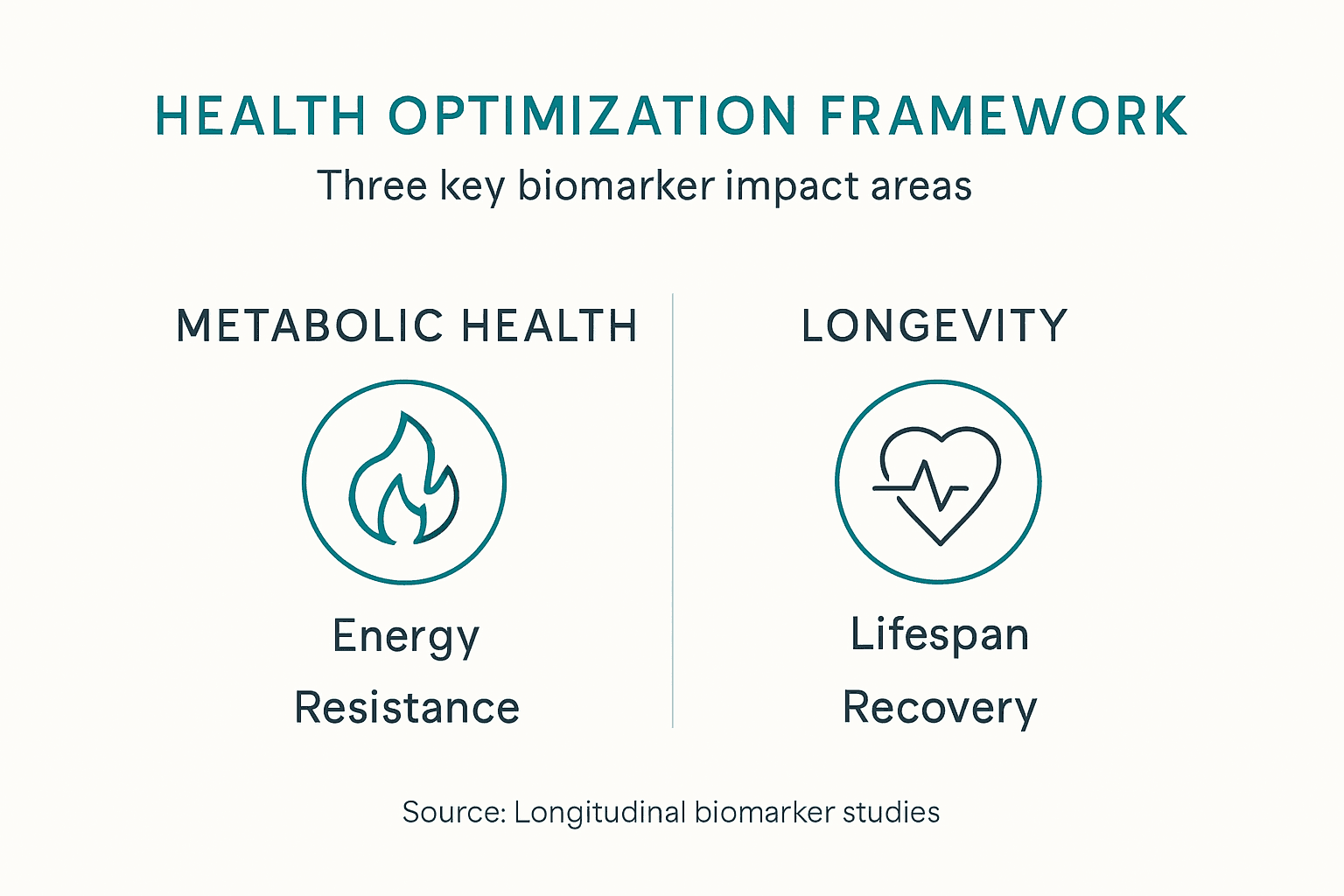
This framework impacts three critical areas. Metabolic health improvements enhance energy production and disease resistance. Performance optimization boosts physical and cognitive function. Longevity strategies extend healthspan by preventing age-related decline.
To unlock biomarker testing benefits, you need foundational knowledge. Understanding which biomarkers matter, how personalized medicine works, and what reliable testing looks like separates effective optimization from wellness theater.
Key Biomarkers in Health Optimization
Types of biomarkers for personal health fall into six essential categories that reveal your body’s internal state. Each category provides specific insights that symptoms alone cannot detect.

Vitamins act as metabolic cofactors that enable thousands of biochemical reactions. Vitamin D deficiency affects immune function and bone health long before you notice symptoms. B vitamins drive energy production and nervous system function.
Hormones regulate everything from metabolism to mood. Testosterone, estrogen, cortisol, and thyroid hormones create cascading effects throughout your body. Small imbalances produce significant downstream consequences.
Amino acids build proteins and neurotransmitters. Essential amino acid ratios determine muscle synthesis, recovery capacity, and mental clarity. Imbalances indicate dietary gaps or absorption issues.
Lipids measure cardiovascular risk and cellular health. Beyond basic cholesterol, advanced lipid panels reveal particle size, oxidation status, and inflammatory markers that predict heart disease risk decades in advance.
Minerals like magnesium, zinc, and selenium enable enzymatic reactions and cellular signaling. Deficiencies impair immune function, energy production, and antioxidant defenses without obvious symptoms.
Metabolic markers including glucose, insulin, and inflammatory proteins show how efficiently your body produces and uses energy. These biomarkers in health optimization predict chronic disease risk years before diagnosis.
Biomarkers provide insights into metabolic and physiological status that remain invisible to symptom-based evaluation. A seemingly healthy person might have suboptimal vitamin D, elevated inflammatory markers, and hormone imbalances that silently damage health. Testing reveals these hidden issues, enabling precise interventions before problems escalate.
At-Home Testing Technologies and Accuracy
Swiss mass spectrometry represents the gold standard in biomarker analysis. This technology identifies and quantifies molecules with extraordinary precision by measuring their mass-to-charge ratios. Unlike older immunoassay methods that can produce false positives, mass spectrometry directly detects target molecules.
At-home biomarker testing achieves clinical-grade accuracy when using advanced methods. Studies show concordance rates above 95% between at-home and traditional lab tests for key markers. The technology hasn’t changed, only the collection location.
Sample collection uses dried blood spots or small capillary samples. You prick your finger, collect drops on treated paper, and mail the sample to the lab. Stabilization chemistry preserves biomarker integrity during shipping.
Benefits of advanced lab testing at home include:
- Convenience: Test when it suits your schedule without clinic appointments
- Privacy: No waiting rooms or unnecessary social interaction
- Rapid access: Results arrive digitally within days, not weeks
- Cost efficiency: Lower overhead means more affordable testing
- Repeat testing: Easy monitoring enables trend analysis over time
Typical scenarios for at-home testing include biohackers tracking optimization interventions, busy professionals who can’t schedule clinic visits, and privacy-conscious individuals wanting discreet health monitoring. Athletes use repeated testing to fine-tune training and recovery protocols.
Pro tip: Schedule your biomarker testing during stable conditions. Avoid testing during illness, extreme stress, or immediately after major diet changes. Consistency in testing conditions reduces variability and reveals true trends.
Metabolic Health and Longevity
Metabolic function mediates nearly every chronic disease. Your body’s ability to produce energy, regulate blood sugar, manage inflammation, and clear cellular waste determines disease resistance. Poor metabolic health accelerates aging and increases risk for diabetes, cardiovascular disease, and neurodegeneration.
Metabolic health status predicts lifespan variation up to 20% in longitudinal studies. Two people with identical genetics can experience dramatically different health trajectories based on metabolic optimization. This isn’t theoretical, it’s measurable through biomarker analysis.
Optimizing metabolic biomarkers produces tangible benefits. Energy levels stabilize as mitochondrial function improves. Cognitive performance sharpens when glucose regulation tightens. Physical recovery accelerates when inflammatory markers decrease. Body composition improves as metabolic flexibility increases.
Key metabolic biomarkers include:
- Fasting glucose and insulin reveal blood sugar regulation
- HbA1c shows three-month glucose averages
- Triglycerides indicate fat metabolism efficiency
- HDL and LDL particle counts predict cardiovascular risk
- hs-CRP measures systemic inflammation
- Liver enzymes reflect metabolic processing capacity
Tracking metabolic health biomarkers connects daily choices to long-term outcomes. When you see your fasting insulin drop after reducing processed carbs, the feedback loop reinforces behavior change. When inflammatory markers decrease after improving sleep, you understand why rest matters.
Practical outcomes extend beyond numbers. Better metabolic health means sustained energy without crashes, clearer thinking without brain fog, faster recovery from exercise, improved body composition, and reduced disease risk. These changes compound over years into dramatically different health trajectories.
Common Misconceptions in Health Optimization
Myth 1: Feeling fine means you’re healthy. Up to 60% of biomarker imbalances exist asymptomatically before clinical manifestations occur. Your body compensates for deficiencies and imbalances until reserves deplete. By the time symptoms appear, problems are advanced.
Myth 2: Diet and exercise alone optimize health. While foundational, these interventions work blindly without biomarker data. You might exercise intensely but have testosterone levels tanking from overtraining. You could eat clean but have vitamin deficiencies from poor absorption.
Myth 3: Normal lab ranges mean optimal health. Clinical ranges define disease cutoffs, not wellness targets. You can sit in the normal range while operating far below optimal. Reference ranges also vary by population, potentially missing individual variations.
Myth 4: Supplements fix everything. Random supplementation without testing wastes money and risks toxicity. Some nutrients compete for absorption, others need cofactors to work. Without knowing your levels, supplementation is guesswork.
Myth 5: One test tells the whole story. Biomarkers fluctuate based on dozens of factors. Single measurements provide snapshots, trends reveal patterns. Repeated testing over months builds the complete picture.
“Molecular data reveals what symptoms cannot. Waiting for problems to become symptomatic means addressing advanced issues rather than preventing them. Biomarker analysis shifts the timeline from reactive treatment to proactive optimization.”
Using biomarker insights correctly requires understanding these limitations. Testing without interpretation leads nowhere. Data without action changes nothing. The value lies in translating molecular information into targeted interventions.
Comparison of Testing Modalities
| Factor | At-Home Testing | Clinical Lab Testing |
|---|---|---|
| Accuracy | >95% concordance with Swiss mass spectrometry | Gold standard reference method |
| Convenience | Test anytime at home, mail sample | Requires appointment, travel, waiting |
| Cost | $150 to $400 for comprehensive panels | $300 to $800+ depending on insurance |
| Privacy | Complete anonymity, digital results | Medical records, insurance documentation |
| Turnaround | 5 to 10 days typical | 7 to 14 days typical |
| Panel Customization | Focused wellness panels | Broader diagnostic panels available |
Testing modalities achieve equivalent accuracy when using advanced analytical methods. The key difference lies in sample collection location, not measurement quality. Both use the same laboratory equipment and protocols for analysis.
Choosing between methods depends on your situation. At-home testing suits biohackers who test frequently, busy professionals who value convenience, and privacy-focused individuals. Clinical testing makes sense when insurance covers costs, you need broader panels, or medical oversight is required.
Practical scenarios help clarify choices. If you’re tracking vitamin D optimization every three months, advanced lab testing at home saves time and money. If your doctor orders comprehensive metabolic panels for diagnosis, clinical labs provide necessary medical documentation.
Pro tip: For iterative optimization, at-home testing enables frequent measurement without the friction of clinic visits. Test, intervene, retest after 8 to 12 weeks. This rapid feedback loop accelerates progress and prevents wasted effort on ineffective strategies.
Insurance coverage varies dramatically. Some plans cover annual wellness testing, others require diagnostic codes. At-home testing costs are predictable and often comparable to clinical copays when insurance doesn’t cover preventive panels.
Applying Biomarker Data for Health Optimization
Translating numbers into results requires a systematic approach. Random changes based on gut feeling waste the precision that biomarker data provides.
-
Establish baseline: Test comprehensively to identify all imbalances, not just suspected issues. Hidden deficiencies often explain persistent problems.
-
Prioritize interventions: Address the most impactful imbalances first. Low vitamin D and poor sleep quality affect everything downstream.
-
Implement targeted changes: Make specific adjustments based on your data. If ferritin is low, increase iron-rich foods and vitamin C. If cortisol is elevated, prioritize stress management.
-
Retest strategically: Wait 8 to 12 weeks for most interventions to show effects. Vitamins and minerals change faster than hormones.
-
Adjust based on results: If markers improve, continue. If unchanged, investigate absorption issues, compliance gaps, or cofactor deficiencies.
Real examples show the process working. Someone with chronic fatigue tests and finds vitamin B12 at 200 pg/mL (low normal) and vitamin D at 18 ng/mL (deficient). They supplement B12 and D3, increase sun exposure, and improve diet quality. Retesting after three months shows B12 at 600 pg/mL and vitamin D at 45 ng/mL. Energy levels normalize.
Another person struggles with body composition despite training hard. Testing reveals testosterone at the low end of normal and elevated cortisol. They reduce training volume, improve sleep from 6 to 8 hours nightly, and add stress management practices. Follow-up testing shows testosterone increased 30% and cortisol normalized. Body composition improves significantly.
Lipid profile optimization works similarly. Someone with LDL particle count of 1800 nmol/L (elevated risk) changes diet to reduce refined carbs and increase omega-3 intake. Six months later, LDL particles drop to 1200 nmol/L while HDL increases.
Biomarker interpretation requires understanding optimal ranges versus reference ranges. Labs report normal as within two standard deviations of population average. Optimal targets tighter ranges associated with longevity and performance.
Pro tip: Work with practitioners experienced in optimization, not just disease treatment. Functional medicine doctors, sports medicine physicians, and specialized health coaches understand nuanced interventions. Their guidance maximizes your investment in testing.
Limitations and Considerations
Biomarker levels fluctuate naturally throughout the day, week, and month. Cortisol peaks in the morning and drops at night. Testosterone varies by time of day. Vitamin levels respond to recent meals. This biological variability means single measurements provide incomplete pictures.
Repeated testing solves the variability problem. Trends matter more than individual data points. Three tests showing declining vitamin D reveal a pattern. One low reading might reflect temporary factors.
Expert interpretation prevents costly mistakes. Elevated liver enzymes might indicate fatty liver disease or simply reflect recent intense exercise. High PSA could signal prostate issues or result from recent sexual activity. Context and expertise separate signal from noise.
Factors affecting biomarker reliability include:
- Recent diet changes alter metabolic markers within days
- Stress and sleep deprivation affect hormone levels dramatically
- Exercise timing impacts inflammatory markers and muscle enzymes
- Hydration status concentrates or dilutes certain markers
- Supplement timing creates artificial spikes in vitamin levels
Education gaps create risks. People misinterpret results, over-supplement based on internet advice, or ignore serious findings. Testing without guidance often leads to confusion rather than clarity. Investment in proper interpretation pays dividends in avoiding mistakes.
Realistic expectations matter. Biomarker testing reveals imbalances but doesn’t diagnose diseases. It guides optimization but doesn’t replace medical care. Testing identifies problems but doesn’t fix them automatically. You still need to implement changes consistently.
Some conditions require clinical diagnosis beyond biomarkers. Autoimmune diseases, cancers, and infections need comprehensive medical evaluation. Biomarker testing complements medical care, it doesn’t substitute for it.
Discover Personalized Biomarker Solutions with Biostarks
Ready to move beyond guesswork? Your unique biochemical profile holds the answers to optimizing health, performance, and longevity.

Biostarks delivers precision biomarker testing using Swiss mass spectrometry technology right to your home. Collect your sample in minutes, mail it in, and receive comprehensive reports within days. Our advanced lab testing analyzes vitamins, hormones, amino acids, lipids, minerals, and metabolic markers with clinical-grade accuracy. Detailed biomarker data interpretation transforms complex results into clear action steps tailored to your goals. Take control of your health with data-driven insights that actually work.
FAQ
What is the difference between at-home and clinical biomarker testing?
At-home tests use advanced technology like Swiss mass spectrometry to achieve >95% accuracy compared to clinical labs. Clinical testing offers broader diagnostic panels and medical oversight. Your choice depends on whether you need convenience for tracking optimization or comprehensive diagnostic evaluation.
How often should I test my biomarkers for effective health optimization?
Testing every 3 to 6 months works best for tracking intervention effects and adjusting strategies. Biohackers during active optimization may test more frequently for specific markers. Consistent timing during stable conditions improves reliability and reveals meaningful trends rather than random fluctuations.
Can biomarker testing replace traditional medical diagnostics?
Health optimization testing focuses on wellness and prevention, not disease diagnosis. Biomarker data supplements clinical evaluation but doesn’t replace it. Always consult healthcare providers for medical concerns, symptoms, or diagnostic needs beyond wellness optimization.
What are the common pitfalls when interpreting biomarker results?
Ignoring natural variability leads to overreaction from single tests. Relying on one measurement without follow-up misses important trends. Attempting interpretation without expert guidance often results in incorrect conclusions. Overreacting to asymptomatic minor fluctuations wastes resources on unnecessary interventions.


