

Nearly half of women aged 30 to 60 experience symptoms of hormonal imbalance, yet most remain unaware of their hormonal status or how to monitor it effectively. Many believe hormone tracking requires expensive lab visits or invasive procedures. This guide clarifies why monitoring your hormones matters and how accessible at-home testing now empowers you to make personalized health decisions that optimize wellness, performance, and longevity.
Table of Contents
- Why Hormonal Health Matters For Overall Wellness
- At-Home Hormonal Testing: How It Works And What You Can Measure
- Interpreting Hormonal Health Data: Key Biomarkers And What They Reveal
- Applying Hormonal Insights To Optimize Wellness And Performance
- Explore Personalized Hormonal Health Testing With Biostarks
- Frequently Asked Questions
Key takeaways
| Point | Details |
|---|---|
| Hormones regulate critical functions | They control metabolism, mood, reproduction, and stress response throughout your body. |
| At-home tests provide convenient insights | Saliva, urine, and finger-prick samples deliver fast, affordable hormone data without clinic visits. |
| Early detection guides interventions | Tracking identifies imbalances before symptoms worsen, enabling timely lifestyle adjustments. |
| Personalized data optimizes wellness | Understanding your unique hormone patterns supports tailored nutrition, stress management, and performance strategies. |
| Technology improves accessibility | Emerging lateral flow assays and rapid testing methods make hormone monitoring more accurate and user-friendly. |
Why hormonal health matters for overall wellness
Hormones function as chemical messengers coordinating essential bodily processes. They regulate your metabolism, influence mood and cognitive function, control reproductive health, and manage stress responses. When these messengers fall out of balance, the effects ripple across every aspect of your well-being.
Hormonal imbalances affect a significant portion of the population, yet many people struggle to recognize or address them. Women face particularly complex hormonal health challenges due to menstrual cycles, pregnancy, perimenopause, and menopause. Men experience hormonal shifts with aging too, though these changes often receive less attention. Systemic barriers including limited access to specialized care, high costs, and inadequate education compound the problem.
Understanding hormone balance matters because imbalances contribute to chronic conditions when left unaddressed. Insulin resistance, thyroid disorders, adrenal fatigue, and reproductive health issues all stem from hormonal disruption. Symptoms range from subtle energy fluctuations and mood changes to severe metabolic dysfunction and infertility.
Tracking your hormonal health provides actionable insights that help you:
- Identify patterns linking symptoms to specific hormone fluctuations
- Detect early warning signs of imbalance before clinical diagnosis
- Monitor how lifestyle changes affect your hormone levels
- Communicate effectively with healthcare providers using data
- Take ownership of your wellness journey with objective measurements
“Hormonal health is the foundation of metabolic function, mental clarity, and physical vitality. Without balance, optimization becomes impossible.”
Self-tracking fills critical gaps in traditional healthcare, which typically addresses hormonal issues reactively rather than preventively. Regular monitoring empowers you to make informed decisions about nutrition, exercise, stress management, and sleep based on your unique physiological responses.
At-home hormonal testing: how it works and what you can measure
At-home hormone testing has transformed from a niche concept into an accessible reality. Modern testing methods eliminate the need for repeated clinic visits, making hormone monitoring convenient and affordable for regular use.
Three primary collection methods dominate the at-home testing market:
- Saliva samples capture free, bioavailable hormones and work particularly well for cortisol, testosterone, and estrogen
- Urine samples measure hormone metabolites over time, providing a comprehensive view of hormone processing
- Finger-prick blood samples offer the most comprehensive analysis, measuring both free and bound hormones with clinical-grade accuracy
The Hormometer at-home test measures cortisol levels from saliva samples and delivers results within 20 minutes, showcasing how rapid testing technology has advanced. This speed enables real-time stress monitoring throughout your day.
At-home AMH testing using lateral flow assay offers non-invasive, affordable, and robust ovarian health monitoring. AMH (anti-Müllerian hormone) indicates ovarian reserve and reproductive potential, making it valuable for fertility planning and detecting conditions like polycystic ovary syndrome.
Common biomarkers you can measure at home include:
- Cortisol for stress response and adrenal function
- AMH for ovarian reserve and reproductive aging
- Estrogen and progesterone for menstrual cycle health
- Testosterone for energy, muscle function, and libido
- DHEA for adrenal health and aging
- Thyroid hormones for metabolic regulation
Pro Tip: Test cortisol at multiple times throughout the day (morning, noon, evening, bedtime) to map your circadian rhythm and identify abnormal patterns that single-point testing might miss.
Advancements in lateral flow assays have dramatically improved test accuracy while reducing complexity. These immunoassay-based tests work similarly to pregnancy tests, using antibodies to detect specific hormones and produce visible results within minutes. The technology continues evolving, with smartphone integration and AI-powered analysis enhancing interpretation and tracking capabilities.
Frequent monitoring reveals trends invisible in annual checkups. You can correlate hormone fluctuations with diet changes, stress events, exercise intensity, or sleep quality. This data-driven approach replaces guesswork with precision, enabling you to optimize your health strategies based on measurable outcomes.

Interpreting hormonal health data: key biomarkers and what they reveal
Collecting hormone data is only valuable if you understand what the numbers mean. Each biomarker tells a specific story about your physiological state, and interpreting them correctly requires knowing normal ranges and individual context.
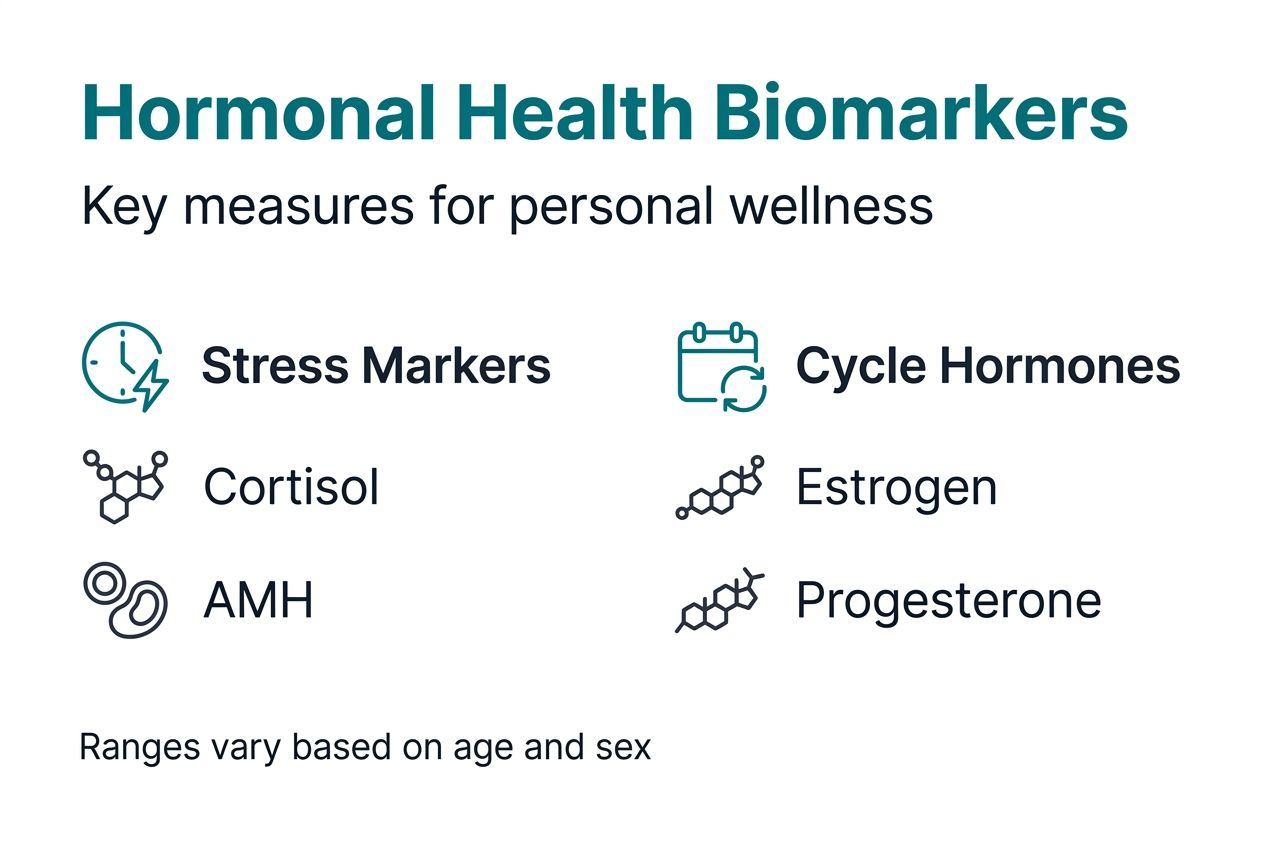
Cortisol follows a natural circadian rhythm, peaking shortly after waking and declining throughout the day to reach its lowest point at bedtime. This pattern supports energy production in the morning and facilitates restorative sleep at night. Chronically elevated cortisol indicates prolonged stress, potentially leading to weight gain, immune suppression, and insulin resistance. Abnormally low cortisol may signal adrenal fatigue or burnout, manifesting as persistent exhaustion and poor stress tolerance.
AMH provides insight into ovarian reserve and reproductive timeline. AMH levels between 1.0 and 4.0 ng/mL generally indicate normal ovarian reserve; below 1.0 points to diminished reserve; above 4.0 signals possible ovarian conditions like PCOS. Unlike hormones that fluctuate with menstrual cycles, AMH remains relatively stable, making it useful for assessing fertility potential and planning reproductive timelines.
| Biomarker | Normal Range (Adult Female) | What Low Levels Indicate | What High Levels Indicate |
|---|---|---|---|
| Cortisol (morning) | 10-20 μg/dL | Adrenal insufficiency, fatigue | Chronic stress, Cushing’s syndrome |
| AMH | 1.0-4.0 ng/mL | Diminished ovarian reserve | Polycystic ovary syndrome |
| Estradiol (follicular) | 30-100 pg/mL | Menopause, ovarian dysfunction | Estrogen dominance, tumors |
| Progesterone (luteal) | 5-20 ng/mL | Luteal phase defect, infertility | Rare, typically pregnancy |
| Testosterone | 15-70 ng/dL | Low libido, fatigue, muscle loss | PCOS, adrenal disorders |
Estrogen and progesterone work in coordinated patterns throughout the menstrual cycle. Estrogen dominates the follicular phase (first half), while progesterone rises after ovulation during the luteal phase (second half). Tracking both reveals whether ovulation occurred, identifies luteal phase defects affecting fertility, and explains symptoms like PMS, irregular periods, or mood swings.
Pro Tip: Compare your hormone values not just against population averages but against your own baseline established through consistent tracking. Individual variation means optimal ranges differ person to person.
Context matters enormously in interpretation. Age, sex, menstrual cycle phase, medications, and health conditions all influence hormone levels. A progesterone level of 2 ng/mL is normal in the follicular phase but indicates a problem in the luteal phase. Testosterone levels considered normal for men would signal hyperandrogenism in women.
Understanding types of biomarkers for personal health helps you build a complete picture. Hormones interact with vitamins, minerals, and metabolic markers, creating complex feedback loops. Vitamin D deficiency affects sex hormone production. Insulin resistance disrupts reproductive hormones. Comprehensive testing reveals these connections.
Your data empowers informed conversations with healthcare providers. Instead of vague symptom descriptions, you present objective measurements showing patterns over time. This precision accelerates diagnosis and enables targeted interventions rather than trial-and-error approaches.
Applying hormonal insights to optimize wellness and performance
Hormone data transforms from numbers into actionable strategies when you apply insights to daily decisions. Personalized adjustments based on your unique patterns deliver better results than generic wellness advice.
Nutrition optimization using hormonal and genetic data represents the cutting edge of personalized health. Genomic profiling combined with functional assessments guides precision nutrition plans that benefit postmenopausal women, addressing metabolic shifts and reducing chronic disease risk. You can tailor macronutrient ratios, meal timing, and supplementation to support your hormone production and metabolism.
For example, if cortisol testing reveals elevated evening levels disrupting sleep, you might:
- Limit caffeine intake after noon to prevent additional cortisol spikes
- Incorporate adaptogenic herbs like ashwagandha to modulate stress response
- Practice stress-reduction techniques during high-cortisol periods
- Adjust evening light exposure to support natural cortisol decline
Stress management becomes more effective when guided by cortisol patterns rather than subjective feelings. You identify specific triggers causing hormone spikes and implement targeted interventions. Some people need morning meditation to prevent all-day elevation. Others benefit from afternoon breaks when cortisol naturally dips. Data reveals your unique pattern.
Menstrual cycle tracking extends beyond fertility awareness. Menstrual cycle tracking helps athletes manage symptoms and improve well-being through education and autonomy. Athletes adjust training intensity and recovery protocols to align with hormonal phases. High-intensity work during the follicular phase (when estrogen enhances performance capacity) and recovery focus during the luteal phase (when progesterone dominates) optimizes results while reducing injury risk.
“Understanding your hormonal rhythm allows you to work with your biology instead of fighting against it. This alignment maximizes both performance and recovery.”
Regular monitoring enables proactive adjustments before small imbalances become major problems. You notice subtle shifts in energy, mood, or physical symptoms and correlate them with hormone changes. This awareness motivates healthier habits because you see direct cause-and-effect relationships between lifestyle choices and physiological outcomes.
Integrating biomarker data into comprehensive wellness plans supports longevity and healthspan extension. Nutritionists using biomarkers achieve better client outcomes by personalizing recommendations to individual biochemistry rather than applying one-size-fits-all protocols. This precision approach addresses root causes rather than merely managing symptoms.
Athletes and fitness enthusiasts gain competitive advantages through hormone optimization:
- Time carbohydrate intake to support insulin sensitivity patterns
- Schedule strength training when testosterone peaks for maximum muscle growth
- Adjust recovery protocols based on cortisol and inflammation markers
- Prevent overtraining by monitoring hormonal stress indicators
- Support female athlete health through cycle-aware programming
The key is consistency. Sporadic testing provides snapshots, but regular monitoring reveals trends and enables meaningful pattern recognition. Quarterly or monthly testing for stable hormones combined with more frequent tracking for dynamic markers like cortisol creates a comprehensive picture of your hormonal health over time.
Explore personalized hormonal health testing with Biostarks
Ready to transform hormone data into personalized wellness strategies? Understanding your biochemistry is the foundation of optimized health.
Biostarks specializes in at-home biomarker testing using advanced Swiss mass spectrometry to analyze hormones, vitamins, amino acids, lipids, minerals, and metabolic markers. Our comprehensive reports translate complex laboratory results into clear, actionable insights tailored to your health goals.
Whether you’re optimizing nutrition based on your unique metabolic profile or enhancing sport performance through cycle-aware training, Biostarks provides the precision data you need. Our user-friendly collection process makes regular monitoring simple, while our detailed analysis empowers you to make informed decisions about your wellness journey.
Start tracking your hormonal health today and discover how personalized insights unlock your potential for enhanced performance, longevity, and vitality.
Frequently asked questions
What is hormonal health tracking?
Hormonal health tracking involves regularly monitoring your hormone levels using at-home tests, wearable devices, or symptom-tracking apps to understand your hormonal balance and detect changes over time. This practice helps you identify imbalances early, informs lifestyle adjustments, and supports overall wellness optimization. Common tracking methods include at-home testing kits measuring saliva, urine, or blood samples, along with digital apps that correlate symptoms with hormonal patterns.
Which hormones should I track at home?
The most valuable hormones to track depend on your health goals and symptoms. Cortisol monitoring reveals stress patterns and adrenal health, making it useful for anyone experiencing chronic stress or fatigue. AMH testing assesses ovarian reserve and reproductive aging, helping with fertility planning. Estrogen and progesterone tracking supports menstrual cycle health and symptom management. Consult healthcare providers to determine which hormones best address your specific concerns and to ensure comprehensive interpretation of results.
How often should I test my hormones?
Testing frequency varies by hormone type and your monitoring purpose. Stress hormones like cortisol may warrant weekly or monthly testing to track patterns and intervention effectiveness. Reproductive hormones such as AMH remain relatively stable and typically require only annual testing unless addressing specific fertility concerns. If tracking menstrual cycle hormones, monthly monitoring throughout different cycle phases provides the most useful data. Personalized testing schedules improve relevance and prevent unnecessary expense while maintaining valuable insight.
Can tracking hormones improve athletic performance?
Hormone tracking empowers athletes by revealing cycle-related patterns and imbalances that affect training capacity, recovery, and overall performance. Menstrual cycle tracking helps athletes by identifying irregularities, managing symptoms, and improving autonomy over health decisions. Athletes tailor training intensity and recovery protocols to hormonal phases, optimizing strength gains and reducing injury risk. While evidence supporting physiological benefits continues growing, the awareness and symptom management advantages are already well-established, supporting holistic approaches to female athlete health.


