

Pushing your limits is not just about training harder, but about understanding exactly what your body needs to perform and recover. For elite athletes, generic lab tests miss the hidden patterns that shape injury risk and slow your progress. Blood biomarker analysis reveals key issues like poor vitamin D or iron status, persistent inflammation, and decreased hormonal drive—factors that research shows are widespread among those who lack precise nutritional support or overtrain. Unraveling these details brings targeted solutions right to your home lab kit.
Table of Contents
- Defining Athlete Blood Testing And Common Myths
- Key Biomarkers Assessed In Athletes
- Testing Methods And Sample Collection Explained
- Personalizing Training And Nutrition With Results
- Risks, Limitations, And Misinterpretations
Key Takeaways
| Point | Details |
|---|---|
| Blood Testing Optimizes Performance | Athlete blood testing targets specific biomarkers to enhance recovery and performance, differing from routine medical tests. |
| Myths Surrounding Testing | Common misconceptions include the belief that one test is sufficient and that standard lab ranges apply to athletes, which is not true. |
| Key Biomarkers Matter | Important markers like Vitamin D, ferritin, and cortisol provide insights into training status and recovery capacity, guiding tailored interventions. |
| Standardization is Essential | Accurate data results from strict sample collection protocols, timing, and consistent testing conditions to reveal true physiological trends. |
Defining Athlete Blood Testing and Common Myths
Athlete blood testing sounds straightforward on the surface, but it represents something far more specific than standard medical blood work. At its core, blood biomarker analysis involves measuring specific biological markers—vitamins, minerals, hormones, amino acids, lipids, and metabolic compounds—to assess your physiological status and identify performance bottlenecks. Unlike annual checkups designed to screen for disease, athlete blood testing targets optimization. It answers precise questions: Are your vitamin D levels limiting your recovery? Is your iron status affecting oxygen transport? Are stress hormones impairing your training adaptability? This data-driven approach transforms guesswork into actionable intelligence.
The testing process itself follows strict protocols. Pre-analytic conditions matter enormously, meaning timing, sample collection method, and storage all influence accuracy. Professional athletes often test under standardized conditions, like early morning before training, to maintain consistency across measurements. Blood biomarker analysis specifically addresses stressors that athletes face regularly—physical workload, sleep disruption, travel across time zones, and psychological pressure—which combine to increase injury and illness risk when unmanaged. By monitoring markers over time, you spot trends before they derail performance.
Now let’s address the myths, because plenty of misconceptions persist. Myth one: Blood testing provides instant answers about performance. Reality: Biomarkers reveal your nutritional and physiological status, not your tomorrow’s race result. They show whether your iron stores support endurance training or whether persistent inflammation limits recovery capacity. Myth two: One blood test is enough. False. Meaningful interpretation requires baseline measurements and repeat testing to identify changes. A single snapshot lacks context. Myth three: Standard lab ranges apply to athletes. Incorrect. Sports-specific reference ranges account for the fact that elite athletes often display different vitamin D, hormonal, or inflammatory profiles than sedentary populations. What looks normal in a general population might indicate a performance limitation for an athlete. Myth four: More biomarkers mean better insights. This one surprises people. Comprehensive testing provides valuable data, but the goal is identifying the specific markers that matter for your sport, training phase, and individual biology.
The real power lies in understanding what common problems biomarker testing actually uncovers. Research consistently shows patterns like poor vitamin D status, inadequate iron levels, low energy availability, persistent inflammation, oxidative stress, and decreased hormonal drive—each directly linked to performance compromises. These aren’t rare edge cases; they’re widespread among athletes who lack nutritional guidance or overtrain without adequate recovery. Testing reveals whether your perceived fatigue stems from dehydration, insufficient carbohydrate availability, hormonal suppression, or true overtraining syndrome.
Pro tip: Request sport-specific reference ranges when interpreting results, not standard clinical ranges, since elite athletes often naturally display different biomarker profiles than the general population due to chronic training adaptations.
This table compares standard clinical blood testing vs. athlete-focused analysis:
| Aspect | Standard Testing | Athlete Blood Analysis |
|---|---|---|
| Target Population | General public | Trained athletes |
| Reference Ranges | Broad, population-based | Sport-specific, individualized |
| Key Purpose | Disease screening | Performance optimization |
| Typical Frequency | Annual or as needed | Every 4-8 weeks |
| Interpretation Focus | Illness detection | Physiology & recovery states |
Key Biomarkers Assessed in Athletes
Athletes don’t need to measure everything in their blood. They need to measure the right things. The biomarkers that matter focus on three core areas: oxygen transport capacity, training stress and recovery status, and immune and inflammatory health. Understanding what each marker reveals transforms raw data into actionable intelligence for performance optimization.
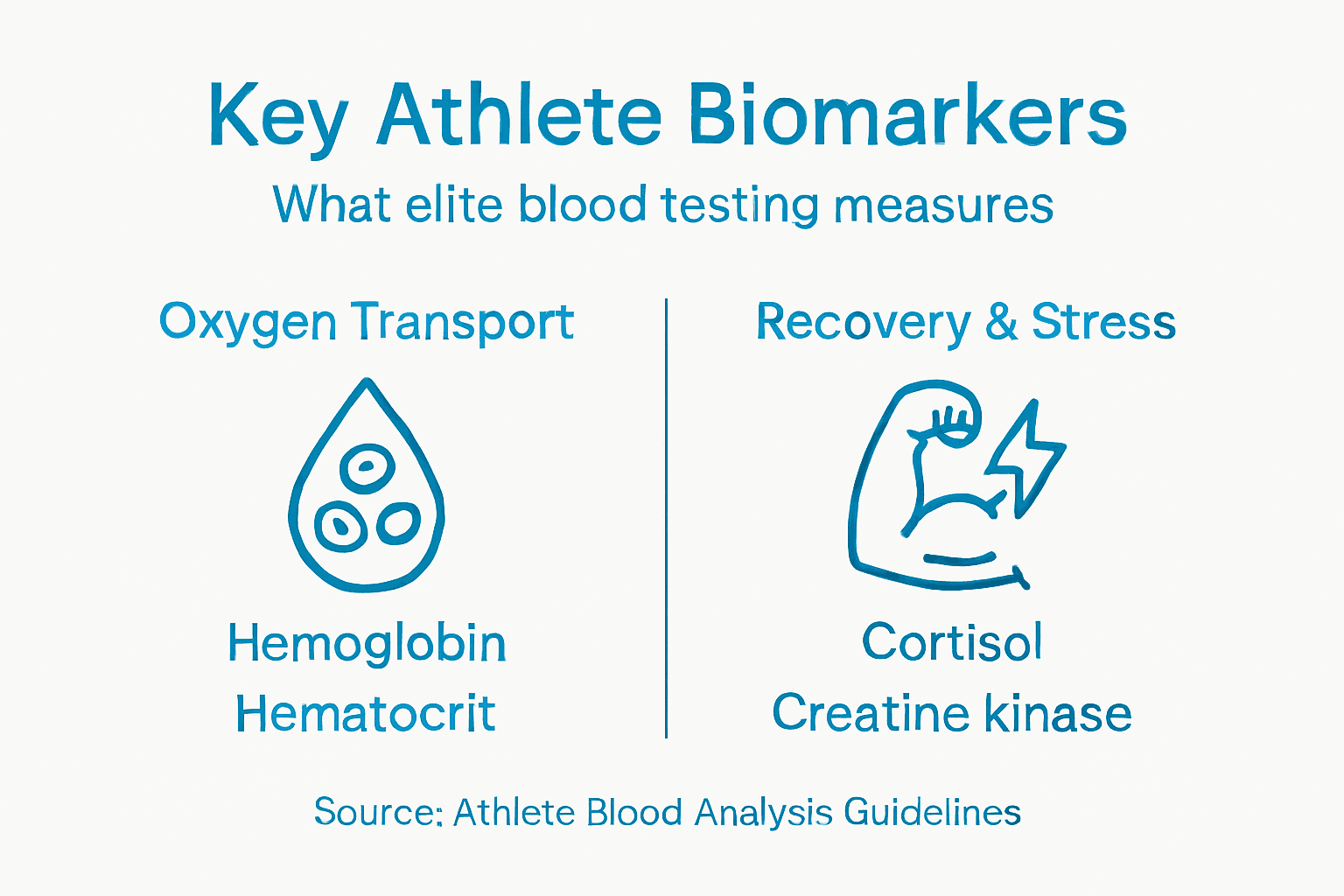
Oxygen transport represents the foundation of aerobic performance. Your Complete Blood Count (CBC) measures red blood cells, hemoglobin, and hematocrit, directly indicating how much oxygen your blood can carry to working muscles. Low hemoglobin limits endurance capacity regardless of training volume. Iron and ferritin tests assess your iron stores, which fuel the production of new red blood cells and support energy metabolism. Endurance athletes particularly suffer from iron deficiency because training increases iron loss through sweat and gastrointestinal bleeding. Vitamin D affects muscle function, bone density, and immune defense, making it critical for both injury prevention and training adaptability. Many athletes in northern climates or those training indoors show insufficient vitamin D levels that directly compromise performance and recovery.
Training stress leaves measurable biochemical signatures. Blood-based biomarkers like creatine kinase, urea, myoglobin, and white blood cells track muscle damage, metabolic stress, and immune response. Elevated creatine kinase indicates recent muscle damage from intense training. Urea reflects protein breakdown and training intensity. These markers reveal whether your body is adapting positively to training or sliding toward overtraining and illness. C-Reactive Protein (CRP) serves as your inflammation alarm bell. Persistent elevation signals systemic inflammation that impairs recovery and increases injury risk. Some inflammation is normal after hard training, but chronic elevation suggests inadequate recovery, poor nutrition, or overtraining.
Hormonal markers provide insight into your nervous system’s stress response and recovery trajectory. Cortisol elevation indicates your body remains in a stressed state, limiting adaptation and recovery. Testosterone levels reflect anabolic drive and training recovery efficiency. Athletes with suppressed testosterone despite adequate sleep often need more recovery time or nutritional intervention. The cortisol-to-testosterone ratio offers even more nuance than individual measurements, revealing whether your training stress matches your recovery capacity.
Timing matters enormously when interpreting these markers. A single elevated value might reflect yesterday’s hard workout, dehydration, or poor sleep rather than a real problem. Confounding factors like pre-analytical conditions, stress, and individual variability affect results. Baseline measurements and trend tracking over weeks or months reveal what’s truly happening versus noise.
Pro tip: Test early morning in a fasted state under consistent conditions, then retest at the same time after 4 to 6 weeks of training to identify meaningful changes rather than daily fluctuations.
Here’s a summary of key athlete blood biomarkers and what each reveals:
| Biomarker | Primary Focus | Performance Impact |
|---|---|---|
| Hemoglobin | Oxygen transport | Endurance, aerobic capacity |
| Ferritin | Iron storage | Energy metabolism, recovery |
| Vitamin D | Bone & muscle health | Injury risk, muscle function |
| Creatine Kinase | Muscle damage | Adaptation, overtraining risk |
| Cortisol | Stress response | Recovery efficiency, adaptation blockers |
| Testosterone | Anabolic drive | Strength, recovery, muscle growth |
| CRP (C-reactive Protein) | Inflammation | Illness, recovery impairment |
Testing Methods and Sample Collection Explained
Blood testing for athletes demands precision. The difference between accurate data and useless data often comes down to how the sample gets collected and processed. Unlike casual blood work where timing matters less, athlete blood testing requires strict standardization. This means controlling when you’re tested, how your body is prepared, and exactly how the sample is handled from needle to laboratory analysis.
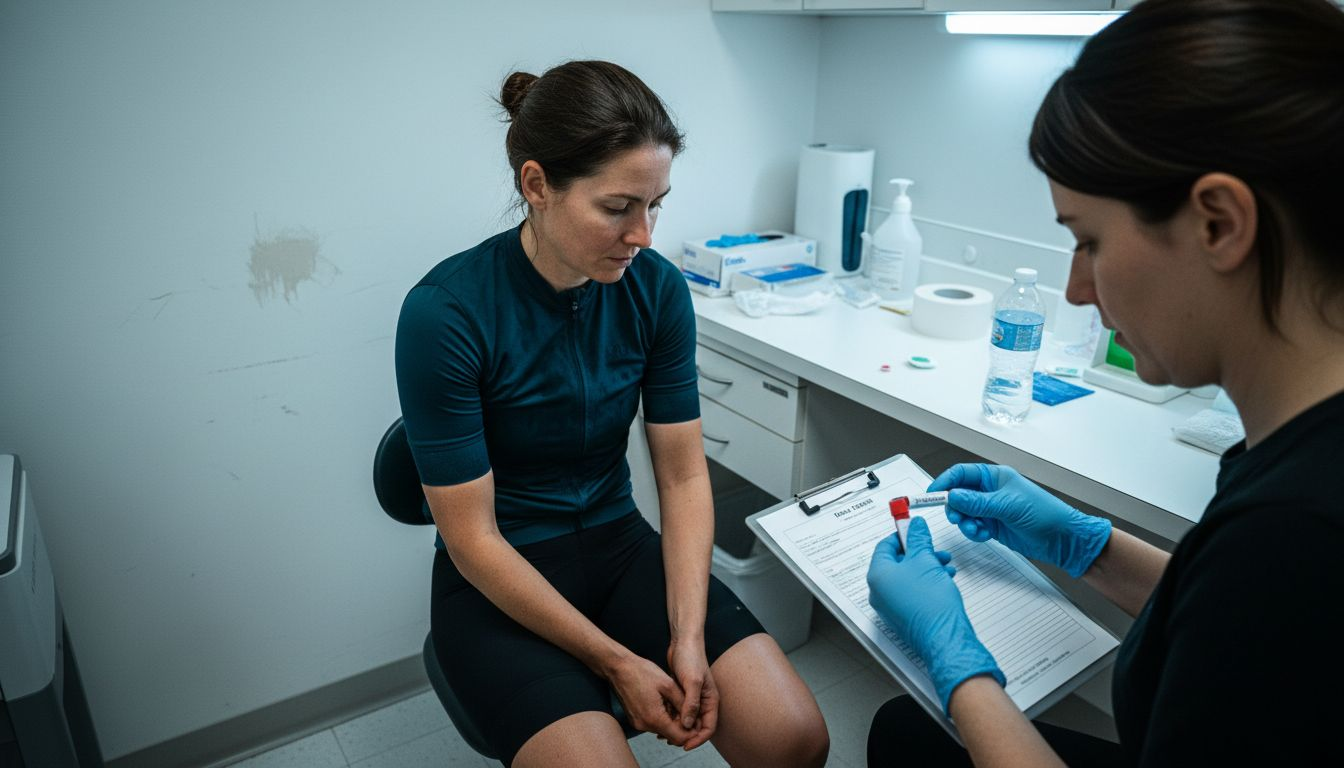
The collection process itself is straightforward but non-negotiable. Blood sample collection follows established protocols designed to protect your safety while maintaining sample integrity. You’ll provide informed consent, confirming you understand the procedure and any minimal risks involved. The phlebotomist collecting your sample should be qualified and trained specifically in athlete blood collection. Before sampling, you rest for a few minutes, allowing your body to return to a baseline state after physical activity or travel. The actual volume drawn is minimal, typically 20 to 25 milliliters, which poses negligible risk. Collection occurs from either your arm or hand, depending on accessibility and sample requirements. The entire process takes just minutes, yet the conditions surrounding it dramatically affect result accuracy.
Timing and preparation create the foundation for meaningful data. Elite athletes are typically tested under controlled conditions that match their training phase and sport demands. Comprehensive blood analyses capture sport-specific hematological adaptations, meaning your baseline values for hemoglobin or red blood cells might naturally differ based on whether you’re a power athlete, endurance specialist, or skill-based performer. Testing early morning in a fasted state minimizes variables introduced by meals, caffeine, or recent training. Hydration status dramatically affects marker concentrations, so consistent pre-test hydration matters. You’ll want to avoid intense training the day before testing, since acute exercise elevates inflammatory markers and muscle damage indicators that don’t reflect your true baseline. After collection, samples must be sealed immediately and documented properly, creating a clear audit trail from collection through analysis.
Laboratory methodology distinguishes high-quality testing from basic screening. Advanced mass spectrometry techniques, like those used by precision health providers, measure biomarkers with exceptional accuracy and sensitivity. This matters because subtle changes in your values carry meaning only when the testing precision can detect them reliably. Standard clinical labs often use older methods that provide less granular data. The turnaround time from collection to results varies, but comprehensive athlete panels typically deliver results within 5 to 10 business days, allowing you to act on findings before your training phase shifts significantly.
Pro tip: Schedule your blood test for early morning after a normal night’s sleep and a day of light activity, not following an intense training session, and maintain consistent timing across repeat tests to minimize confounding variables.
Personalizing Training and Nutrition With Results
Generic training plans and standard nutrition advice fail elite athletes because they ignore individual biology. Blood testing data transforms vague guidelines into precise interventions tailored to your actual physiology. Your iron status, vitamin D levels, hormonal profile, and inflammatory markers don’t fit a one-size-fits-all template. They’re uniquely yours, and your training and nutrition strategy should reflect that reality.
Nutrient deficiencies discovered through blood testing demand immediate attention because they directly limit performance. An athlete with low iron can’t increase aerobic capacity through training alone, no matter how much volume they accumulate. An athlete with insufficient vitamin D won’t recover optimally, won’t support bone density adequately, and won’t mount appropriate immune responses to training stress. Personalized sports nutrition tailors dietary recommendations to your individual needs, considering how your genetics influence nutrient absorption and metabolism. Some athletes absorb iron efficiently from plant sources while others need animal-based iron. Some metabolize certain B vitamins slowly, requiring higher intake. Rather than guessing, blood testing reveals your actual status and guides supplementation strategy. If your ferritin sits at 12 micrograms per liter, you need an intervention protocol. If your vitamin D measures 18 nanograms per milliliter, generic supplementation won’t correct the deficiency quickly enough. Targeted dosing based on your actual levels accelerates correction.
Training modifications follow logically from blood markers. Elevated cortisol with suppressed testosterone signals that your sympathetic nervous system dominates your recovery state. This points toward reducing training volume, increasing sleep, and managing stress rather than pushing harder. Persistent inflammation detected through elevated C-reactive protein suggests your training frequency exceeds your recovery capacity. Your body can’t adapt; it’s stuck in breakdown mode. Data-driven athletes respond by reducing training frequency, extending recovery days, or modifying intensity distribution. Conversely, athletes showing markers of undertraining may have room to increase volume or intensity.
Recovery nutrition becomes specific rather than generic. Blood testing results guide individualized training and recovery protocols by revealing nutrient deficiencies, hormonal imbalances, and stress levels. An athlete showing depleted glycogen stores and elevated blood glucose variability needs carbohydrate timing and quality adjustments. An athlete with low branched-chain amino acids benefits from specific protein timing strategies. Hydration recommendations shift when sodium and electrolyte markers reveal abnormalities. You stop following influencer nutrition advice and start making decisions grounded in your physiology.
The timeline matters. Blood markers don’t change overnight. Most interventions require 8 to 12 weeks to produce measurable shifts, which is why retesting at regular intervals proves essential. You implement nutrition changes, adjust training stress, modify recovery strategies, then retest to confirm the intervention worked.
Pro tip: Create a simple spreadsheet tracking your key biomarkers across testing cycles, noting training volume, nutrition focus, and life stress during each period, so you identify which interventions move your markers in the desired direction.
Risks, Limitations, and Misinterpretations
Blood testing delivers powerful insights, but it’s not magic. Athletes and coaches often overestimate what a single marker reveals or misinterpret results due to incomplete understanding of the science behind them. The gap between useful data and misleading conclusions is narrower than most realize. Understanding these pitfalls separates informed decision-making from costly mistakes.
One fundamental limitation stems from variability in how samples are collected and handled. Pre-analytical conditions dramatically affect biomarker results, meaning timing, hydration status, stress level, and even the time since your last meal influence values. An athlete tested immediately after travel will show different inflammatory markers than the same athlete tested at home. A dehydrated athlete displays artificially elevated hemoglobin concentration. Acute exercise affects creatine kinase for days, masking your true baseline. This doesn’t mean testing is useless, but it means a single result without context proves dangerously misleading. You need multiple measurements under consistent conditions to identify real trends versus noise.
Another critical trap involves using standard clinical reference ranges for athletes. Clinical labs establish normal ranges based on sedentary populations. Elite endurance athletes naturally possess higher hemoglobin from chronic altitude training adaptations. Their cortisol patterns differ from office workers. Their inflammatory markers fluctuate within sport-specific patterns. Applying sedentary reference ranges to an athlete creates false alarms or misses genuine problems. Blood biomarker interpretation requires understanding sport-specific contexts and individual baselines. An athlete’s absolute creatine kinase value means nothing without knowing their baseline and their training history that week. A marker that looks abnormal might represent normal adaptation to training.
Frequency and timing of testing create another source of misinterpretation. Testing once every six months provides insufficient data to identify meaningful changes. Testing weekly generates noise that obscures trends. Physical stress, psychological stress, sleep disruption, and infection all influence markers temporarily. Athletes sometimes spot a single elevated value and panic unnecessarily. Other times they ignore a consistent trend because they don’t retest frequently enough to recognize the pattern. Longitudinal monitoring at consistent intervals, typically every 4 to 8 weeks, reveals whether changes represent genuine physiological shifts requiring intervention.
Selection bias compounds problems. Choosing inappropriate biomarkers for your sport or training phase wastes resources. Testing testosterone and cortisol matters for a strength athlete managing recovery. Testing ferritin and hemoglobin matters more for an endurance athlete. Testing lactate clearance markers makes sense for a repeated-sprint athlete. Comprehensive panels sound appealing but often include markers irrelevant to your specific situation. Work with knowledgeable practitioners who understand your sport’s unique demands rather than ordering everything available.
Pro tip: Establish your personal baseline values during a healthy, normal training block before making any interventions, then retest under identical conditions after 4 to 8 weeks to identify real changes rather than comparing your results to population averages.
Take Control of Your Athletic Performance With Precise Biomarker Testing
Unlocking your full potential as an athlete requires more than just dedication and hard work. The article highlights challenges such as nutrient deficiencies, hormonal imbalances, and inflammation that silently undermine your training and recovery. These factors create hidden barriers that generic testing and vague advice cannot address. Targeted blood biomarker analysis with sport-specific reference ranges is essential to uncover these performance-limiting issues and guide personalized strategies.
Discover how Biostarks can transform your approach to health and performance through advanced at-home testing solutions. Our cutting-edge Swiss mass spectrometry technology delivers high-resolution insights on iron status, vitamin D, stress hormones, inflammation markers and more with precision tailored for athletes. Experience the convenience of user-friendly sample collection and receive actionable reports designed to empower your training, nutrition, and recovery decisions.
Elevate your performance today by choosing from the Biostarks | Collection and access the most precise athlete-focused blood testing available. Start optimizing your health with confidence by visiting Biostarks. Harness personalized data to make informed decisions now and overcome hidden obstacles standing between you and your best performance.
Frequently Asked Questions
What is athlete blood testing and how does it differ from standard blood tests?
Athlete blood testing focuses on measuring specific biomarkers—such as vitamins, minerals, hormones, and metabolic compounds—to optimize athletic performance, while standard blood tests primarily screen for diseases in the general population.
Why is it important to have sport-specific reference ranges when interpreting blood test results?
Sport-specific reference ranges are crucial because elite athletes often have different physiological and biological profiles than sedentary individuals. Using standard clinical ranges may lead to false positives or miss potential performance limitations.
How often should athletes undergo blood testing for optimal results?
Athletes should typically undergo blood testing every 4 to 8 weeks to monitor changes over time and identify trends, rather than relying on infrequent testing which may overlook important fluctuations.
What are some common biomarkers assessed in athlete blood testing?
Common biomarkers include hemoglobin (for oxygen transport), ferritin (for iron storage), vitamin D (for muscle and immune health), creatine kinase (for muscle damage), cortisol (for stress response), and testosterone (for anabolic drive).


