

TL;DR:
- Personalized health data uses biomarkers and wearable metrics for tailored health strategies.
- Interpretation by experts ensures meaningful insights beyond raw numbers.
- Limits include potential for misinterpretation, ethical concerns, and reliance on contextual understanding.
Most people still follow generic health plans despite living in an era where individual biological data is more accessible than ever. The assumption that one nutrition protocol, one supplement stack, or one training load works for everyone ignores what the science increasingly confirms: your body operates by its own rules. Biomarker testing and integrated health data are changing how athletes and health-conscious individuals approach performance, recovery, and longevity. This article breaks down what personalized health data actually means, which measurements matter most, how to turn raw numbers into real strategies, and where the limits of this approach honestly lie.
Table of Contents
- From generic advice to precision health: why personalization matters
- Key biomarkers and methodologies: what gets measured, and why
- Integrating data for actionable insights: from numbers to strategies
- Cautions, ethical considerations, and practical limits of personalization
- Personalized health data: what most experts don’t tell you
- Experience the benefits of personalized health insights
- Frequently asked questions
Key Takeaways
| Point | Details |
|---|---|
| Personalization enhances results | Using your own biomarker and wearable data leads to more effective health, nutrition, and performance strategies. |
| Expert context matters | Personal health data is most valuable when interpreted with expert guidance and your own lived experience. |
| Limits and ethics exist | While powerful, personalized health data has evidence gaps, accessibility challenges, and privacy issues to consider. |
| Action beats numbers | Turning data into results means focusing on practical change, not chasing perfect scores. |
From generic advice to precision health: why personalization matters
For decades, health guidance meant population averages. Eat less, move more, sleep eight hours. These recommendations work for some people some of the time, and they fail many others entirely. The reason is simple: your biology is not average.
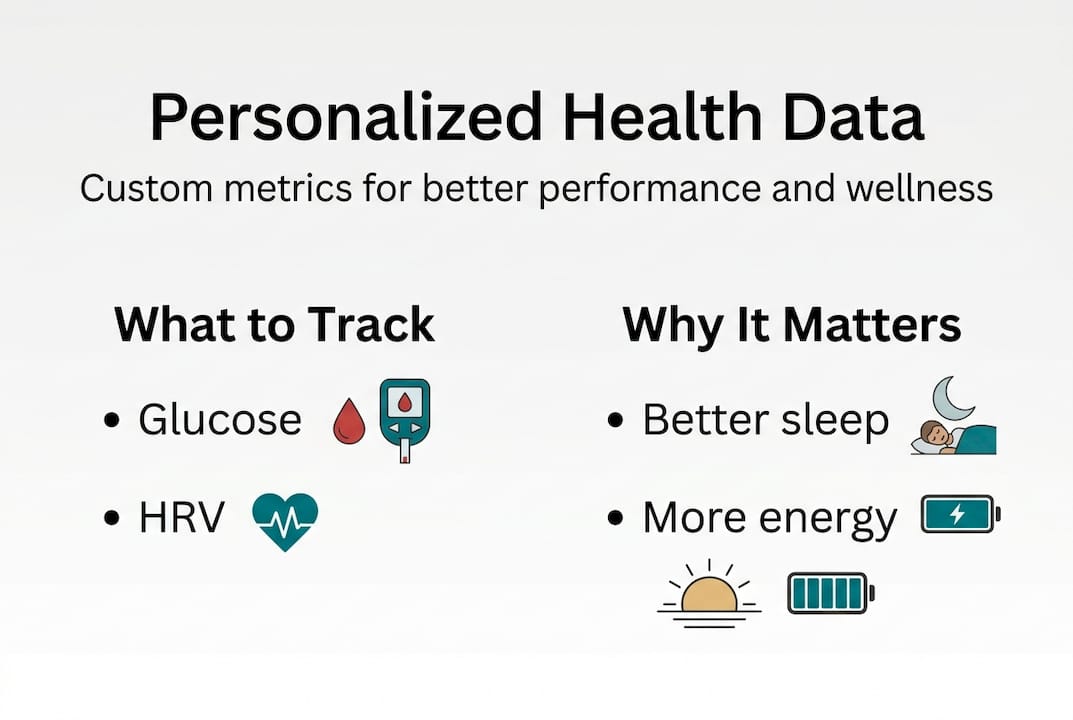
Personalized health data refers to the collection and analysis of individual biological signals, including types of health biomarkers like blood glucose, cortisol, and ferritin, alongside wearable metrics such as heart rate variability (HRV) and sleep staging, and subjective inputs like energy levels and perceived effort. Together, these data points paint a picture that generic advice cannot replicate.
Here is what a typical personalized health data protocol might measure:
- Metabolic markers: fasting glucose, HbA1c (a three-month blood sugar average), insulin sensitivity
- Hormones: testosterone, cortisol, thyroid panel, estradiol
- Nutritional status: vitamin D, B12, ferritin, zinc, magnesium
- Cardiovascular risk: LDL particle size, triglycerides, HDL cholesterol
- Inflammation: C-reactive protein (CRP), interleukin-6
- Recovery and performance: lactate threshold, HRV, resting heart rate trends
The shift away from generic plans is already underway across sports science and preventive medicine. Precision strategies based on biomarkers are replacing one-size-fits-all approaches for health-conscious individuals and athletes alike. And the payoff is real: biomarker-based plans enable tailored nutrition, training, and recovery strategies that improve both performance and long-term health.
“The goal is not more data. The goal is the right data, interpreted in context, applied with precision.”
For athletes, this might mean adjusting carbohydrate intake based on real-time glucose response rather than a textbook macro split. For someone focused on longevity, it could mean catching early signs of metabolic dysfunction years before symptoms appear. Personalization is not a luxury feature; it is increasingly the baseline expectation for anyone serious about their health.
Key biomarkers and methodologies: what gets measured, and why
Understanding what gets measured, and what each marker actually tells you, is the foundation of using personal health data well. Not all biomarkers carry equal weight, and knowing which ones are actionable separates useful testing from expensive noise.
Comprehensive biomarker protocols can test over 100 markers, integrating blood data, wearable outputs, and subjective assessments for a complete planning picture. In practice, most useful testing clusters into a few key categories:
| Biomarker category | What it measures | Why it matters |
|---|---|---|
| Metabolic markers | Glucose, HbA1c, insulin | Energy regulation, diabetes risk |
| Lipid panel | LDL, HDL, triglycerides | Cardiovascular health |
| Hormonal panel | Cortisol, testosterone, thyroid | Stress response, recovery, performance |
| Micronutrients | Vitamin D, B12, iron, magnesium | Immune function, energy, bone health |
| Inflammation | CRP, IL-6 | Chronic disease risk, training load |
| Wearable data | HRV, sleep stages, VO2 max proxy | Recovery readiness, aerobic capacity |
Key markers including glucose, lipids, hormones, and HRV give athletes and health-focused individuals actionable targets rather than vague guidance. For endurance athletes especially, lactate threshold testing identifies the precise exercise intensity at which the body shifts from aerobic to anaerobic metabolism, making training zone prescription far more accurate than using heart rate formulas based on age alone.

One finding that surprises many people: subjective monitoring explains up to 43.8% of performance variation compared to 18.8% for biomarkers alone. That means how you feel, how motivated you are, and your perceived recovery quality are not soft data points. They are critical inputs that belong alongside your blood panel.
For best results when interpreting biomarker results, pair your lab values with wearable trends and your subjective experience over time. A single snapshot rarely tells the full story.
Pro Tip: Track your subjective readiness score daily alongside your wearable data. When it consistently diverges from what your numbers suggest, that gap itself becomes a valuable signal worth exploring with a practitioner.
The biomarker benefits most athletes report are not just performance-related. Better sleep, sharper mental clarity, and more consistent energy often emerge once key deficiencies or hormonal imbalances are identified and corrected.
Integrating data for actionable insights: from numbers to strategies
Raw biomarker numbers mean very little without interpretation. A ferritin level of 35 ng/mL sits technically within the “normal” clinical range, but for a female endurance athlete training twice a day, it likely signals meaningful iron insufficiency that will blunt performance. This is where expert involvement changes everything.
Expert interpretation uses optimal ranges rather than clinical cutoffs and integrates wearable data for a fuller picture of what your body actually needs. The difference between optimal and merely normal is where real health gains live.
Here is how the three main interpretation approaches compare:
| Approach | Strengths | Limitations |
|---|---|---|
| Expert-guided interpretation | Context-aware, optimal ranges, integrative | Requires access to a qualified practitioner |
| DIY interpretation | Low cost, immediate access | High risk of misinterpretation, no context |
| App-only analysis | Convenient, automated | Lacks nuance, often uses clinical cutoffs only |
Turning your data into a personal action plan typically follows these steps:
- Run a baseline test covering your priority biomarker categories.
- Compare results to both clinical norms and performance-optimal ranges.
- Identify two or three actionable targets, not twenty.
- Build targeted interventions: adjust nutrition, supplementation, sleep, or training load.
- Retest in eight to twelve weeks to measure response.
- Refine the plan based on updated data and how you feel.
The influence of AI on this process is growing fast. AI-powered precision medicine now combines biomarkers, wearable data, and environmental context to generate dynamic recommendations. But context and human oversight remain essential. An algorithm does not know that you had a brutal travel week, lost a family member, or are managing chronic stress. Those factors shape your data profoundly.
For athletes working toward specific goals, personalized health strategies built around integrated data consistently outperform generic periodization plans. And for those prioritizing longevity, transforming health data into preventive action is how early risk signals become correctable before they become diagnoses.
“The most expensive healthcare is treating conditions that data could have predicted years earlier.”
Finally, lactate threshold method selection matters enormously in athletic contexts. Some methods predict performance meaningfully better than others, which is why understanding the “how” behind your test is just as important as the result itself.
Cautions, ethical considerations, and practical limits of personalization
Personalized health data is genuinely powerful. It is also genuinely limited, and honesty about those limits is part of using it well.
First, the performance caveat: routine biomarker testing does not reliably produce direct gains in race times or strength. The primary drivers of athletic improvement remain training quality, consistent nutrition, and sleep. Biomarkers are most valuable when they reveal a specific deficiency or imbalance that is actively limiting you, not as a standalone performance lever.
Common pitfalls to watch for:
- Chasing numbers: Optimizing a lab value without a corresponding symptom or performance issue is often wasted effort.
- Confirmation bias: Seeking tests until you find results that match what you already believe.
- One-point snapshots: Single tests miss natural biological variation; trends over time carry far more meaning.
- Ignoring context: Subjective wellness can outperform raw biomarker values as a predictor of outcomes when context is properly factored in.
Beyond individual pitfalls, broader ethical challenges surround the field. Significant disparities exist in access to precision medicine based on cost, geography, and systemic bias in datasets. Testing panels that cost hundreds of dollars per month remain out of reach for most people globally, and many AI models were trained on populations that do not represent all demographics equally. Privacy is another real concern: your health data is among the most sensitive information you generate, and not all providers protect it with equal rigor.
“Data without equity is just a more sophisticated way of leaving people behind.”
Pro Tip: Use your personal health data as a guide and a conversation starter with a qualified practitioner, not as a self-diagnosis tool. The goal is better decisions, not perfect numbers.
For a grounded approach to data-driven wellness, prioritize correcting clear deficiencies, building sustainable habits, and retesting to measure real change over time.
Personalized health data: what most experts don’t tell you
Here is the honest truth most resources skip: your biomarkers are a snapshot of your biology at one moment in time, shaped by everything that happened to you in the weeks before the test. Poor sleep, high stress, a hard training block, a weekend of poor eating, all of it shows up in your blood. The numbers are real, but they are not fixed facts about who you are.
We have seen clients with textbook-perfect panels who feel exhausted and unmotivated, and others with flagged values who perform brilliantly. The reason is almost always context and behavior. Nutritionists using biomarkers for client outcomes consistently report that the most transformative results come when lab data is integrated with behavioral patterns, stress history, sleep quality, and honest conversation, not when numbers are treated as commands.
Personalization works best when it informs your decisions rather than dictating them. Focus on trends across multiple tests. Look for patterns that align with how you actually feel. And treat your data as a collaborator in your health journey, not a verdict.
Experience the benefits of personalized health insights
If the science here resonates with you, the next step is actually running your own data. Knowing that personalization matters is one thing; seeing your own biomarker profile is another entirely.
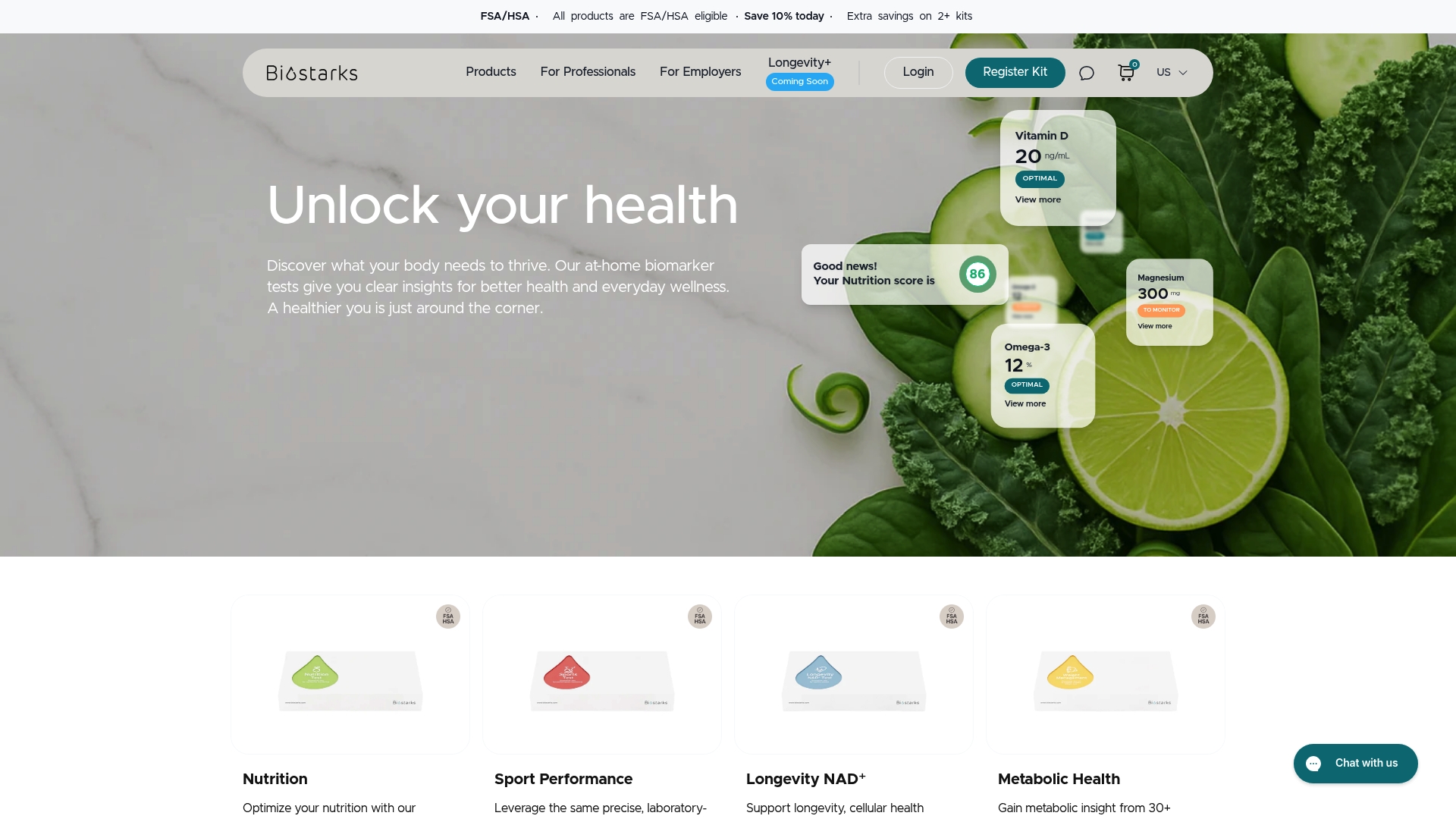
At Biostarks, personalized biomarker testing uses advanced Swiss mass spectrometry to analyze vitamins, hormones, amino acids, lipids, and metabolic markers from a simple at-home sample. You get precise, actionable reports, not just a list of numbers. Whether you are an athlete targeting performance or someone focused on long-term wellness, our biomarker testing guide is a practical starting point for understanding what to test and how to act on what you find. Expert support and integrated insights are built into the process from the start.
Frequently asked questions
What is personalized health data?
Personalized health data refers to individual biological signals gathered through blood tests, wearables, and subjective assessments used to tailor nutrition, training, and wellness strategies to a specific person rather than a population average.
Do personalized biomarker tests improve athletic performance?
Routine biomarker testing does not guarantee faster race times or greater strength; the primary performance drivers remain training quality and nutrition, with biomarkers most valuable for identifying specific deficiencies that are actively limiting progress.
Are personalized health data methods affordable?
AI-powered precision medicine is cost-effective in roughly 89% of economic analyses, but meaningful access gaps tied to cost and geographic equity still affect many populations globally.
Is my privacy at risk with personalized health data?
Health data is among the most sensitive personal information you generate, and ethical privacy concerns are a documented challenge in precision medicine; always choose providers with transparent, rigorous data security policies.
What’s the main pitfall with personalized health data?
The most common mistake is over-interpreting results without factoring in symptoms, context, and expert guidance, which can distract from the fundamentals that actually drive health and performance.
Recommended
- Why choose data-driven wellness for optimal h… | Biostarks
- How data transforms personalized wellness: 28… | Biostarks
- Wellness optimization strategies for personal… | Biostarks
- 7 Key Biomarker Testing Benefits for Athletes… | Biostarks
- Medical Astrology Explained: Wellness Through Zodiac | Lunaris


