

Hormone testing can feel frustrating when results seem inconsistent or misleading, leaving you unsure about your next wellness steps. Many health-conscious individuals struggle with poorly timed samples, unreliable testing methods, or confusing interpretations that fail to deliver actionable insights. Understanding the complete workflow for hormone analysis, from sample collection timing to advanced testing methods and personalized interpretation, empowers you to take control of your hormonal health. This guide breaks down each phase with practical steps to ensure accurate, meaningful results that support your optimization goals.
Table of Contents
- Understanding The Problem: Why Hormone Analysis Workflow Matters
- Preparation Phase: What You Need Before Collecting Samples
- Execution Phase: Reliable Testing And Methodology
- Post-Analytical Phase: Interpreting And Applying Your Results
- Optimize Your Hormone Analysis With Biostarks
- Frequently Asked Questions
Key takeaways
| Point | Details |
|---|---|
| Three-phase workflow | Hormone analysis involves pre-analytical preparation, analytical testing, and post-analytical interpretation for reliable results. |
| Timing is critical | Sample collection timing respects circadian rhythms and menstrual cycles to capture accurate hormone levels. |
| LC-MS/MS gold standard | Liquid chromatography-tandem mass spectrometry provides superior precision and multiplex capability over immunoassays. |
| Salivary monitoring | Saliva tests track trends non-invasively but lack the precision needed for clinical decisions. |
| Personalized interpretation | Comparing results to individualized reference ranges and considering confounding factors maximizes actionable insights. |
Understanding the problem: why hormone analysis workflow matters
Hormone levels fluctuate dramatically throughout the day and across menstrual cycles, making timing the single most critical factor for accurate testing. Testosterone levels vary by 35% between dawn and midday, meaning a random sample can produce wildly different readings that mislead your wellness decisions. Many individuals collect samples at inconsistent times or during periods of acute stress, yielding data that reflects temporary states rather than baseline hormonal function.
Common immunoassay testing methods compound these timing issues with technical limitations that produce inaccurate results. These assays suffer from cross-reactivity, where antibodies bind to similar molecules instead of the target hormone, leading to overestimation or false positives. You might receive elevated estrogen readings when the test actually detected a metabolite or medication, creating unnecessary concern and misguided interventions.
The distinction between free and total hormone levels adds another layer of complexity that standard testing often ignores. High sex hormone-binding globulin (SHBG) can mask low free testosterone by binding most of your total testosterone, leaving you symptomatic despite “normal” total levels on paper. Without measuring both markers and understanding their relationship, you miss the complete picture of hormonal availability and function.
“Interpreting hormone results without considering individual context, timing, and testing method limitations leads to confusion and ineffective optimization strategies.”
Key workflow problems include:
- Inconsistent sample collection timing across different testing occasions
- Reliance on immunoassays with known cross-reactivity issues
- Failure to account for binding proteins affecting hormone availability
- Generic reference ranges that ignore individual baselines and goals
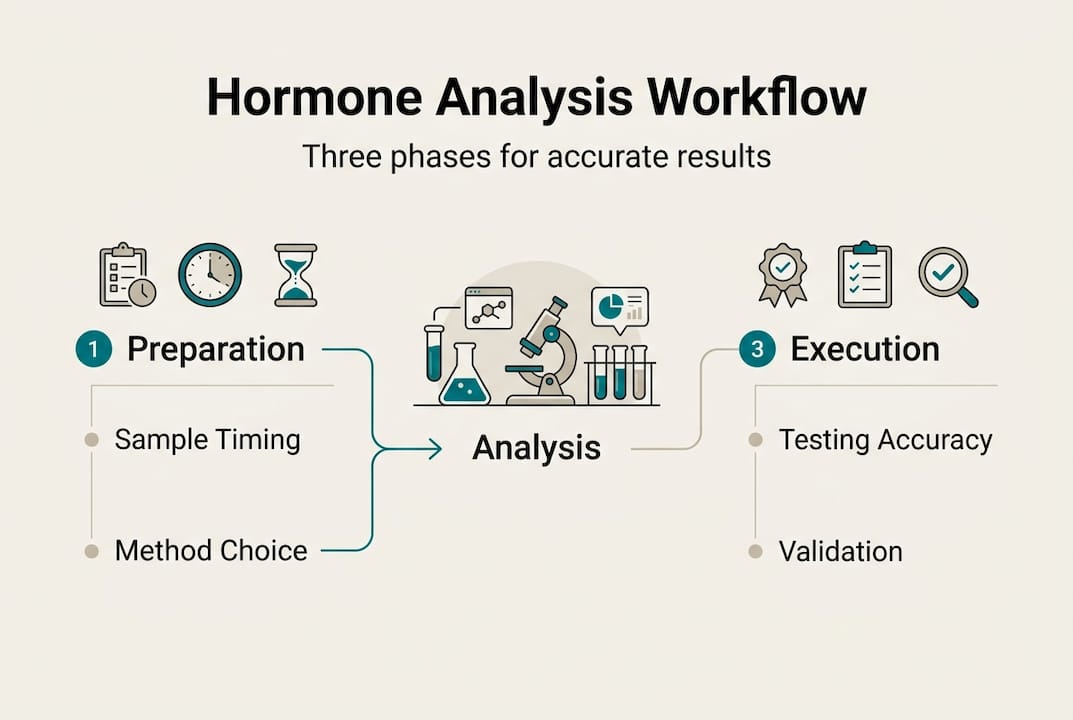
Understanding hormone balance requires addressing these workflow challenges systematically. Each phase, from preparation through interpretation, must be optimized to generate reliable, actionable data that supports your wellness journey.
Preparation phase: what you need before collecting samples
Optimal sample timing respects your body’s natural circadian rhythms and, for menstruating individuals, the specific phase of your menstrual cycle. Morning 8-10 AM serum collection captures peak testosterone and cortisol levels, providing the most clinically relevant baseline for comparison across multiple tests. Collecting samples at different times creates artificial variability that obscures real changes in your hormonal status.
For women tracking estrogen and progesterone, cycle day matters enormously. Day 3 estradiol and FSH measurements assess ovarian reserve and baseline function, while mid-luteal progesterone (days 19-22 of a 28-day cycle) confirms ovulation and corpus luteum function. Random sampling outside these windows yields numbers that lack meaningful interpretation context.
Serum sampling remains the gold standard for clinical accuracy, especially when analyzed using liquid chromatography-tandem mass spectrometry (LC-MS/MS). Blood samples provide stable hormone concentrations less affected by collection technique variability compared to saliva or urine. The venipuncture process, while slightly invasive, ensures you get precise measurements of both free and total hormone fractions.
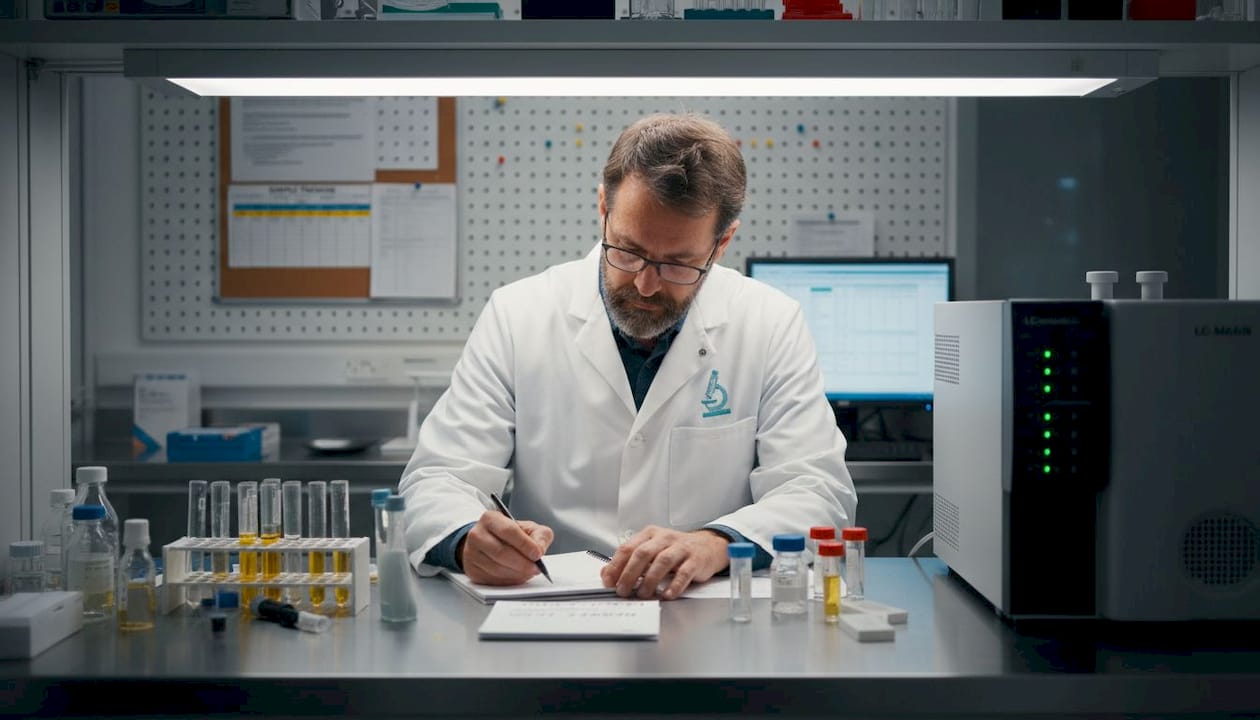
Salivary samples offer a non-invasive alternative suitable for monitoring cortisol rhythms throughout the day or tracking trends over time. Saliva reflects free, biologically active hormone levels without the influence of binding proteins. However, salivary testing has significant limitations for low-concentration hormones like testosterone in women, where values often fall below reliable detection thresholds.
Pro Tip: Avoid collecting samples during periods of acute illness, extreme stress, or within 48 hours of intense exercise, as these transient states create temporary hormonal shifts that don’t reflect your true baseline function.
Pre-collection preparation checklist:
- Schedule collection for consistent time of day (ideally 8-10 AM)
- Track menstrual cycle day for sex hormone testing
- Fast 8-12 hours if testing metabolic hormones like insulin
- Avoid strenuous exercise 48 hours before collection
- Document medications and supplements that may interfere
| Sample Type | Best For | Limitations |
|---|---|---|
| Serum | Clinical diagnosis, LC-MS/MS precision | Requires venipuncture |
| Saliva | Cortisol rhythms, trend monitoring | Low sensitivity for some hormones |
| Urine | Metabolite assessment, 24-hour averages | Less precise for acute levels |
Following a step-by-step hormone analysis approach ensures your preparation phase sets you up for meaningful results. Clear instructions and consistent execution eliminate pre-analytical variability that undermines data quality.
Execution phase: reliable testing and methodology
Liquid chromatography-tandem mass spectrometry has revolutionized hormone testing by providing superior specificity and sensitivity while quantifying multiple steroids in less than 8 minutes per sample. This technology physically separates molecules by mass and charge, eliminating the cross-reactivity problems that plague antibody-based immunoassays. You get precise measurements of testosterone, estradiol, progesterone, cortisol, and DHEA from a single sample with minimal interference.
Immunoassays, while cheaper and faster, suffer from fundamental limitations that compromise accuracy. Antibodies can bind to structurally similar molecules, leading to overestimation when metabolites or medications interfere with the assay. Testosterone immunoassays notoriously struggle with female ranges, often reporting values with 20-30% variability compared to LC-MS/MS reference methods.
Modern LC-MS/MS protocols use one-step sample preparation that makes this advanced technology practical for routine clinical use. Automated extraction and derivatization processes reduce manual handling errors while maintaining the superior analytical performance that mass spectrometry provides. Labs can now offer multisteroid panels at competitive prices without sacrificing the precision that optimization decisions require.
| Method | Specificity | Multiplex Capability | Speed | Cost |
|---|---|---|---|---|
| LC-MS/MS | Excellent | 10+ steroids per run | 8 minutes | Moderate |
| Immunoassay | Poor to moderate | Single hormone | 15-30 minutes | Low |
| RIA | Moderate | Single hormone | Hours | Low |
Laboratory certification and method validation provide essential quality assurance for trustworthy results. Look for labs holding CLIA certification, CAP accreditation, or equivalent international standards that mandate regular proficiency testing and quality control. These certifications ensure the lab follows standardized protocols and maintains equipment calibration for consistent performance.
Pro Tip: Request your lab’s coefficient of variation (CV) data for the specific hormones you’re testing, as CV below 10% indicates excellent precision and reproducibility across multiple measurements.
Method validation includes establishing detection limits, linear range, accuracy, and precision for each hormone measured. A properly validated LC-MS/MS method can reliably detect testosterone down to 1-2 ng/dL, critical for accurately measuring female levels that typically range from 10-50 ng/dL. Immunoassays often have detection limits of 10-20 ng/dL, making them unreliable for half the population.
Implementing biomarker analysis best practices during the analytical phase ensures your testing generates data worthy of the preparation effort. Quality testing methodology forms the foundation for meaningful interpretation and optimization strategies.
Post-analytical phase: interpreting and applying your results
Comparing your results to personalized reference intervals rather than generic population ranges transforms numbers into actionable insights. Standard reference ranges typically span the 2.5th to 97.5th percentile of a broad population, meaning “normal” might include suboptimal values that don’t support your performance and longevity goals. Your optimal testosterone might sit in the upper quartile of the reference range, while “normal” low-normal values leave you symptomatic.
Confounding factors beyond the hormone value itself dramatically impact interpretation and require careful consideration. SHBG levels determine how much total testosterone remains biologically available, with high SHBG binding most of your testosterone and reducing free hormone despite normal total levels. Medications like oral contraceptives, statins, or corticosteroids alter hormone production, metabolism, or binding protein levels, creating artificial patterns that don’t reflect your underlying physiology.
Lifestyle interventions can produce substantial hormone improvements without pharmaceutical intervention. Optimizing sleep duration and quality can boost testosterone by 20-35% in men with chronic sleep restriction, while stress reduction techniques lower cortisol and improve the cortisol-to-DHEA ratio that indicates resilience. Resistance training, adequate protein intake, and maintaining healthy body composition all support optimal hormone production and signaling.
Key interpretation considerations:
- Compare results to your personal baseline, not just population ranges
- Calculate free hormone levels using SHBG and albumin measurements
- Account for medications, supplements, and recent lifestyle changes
- Consider symptom correlation, not just laboratory values
- Track trends across multiple tests rather than single snapshots
A structured tracking approach helps you identify real changes versus normal fluctuation:
- Establish baseline with two tests 4-6 weeks apart at consistent timing
- Implement targeted interventions (sleep, nutrition, stress management)
- Retest after 8-12 weeks to assess intervention impact
- Adjust strategies based on both subjective improvements and objective data
- Maintain testing consistency in timing, lab, and methodology
Know when professional consultation becomes essential for optimal outcomes. Persistently low or high values outside reference ranges, discordance between symptoms and laboratory findings, or complex hormonal imbalances involving multiple axes require clinical expertise. Endocrinologists and functional medicine practitioners can order additional tests, prescribe hormone replacement when appropriate, and monitor for underlying conditions affecting hormone production.
Applying biomarker interpretation insights transforms raw data into a personalized optimization roadmap. The post-analytical phase completes the workflow by connecting laboratory values to meaningful health improvements and informed decision-making.
Optimize your hormone analysis with Biostarks
Now that you understand the complete workflow for accurate hormone analysis, you can take the next step toward personalized optimization with precision testing. Biostarks offers advanced biomarker testing powered by Swiss mass spectrometry technology, delivering the LC-MS/MS accuracy and multiplex capability this guide recommends. You get comprehensive hormone panels that measure free and total levels, binding proteins, and metabolic markers in one streamlined process.
Our personalized biomarker testing follows the three-phase workflow outlined here, from pre-analytical guidance on optimal timing through detailed post-analytical reports with individualized reference ranges. Each report includes clear explanations of what your results mean for your specific health goals, eliminating the confusion that generic lab reports create. You can track changes over time with consistent methodology and timing, building a comprehensive picture of your hormonal health journey.
Expert insights accompany every test, helping you understand confounding factors, lifestyle interventions, and when to seek additional clinical support. Access our complete hormone analysis guide and interpretation resources to maximize the value of your testing investment and make data-driven decisions that support your wellness optimization.
Frequently asked questions
What is the best time to collect hormone samples?
Morning sampling between 8-10 AM captures peak testosterone and cortisol levels, providing the most clinically relevant baseline for comparison across multiple tests. This timing respects natural circadian rhythms and minimizes variability caused by daily hormonal fluctuations. Avoid late-day collection for pulsatile hormones, as afternoon values can be 30-40% lower than morning peaks, creating misleading comparisons if timing isn’t consistent.
Why is LC-MS/MS preferred over immunoassays for hormone testing?
LC-MS/MS offers superior specificity by physically separating molecules based on mass and charge, eliminating the cross-reactivity that causes immunoassay errors. This technology enables multiplex steroid panels that measure 10+ hormones from one sample in under 8 minutes with excellent precision. Immunoassays suffer from antibody binding to similar molecules, leading to overestimation and poor accuracy, especially for low-concentration hormones in women.
Can salivary hormone tests replace blood tests for clinical decisions?
Saliva tests excel at tracking cortisol rhythms and monitoring trends non-invasively but have lower accuracy for low-concentration hormones like female testosterone. Values often fall below reliable detection thresholds, producing inconsistent results that shouldn’t guide clinical interventions. Confirm important clinical decisions with serum LC-MS/MS testing when precision matters for diagnosis or treatment monitoring.
How do I account for SHBG when interpreting testosterone results?
Calculate free testosterone using total testosterone, SHBG, and albumin values to determine biologically available hormone levels. High SHBG binds most testosterone, reducing free hormone despite normal total levels and potentially explaining symptoms. Many labs provide calculated free testosterone, or you can use validated calculators with your measured values to assess true hormone availability.
How often should I retest hormones to track optimization progress?
Establish baseline with two tests 4-6 weeks apart, then retest 8-12 weeks after implementing interventions to assess impact. This interval allows sufficient time for lifestyle changes to affect hormone production and metabolism while avoiding excessive testing costs. Maintain consistent timing, methodology, and lab selection across all tests to ensure changes reflect real physiological shifts rather than methodological variability.


