

Your energy crashes at 3 p.m., the scale won’t budge despite your best efforts, and your lab results feel like a foreign language. These aren’t random frustrations. They’re signals from a metabolism that isn’t firing on all cylinders. Metabolic health sits at the intersection of energy, weight, longevity, and chronic disease risk, and it’s shaped by far more than what you eat. In this article, you’ll get science-backed, actionable strategies covering movement, nutrition, muscle, recovery, and personalized tracking so you can stop guessing and start optimizing.
Table of Contents
- Metabolic health: what it is and why it matters
- Move daily: exercise for metabolic mastery
- Eat for metabolic health: proven dietary strategies
- Muscle up: strength, protein, and fat loss
- Recovery and lifestyle: sleep, stress, and routine
- Personalizing your metabolic approach: tracking and biohacking tips
- Quick comparison: which tip delivers what result?
- Take the next step: test and optimize your metabolic health
- Frequently asked questions
Key Takeaways
| Point | Details |
|---|---|
| Daily activity matters | Consistent exercise is the single most powerful metabolic boost you can control. |
| Diet quality counts | Emphasizing whole foods and reducing processed foods strongly influences metabolism and risk. |
| Muscle over scale | Building muscle is more effective than losing weight alone for boosting metabolism. |
| Personalized data wins | Wearables, biomarkers, and tracking allow for tailored metabolic optimization. |
| Sleep supports success | Quality sleep and stress management are vital for optimal metabolism. |
Metabolic health: what it is and why it matters
Metabolic health isn’t just about weight. It’s a cluster of physiological markers that determine how efficiently your body produces energy, manages blood sugar, and handles fat. When these markers fall out of range, your risk for type 2 diabetes, cardiovascular disease, and cognitive decline climbs sharply. Understanding what’s actually being measured gives you a real target to aim at.
Explore metabolic health insights to see how each marker connects to your daily energy and long-term vitality. The five core markers that define metabolic syndrome are well established, and the diagnostic criteria require three or more of the following: waist circumference ≥40 inches (men) or ≥35 inches (women), triglycerides ≥150 mg/dL, HDL below 40 mg/dL (men) or 50 mg/dL (women), blood pressure ≥130/80 mmHg, or fasting glucose ≥100 mg/dL.
Metabolic syndrome affects roughly 1 in 3 American adults, yet most people with it have no obvious symptoms until a serious health event occurs.
Key metabolic markers at a glance:
| Marker | Healthy range | Risk signal |
|---|---|---|
| Fasting glucose | 70 to 99 mg/dL | ≥100 mg/dL |
| Triglycerides | Below 150 mg/dL | ≥150 mg/dL |
| HDL cholesterol (men) | ≥40 mg/dL | Below 40 mg/dL |
| Waist circumference (men) | Below 40 inches | ≥40 inches |
| Blood pressure | Below 120/80 mmHg | ≥130/80 mmHg |
Modifiable areas you can act on right now:
- Physical activity level and exercise type
- Dietary quality and meal timing
- Muscle mass and body composition
- Sleep duration and quality
- Stress management and cortisol patterns
- Personalized tracking via biomarkers and wearables
The good news: every single one of these is within your control. The following sections break down exactly how to move each lever.
Move daily: exercise for metabolic mastery
If you could take one pill that improved insulin sensitivity, lowered triglycerides, raised HDL, reduced blood pressure, and extended lifespan, you’d take it every day. That pill is exercise. Exercise is the most powerful longevity intervention, outperforming nearly every other lifestyle or pharmacological approach studied to date.
The research is clear: at least 30 minutes of brisk walking daily, combined with strength training, produces meaningful metabolic improvements. But not all movement is equal. Here’s how to structure your week for maximum metabolic return:
- Zone 2 cardio (3 to 4 days/week): Brisk walking, cycling, or swimming at a pace where you can hold a conversation. This trains your mitochondria to burn fat efficiently.
- HIIT (1 to 2 days/week): Short bursts of high-intensity effort followed by rest. Powerful for improving glucose uptake and VO2 max.
- Resistance training (2 days/week): Compound lifts like squats, deadlifts, and rows. Muscle tissue is metabolically active tissue.
- Non-exercise activity (daily): Standing, walking between tasks, and taking stairs. These micro-movements add up to significant caloric and metabolic benefit.
- Recovery movement (1 day/week): Light yoga, stretching, or a slow walk. Active recovery keeps circulation up without taxing your system.
Stat: VO2 max is the single strongest predictor of all-cause mortality. Improving it from “low” to “below average” cuts mortality risk by roughly 50%.
For biohackers, pairing a continuous glucose monitor (CGM) with your workouts reveals exactly how your body responds to each session. You can track metabolic health naturally using simple tools before investing in advanced tech.
Pro Tip: If you’re short on time, a 20-minute HIIT session delivers comparable glucose-lowering effects to 45 minutes of steady-state cardio. Efficiency matters. You can also track with biomarker testing to confirm your exercise program is actually moving your metabolic markers in the right direction.
Eat for metabolic health: proven dietary strategies
Activity primes your metabolism, but diet provides the raw materials and signals for how your body functions. The most metabolically protective diets emphasize fruits, vegetables, whole grains, and lean protein while limiting processed foods, saturated fats, and added sugars. Two frameworks consistently outperform the rest: Mediterranean and DASH.

| Diet | Core focus | Best for |
|---|---|---|
| Mediterranean | Olive oil, fish, legumes, vegetables | Cardiovascular and insulin health |
| DASH | Low sodium, high potassium, whole foods | Blood pressure and glucose control |
| Plant-based | Whole plant foods, minimal animal products | Insulin sensitivity, inflammation |
| Standard Western | Ultra-processed, high sugar, refined grains | Metabolic dysfunction |
Plant-based nutrition combined with exercise synergistically improves insulin sensitivity beyond what either approach achieves alone. That’s a meaningful edge for anyone serious about metabolic optimization.
Smart food choices by category:
- Proteins: Wild salmon, eggs, legumes, Greek yogurt, tempeh
- Fats: Extra virgin olive oil, avocado, walnuts, sardines
- Carbohydrates: Sweet potato, oats, quinoa, berries, lentils
- Avoid: Refined seed oils, packaged snacks, sugary drinks, white bread
Pro Tip: Swap one ultra-processed snack per day with a whole food alternative. A handful of walnuts instead of chips delivers fiber, omega-3s, and protein that stabilize blood sugar rather than spike it. You can optimize with biomarkers to see exactly how your dietary changes affect your lipid panel, fasting glucose, and inflammatory markers.
For biohackers, timing carbohydrates around physical activity is a high-leverage strategy. Consuming most of your carbs in the two-hour window around exercise improves glucose disposal and reduces fat storage. Your muscles act as a glucose sink when they’re primed from training.
Muscle up: strength, protein, and fat loss
Nutrition and fitness are two sides of the same coin, but muscle is your metabolism’s secret weapon. Skeletal muscle is the largest glucose-disposal organ in your body. More of it means better insulin sensitivity, higher resting metabolic rate, and more caloric buffer for dietary flexibility.
Building muscle mass boosts resting metabolic rate, and protein-rich meals increase the thermic effect of food, meaning your body burns more calories just digesting them. Protein has a thermic effect of roughly 20 to 30%, compared to 5 to 10% for carbohydrates and 0 to 3% for fats. That’s a significant metabolic advantage built into every high-protein meal.
Easy strength-building routines to start this week:
- Bodyweight squats and push-ups (3 sets, 3 days/week)
- Dumbbell rows and Romanian deadlifts (2 sets, 2 days/week)
- Farmer’s carries and planks for core and grip strength
- Progressive overload: add 5% more weight or one extra rep each week
You don’t need to lose a dramatic amount of weight to see results. Losing just 3 to 5% of body weight reduces insulin resistance, lowers diabetes risk, and improves blood pressure. That’s 5 to 8 pounds for a 160-pound person. Achievable and impactful.
Pro Tip: Distribute protein across three to four meals rather than loading it all at dinner. Aim for 30 to 40 grams per meal to maximize muscle protein synthesis. Tracking body composition (not just scale weight) through biomarker testing benefits for biohackers gives you a clearer picture of whether you’re building muscle or just losing water weight. You can also track metabolic biomarkers like HOMA-IR and fasting insulin to confirm your body composition changes are translating to real metabolic improvement.
Recovery and lifestyle: sleep, stress, and routine
With body and diet covered, don’t overlook what happens during rest. Your metabolism relies on recovery just as much as it relies on exercise and nutrition. Skimping on sleep is one of the fastest ways to derail glucose control, elevate cortisol, and increase appetite for high-calorie foods.
The data is stark: Adults sleeping fewer than 6 hours per night show significantly higher rates of insulin resistance and metabolic syndrome compared to those sleeping 7 to 9 hours.
Sleeping 7 to 9 hours nightly and managing stress through practices like meditation or yoga directly improves metabolic markers. Here’s a practical protocol to build into your routine:
- Set a consistent sleep and wake time (even on weekends). Circadian rhythm consistency improves glucose metabolism.
- Cut screens 60 minutes before bed. Blue light suppresses melatonin and delays sleep onset.
- Keep your bedroom cool and dark. Core body temperature drop signals deep sleep onset.
- Practice 10 minutes of breathwork or meditation daily. Lowering cortisol reduces visceral fat accumulation over time.
- Limit caffeine after 1 p.m. Caffeine has a half-life of 5 to 6 hours and disrupts sleep architecture even when you don’t feel it.
- Build a wind-down ritual. Reading, light stretching, or journaling signals your nervous system to shift into recovery mode.
Understanding how types of biomarkers for personal insight like cortisol and inflammatory markers change with sleep quality gives you objective feedback on whether your recovery habits are actually working.
Personalizing your metabolic approach: tracking and biohacking tips
To put all the above into action, personalizing and tracking your metabolic journey ensures maximum results. Generic advice gets generic results. Your glucose response to oatmeal might be completely different from your training partner’s, and that difference matters for how you structure your diet and workouts.
Individual glucose responses vary significantly even when people eat identical foods, and AI models can now predict insulin resistance early enough to intervene before clinical thresholds are crossed. This is the frontier of metabolic optimization.
What to monitor and when:
- Fasting glucose and insulin (quarterly): Baseline metabolic status and HOMA-IR calculation
- HbA1c (every 6 months): Average blood sugar over 90 days
- Lipid panel including apoB (annually): Cardiovascular and metabolic risk
- CGM data (ongoing): Real-time glucose response to food, exercise, and stress
- Wearable HRV and sleep scores (daily): Recovery quality and autonomic nervous system status
Pro Tip: Don’t wait for symptoms to start tracking. Use an at-home biomarker guide to establish your personal baseline, then retest every 90 days to measure progress. Understanding the role of biomarkers in health helps you interpret results in context rather than just comparing to population averages. The biomarker testing benefits compound over time as you build a longitudinal picture of your metabolic trajectory.
Quick comparison: which tip delivers what result?
With a tailored arsenal of tips in hand, use this matrix to guide your next best step based on your primary goal.
| Strategy | Fat loss | Insulin sensitivity | Energy | Longevity | Personalization |
|---|---|---|---|---|---|
| Daily movement | ✓✓✓ | ✓✓✓ | ✓✓✓ | ✓✓✓ | ✓ |
| Dietary quality | ✓✓✓ | ✓✓✓ | ✓✓ | ✓✓ | ✓✓ |
| Muscle building | ✓✓✓ | ✓✓✓ | ✓✓ | ✓✓✓ | ✓✓ |
| Sleep and recovery | ✓✓ | ✓✓ | ✓✓✓ | ✓✓✓ | ✓ |
| Biomarker tracking | ✓ | ✓✓ | ✓ | ✓✓✓ | ✓✓✓ |
One critical nuance: standard markers don’t tell the full story. Even someone metabolically healthy with zero coronary artery calcium still needs to monitor apoB and fasting insulin, not just HbA1c. Routine tracking and long-term adjustment separate people who maintain metabolic health from those who regress.
The goal isn’t to optimize one marker in isolation. It’s to build a system where movement, diet, muscle, sleep, and data all reinforce each other continuously.
Take the next step: test and optimize your metabolic health
Knowing the strategies is one thing. Knowing your numbers is what turns strategy into results. Generic protocols can move the needle, but personalized data tells you exactly which levers to pull and when.
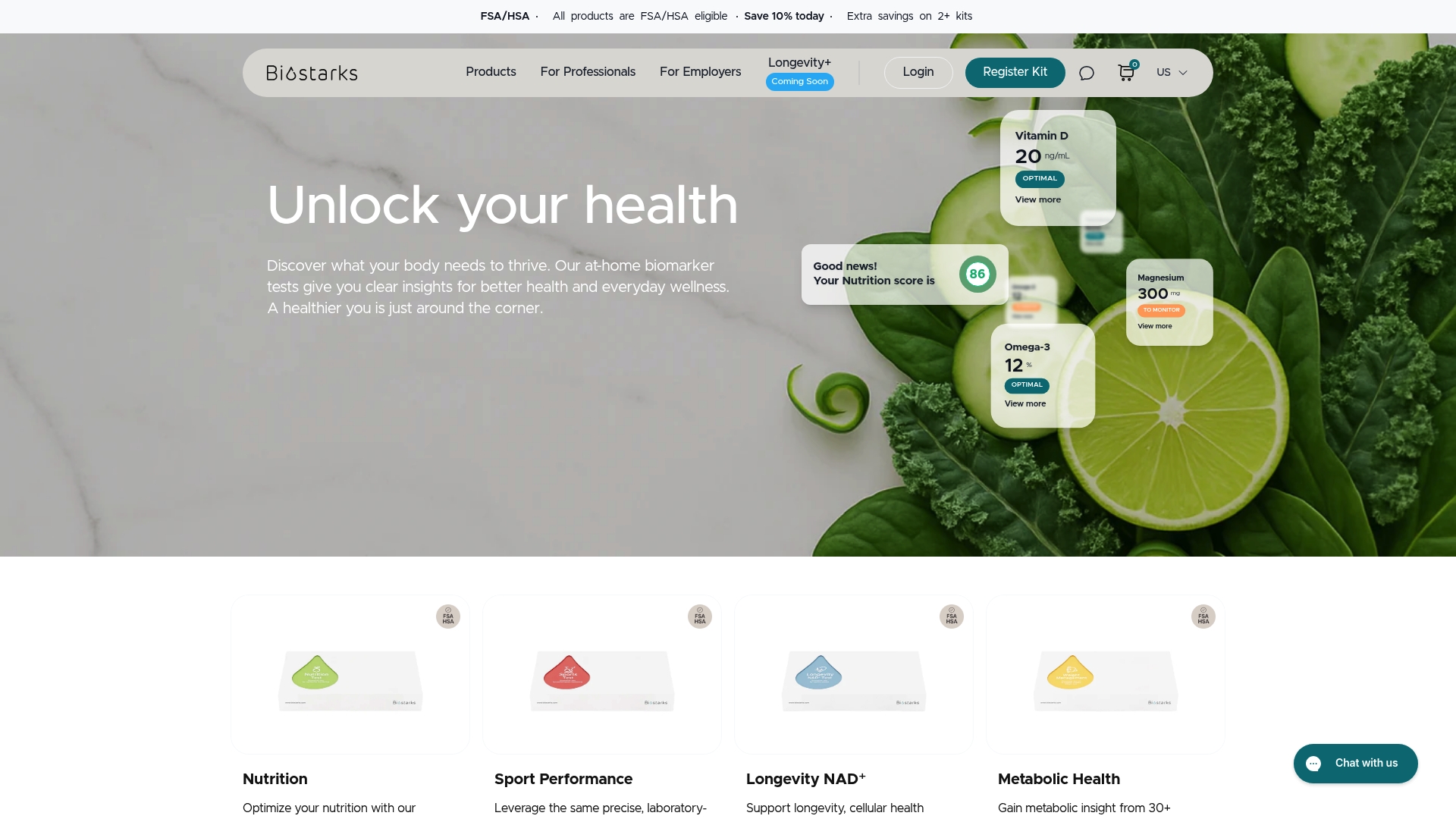
At Biostarks, you can test your metabolic biomarkers from home using advanced Swiss mass spectrometry, covering glucose markers, lipids, hormones, amino acids, and more. You get a clear, actionable report that connects your results to specific lifestyle interventions. No clinic visits, no confusing lab printouts. Just precise data and a clear path forward. If you’re serious about optimizing your metabolic health in 2026, start with your baseline.
Frequently asked questions
What is the fastest way to improve metabolic health?
Combining daily physical activity with reducing ultra-processed foods delivers the quickest measurable impact on insulin sensitivity and core metabolic markers. A Mediterranean or DASH diet accelerates results further within weeks.
Can poor sleep really harm my metabolism?
Yes. Consistently getting fewer than 7 hours disrupts glucose control, elevates cortisol, and increases appetite for calorie-dense foods. The Mayo Clinic recommends 7 to 9 hours as the target for metabolic protection.
How can I personalize my metabolic health plan?
Use a CGM to see your real-time glucose responses, pair it with wearable HRV data, and run periodic biomarker panels. Individual glucose responses vary widely, so personalized data outperforms any one-size-fits-all protocol.
Is losing even a small amount of weight beneficial to metabolism?
Absolutely. Losing just 3 to 5% of body weight meaningfully reduces insulin resistance, lowers blood pressure, and cuts diabetes risk, even before reaching an ideal body weight.
Recommended
- Optimize metabolic function for peak health i… | Biostarks
- 7 Ways to Track Metabolic Health Naturally fo… | Biostarks
- Wellness optimization checklist: 25% better m… | Biostarks
- Metabolic health optimization with biomarkers… | Biostarks
- Гид за здравословно кафе: Постигнете енергия и фокус – Neurofuel™️


