

TL;DR:
- Tracking hormones with consistency enables proactive optimization of energy, mood, and recovery.
- Regular testing reveals personalized trends, preventing health issues before symptoms emerge.
Most people who care deeply about their health hit the same wall: they get a hormone test result, stare at a column of numbers, and have no idea what to do next. Is cortisol high because of stress or because of the timing of the test? Is testosterone trending down or just reflecting one bad week? That confusion is exactly what makes hormone tracking feel inaccessible, even for committed biohackers. A clear, repeatable system changes everything. When you track your hormones with intention and consistency, you stop reacting to symptoms and start optimizing proactively.
Table of Contents
- Why hormone tracking matters for wellness and performance
- What you need to track hormones at home
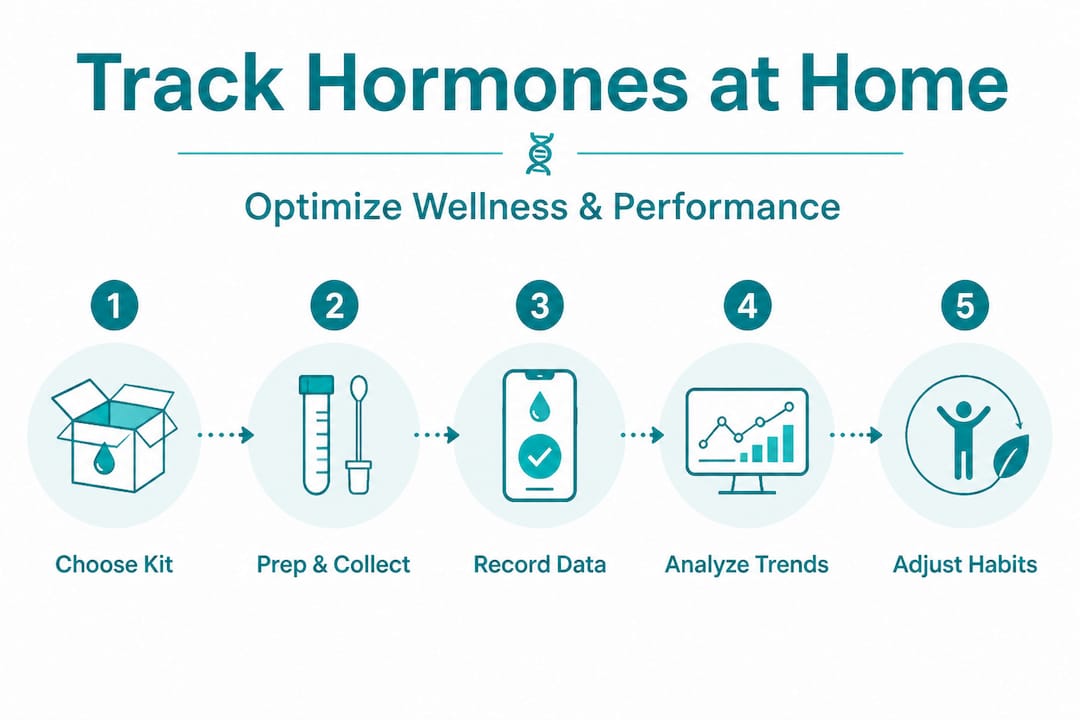
- Step-by-step guide: Tracking your hormones
- Troubleshooting and common mistakes
- What to expect: Outcomes and next steps
- Our perspective: What most guides miss about hormone tracking
- Support your hormone tracking journey
- Frequently asked questions
Key Takeaways
| Point | Details |
|---|---|
| Start with clear goals | Define why you want to track your hormones to choose relevant tests and frequency. |
| Choose reliable tools | Select accredited at-home test kits and follow instructions closely for accuracy. |
| Track consistently | Consistent timing and method are vital for meaningful, comparable hormone results. |
| Interpret trends, not snapshots | Look for patterns across multiple results rather than relying on single measurements. |
| Use results to optimize lifestyle | Apply your insights to adjust nutrition, exercise, sleep, and stress management. |
Why hormone tracking matters for wellness and performance
Hormones regulate nearly everything that matters to a performance-focused individual: energy production, body composition, recovery speed, mood stability, libido, and even cognitive sharpness. A single snapshot rarely tells the full story. Trends over time do.
Tracking hormonal health supports personalized healthcare by giving you data points that connect to your actual lifestyle choices, not just population averages. When you know how your cortisol behaves across training blocks, or how your thyroid hormones shift during caloric restriction, you can make targeted adjustments instead of guessing.
The case for regular monitoring is strong. Research shows that microelement balance and hormonal health are deeply interconnected, meaning deficiencies in zinc, magnesium, or selenium can suppress hormone production well before clinical symptoms appear. You would never catch that connection without consistent data.
Understanding hormone balance is essential not just for treating dysfunction but for preventing it. Hormonal drift, the slow shift of markers over months or years, is one of the most underappreciated health risks in the wellness space. By the time symptoms like fatigue, weight gain, or poor sleep become obvious, levels may have been off-track for a long time.
Key benefits of regular hormone tracking include:
- Early detection of hormonal imbalances before symptoms develop
- Personalized baselines that reflect your unique physiology, not generic lab reference ranges
- Performance optimization through understanding how recovery, training load, and nutrition affect your hormones
- Accountability for lifestyle interventions, so you can verify whether changes are actually working
- Longevity planning by monitoring age-related hormonal shifts like declining DHEA or testosterone
Stat to know: Studies suggest that up to 80% of adults experience at least one symptom linked to hormone imbalance during their lifetime, yet fewer than 20% ever test proactively.
What you need to track hormones at home
Before you collect a single sample, you need the right setup. Jumping into at-home testing without preparation leads to inaccurate results and wasted resources.
A solid step-by-step hormone analysis starts with identifying which markers are most relevant to your goals. A biohacker focused on body recomposition needs different data than someone managing stress or optimizing fertility. Know your objective first.
Here are the core tools and requirements for home hormone tracking:
- At-home test kit from a validated laboratory that uses mass spectrometry or ELISA technology
- Sample collection materials, which vary by test: dried blood spot cards, saliva tubes, or urine collection containers
- A timer and calendar for accurate timing of sample collection relative to sleep, meals, and exercise
- Secure digital storage or a health tracking app to log results over time
- A reference physician or functional medicine practitioner for interpreting results that fall outside expected ranges
Choosing the right kit matters more than most guides admit. Look for labs that validate their methods against clinical standards and that report in units you can compare across time. A useful practical hormone balance guide emphasizes that the collection method (dried blood vs. serum vs. saliva) affects which hormones can be accurately measured.
Here is a quick comparison of common at-home testing formats:
| Format | Best for | Key limitations |
|---|---|---|
| Dried blood spot | Testosterone, thyroid, cortisol | Requires proper finger-prick technique |
| Saliva | Cortisol rhythm, DHEA, estrogen | Affected by food, gum, and oral hygiene |
| Urine (24-hr or DUTCH) | Metabolite profiling, estrogen pathways | Time-intensive collection protocol |
| Venous blood (lab-ordered) | Full hormone panel accuracy | Requires phlebotomist or clinic visit |
Reviewing essential hormone markers before you order helps you avoid buying a kit that misses the most relevant biomarkers for your specific goals.

Pro Tip: Before your first test, write down your current symptoms, recent training load, sleep quality, and stress level. This contextual log becomes invaluable when you try to interpret results months later.
Step-by-step guide: Tracking your hormones
This is where most people either succeed or fall apart. Execution matters more than intention.
The at-home biomarker testing process follows a predictable sequence, and knowing each stage prevents the errors that skew results.
- Set your testing schedule. For most hormones, morning collection between 7:00 and 9:00 AM reflects peak circadian levels. Cortisol, for example, is highest within 30 minutes of waking. Testosterone peaks in the early morning for men. Test at the same time of day for every cycle.
- Prepare 48 hours in advance. Avoid intense exercise, alcohol, and significant dietary changes in the 48 hours before collection. These variables inflate or suppress multiple markers and make trend analysis unreliable.
- Collect your sample correctly. Follow kit instructions precisely. For dried blood spot tests, warm your hand first to improve blood flow. For saliva tests, avoid eating, drinking (except water), or brushing your teeth for at least 30 minutes before collection.
- Label and ship immediately. Use the prepaid packaging provided by your lab. Delays in shipping, especially in warm weather, can degrade hormone concentrations in the sample.
- Record your context data. Note your sleep hours from the previous night, current training phase, any supplements taken, and your general stress level. This metadata is what transforms raw numbers into actionable insight.
- Review results against your baseline, not population averages. Your optimal testosterone may sit at the upper end of “normal” for your demographic. Your cortisol pattern matters more than a single cortisol number.
- Log and compare across test cycles. Build a simple spreadsheet or use a dedicated app. Visualizing trends over 3, 6, and 12 months is where the real intelligence emerges.
Here is a reference table for common hormones, ideal testing windows, and recommended frequency:
| Hormone | Best testing time | Recommended frequency |
|---|---|---|
| Cortisol | Within 30 min of waking | Every 3 months |
| Testosterone (total/free) | 7:00 to 9:00 AM | Every 3 to 6 months |
| Estradiol | Day 3 of cycle (females) | Every cycle or quarterly |
| Thyroid (TSH, T3, T4) | Morning, fasted | Every 6 months |
| DHEA-S | Morning | Every 6 months |
| Insulin | Fasted | Every 6 months |
Analyzing hormone balance at home becomes far more powerful when you treat each result as part of a sequence rather than a standalone score. Consider also the interplay between markers: low testosterone combined with elevated cortisol tells a very different story than low testosterone with normal cortisol. Context is everything.
Optimizing your hormone tracking workflow also means coordinating with any supplementation protocol you are running. If you are using male hormone supplements or adaptogens to support adrenal function, stop them 5 to 7 days before testing to avoid masking your baseline.
Important: Never self-diagnose or self-medicate based on at-home results alone. Use your data as a starting point for conversations with a qualified practitioner, not as a replacement for professional guidance.
Pro Tip: Create a “test day ritual” that stays identical every time you test: same wake time, same hydration, same pre-collection routine. Reducing variability in your process increases the signal-to-noise ratio in your data dramatically.
Troubleshooting and common mistakes
Even experienced biohackers make mistakes in hormone tracking. The good news is that most errors are predictable and easy to fix once you know what to watch for.
The most common issues people encounter include:
- Testing at inconsistent times. A cortisol sample collected at 6 AM will look very different from one collected at 11 AM. Time variability is the number one source of misleading trends.
- Not accounting for acute stressors. A hard workout the day before, a terrible night of sleep, or a stressful event can spike or suppress multiple hormones. If you know a major stressor occurred, note it and consider delaying the test by 48 hours.
- Mishandling samples. Saliva samples left at room temperature too long or dried blood cards that were not fully dried before packaging will produce degraded or inaccurate readings.
- Interpreting results in isolation. A low free testosterone reading means something very different depending on whether SHBG (sex hormone-binding globulin) is also elevated. Always look at the full panel, not a single number.
- Over-testing without acting on results. Testing monthly when quarterly is sufficient creates noise without added clarity. More data is not always better data.
The importance of hormone balance lies not just in knowing your numbers but in understanding what drives them. Lifestyle factors like sleep quality, caloric intake, training volume, and chronic psychological stress all shift hormonal output. When results seem unexpected, audit your lifestyle variables before assuming the test is wrong.
Understanding step-by-step hormone analysis also means knowing when to retest. A single abnormal result does not warrant alarm. Endocrine systems fluctuate naturally. Retest the same marker under consistent conditions before making any protocol changes.
HRT clinic strategies point out that even clinical settings follow retesting protocols before any therapeutic decisions are made. Apply the same discipline to your at-home tracking.
Critical note: If you receive results that suggest significantly elevated or suppressed hormone levels across multiple markers, prioritize professional evaluation before making any changes to diet, exercise, or supplementation.
Pro Tip: Keep a “consistency log” where you rate your pre-test preparation on a simple 1 to 5 scale. If your score drops below 3 for any given test cycle, consider flagging that data point as potentially unreliable.
What to expect: Outcomes and next steps
Hormone tracking done consistently produces results that go well beyond a lab printout. The real value shows up in how you feel, perform, and recover.
Typical positive outcomes from a systematic 6 to 12 month tracking program include:
- Clearer energy patterns, with less unexplained fatigue in the afternoon or evening
- Improved body composition response to training when hormones are optimized to support muscle protein synthesis and fat metabolism
- Better sleep quality, often linked to normalized cortisol rhythms and melatonin signaling
- Mood stability, particularly for individuals who optimize estrogen-to-progesterone ratios or manage cortisol dysregulation
- Targeted supplementation, validated by data showing actual deficiencies rather than guesswork
Reading through a solid hormone profiling guide reveals that the most successful users are those who integrate their hormone data with other wellness metrics. Heart rate variability, sleep scores, training performance records, and dietary logs all add layers of context that transform numbers into a comprehensive picture of how your biology responds to your choices.
Here is a summary of key outcomes and the next steps associated with each:
| Outcome | What it signals | Recommended next step |
|---|---|---|
| Cortisol trending high | Overtraining or chronic stress | Reduce load, add sleep, retest in 6 weeks |
| Testosterone declining | Aging, poor sleep, high stress | Review lifestyle factors, consider clinical consult |
| Thyroid markers shifting | Metabolic or dietary changes | Adjust iodine/selenium intake, retest in 3 months |
| Estrogen imbalance | Gut health or detox pathway issue | Investigate microbiome, increase cruciferous vegetables |
| Stable, optimized panel | Effective wellness protocol | Maintain current approach, shift to 6-month testing |
Our perspective: What most guides miss about hormone tracking
Most hormone tracking guides stop at data collection. They give you a protocol, show you a reference range, and leave you staring at a spreadsheet wondering what it all means for your actual life.
Here is the uncomfortable truth: the data is only as valuable as the behavior change it drives. We have seen users collect 12 months of pristine hormone panels and make zero meaningful adjustments to their sleep, nutrition, or training. The numbers improved their anxiety, not their health.
The trap is numbers obsession. When you track any biomarker closely, there is a psychological pull toward optimizing the number itself rather than the lifestyle producing it. Someone who sees slightly low testosterone might immediately reach for supplementation before asking whether their sleep is averaging 5.5 hours a night, whether they are in a chronic caloric deficit, or whether their training volume has doubled over the past 3 months. Each of those factors would suppress testosterone independently.
Proactive health monitoring empowers you most when the tracking loop feeds back into real decisions: changing sleep timing, adjusting training periodization, modifying macronutrient ratios, or managing stress load. Without that feedback loop, you have expensive self-knowledge and nothing more.
The other thing most guides skip: your personal trend matters far more than population norms. A testosterone level of 520 ng/dL might be your personal peak and also sit in the middle of a “normal” range. It might also be a significant decline from your personal baseline of 720 ng/dL. Only consistent, longitudinal tracking reveals which scenario applies to you. Generic reference ranges were built on population data, not on your specific biology.
Focus on patterns, not single data points. One elevated cortisol reading is noise. Three consecutive elevated cortisol readings following a period of intensified training is a signal worth acting on.
Pro Tip: Review your hormone data quarterly alongside your training logs and sleep records side by side. The correlations you find will be far more instructive than any single lab value.
Support your hormone tracking journey
Tracking your hormones effectively starts with reliable data, and that is exactly where we come in.
At Biostarks, we have built our at-home hormone test solutions specifically for health-conscious individuals who want clinical-grade accuracy without the clinic visit. Our platform uses advanced Swiss mass spectrometry to analyze hormones, vitamins, amino acids, and metabolic markers from a simple at-home sample. You get detailed, actionable reports designed not just to show you numbers but to explain what they mean for your performance, recovery, and long-term wellness. Whether you are just starting your hormone tracking journey or refining an existing protocol, Biostarks provides the precision and clarity your decisions deserve.
Frequently asked questions
How often should I track my hormone levels?
Most recommendations suggest testing every 3 to 6 months for ongoing wellness monitoring. More frequent testing is appropriate when actively managing a known imbalance or adjusting a new protocol, as outlined in guidance on why track hormonal health for personalized wellness.
What hormones are essential to track for performance?
The most impactful markers for performance optimization are testosterone, estrogen, cortisol, thyroid hormones (TSH, T3, T4), and DHEA. Your specific goals determine prioritization, and a deeper look at top hormone markers can help you decide which panel fits your needs.
Are at-home hormone tests accurate?
Modern at-home kits that use mass spectrometry or validated ELISA methods are highly reliable when collection instructions are followed precisely. The hormone analysis guide outlines the clinical standards that quality at-home tests are benchmarked against.
How do I interpret my hormone test results?
Use the reference ranges provided with your results as a starting point, but prioritize your personal trend over time. The at-home hormone balance guide walks through how to read patterns rather than reacting to individual values.
What should I do if my hormone levels are abnormal?
Always retest under identical conditions before drawing conclusions. If results remain outside your expected range on a second test, consult a qualified practitioner rather than self-intervening. A thorough step-by-step hormone analysis protocol includes clear guidance on when retesting is warranted.
Recommended
- Why track hormonal health for personalized we… | Biostarks
- Top hormone markers: essential examples for h… | Biostarks
- How to analyze hormone balance: at-home guide | Biostarks
- How to optimize your workflow for hormone ana… | Biostarks
- Lab testing checklist for fitness pros: key markers
- How Genetic Testing Drives Better Wellness, Health, and Prevention


