

Staying at the top of your game in a busy city means more than just training hard and eating well. For health-conscious individuals and athletes, understanding your body’s signals is key to unlocking your full potential. Biomarker data offers objective insights into your unique physiology that go far beyond what standard checkups provide. This guide clears up common misconceptions, explains essential biomarker types, and shows how at-home testing can transform your personal wellness and performance strategy.
Table of Contents
- Defining Biomarker Data and Common Misconceptions
- Key Types of Biomarkers and Their Distinctions
- How Biomarker Testing Works in Practice
- Personalized Diagnostics and Data-Driven Treatment
- Addressing Risks, Limitations, and Ethical Challenges
- Comparing Biomarker Testing to Traditional Health Assessments
Key Takeaways
| Point | Details |
|---|---|
| Understanding Biomarkers | Biomarkers are vital biological indicators that provide insights into health by tracking physiological processes, detecting diseases, and monitoring treatments. |
| Digital Biomarkers’ Potential | Digital biomarkers leverage technology for continuous health monitoring, expanding insights beyond traditional measurements. |
| Personalized Medicine Impact | Personalized diagnostics utilize advanced data analytics to tailor treatment strategies, enhancing patient care and outcomes. |
| Ethical Considerations | Ethical challenges in biomarker research require careful attention to privacy, consent, and equitable access to avoid disparities. |
Defining Biomarker Data and Common Misconceptions
Biomarker data represents a groundbreaking approach to understanding human health through objectively measured biological characteristics. Biomarkers provide critical insights into physiological processes, revealing intricate details about an individual’s normal biological functions, potential pathological conditions, and responses to various environmental or medical interventions.
At its core, biomarker data encompasses a wide range of measurable indicators that can include molecular, cellular, biochemical, and genetic parameters. These data points serve multiple purposes:
- Tracking normal physiological processes
- Detecting early signs of disease
- Monitoring treatment effectiveness
- Assessing individual metabolic responses
- Predicting potential health risks
Common misconceptions often arise from misunderstanding the complexity and nuanced nature of biomarker analysis. Many individuals incorrectly assume that biomarkers provide absolute, binary diagnoses, when in reality, they represent sophisticated indicators requiring expert interpretation. Biological parameters indicate complex physiological states that demand comprehensive, context-specific evaluation.
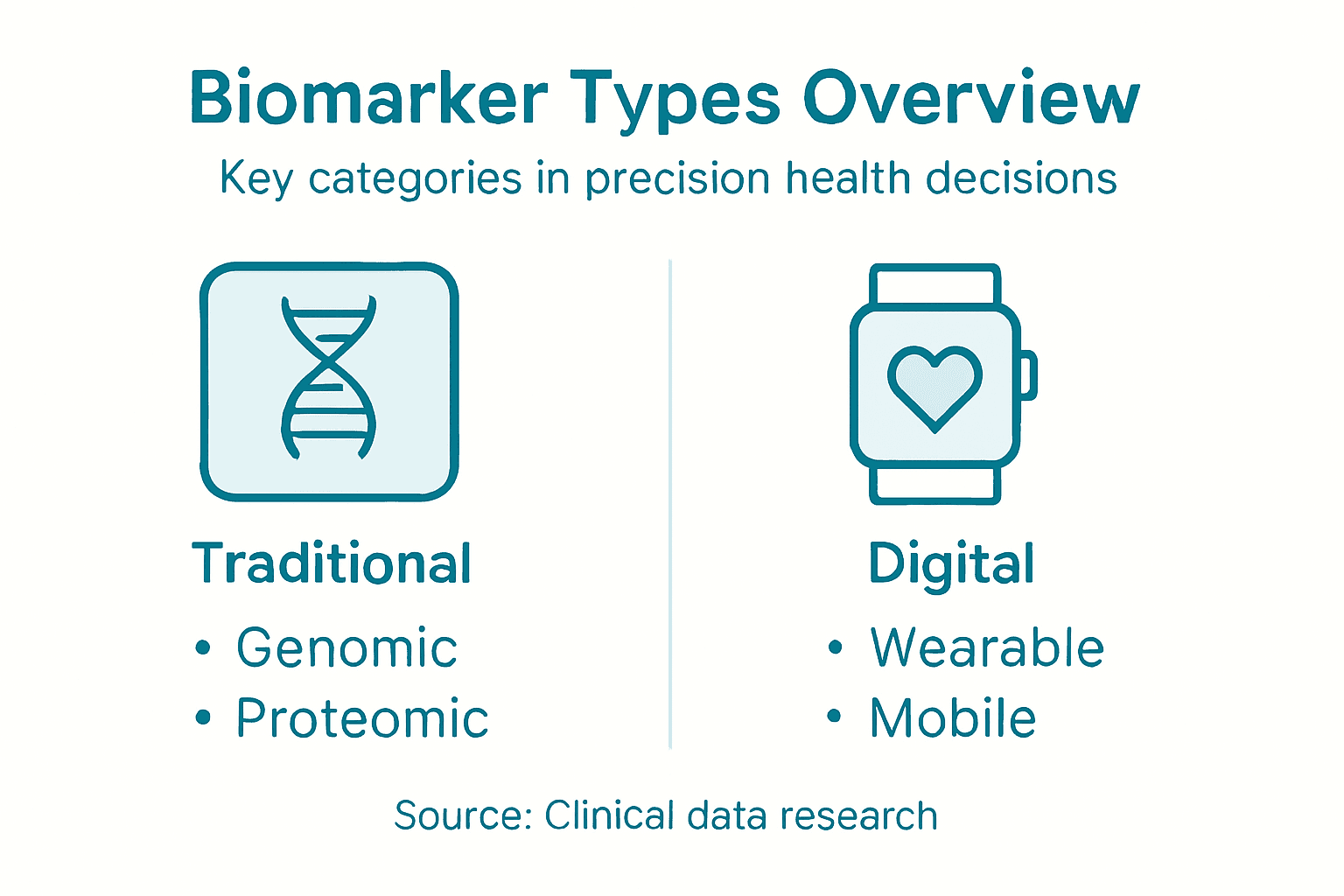
Digital biomarkers have emerged as a particularly innovative subset, leveraging technology to capture continuous, real-time health data through wearable devices and advanced monitoring systems. These digital indicators expand our understanding beyond traditional laboratory measurements, offering unprecedented insights into an individual’s health trajectory.
Pro tip: Always consult healthcare professionals when interpreting biomarker data to ensure accurate, personalized health insights.
Key Types of Biomarkers and Their Distinctions
Biomarkers represent a sophisticated spectrum of biological indicators, each serving unique purposes in understanding human health. Biomarkers span multiple classification systems that provide comprehensive insights into an individual’s physiological landscape.
The primary categories of biomarkers can be distinguished by their fundamental characteristics and clinical applications:
- Diagnostic Biomarkers: Identify specific disease presence
- Prognostic Biomarkers: Predict potential disease progression
- Predictive Biomarkers: Determine potential treatment response
- Risk Biomarkers: Assess likelihood of developing certain conditions
- Monitoring Biomarkers: Track treatment effectiveness
Molecular classification reveals deeper nuances in biomarker types. Biomarkers encompass genomic, proteomic, and metabolomic domains, each offering unique perspectives on biological processes. Genomic biomarkers examine DNA-level changes, proteomic biomarkers analyze cellular protein activities, and metabolomic biomarkers investigate biochemical transformation pathways.
These diverse biomarker types provide clinicians and researchers with multidimensional tools for understanding individual health trajectories. By integrating information from different molecular levels, healthcare professionals can develop more precise, personalized intervention strategies that address unique physiological characteristics.
Here’s a quick overview of common biomarker types and their clinical relevance:
| Biomarker Type | Main Focus | Clinical Application |
|---|---|---|
| Genomic | DNA mutations & variations | Cancer risk assessment |
| Proteomic | Protein expression profiles | Monitoring disease activity |
| Metabolomic | Metabolic pathway changes | Detecting metabolic disorders |
| Cellular | Cell-level changes | Immune response evaluation |
| Digital | Continuous sensor data | Real-time health monitoring |
Pro tip: Consult with healthcare professionals who can help you interpret the complex landscape of biomarker data and translate scientific insights into actionable health recommendations.
How Biomarker Testing Works in Practice
Biomarker testing represents a sophisticated approach to understanding individual health through precise scientific analysis. Clinical biomarker testing involves multiple critical stages that transform complex biological data into actionable medical insights.
The biomarker testing process typically encompasses several key stages:
- Sample Collection: Obtaining appropriate biological specimens
- Specimen Preparation: Processing and stabilizing samples
- Molecular Analysis: Performing biochemical and genetic assays
- Data Interpretation: Evaluating results in clinical context
- Reporting: Generating comprehensive health insights
Technical precision is paramount in biomarker testing. Precision medicine requires rigorous testing protocols that ensure accurate, reliable results. Modern testing methodologies utilize advanced technologies like mass spectrometry, polymerase chain reaction (PCR), and immunoassays to detect and quantify specific molecular indicators.
Each biomarker test provides a unique window into an individual’s physiological landscape, offering healthcare professionals unprecedented insights into potential health risks, disease progression, and personalized treatment strategies. By analyzing molecular-level data, clinicians can develop more targeted, effective intervention approaches that address individual health characteristics.
Pro tip: Request a comprehensive explanation of your biomarker test results from healthcare professionals, ensuring you understand the clinical context and potential implications of each molecular indicator.
Personalized Diagnostics and Data-Driven Treatment
Personalized medicine represents a revolutionary approach to healthcare that transforms traditional diagnostic and treatment paradigms. Machine learning advances enable complex patient data integration by analyzing intricate genetic, clinical, and lifestyle information to develop targeted health strategies.
Key components of data-driven personalized diagnostics include:
- Genetic Profiling: Analyzing individual genetic markers
- Clinical History Assessment: Comprehensive medical background evaluation
- Lifestyle Data Synthesis: Integrating behavioral and environmental factors
- Predictive Risk Modeling: Forecasting potential health trajectories
- Precision Treatment Design: Creating individualized intervention plans
Artificial intelligence is transforming healthcare delivery by enabling unprecedented levels of personalization. Generative AI creates tailored patient care approaches that consider an individual’s unique molecular and physiological characteristics. This technology allows healthcare professionals to move beyond one-size-fits-all treatment models, instead developing nuanced, precise interventions that address specific patient needs.

The convergence of advanced data analytics, molecular diagnostics, and machine learning promises a future where healthcare becomes increasingly personalized, preventative, and proactive. By leveraging comprehensive data sets and sophisticated analytical tools, medical professionals can develop more accurate, timely, and effective treatment strategies that optimize individual patient outcomes.
Pro tip: Maintain a comprehensive personal health record to support more effective data-driven diagnostic and treatment approaches.
Addressing Risks, Limitations, and Ethical Challenges
Biomarker research and precision medicine demand rigorous ethical scrutiny to ensure patient safety and data integrity. Ethical challenges span multiple interconnected domains that require comprehensive policy frameworks and stakeholder engagement.
Key ethical considerations in biomarker technologies include:
- Patient Privacy: Protecting personal health information
- Data Security: Preventing unauthorized data access
- Informed Consent: Ensuring transparent patient understanding
- Algorithmic Bias: Mitigating potential discriminatory data interpretations
- Equitable Access: Preventing healthcare disparities
Digital biomarkers introduce additional complexity to ethical frameworks. Digital health technologies raise critical privacy concerns that challenge traditional healthcare privacy models. These technologies generate continuous personal data streams, creating unprecedented opportunities for personalized healthcare while simultaneously introducing potential risks of surveillance, stigmatization, and unauthorized data exploitation.
Navigating these ethical challenges requires collaborative approaches involving healthcare professionals, technology developers, policymakers, and patient advocacy groups. Transparent communication, robust regulatory mechanisms, and ongoing ethical assessments are essential to balance technological innovation with individual rights and societal well-being.
Pro tip: Always request detailed information about data usage, storage, and protection policies before participating in digital health research or diagnostic programs.
Comparing Biomarker Testing to Traditional Health Assessments
Healthcare diagnostics are undergoing a transformative evolution, with biomarker testing emerging as a powerful complement to traditional clinical assessments. Digital biomarkers enhance diagnostic precision by providing objective, molecular-level insights that extend beyond conventional symptom-based evaluations.
Key differences between traditional and biomarker-based health assessments include:
-
Traditional Assessment:
- Relies on physical examinations
- Depends on patient-reported symptoms
- Subjective interpretation
- Limited real-time insights
-
Biomarker Testing:
- Objective molecular-level data
- Quantifiable biological indicators
- Predictive and preventative potential
- Continuous health monitoring capabilities
Clinical integration represents the most promising approach to healthcare diagnostics. Biomarkers complement traditional clinical evaluations by providing deeper insights into physiological processes. While traditional assessments capture the holistic patient experience, biomarker testing offers precise molecular-level information that can reveal underlying health conditions before visible symptoms emerge.
The synergy between traditional clinical expertise and advanced biomarker technologies creates a more comprehensive approach to personal health management. This integrated model enables healthcare professionals to develop more nuanced, personalized treatment strategies that address individual biological variations with unprecedented accuracy.
This table summarizes key contrasts between traditional assessments and biomarker testing:
| Approach | Data Source | Precision Level | Patient Impact |
|---|---|---|---|
| Traditional Assessment | Physical exam & history | Moderate, subjective | Relies on symptoms |
| Biomarker Testing | Molecular & digital data | High, objective | Enables early detection |
Pro tip: Request a comprehensive health assessment that combines both traditional clinical examination and advanced biomarker testing for a more complete understanding of your health status.
Unlock the Power of Biomarker Data with Biostarks
The article highlights the challenge of translating complex biomarker data into clear, actionable health insights. Many people struggle with understanding sophisticated biological indicators and require precise, trustworthy testing to guide personalized health decisions. Whether you aim to optimize your metabolic function, monitor hormone levels, or enhance longevity, the key is access to accurate biomarker analysis paired with expert interpretation. Biostarks offers a proven solution that uses advanced Swiss mass spectrometry to deliver high-resolution biomarker testing from the comfort of your home. Our platform bridges the gap between intricate molecular data and simple, personalized reports tailored for health-conscious individuals and athletes.
Experience how Biostarks | Collection transforms your internal health status into meaningful actions.
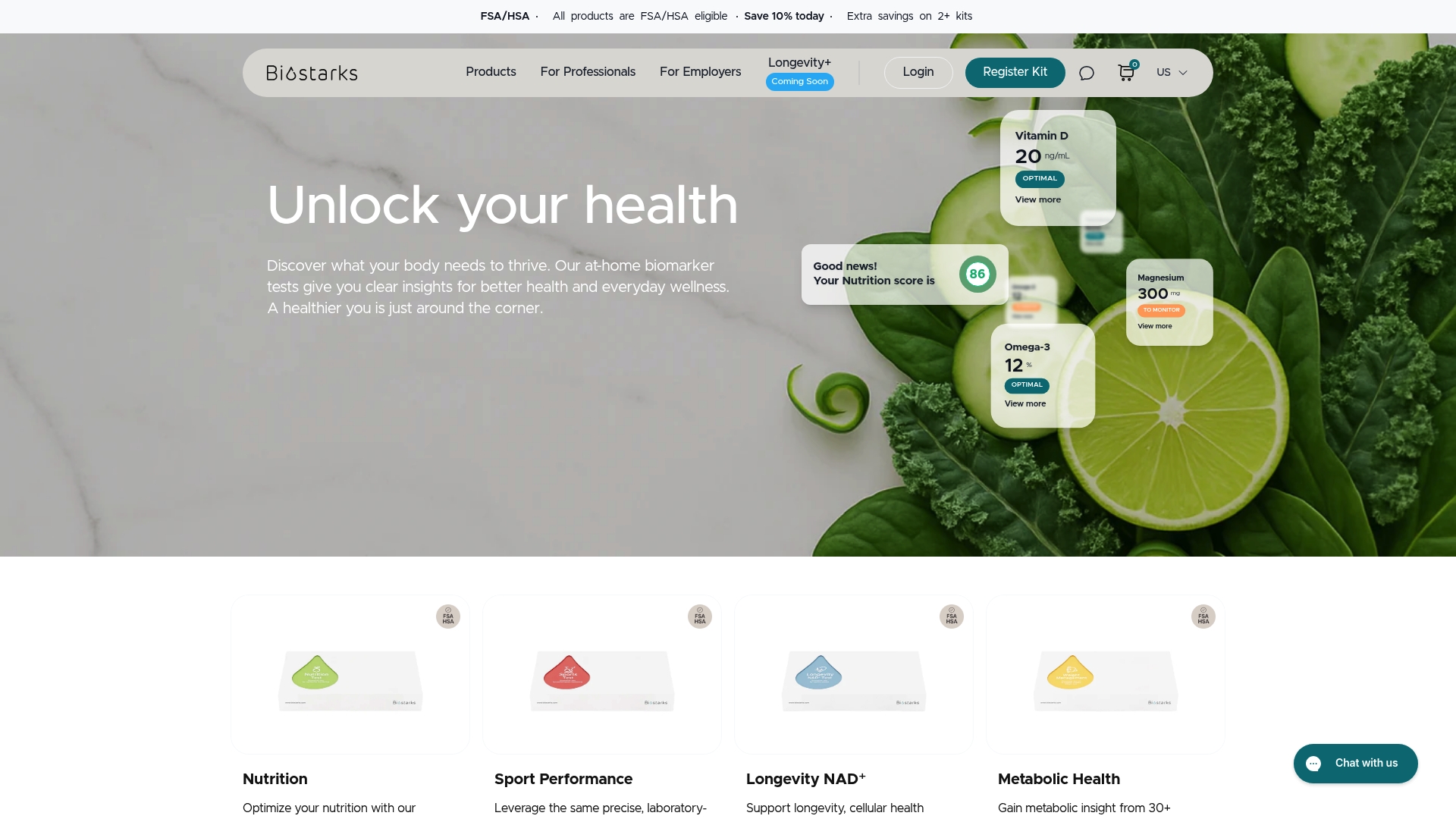
Take control of your health journey today by exploring comprehensive biomarker testing options at Biostarks. Discover detailed insights into vitamins, hormones, amino acids, lipids, minerals, and more that empower you to make confident, data-driven decisions. Start now and let science guide you toward optimal performance, vitality, and long-term well-being.
Frequently Asked Questions
What is biomarker data?
Biomarker data refers to objectively measured biological characteristics that provide insights into physiological processes, early disease detection, treatment effectiveness monitoring, metabolic responses, and potential health risks.
How does biomarker testing work in practice?
Biomarker testing typically involves several stages: sample collection, specimen preparation, molecular analysis, data interpretation, and reporting of health insights based on objective molecular-level data.
What are the key types of biomarkers and their clinical applications?
Key types of biomarkers include diagnostic biomarkers (identify disease presence), prognostic biomarkers (predict disease progression), predictive biomarkers (determine treatment response), risk biomarkers (assess likelihood of conditions), and monitoring biomarkers (track treatment effectiveness).
How do digital biomarkers differ from traditional biomarkers?
Digital biomarkers leverage technology to capture continuous, real-time health data through devices, providing insights beyond traditional lab measurements, enhancing ongoing health monitoring, and offering more personalized insights into individual health trajectories.


