

TL;DR:
- Proper hormone regulation influences energy, mood, and metabolism, requiring targeted lifestyle strategies. Prioritizing consistent sleep, balanced meals rich in protein and healthy fats, resistance training, and stress management supports hormone health effectively. Regular hormone testing allows personalized adjustments, ensuring actual progress versus guesswork.
Your hormones control far more than you realize. Energy, mood, metabolism, sleep quality, body composition, and even how you handle stress all trace back to hormonal signals running constantly in the background. The problem is that most hormone optimization tips you find online are either too vague to act on or too clinical to understand. This article cuts through that. You will find practical, evidence-based strategies for natural hormone regulation that you can start applying this week, grounded in real physiology and organized for how people actually live.
Table of Contents
- Key Takeaways
- 1. Prioritize sleep as your first hormone optimization tip
- 2. Build every meal around protein, fat, and fiber
- 3. Exercise smart, not just hard
- 4. Manage stress and protect your gut microbiome
- 5. Use testing to stop guessing about your hormones
- My honest take on hormone optimization
- See exactly where your hormones stand with Biostarks
- FAQ
Key Takeaways
| Point | Details |
|---|---|
| Sleep is the foundation | Getting 7-9 hours nightly regulates cortisol, insulin, leptin, and growth hormone simultaneously. |
| Nutrition drives hormone production | Protein, healthy fats, and fiber at every meal stabilize blood sugar and support hormone synthesis. |
| Exercise type matters | Compound resistance training and moderate cardio support testosterone and insulin sensitivity better than random workouts. |
| Stress and gut health are linked | Chronic stress elevates cortisol while poor gut health disrupts hormone metabolism at the cellular level. |
| Testing beats guessing | Diagnostic bloodwork identifies specific imbalances so interventions target the real problem, not assumed ones. |
1. Prioritize sleep as your first hormone optimization tip
No lifestyle change delivers faster hormonal improvement than fixing your sleep. Adults need 7-9 hours of consistent sleep nightly to regulate cortisol, insulin, and leptin properly. Miss that window regularly and you are running with suppressed testosterone, elevated cortisol, and disrupted hunger signals before you even get to breakfast.
The consistency of your schedule matters as much as duration. Going to bed and waking at the same time every day, including weekends, trains your circadian rhythm. That rhythm governs the release of melatonin, cortisol, and growth hormone in precise sequences that only work when timing is predictable.
- Keep your bedroom between 60 and 67°F for optimal melatonin production
- Block all light sources, including standby lights on electronics
- Avoid screens for at least 60 minutes before bed to limit blue light exposure
- Do not consume caffeine after 1 p.m. if you are sensitive to its half-life effects
One underappreciated fix is morning light. Stepping outside within 10 minutes of waking triggers the cortisol awakening response that sets your hormonal clock for the day. Glass blocks the specific wavelengths needed. Even five minutes outdoors makes a measurable difference.
Pro Tip: Set your wake time first, not your bedtime. Work backward from when you need to rise and count back 8 hours. This anchors your circadian rhythm faster than trying to force an earlier sleep onset.
2. Build every meal around protein, fat, and fiber
What you eat directly determines what your body has available to make hormones. Cholesterol is the raw material for testosterone, estrogen, and cortisol. Amino acids from protein are required to build peptide hormones like insulin and growth hormone. Skimping on either category does not make you lean. It makes you hormonally deficient.
Stabilizing blood sugar through protein, healthy fat, and fiber at every meal moderates insulin response and supports satiety hormones GLP-1 and PYY. This is not about counting macros obsessively. It is about structuring meals so glucose enters the bloodstream at a manageable rate rather than in a spike that triggers a corrective insulin flood.
The foods that support these goals most consistently:
- Avocados, olive oil, and fatty fish for hormone-supporting healthy fats
- Eggs, chicken, lentils, and Greek yogurt for complete amino acid profiles
- Broccoli, cauliflower, and Brussels sprouts to support estrogen metabolism through DIM (diindolylmethane)
- Flaxseed, oats, and vegetables for fiber that helps clear excess hormones through the gut
Pro Tip: If you eat three meals a day, aim for 25-40 grams of protein at each one. This amount consistently supports muscle protein synthesis and keeps glucagon in the right ratio to insulin throughout the day.
Alcohol, added sugars, and ultra-processed foods are worth reducing aggressively. Each disrupts insulin sensitivity, suppresses testosterone, and increases aromatization. That last point matters if you are trying to reduce estrogen levels naturally, since excess body fat and liver stress both accelerate the conversion of testosterone to estrogen.
3. Exercise smart, not just hard
Exercise is one of the most powerful hormonal health strategies available, but the type and load matter enormously. Compound resistance exercises like squats, deadlifts, and rows produce acute spikes in testosterone and growth hormone. Over time, consistent strength training improves insulin sensitivity at the cellular level. This is the exercise approach most worth prioritizing.
Clinical guidance supports 30 minutes of moderate cardio five days per week alongside regular resistance work. This combination supports cortisol regulation without overtaxing the adrenal axis. The key word is “moderate.” Zone 2 cardio, where you can hold a conversation but feel the effort, is far more hormone-friendly than chronic high-intensity sessions.
- Prioritize 3-4 resistance training sessions per week using multi-joint movements
- Keep cardio sessions at a conversational pace for at least 80% of weekly volume
- Schedule rest days intentionally, not as an afterthought
- Monitor recovery quality: poor sleep after training is a clear signal of overreaching
Over-exercising during hormonal depletion impedes recovery and can worsen imbalances. If you are already dealing with fatigue, elevated cortisol, or disrupted sleep, adding intense daily workouts accelerates the problem rather than solving it.
Pro Tip: Track your resting heart rate each morning. A consistent elevation of 5-8 beats per minute above your baseline usually signals under-recovery and often reflects cortisol dysregulation before any other symptom appears.

4. Manage stress and protect your gut microbiome
Cortisol is the hormone that breaks everything else down when left chronically elevated. It suppresses testosterone, disrupts thyroid function, impairs insulin sensitivity, and interferes with sleep. Every other hormone optimization effort competes against an unchecked cortisol load. Managing stress is not a soft wellness concept. It is a hard physiological requirement.
Mindfulness, yoga, and social connection reduce cortisol measurably and support hormonal balance across multiple systems. Ten minutes of diaphragmatic breathing activates the parasympathetic nervous system within minutes. You do not need an hour-long session to move the needle.
The gut is an underestimated player in this picture. Gut health critically regulates hormones through microbial influence on hormone metabolism and immune signaling. The estrobolome, a collection of gut bacteria that process estrogen, directly affects how much circulating estrogen gets reabsorbed versus excreted. A disrupted microbiome can shift that balance in clinically meaningful ways.
Here is a quick comparison of high-impact habits versus common mistakes in this area:
| Habit | Effect on hormones |
|---|---|
| Daily 10-minute breathing practice | Lowers cortisol, supports parasympathetic tone |
| Fermented foods (kefir, kimchi, sauerkraut) | Supports gut microbiome and estrogen clearance |
| BPA and phthalate exposure from plastics | Disrupts endocrine function as xenoestrogens |
| Skipping meals or chronic undereating | Elevates cortisol and suppresses thyroid output |
| Consistent meal timing | Reduces nervous and endocrine system stress |
Avoiding endocrine disruptors deserves more attention than it gets. Plastics, synthetic fragrances, and certain pesticides mimic or block hormone receptors. Switching to glass food storage, filtered water, and fragrance-free personal care products is a low-effort intervention with meaningful long-term impact.
5. Use testing to stop guessing about your hormones
The most overlooked of all hormonal health strategies is also the most direct one. You cannot optimize what you have not measured. Generic hormone advice assumes you have the same baseline as everyone else. You do not. Two people with identical symptoms can have opposite hormonal imbalances driving them.
Hormone optimization begins with diagnostic bloodwork to identify specific deficiencies followed by tailored interventions. This data-driven approach replaces trial-and-error lifestyle changes with targeted ones. When you know your free testosterone, DHEA-S, SHBG, cortisol curve, and thyroid panel, you stop guessing and start addressing real gaps.
The concept of optimal functional hormone ranges is distinct from simply avoiding disease thresholds. A testosterone level that keeps you out of the clinical low range may still leave you fatigued, unmotivated, and carrying excess body fat. Functional optimization targets ranges where you actually feel and perform well, not just ranges that clear a laboratory flag.
Tracking changes over time adds another layer. A single test gives you a snapshot. Repeated testing at 3 to 6 month intervals shows whether your lifestyle changes, supplement protocols, or stress management practices are actually shifting your numbers. Without that feedback loop, you are exercising, eating, and sleeping better on faith rather than evidence.
For a structured overview of what to look at when building this picture, Biostarks covers the key diagnostic markers worth tracking as part of a hormone analysis workflow.
| Hormone marker | Why it matters |
|---|---|
| Free testosterone | Active hormonal fraction; low levels affect energy and muscle mass |
| SHBG (sex hormone binding globulin) | High levels reduce testosterone availability even when total is normal |
| Cortisol (morning) | Indicates HPA axis health and adrenal output timing |
| Thyroid (TSH, Free T3, Free T4) | Regulates metabolism, temperature, and energy production |
| Estradiol | Relevant for both men and women; excess drives fat gain and mood disruption |
| DHEA-S | Precursor hormone; declining levels correlate with aging and stress load |
My honest take on hormone optimization
I have followed this space closely for years, and the pattern I keep seeing is the same. People come in with real symptoms, real frustration, and a stack of supplements they bought based on something they read online. Some of those supplements do something. Most do not address the actual driver.
What I have learned is that hormone optimization is fundamentally an information problem before it is an intervention problem. You need to know what is actually off before you can fix it. The lifestyle changes I described above, sleep, nutrition, exercise, stress management, work reliably as a foundation. But once you have those dialed in and still feel suboptimal, the next move is not another supplement. It is a blood test.
I have also noticed that people underestimate how slow this process is. You will not see meaningful hormonal shifts in two weeks. Consistent changes tracked over three to six months are what reveal whether you are moving in the right direction. That timeframe frustrates people who want fast results. But hormones are not a system you tweak once. They are a system you tend.
The best results I have seen come from people who combine practical hormone tracking with honest lifestyle consistency. Not perfection. Consistency. That combination, backed by periodic data, is what actually moves the needle over time.
— Romain
See exactly where your hormones stand with Biostarks
Most people spend months adjusting their sleep, diet, and exercise before checking whether those changes are actually shifting their hormonal markers. Biostarks, an AMR Labs SA company, removes that uncertainty with at-home biomarker testing powered by Swiss mass spectrometry. You collect your sample at home, ship it to the lab, and receive a detailed breakdown of your hormone levels alongside markers for metabolic health, vitamins, and more.
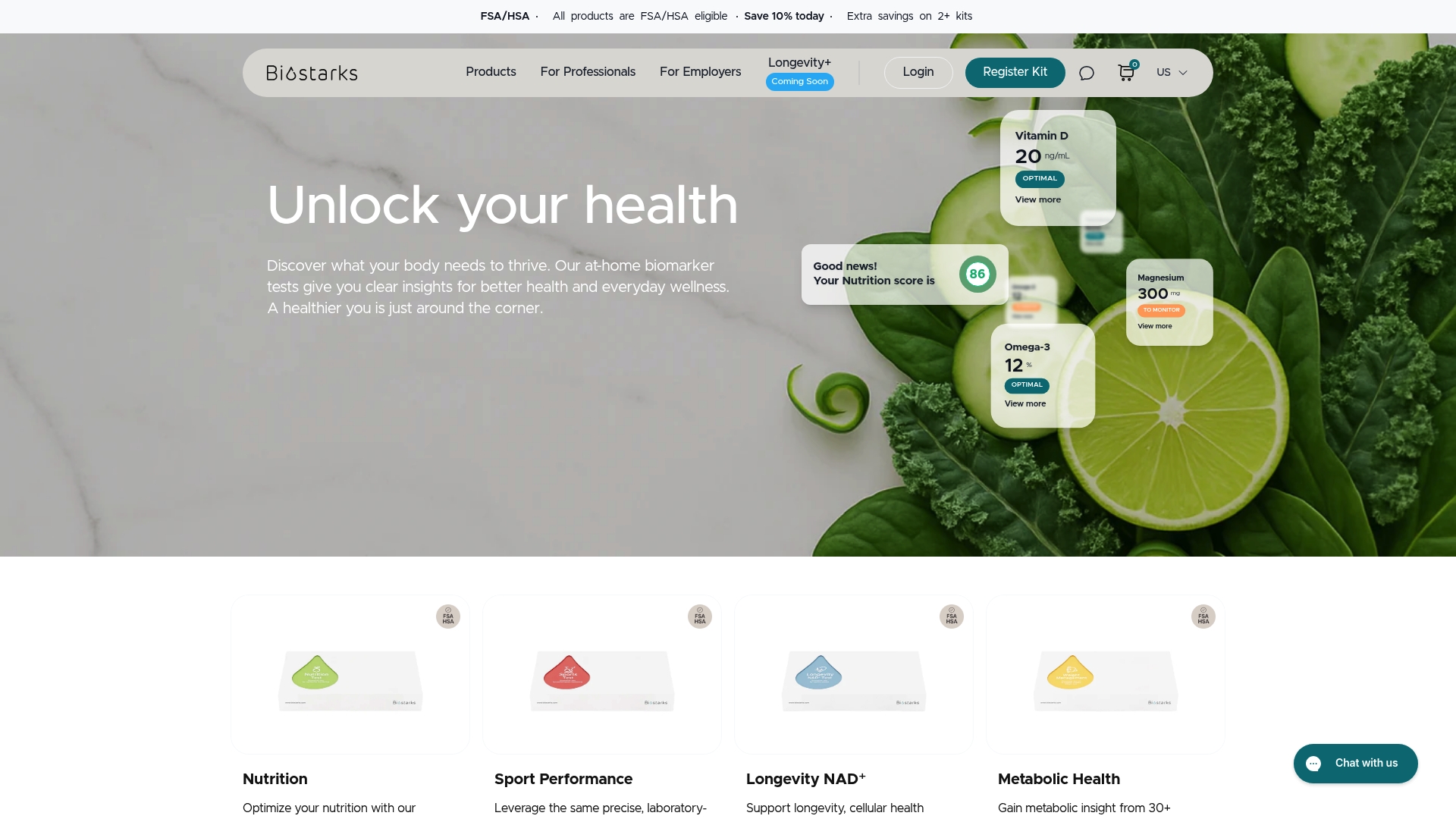
The reports translate complex laboratory data into clear, prioritized guidance so you know exactly which markers need attention and why. Whether you want to understand your hormone balance more deeply or build a full optimization protocol, Biostarks gives you the data to make informed decisions. Explore your options at biostarks.com.
FAQ
What are the most effective hormone optimization tips?
The highest-impact lifestyle changes are consistent sleep (7-9 hours nightly), protein and healthy fat at every meal, compound resistance training, and daily stress reduction practices like breathing or meditation. These four areas affect the widest range of hormones simultaneously.
How can I increase testosterone naturally?
Compound resistance training, adequate sleep, reduced alcohol intake, and managing body fat are the most evidence-supported ways to increase testosterone naturally. Zinc, vitamin D, and magnesium are also the best supplements for hormones when actual deficiencies are confirmed by testing.
How does gut health affect hormone balance?
The gut microbiome directly influences hormone metabolism, particularly estrogen clearance. Gut microbial activity shapes how much circulating estrogen is reabsorbed versus eliminated. Supporting gut health through fermented foods and fiber is a practical hormone balancing technique with meaningful downstream effects.
How do I reduce estrogen levels naturally?
Increasing fiber intake, consuming cruciferous vegetables, reducing alcohol, maintaining a healthy body weight, and avoiding BPA and synthetic fragrances all support natural estrogen clearance. These approaches target both production and elimination pathways simultaneously.
How often should I test my hormones?
Most people benefit from testing every 3 to 6 months when actively making lifestyle changes. This interval is frequent enough to detect meaningful shifts and adjust your approach based on actual data rather than symptoms alone.
This content is for educational purposes only and does not constitute medical advice. Always consult with a healthcare professional before making changes to your health regimen.


