

Biomarker testing represents a powerful tool for health optimization, with early shifts in biomarker profiles predicting aging-related disease risks up to 30% more accurately than symptom-based approaches. This personalized data enables you to detect metabolic dysfunctions before symptoms emerge, transforming how you approach longevity and metabolic health. Understanding how to interpret and act on biomarker insights can extend your healthspan and optimize your body’s performance over time.
Table of Contents
- Introduction To Biomarker Testing And Longevity
- Scientific Basis: How Biomarkers Reflect Aging And Metabolic Health
- Common Misconceptions About Biomarker Testing In Longevity
- Framework For Utilizing Biomarker Testing For Longevity Optimization
- Practical Steps To Use Biomarker Testing Results Effectively
- Conclusion: Turning Data Into Longevity Action
- Explore Personalized Biomarker Testing With Biostarks
- Frequently Asked Questions
Key Takeaways
| Point | Details |
|---|---|
| Early Detection Power | Biomarker testing identifies metabolic changes years before clinical symptoms appear. |
| Precision Matters | Mass spectrometry delivers higher accuracy than conventional immunoassay methods. |
| Longitudinal Approach | Regular testing reveals trends that single snapshots miss completely. |
| Actionable Framework | Converting biomarker data into targeted interventions maximizes healthspan benefits. |
| Individual Context | Optimal levels vary per person, requiring personalized interpretation strategies. |
Introduction to Biomarker Testing and Longevity
Biomarker testing analyzes measurable biological indicators to assess your internal health status and predict future disease risk. For longevity optimization, this approach focuses on detecting early metabolic shifts that influence aging trajectories. Rather than waiting for symptoms, you gain insight into how your body functions at the molecular level.
Several biomarker categories prove particularly relevant for aging research. Lipid profiles reveal cardiovascular health and inflammation levels. Hormone panels track endocrine function, which declines with age. Vitamin and mineral assessments identify deficiencies affecting cellular energy production. Metabolic markers like glucose and insulin resistance indicators predict metabolic syndrome risk.
Advanced testing methods significantly improve data quality. Mass spectrometry-based biomarker tests provide higher precision and reproducibility than conventional immunoassays, enabling more confident clinical decisions. This precision matters when tracking subtle changes over time or identifying optimal ranges for peak performance.
Understanding the role of biomarkers in health optimization empowers you to move beyond generic health advice. By accessing data-driven metabolic health insights, you can tailor interventions to your unique physiology. The essential types of biomarkers span multiple systems, offering a comprehensive view of your biological age versus chronological age.
Key benefits of precision biomarker testing include:
- Early detection of metabolic dysfunction before disease manifests
- Personalized baseline establishment for tracking individual health trajectories
- Objective measurement of intervention effectiveness over time
- Identification of hidden deficiencies impacting energy and cognition
- Risk stratification for age-related conditions like cardiovascular disease
This foundation prepares you to understand how specific markers correlate with aging processes and what actions produce meaningful improvements.
Scientific Basis: How Biomarkers Reflect Aging and Metabolic Health
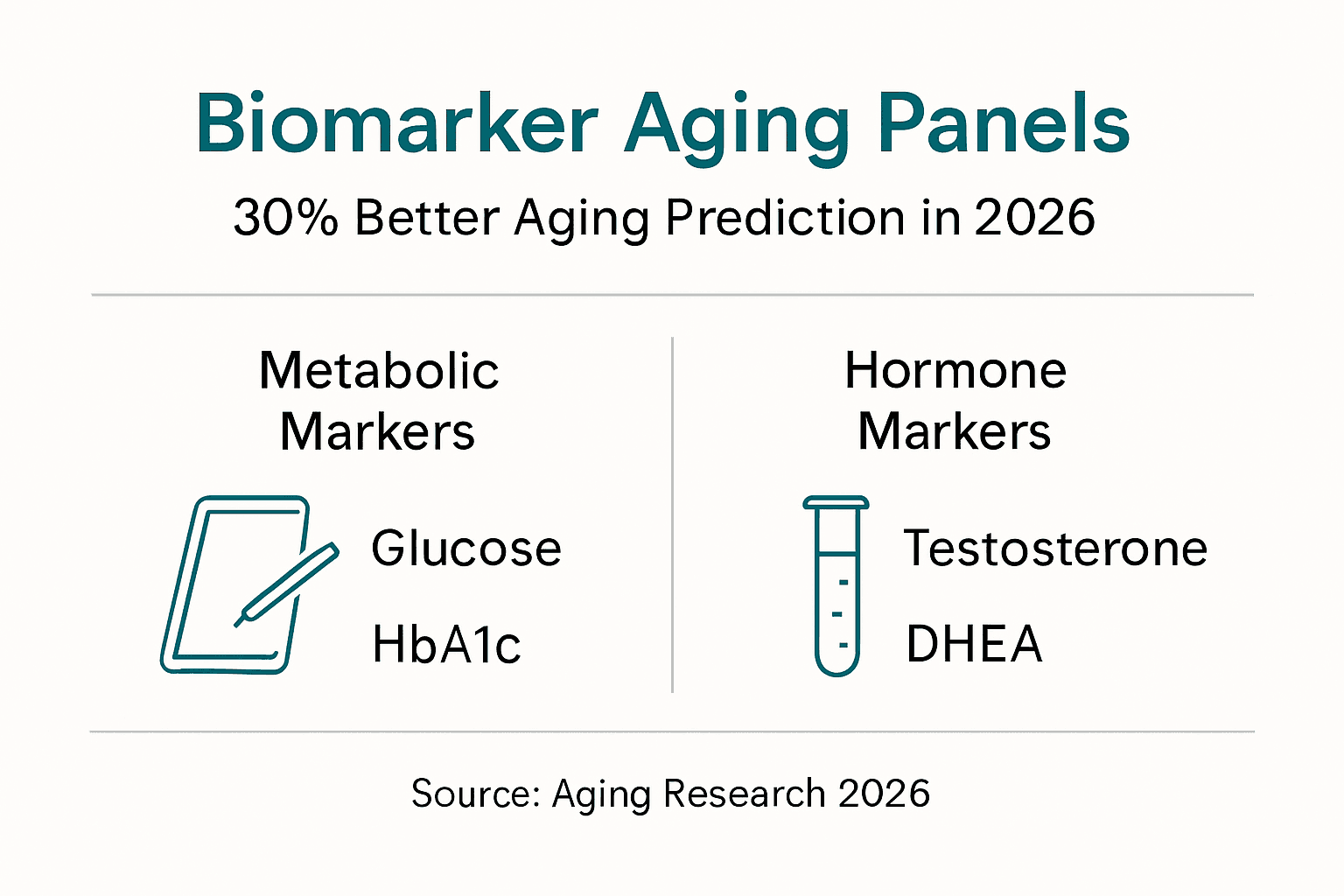
Specific biomarkers serve as early warning systems for metabolic dysfunction and biological aging. Biomarker testing enables detection of early metabolic dysfunctions that precede clinical symptoms, giving you a 30% accuracy advantage in predicting age-related disease risks. This predictive power stems from biomarkers’ sensitivity to physiological changes occurring at the cellular level.
Sex hormones like testosterone, estrogen, and DHEA decline with age, affecting muscle mass, bone density, and metabolic rate. Lipid profiles such as HDL cholesterol and triglycerides predict cardiovascular longevity, with abnormal levels increasing mortality risk by 35%. Vitamin D influences immune function and inflammation, while B vitamins support methylation pathways critical for DNA repair.

Metabolic markers reveal how efficiently your body processes nutrients. Fasting glucose and HbA1c indicate insulin sensitivity and diabetes risk. Homocysteine levels reflect cardiovascular health and methylation capacity. Inflammatory markers like hsCRP signal chronic low-grade inflammation accelerating aging.
Composite biomarker panels improve biological age estimation accuracy beyond single marker tests. By analyzing multiple systems simultaneously, you capture interactions between hormones, metabolism, and inflammation that single tests miss.
| Biomarker Category | Key Markers | Aging/Metabolic Significance |
|---|---|---|
| Lipids | HDL, LDL, Triglycerides | Cardiovascular health, inflammation, longevity prediction |
| Hormones | Testosterone, Estrogen, DHEA, Cortisol | Muscle mass, bone density, stress response, metabolic rate |
| Vitamins | D, B12, Folate | Immune function, methylation, energy production |
| Metabolic | Glucose, HbA1c, Insulin | Diabetes risk, metabolic syndrome, cellular aging |
| Inflammatory | hsCRP, Homocysteine | Chronic inflammation, cardiovascular risk, oxidative stress |
Pro Tip: Focus on tracking ratios between markers rather than absolute values alone. The testosterone to cortisol ratio, for example, reveals more about recovery capacity than either hormone individually.
Understanding these biological connections helps you interpret results meaningfully. When tracking metabolic health biomarkers, you transform raw numbers into actionable intelligence about your body’s aging trajectory.
Common Misconceptions about Biomarker Testing in Longevity
Many people mistakenly believe that simply getting tested extends lifespan. Testing provides data, but longevity benefits only materialize when you use that information to guide targeted interventions. Without action, biomarker results remain interesting numbers rather than health optimization tools.
Another widespread misconception involves one-time testing. A single snapshot cannot reveal trends or confirm whether interventions work. Biological systems fluctuate daily due to sleep, stress, diet, and exercise. Longitudinal testing over months or years reveals meaningful patterns that isolated tests miss completely.
The assumption that higher levels always indicate better health causes problems. Optimal ranges exist for most biomarkers, with both deficiency and excess creating issues. Extremely high testosterone might signal supplementation abuse rather than vitality. Excessive vitamin D can cause hypercalcemia despite the nutrient’s importance.
Some individuals overgeneralize results without considering personal context. Age, sex, genetics, and lifestyle dramatically influence optimal ranges. A 25-year-old athlete and a 60-year-old retiree require different interpretation frameworks. Population reference ranges provide starting points but may not reflect your individual optimum.
Common mistakes to avoid:
- Ignoring testing conditions like fasting status or time of day
- Comparing results from different laboratory methods or providers
- Making drastic changes based on single abnormal results
- Failing to retest after implementing interventions
- Prioritizing trendy markers over foundational health indicators
Pro Tip: Establish your personal baseline with comprehensive testing before starting any new health protocol. This creates a reference point for measuring intervention effectiveness rather than guessing whether changes help.
Proper biomarker interpretation insights require understanding these nuances. Context matters as much as the numbers themselves when translating data into longevity strategies.
Framework for Utilizing Biomarker Testing for Longevity Optimization
Choosing between multi-marker panels and single-marker tests significantly impacts the insights you gain. Each approach offers distinct advantages depending on your goals and current health knowledge.
| Testing Approach | Pros | Cons |
|---|---|---|
| Multi-Marker Panels | Comprehensive system view, identifies interactions, establishes broad baseline | Higher cost, potential information overload, may include irrelevant markers |
| Single-Marker Tests | Targeted focus, lower cost, tracks specific interventions | Misses system interactions, incomplete picture, requires prior knowledge |
Testing frequency depends on your optimization goals and intervention timelines. For establishing baselines, test comprehensively every 3 to 6 months initially. Once you identify key markers requiring attention, quarterly testing of those specific biomarkers tracks intervention effectiveness. Major lifestyle changes warrant retesting within 8 to 12 weeks to confirm impact.
Integrating biomarker data with lifestyle modifications creates a feedback loop driving continuous improvement. Supplement adjustments should target identified deficiencies. Dietary changes address metabolic markers like glucose and lipids. Exercise protocols respond to hormone levels and inflammatory markers. Clinical guidance ensures interventions remain safe and evidence-based.
A systematic framework for applying biomarker data follows this cycle:
- Conduct comprehensive baseline testing across all relevant biomarker categories
- Interpret results in context of your age, sex, goals, and current health status
- Identify priority markers showing suboptimal levels or concerning trends
- Design targeted interventions addressing specific biomarker imbalances
- Implement changes consistently for sufficient duration to affect biology
- Retest priority markers to measure intervention effectiveness objectively
- Adjust protocols based on new data and continue the optimization cycle
This iterative approach transforms biomarker testing from a static snapshot into a dynamic health management system. Understanding why to use biomarker insights effectively separates those who merely test from those who actually optimize longevity.
Practical Steps to Use Biomarker Testing Results Effectively
Interpreting biomarker results requires comparing your values against optimal ranges rather than just normal ranges. Normal ranges capture 95% of the population, including many with suboptimal health. Optimal ranges reflect levels associated with peak performance and longevity. A fasting glucose of 95 mg/dL falls within normal limits but suggests developing insulin resistance when optimal targets stay below 85 mg/dL.
Tailoring interventions based on biomarker signals maximizes effectiveness. Low vitamin D responds to supplementation with D3 plus K2 for absorption. Elevated triglycerides improve with carbohydrate reduction and omega-3 fatty acids. Poor testosterone levels may require sleep optimization, stress management, and resistance training before considering hormone replacement.
Dietary adjustments should address specific metabolic signals. High fasting insulin indicates excessive carbohydrate intake relative to your metabolic capacity. Elevated homocysteine suggests inadequate B vitamin intake, particularly B6, B12, and folate. Low HDL cholesterol often improves with increased healthy fat consumption and regular exercise.
Supplementation works best when targeted to confirmed deficiencies. Blanket supplementation without testing wastes money and risks imbalances. Magnesium deficiency shows up in RBC magnesium tests more reliably than serum tests. Amino acid panels reveal specific deficiencies affecting protein synthesis and neurotransmitter production.
Pro Tip: Implement one major intervention at a time when possible, then retest to isolate what actually moves your markers. Changing diet, supplements, and exercise simultaneously makes it impossible to identify which intervention produced results.
Tracking progress requires consistent testing conditions. Use the same laboratory and testing method for comparability. Test at similar times of day since many biomarkers fluctuate diurnally. Maintain similar fasting status and recent activity levels before blood draws.
Common pitfalls when acting on biomarker data:
- Changing everything at once without tracking individual intervention effects
- Expecting immediate results when biological changes require weeks or months
- Ignoring sleep and stress despite their massive impact on biomarkers
- Over-supplementing based on internet research rather than confirmed deficiencies
- Stopping successful interventions once biomarkers normalize instead of maintaining them
Leveraging precision health with biomarker data requires patience and systematic thinking. You’re unlocking health data via biomarker testing to guide evidence-based decisions rather than guessing what your body needs. Understanding key blood biomarkers for health creates a foundation for interpreting results and designing effective protocols.
Conclusion: Turning Data into Longevity Action
Biomarker testing transforms longevity optimization from guesswork into a data-driven science. Early detection of metabolic dysfunction enables targeted interventions years before symptoms emerge, fundamentally changing your aging trajectory. The 30% improvement in disease prediction accuracy represents a significant advantage for anyone serious about extending healthspan.
Personalized interventions based on your unique biomarker profile outperform generic health advice. By establishing baselines, tracking trends, and adjusting protocols based on objective data, you take control of your biological age. Ongoing testing creates accountability and reveals whether your efforts produce measurable improvements.
Advancing testing technologies continue expanding possibilities for longevity research. As methods improve and costs decrease, personalized precision health becomes accessible to broader audiences. Those who adopt systematic biomarker tracking today position themselves at the forefront of the longevity optimization movement.
Explore Personalized Biomarker Testing with Biostarks
Ready to transform biomarker insights into longevity action? Biostarks delivers precision testing powered by advanced Swiss mass spectrometry, providing the accuracy you need for confident health decisions.

Our comprehensive biomarker testing services analyze vitamins, hormones, amino acids, lipids, minerals, and metabolic markers with exceptional precision. Personalized biomarker reports translate complex laboratory data into clear, actionable strategies tailored to your unique physiology. With regular testing and expert interpretation, you’ll track progress objectively and optimize interventions for maximum healthspan benefits. Advanced lab testing solutions from Biostarks bridge the gap between cutting-edge diagnostics and practical wellness management, empowering you to make data-driven decisions about your longevity journey.
Frequently Asked Questions
How often should I get biomarker tests for longevity optimization?
Test comprehensively every 3 to 6 months when establishing baselines or making significant lifestyle changes. Once you identify stable patterns, annual comprehensive panels with quarterly testing of priority markers provide sufficient data for tracking trends and measuring intervention effectiveness.
Can biomarker testing predict my exact lifespan?
No, biomarker testing estimates biological age and disease risk but cannot predict exact lifespan. Too many variables including accidents, infections, and future lifestyle choices affect longevity. Testing reveals your current trajectory and areas requiring attention, empowering you to modify risk factors within your control.
What makes mass spectrometry testing better than traditional methods?
Mass spectrometry delivers superior precision, reproducibility, and accuracy compared to immunoassays. This method directly measures molecular mass rather than relying on antibody binding, reducing interference and false results. Higher precision enables confident tracking of subtle changes critical for optimization.
Are all biomarker abnormalities a sign of poor longevity?
Not necessarily. Temporary fluctuations occur due to recent meals, exercise, stress, or illness. Single abnormal results require confirmation through retesting before drawing conclusions. Some variations reflect genetic differences rather than dysfunction, highlighting why personalized interpretation matters more than population references.
How do I know which biomarkers to focus on for my health?
Start with foundational markers covering metabolic, cardiovascular, hormonal, and inflammatory systems. Then prioritize based on your health history, symptoms, goals, and family disease patterns. Comprehensive initial testing identifies unexpected issues, after which you can narrow focus to markers most relevant for your optimization strategy.


