

Choosing which biomarkers to track can feel overwhelming when you’re trying to optimize your health beyond basic disease screening. While standard medical tests focus on detecting illness, functional health biomarkers reveal opportunities for performance enhancement and longevity. This guide provides a clear, prioritized list of essential biomarkers you can monitor at home, helping you make data-driven decisions about your wellness journey. You’ll learn which markers matter most, how to interpret them for optimization rather than just disease prevention, and practical steps to build your personalized tracking system.
Table of Contents
- How To Choose Functional Health Biomarkers: Key Criteria
- Top Functional Health Biomarkers To Monitor At Home
- Comparing Functional Biomarkers: A Side-By-Side Overview
- How To Use Your Functional Biomarker List For Personalized Health Optimization
- Optimize Your Health With Biostarks’ At-Home Testing
- Frequently Asked Questions
Key takeaways
| Point | Details |
|---|---|
| Normal vs. optimal ranges | Understanding the difference between disease-free and peak performance levels guides true health optimization |
| Core biomarker categories | Metabolic, inflammatory, and hormonal markers form the foundation of functional health tracking |
| At-home testing advantage | Convenient personal monitoring enables proactive wellness adjustments before problems develop |
| Selection criteria matter | Prioritize biomarkers based on relevance, actionability, reliability, and testing accessibility |
How to choose functional health biomarkers: key criteria
Functional health biomarkers measure your body’s performance capacity, not just absence of disease. Unlike conventional lab work that flags only abnormal values, these markers help you identify subtle shifts that affect energy, recovery, cognitive function, and metabolic efficiency. The goal shifts from avoiding illness to achieving your biological potential.
The distinction between normal and optimal levels is crucial for understanding biomarker results. A fasting glucose of 95 mg/dL falls within normal ranges but sits far from the optimal 70-85 mg/dL target that supports metabolic health and longevity. This gap represents missed opportunities for performance gains and preventive action.
When selecting biomarkers for your personal tracking system, apply these four essential criteria:
- Relevance: The marker directly connects to your specific health goals, whether that’s athletic performance, cognitive clarity, hormonal balance, or metabolic optimization
- Actionability: Results provide clear direction for lifestyle, nutrition, or supplementation changes you can implement immediately
- Reliability: The biomarker shows consistent, reproducible values when measured using validated at-home testing methods
- Testing accessibility: You can collect samples conveniently at home without complex procedures or frequent clinic visits
Pro Tip: Start with a focused panel of 5-7 high-impact biomarkers rather than overwhelming yourself with comprehensive testing. You can always expand your tracking as you understand your baseline patterns and identify specific optimization targets.
Top functional health biomarkers to monitor at home
These core biomarkers provide actionable insights across metabolic, inflammatory, and hormonal health domains. Each marker reveals specific aspects of your physiological function that respond to lifestyle interventions.
HbA1c (Glycated Hemoglobin) reflects your average blood sugar control over 2-3 months. While normal ranges extend to 5.6%, optimal levels sit below 5.3% for metabolic health and longevity. This marker helps you assess how well your body manages glucose from diet and stress responses.

Fasting Glucose measures blood sugar after an overnight fast, with optimal ranges between 70-85 mg/dL compared to the normal threshold of 100 mg/dL. Tracking trends helps catch insulin resistance years before diabetes develops.
Lipid Panel includes total cholesterol, LDL, HDL, and triglycerides. Beyond standard ranges, functional optimization targets HDL above 60 mg/dL, triglycerides below 100 mg/dL, and a triglyceride-to-HDL ratio under 2:1 for cardiovascular and metabolic wellness.
C-Reactive Protein (CRP) quantifies systemic inflammation. Optimal levels stay below 1.0 mg/L, while values above 3.0 mg/L indicate chronic inflammation that accelerates aging and disease risk. This marker responds quickly to dietary changes, sleep quality, and stress management.
Vitamin D (25-hydroxyvitamin D) supports immune function, bone health, and mood regulation. Functional ranges target 50-80 ng/mL rather than just avoiding deficiency below 30 ng/mL. Many people need supplementation to reach optimal levels, especially in winter months.
Thyroid Hormones (TSH, Free T3, Free T4) govern metabolism, energy production, and body temperature regulation. Optimal TSH typically falls between 1.0-2.5 mIU/L, with free T3 in the upper half of reference ranges for peak metabolic function.
Cortisol reveals stress response patterns and circadian rhythm health. Morning cortisol should peak upon waking, then decline throughout the day. Disrupted patterns indicate chronic stress, poor sleep, or adrenal dysfunction affecting energy and recovery.
Follow this biomarker checklist to establish your baseline testing routine. Understanding metabolic markers helps you connect daily habits to measurable health outcomes. Explore the full spectrum of biomarker types to identify additional markers relevant to your specific goals.
Comparing functional biomarkers: a side-by-side overview
This comparison helps you prioritize which biomarkers deliver the most actionable insights for your wellness optimization journey. Different markers serve distinct purposes in your health monitoring strategy.
| Biomarker | Primary Insight | Testing Method | Optimal Target | Health Impact Area |
|---|---|---|---|---|
| HbA1c | Long-term glucose control | Finger prick blood spot | Below 5.3% | Metabolic health, aging |
| Fasting Glucose | Current blood sugar regulation | Finger prick or venous draw | 70-85 mg/dL | Energy, insulin sensitivity |
| CRP | Systemic inflammation level | Finger prick blood spot | Below 1.0 mg/L | Recovery, disease prevention |
| Vitamin D | Immune and bone health status | Finger prick blood spot | 50-80 ng/mL | Immunity, mood, longevity |
| Lipid Panel | Cardiovascular and metabolic risk | Finger prick or venous draw | HDL >60, TG <100 mg/dL | Heart health, metabolism |
| Thyroid Panel | Metabolic rate and energy production | Finger prick or venous draw | TSH 1.0-2.5 mIU/L | Energy, weight, temperature |
| Cortisol | Stress response and circadian rhythm | Saliva or blood sample | Morning peak, evening low | Stress resilience, sleep |
Functional biomarkers help identify not just disease risk but also opportunities for health optimization. The most actionable markers for general wellness include HbA1c, CRP, and Vitamin D because they respond predictably to lifestyle changes and correlate strongly with longevity outcomes.
Pro Tip: Consider testing frequency and cumulative costs when building your biomarker panel. Start with quarterly testing for fast-responding markers like CRP and glucose, while checking slower-changing markers like Vitamin D and thyroid hormones every 6-12 months. This approach balances actionable feedback with budget sustainability.
Learn more about at-home biomarker testing to understand collection methods and result interpretation for different marker types.
How to use your functional biomarker list for personalized health optimization
Transforming biomarker data into tangible health improvements requires a systematic approach to selection, tracking, and interpretation. Follow these steps to build your personalized monitoring system:
-
Identify your primary health goals: Define whether you’re optimizing for athletic performance, cognitive function, metabolic health, hormonal balance, or longevity. This focus determines which biomarkers deserve priority attention and frequent monitoring.
-
Establish your baseline values: Test your selected biomarkers to understand your current status before making interventions. Record these initial measurements with notes about your current lifestyle, diet, sleep patterns, and stress levels for context.
-
Set specific optimization targets: Research optimal ranges for each biomarker based on functional health standards, not just laboratory normal values. Optimal biomarker ranges focus on achieving peak performance and longevity, not just disease prevention.
-
Implement targeted interventions: Make one or two lifestyle changes at a time based on your biomarker results. This controlled approach helps you identify which interventions actually move your markers toward optimal ranges.
-
Track trends over single values: A single elevated CRP reading might reflect temporary inflammation from a recent workout. Three consecutive elevated readings indicate chronic inflammation requiring intervention. Focus on directional changes across multiple tests rather than reacting to isolated results.
-
Adjust testing frequency strategically: Rapidly responsive markers like glucose and CRP warrant quarterly testing during active optimization. Slower-changing markers like Vitamin D or thyroid hormones need less frequent monitoring once you reach optimal ranges.
-
Document correlations and patterns: Note how specific dietary changes, sleep quality, training intensity, or stress levels correlate with biomarker shifts. This personal data reveals your unique physiological responses and guides future optimization decisions.
Explore comprehensive metabolic health optimization strategies to understand how different biomarkers interact. Consider working with professionals who use biomarkers for personalized nutrition guidance to accelerate your optimization journey.
Optimize your health with Biostarks’ at-home testing
Ready to transform your health data into actionable wellness improvements? Biostarks delivers convenient at-home testing kits that measure the key functional biomarkers covered in this guide, using advanced Swiss mass spectrometry for laboratory-grade accuracy.
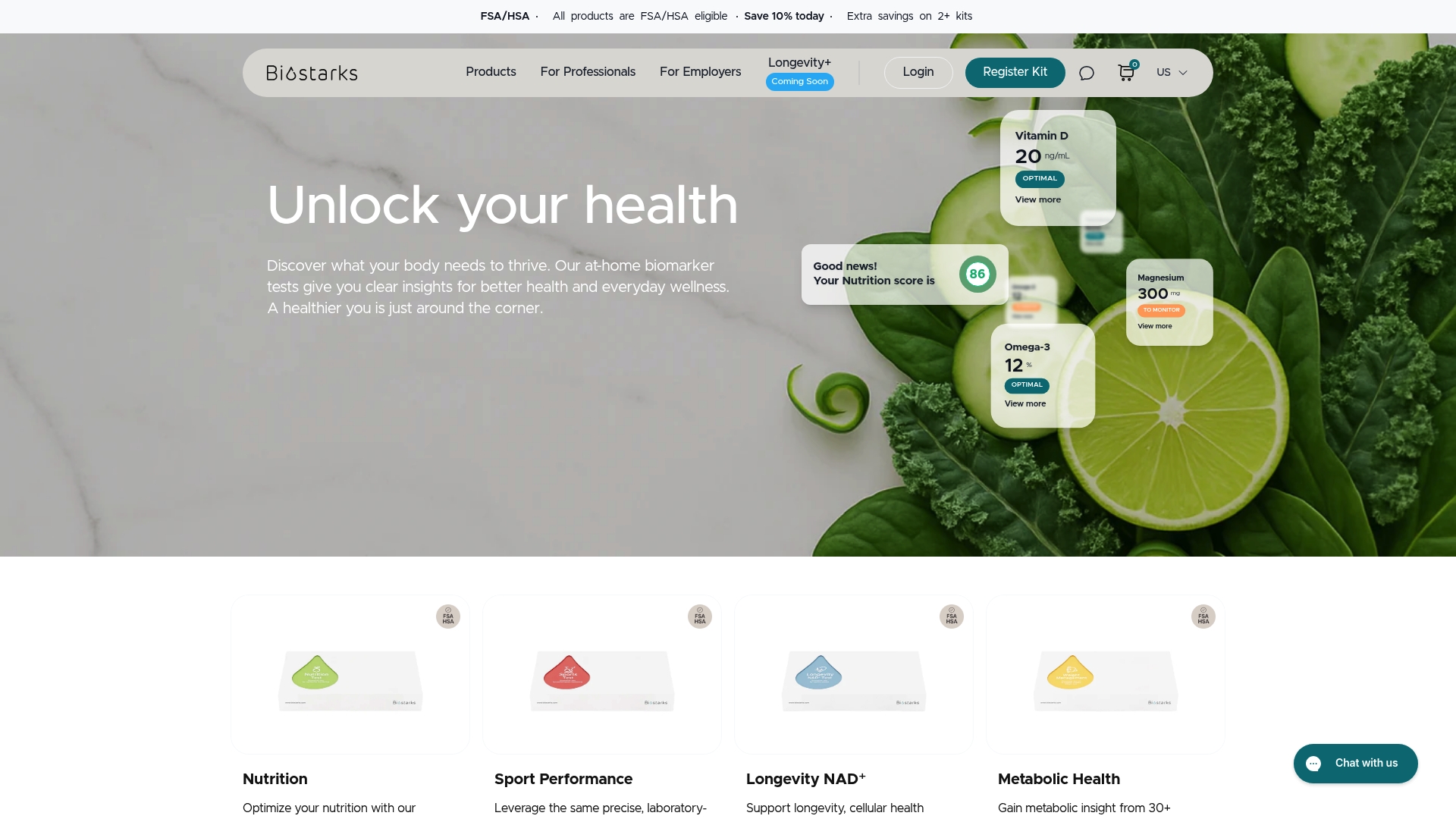
Our comprehensive testing panels track metabolic markers, inflammatory indicators, hormonal balance, and nutritional status with simple finger-prick collection. You’ll receive detailed reports that highlight not just your results, but personalized insights connecting your biomarker values to practical lifestyle adjustments. Whether you’re starting your functional health journey or expanding your current tracking system, Biostarks provides the precision data and expert guidance you need. Follow our biomarker checklist to get started with confidence, knowing you’re monitoring the markers that matter most for your 2026 wellness goals.
Frequently asked questions
What are functional health biomarkers?
Functional health biomarkers are measurable indicators that reflect your body’s performance capacity and wellness potential, not just disease presence. They guide personalized optimization strategies for energy, recovery, cognitive function, and longevity by revealing opportunities for improvement before symptoms develop.
Why focus on optimal rather than just normal biomarker levels?
Normal levels indicate absence of disease risk, but optimal ranges aim for peak health and performance. The distinction between normal and optimal is crucial because tracking optimal levels reveals early improvements or declines often missed by standard tests. This proactive approach supports longevity and prevents gradual metabolic decline.
How often should I test my functional health biomarkers at home?
Testing frequency varies by biomarker and personal health goals, typically ranging from every 3 to 12 months. Fast-responding markers like glucose and CRP benefit from quarterly testing during active optimization, while slower-changing markers like Vitamin D or thyroid hormones need monitoring every 6-12 months. Consistent tracking helps identify trends and inform timely lifestyle adjustments.
What should I do if my biomarker results are outside optimal ranges?
Review results carefully and consider retesting to confirm the pattern before making major changes. Consult healthcare or nutrition professionals to tailor interventions based on your unique biomarker profile, especially for significant deviations. Many functional health practitioners specialize in using biomarkers for personalized guidance that addresses your specific imbalances.


