

TL;DR:
- Start wellness with comprehensive biomarker testing to establish a personalized health baseline.
- Continually track and retest biomarkers every 3 to 6 months to measure genuine progress.
- Focus on fundamentals like sleep, diet, and exercise before adding complex biohacks or advanced tech.
The wellness industry throws thousands of strategies at you every year, and most of them contradict each other. Cold plunges or sauna? Keto or Mediterranean? More protein or more fasting? The noise is real, and it costs people time, money, and results. The smartest way to cut through it is to stop guessing and start measuring. At-home biomarker testing gives you a precise, personal snapshot of what is actually happening inside your body, so every decision you make is grounded in data rather than trend cycles. This article walks you through evidence-based strategies, a clear framework for tracking progress, and the pitfalls to avoid when personalizing your health.
Table of Contents
- Establishing your wellness baseline through comprehensive biomarker testing
- Tracking interventions: Strategies and closed-loop feedback
- Comparing common strategies: Basics, biohacks, and advanced frameworks
- Avoiding pitfalls and risks: Personalization without over-optimization
- Why the basics are the ultimate advanced strategy in wellness optimization
- Step into evidence-based, personalized wellness with Biostarks
- Frequently asked questions
Key Takeaways
| Point | Details |
|---|---|
| Start with a baseline | Comprehensive biomarker testing sets a reliable foundation for meaningful wellness optimization. |
| Prioritize basics first | Consistent sleep, nutrition, exercise, and stress management deliver the greatest health improvements. |
| Leverage closed-loop feedback | Repeated testing and tracking help fine-tune and personalize strategies that truly work for you. |
| Balance innovation with evidence | Advanced interventions can be valuable, but should supplement—not replace—proven essentials. |
| Avoid over-optimization | Stay focused on fundamentals and recognize when to consult experts to avoid common pitfalls. |
Establishing your wellness baseline through comprehensive biomarker testing
Before you change anything, you need to know where you stand. Most people skip this step and jump straight into interventions, which is like navigating without a map. Wellness management essentials start with understanding your unique internal landscape, and that means getting a comprehensive biomarker panel done first.
A baseline panel covers a wide range of biological markers across several categories:
- Metabolic markers: fasting glucose, insulin, HbA1c, and triglycerides reveal how your body handles energy
- Hormonal markers: testosterone, cortisol, DHEA, and thyroid hormones show how your endocrine system is functioning
- Cardiovascular markers: LDL particle size, ApoB, and homocysteine indicate cardiovascular risk beyond standard cholesterol tests
- Inflammation markers: hsCRP and interleukin-6 flag chronic low-grade inflammation, a driver of most chronic disease
- Nutrient markers: vitamin D, B12, magnesium, ferritin, and omega-3 index reveal deficiencies that are invisible without testing
Panels from platforms like Biostarks analyze over 100 markers using Swiss mass spectrometry, a method that delivers precision most standard lab tests cannot match. Establishing a baseline through comprehensive at-home or lab-based panels is a core methodology for optimization, not an optional extra.
The at-home lab testing process is straightforward. You collect a small blood sample using a finger-prick kit at home, ship it to the lab, and receive a detailed report with your results contextualized against optimal ranges, not just clinical reference ranges. That distinction matters enormously because you can be “normal” on a standard test and still be far from optimal.
Knowing your key health biomarkers gives you several concrete advantages:
- Reveals hidden imbalances before they become symptoms
- Removes guesswork from supplement and diet choices
- Creates an objective benchmark to measure progress against
- Identifies your highest-leverage intervention targets
Researchers have also flagged potential pitfalls of biomarker use when results are interpreted without context, which is why actionable reporting matters as much as the data itself.
Pro Tip: Run a comprehensive panel before introducing any new supplement, diet protocol, or training program. Without a pre-intervention baseline, you have no way to know if your changes are working.
| Biomarker category | Example markers | What it tells you |
|---|---|---|
| Metabolic | Glucose, insulin, HbA1c | Energy regulation and diabetes risk |
| Hormonal | Testosterone, cortisol, TSH | Endocrine balance and stress response |
| Cardiovascular | ApoB, homocysteine, LDL | Heart disease risk beyond basic cholesterol |
| Inflammation | hsCRP, IL-6 | Chronic inflammation status |
| Nutrients | Vitamin D, B12, magnesium | Deficiency-driven performance gaps |
Tracking interventions: Strategies and closed-loop feedback
Once you have your baseline, the real power of wellness optimization comes from continually tracking the impact of smart interventions. A single test is a photograph. A series of tests over time is a film, and the film tells you far more.
The closed-loop process looks like this:
- Test your current biomarker status across relevant categories
- Identify the highest-leverage gaps or imbalances in your results
- Intervene with a targeted, evidence-based change (diet, sleep, movement, or supplementation)
- Log every detail of the intervention, including dose, timing, and duration
- Retest after 8 to 12 weeks to measure the actual biological response
- Refine the intervention based on what the data shows, not what you feel
This process works because it separates real signal from placebo. You might feel better after starting a new supplement, but your biomarkers will tell you whether anything actually changed. The wellness optimization checklist lays out this process in detail for metabolic health specifically.
Pairing blood biomarkers with wearables adds another layer of resolution. Continuous glucose monitors (CGMs) show you how specific meals affect your blood sugar in real time, while sleep trackers quantify recovery quality night by night. Personalized data insights become far more actionable when you can correlate wearable outputs with your lab results.
“Combine blood biomarkers with wearables for real-time feedback; personalize via genetics and microbiome but validate changes empirically rather than relying on hype or assumptions alone.”
Gut microbiome research is showing increasingly strong evidence that dietary modulation of your microbiome can shift metabolic and inflammatory markers measurably. This is one area where personalization genuinely matters because two people eating the same food can have completely different glucose and inflammatory responses.
Pro Tip: Keep a simple intervention log with dates, what you changed, and your subjective energy and mood scores. When you retest, you will have the context to interpret your results accurately.
Comparing common strategies: Basics, biohacks, and advanced frameworks
With a framework for tracking interventions, it helps to evaluate which strategies actually move the needle. Not all wellness approaches are created equal, and the evidence gap between them is wider than most people realize.
Here is how the main categories break down:
- Foundational strategies: Sleep optimization (7 to 9 hours), whole-food nutrition, consistent resistance and aerobic exercise, and stress management through mindfulness or breathwork
- Popular biohacks: Cold plunge therapy, NAD+ supplementation, red light therapy, intermittent fasting, and heat exposure
- Advanced frameworks: AI-driven health coaching, continuous biomarker monitoring, microbiome sequencing, and personalized genomics
The complete biomarker steps for tracking your progress apply across all three tiers, but the evidence base for each tier is very different.

Basics outperform gadgets: minimum sleep, sugar avoidance, consistent exercise, and stress management yield the most robust and reproducible outcomes across populations. Biohacks can be risky and their benefits are often marginal compared to what you gain from nailing the fundamentals.
Enthusiasts promote tech stacks for precision health, while skeptics warn of unproven claims, high costs, and the risk of optimizing the wrong variables.
| Approach | Evidence level | Cost | Pros | Cons |
|---|---|---|---|---|
| Sleep, diet, exercise | Very strong | Low | Proven, scalable, sustainable | Requires consistency |
| Cold plunge, NAD+ | Moderate | Medium | Recovery, energy anecdotes | Variable individual response |
| AI coaching, CGM | Emerging | High | Real-time personalization | Complexity, cost, data overload |
| Microbiome modulation | Growing | Medium | Metabolic and immune impact | Interpretation still evolving |
The risk of over-optimization is real. Stacking too many interventions at once makes it impossible to isolate what is working, and the cognitive load of managing a complex protocol can itself become a stressor that worsens your biomarkers.
Avoiding pitfalls and risks: Personalization without over-optimization
Before you commit to any strategy, it is critical to understand the common pitfalls of personalization and the need for balance. More data does not automatically mean better decisions.
Watch for these warning signs of over-optimization:
- Tracking more than 5 to 6 variables simultaneously with no clear priority
- Changing multiple interventions at the same time, making results uninterpretable
- Chasing marginal biomarker improvements while ignoring sleep or stress
- Feeling anxious about your data rather than empowered by it
- Spending more on supplements than on quality food
One of the most counterintuitive lessons in data-driven health is that optimal metabolite levels are often non-linear. More vitamin D is not always better. Higher testosterone is not always better. Every marker has a functional range, and pushing past it can create new imbalances. Data-driven wellness works best when it is guided by context, not just numbers.
“Genetics aren’t destiny: use your genetic data as a vulnerability map, not an excuse for fatalism. LLM-driven recommendations remain unstable without professional oversight.”
Knowing when to bring in a professional is part of smart personalization. If your metabolic health markers are consistently outside optimal ranges despite lifestyle changes, a functional medicine practitioner or sports nutritionist can provide interpretation that goes beyond what any algorithm can offer.
Tech-stack enthusiasts often underestimate how much of their perceived progress comes from the placebo effect of feeling in control. That is not nothing, but it should not be confused with measurable biological improvement. Your biomarkers are the honest signal in a field full of noise.
Why the basics are the ultimate advanced strategy in wellness optimization
Here is an uncomfortable truth the biohacking community rarely admits: most people who plateau on complex protocols have not actually mastered sleep, nutrition, and movement. They have optimized around the edges while the foundation leaks.
We have seen this pattern repeatedly. Someone stacks peptides, CGMs, and red light therapy, but sleeps six hours a night and eats inconsistently. Their biomarkers barely move. Then they fix their sleep and clean up their diet, and within 12 weeks, inflammatory markers drop, hormonal balance improves, and metabolic efficiency climbs. The advanced tools then start working because the signal is clean.
Data shows that 7 to 9 hours of sleep, eliminating added sugar, consistent exercise, and stress management are the top levers for robust, measurable health outcomes. Everything else is a multiplier on top of that foundation, not a replacement for it.
“The order of operations matters. Fix the basics first, and your natural metabolic assessment will show you exactly where advanced interventions can then add genuine value.”
The most sophisticated thing you can do is build a protocol that is simple enough to sustain and precise enough to measure. That is the real meta-biohack.
Step into evidence-based, personalized wellness with Biostarks
You now have a clear framework: baseline first, intervene with evidence, track the feedback loop, and keep the fundamentals locked in. The next step is putting that framework into action with data you can actually trust.
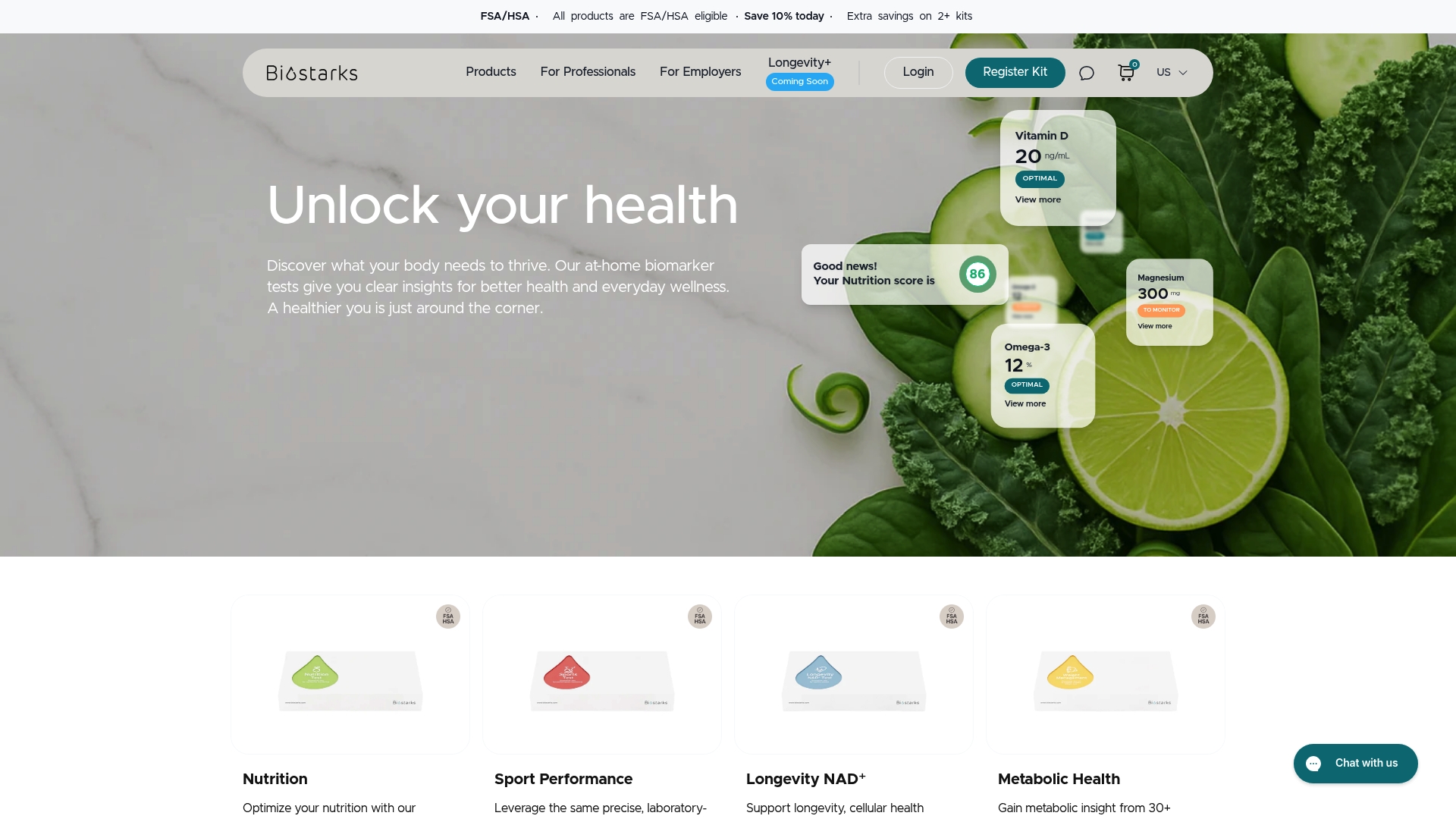
Biostarks makes personalized at-home testing accessible and actionable, with panels covering over 100 biomarkers analyzed using advanced Swiss mass spectrometry. The reports go beyond raw numbers to give you context, optimal ranges, and clear next steps. If you want to understand what at-home testing actually involves before you start, the platform has detailed guides to walk you through the process. Your data is waiting. Start with a baseline and let the numbers lead.
Frequently asked questions
How often should I retest my biomarkers for optimal results?
Retesting every 3 to 6 months is the recommended best practice, giving enough time for interventions to produce measurable biological changes before you assess their impact.
Do I need to use advanced biohacks for wellness optimization?
Most people see their largest gains from optimizing sleep, diet, and exercise first. Basics outperform gadgets consistently, and advanced interventions add only marginal improvements on top of a solid foundation.
Can genetics alone determine my personalized health strategy?
Genetics reveal where you are vulnerable, not what your health will look like. Genetics are a vulnerability map, and tracking your actual biomarker responses to interventions is what drives true personalization.
What are the risks of over-optimizing my wellness routine?
Over-optimization creates unnecessary stress, makes it impossible to isolate what is working, and often distracts from the basics that matter most for measurable health outcomes.
How does the gut microbiome impact my wellness strategy?
Gut microbiome modulation through dietary changes shows some of the strongest emerging evidence for shifting metabolic and inflammatory biomarkers in a personalized, measurable way.


