

Everyone chasing optimal performance knows managing metabolic health is more complex than it seems. As research confirms, metabolic markers signal intricate interactions among genetics, environment, and lifestyle, offering far more than basic checkups ever could. Understanding these sophisticated indicators empowers you to personalize your wellness strategies and harness advanced at-home biomarker testing for truly dynamic insight. Boldly challenge common myths and gain clarity by recognizing that metabolic health is a layered system, not a simple checklist.
Table of Contents
- Metabolic Markers Defined and Common Myths
- Categories of Metabolic Markers Explained
- How Metabolic Marker Testing Works
- Interpretation and Applications of Results
- Risks, Limitations, and Avoidable Mistakes
Key Takeaways
| Point | Details |
|---|---|
| Metabolic Markers Are Complex | Metabolic markers reflect intricate interactions within the body, affected by a range of factors including genetics and lifestyle. |
| Comprehensive Testing Is Valuable | Utilizing advanced metabolic marker testing can provide personalized insights that surpass traditional health assessments. |
| Dynamic Nature of Markers | Metabolic markers change in response to various influences such as diet and exercise, necessitating thorough analysis for accurate interpretation. |
| Professional Interpretation Is Essential | Engaging healthcare professionals for multivariate analysis of metabolic markers enhances the understanding of individual health status and risks. |
Metabolic Markers Defined and Common Myths
Metabolic markers represent critical biochemical signals revealing complex internal health dynamics. These intricate indicators help medical professionals and health-conscious individuals understand how different bodily systems interact, potentially predicting disease risks and metabolic performance.
At its core, metabolic markers encompass a range of biological measurements that provide insights into how effectively the body processes nutrients, regulates energy, and maintains physiological balance. Complex metabolic syndrome interactions reveal that these markers are not simple cause-and-effect indicators, but sophisticated signals of systemic health.
Common metabolic markers include:
- Glucose levels
- Lipid profiles
- Inflammatory indicators like C-reactive protein
- Hormone concentrations (insulin, leptin, adiponectin)
- Blood pressure measurements
Many people mistakenly believe metabolic health is straightforward, but research demonstrates significant complexity. Metabolic syndrome biomarkers represent intricate networks influenced by genetic, environmental, and lifestyle factors, making oversimplified interpretations dangerous.
Contrary to popular myths, metabolic markers are not static measurements but dynamic indicators that change based on diet, exercise, stress, and genetic predispositions. Understanding their interconnected nature requires sophisticated analysis and personalized interpretation.
Pro tip: Consider comprehensive metabolic marker testing to gain nuanced insights beyond traditional health screenings, enabling more precise personalized health strategies.
Here’s a quick comparison of traditional health assessments and comprehensive metabolic marker testing:
| Aspect | Traditional Assessments | Metabolic Marker Testing |
|---|---|---|
| Scope | Basic health status | Detailed metabolic function |
| Personalization | Low | High, individualized insights |
| Disease Prediction | Limited | Advanced risk evaluation |
| Diagnostic Depth | Single parameter focus | Multi-marker, systemic focus |
Categories of Metabolic Markers Explained
Metabolic markers represent complex biological indicators that provide critical insights into an individual’s overall health status. Metabolic syndrome indicators are not singular measurements but interconnected signals revealing intricate physiological processes.
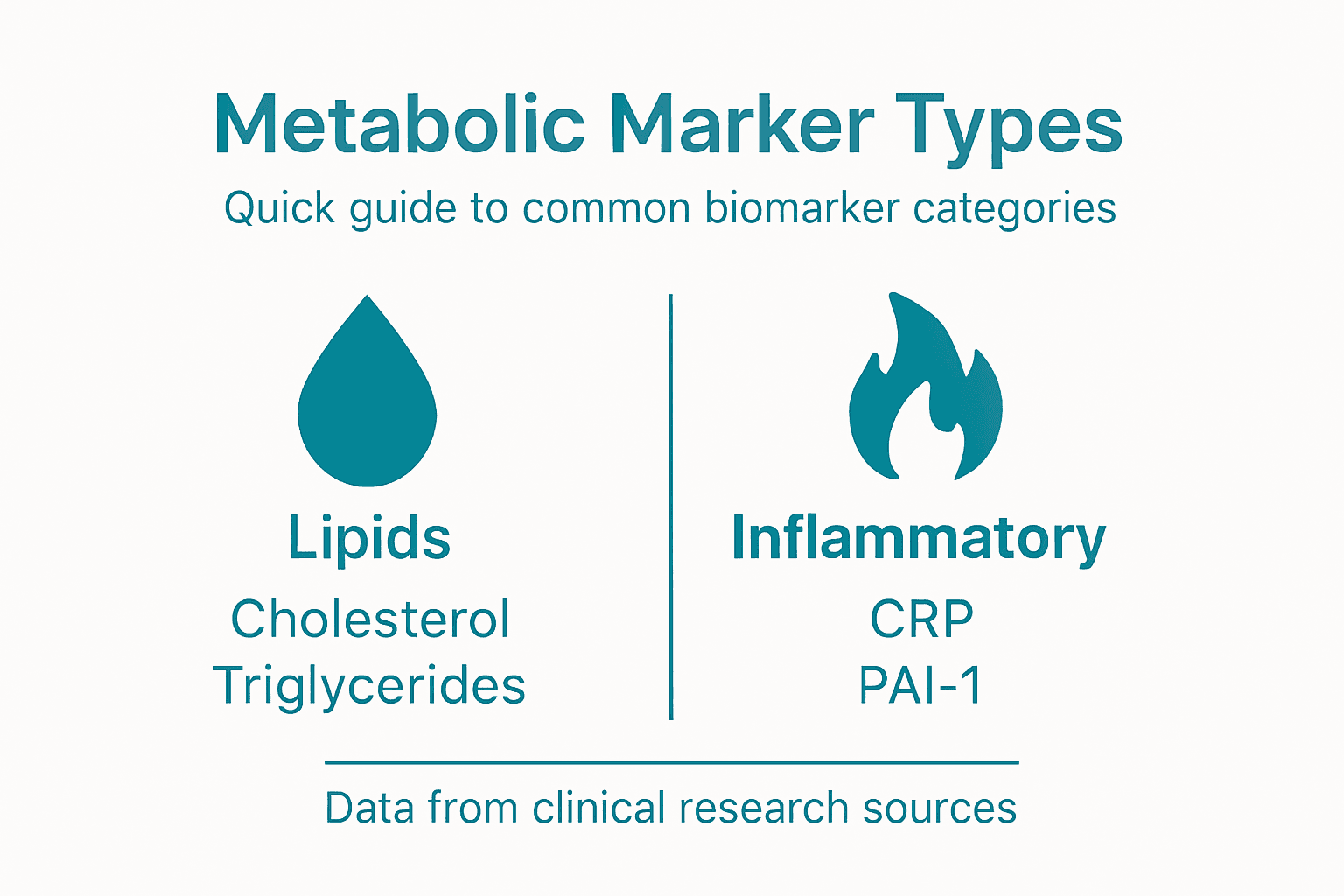
These markers are typically categorized into several key groups that collectively paint a comprehensive picture of metabolic health:
-
Lipid Profile Markers
- Triglyceride levels
- HDL cholesterol
- LDL cholesterol
- Total cholesterol ratio
-
Glucose Homeostasis Markers
- Fasting glucose levels
- Insulin concentration
- Hemoglobin A1c (HbA1c)
-
Inflammatory Indicators
- High-sensitivity C-reactive protein
- Cytokine levels
- Oxidative stress markers
-
Hormonal Markers
- Leptin levels
- Adiponectin concentration
- Insulin resistance indicators
Modern medical research emphasizes that metabolic biomarker integration provides more accurate diagnostic capabilities than isolated measurements. This approach recognizes metabolic health as a multifaceted, dynamic system influenced by genetic, environmental, and lifestyle factors.
Advanced metabolic marker panels now include novel indicators like plasminogen activator inhibitor-1 (PAI-1) and activin-A, expanding our understanding beyond traditional diagnostic boundaries. These sophisticated markers help healthcare professionals develop more precise, personalized health strategies.
Pro tip: Request comprehensive metabolic marker testing that evaluates multiple indicator categories to gain a holistic understanding of your metabolic health.
To help clarify the types of metabolic markers, here’s a reference table summarizing their roles:
| Marker Category | Typical Markers | Main Health Focus |
|---|---|---|
| Lipid Profile | Triglycerides, cholesterol | Cardiovascular health |
| Glucose Homeostasis | Fasting glucose, HbA1c | Diabetes risk assessment |
| Inflammatory | C-reactive protein, cytokines | Chronic inflammation detection |
| Hormonal | Insulin, leptin, adiponectin | Energy balance, obesity |
How Metabolic Marker Testing Works
Metabolomics testing provides a sophisticated approach to understanding an individual’s internal health landscape by analyzing complex biological signals. This advanced diagnostic method goes far beyond traditional blood tests, offering a comprehensive view of metabolic processes and potential health risks.
The metabolic marker testing process typically involves several key stages:
-
Sample Collection
- Blood draw
- Urine sample
- Saliva collection
- Optional tissue or hair samples
-
Sample Preparation
- Precise handling to preserve metabolite integrity
- Rapid processing to minimize molecular degradation
- Specialized storage conditions
-
Advanced Analytical Techniques
- Mass spectrometry
- Nuclear magnetic resonance spectroscopy
- High-performance liquid chromatography
- Gas chromatography
Medical researchers use metabolomics biomarker screening as a systematic approach that involves three critical phases: discovery, modeling, and validation. This methodical process ensures the accuracy and clinical relevance of metabolic marker identification and interpretation.
The screening process identifies metabolic signatures influenced by genetics, lifestyle, environmental factors, and individual biochemical variations. By analyzing small molecular compounds, healthcare professionals can develop personalized insights into an individual’s metabolic health, potential disease risks, and optimization strategies.

Pro tip: Choose metabolic marker testing that utilizes multiple analytical techniques to ensure comprehensive and precise health insights.
Interpretation and Applications of Results
Metabolic marker results interpretation represents a sophisticated approach to understanding an individual’s complex health landscape. Unlike traditional diagnostic methods, this advanced analysis provides nuanced insights into metabolic functioning, disease risk, and potential optimization strategies.
Key areas of metabolic marker result applications include:
-
Disease Risk Assessment
- Cardiovascular disease prediction
- Type 2 diabetes risk evaluation
- Metabolic syndrome identification
- Early inflammatory condition detection
-
Personalized Health Strategies
- Targeted lifestyle interventions
- Nutritional recommendation customization
- Exercise prescription optimization
- Supplement selection guidance
-
Monitoring Health Progression
- Treatment effectiveness tracking
- Metabolic health trend analysis
- Intervention impact measurement
- Long-term wellness planning
Multivariate clinical interpretation offers a more comprehensive understanding by examining correlations among multiple metabolic markers, rather than analyzing individual indicators in isolation. This network-based approach provides deeper, more personalized health assessments that enable more precise clinical decision-making.
Professional metabolic marker interpretation requires advanced analytical techniques that consider the intricate interactions between different metabolic pathways, genetic predispositions, and environmental influences. By examining these complex relationships, healthcare professionals can develop targeted, individualized strategies for preventing and managing metabolic disorders.
Pro tip: Work with healthcare professionals who utilize comprehensive, multivariate analysis when interpreting your metabolic marker results to ensure the most accurate and personalized health insights.
Risks, Limitations, and Avoidable Mistakes
Metabolic marker testing, while powerful, is not infallible. Metabolomics challenges demand careful navigation to ensure accurate and meaningful health insights.
Common risks and limitations include:
-
Technical Challenges
- High-dimensional data complexity
- Methodological variability
- Potential measurement inconsistencies
- Equipment calibration requirements
-
Interpretation Pitfalls
- Over-interpretation of results
- Neglecting individual genetic variations
- Misunderstanding correlation vs. causation
- Ignoring contextual health factors
-
Sampling and Analytical Errors
- Improper sample handling
- Insufficient quality control
- Statistical analysis misapplication
- Inadequate data normalization
Precision in metabolic marker testing requires rigorous scientific protocols. Practitioners must implement comprehensive quality control measures, standardize procedures, and maintain meticulous attention to analytical details to minimize potential errors and ensure reliable results.
Individuals should approach metabolic marker testing with realistic expectations, understanding that these tests provide valuable insights but are not definitive diagnostic tools. Consulting healthcare professionals who can contextualize results within a broader health assessment is crucial for meaningful interpretation.
Pro tip: Always request detailed methodology information and quality control standards when undergoing metabolic marker testing to ensure the highest possible data reliability.
Unlock Precision in Your Metabolic Health Journey Today
Understanding the intricate network of metabolic markers can feel overwhelming due to their dynamic and interconnected nature. If you are determined to move beyond oversimplified health assessments and gain personalized, detailed insights into your metabolic function, Biostarks offers a powerful solution. With expertise in advanced Swiss mass spectrometry, Biostarks tests key biomarkers like glucose, lipids, hormones, and inflammatory indicators to help you precisely track and optimize your metabolic health.

Take control of your well-being by choosing a testing service designed for those who want clarity, accuracy, and actionable data on their internal health status. Discover how this sophisticated approach to metabolic marker analysis empowers health-conscious individuals to prevent disease and enhance longevity. Start your transformation now by exploring the Biostarks | Collection, or learn more about our at-home testing process at Biostarks. For additional options tailored to different needs, visit our public collections and take the first step toward a healthier future.
Frequently Asked Questions
What are metabolic markers?
Metabolic markers are biochemical signals that provide insights into the body’s metabolic processes, such as nutrient processing, energy regulation, and overall physiological balance.
How does metabolic marker testing work?
Metabolic marker testing involves sample collection (blood, urine, saliva), sample preparation, and advanced analytical techniques like mass spectrometry and chromatography to analyze complex biological signals.
What types of metabolic markers are commonly tested?
Common metabolic markers include lipid profile markers, glucose homeostasis markers, inflammatory indicators, and hormonal markers, each providing insights into different aspects of health.
How can I interpret the results of my metabolic marker testing?
Interpreting metabolic marker results requires a comprehensive analysis considering correlations among multiple markers. It’s best to work with healthcare professionals who specialize in metabolic health for accurate guidance.


