

TL;DR:
- Blood biomarker profiling analyzes proteins, metabolites, and genes to assess health risks and guide personalized wellness. AI-powered multi-omics techniques enable early disease detection and tailored treatments, with at-home microsampling increasing accessibility and accuracy. Despite its benefits, limited awareness and misconceptions hinder wider adoption of this powerful proactive health tool.
Blood biomarker profiling is the systematic analysis of specific biological molecules in a blood sample to assess health status, detect disease risk, and guide personalized wellness decisions. The process measures proteins, metabolites, genes, and hormones that reflect how your body is functioning at a molecular level. Unlike a standard annual checkup, blood biomarker profiling captures a high-resolution snapshot of your internal biology. With the integration of AI and multi-omics technologies in 2026, this form of blood marker analysis has moved from hospital labs into everyday health management, offering predictive power that was unimaginable a decade ago.
What are blood biomarkers and how are they tested?
Blood biomarkers are measurable biological molecules whose concentrations in the blood signal normal or abnormal physiological processes. The three primary categories are proteins (including enzymes and hormones), metabolites (small molecules produced during metabolism), and genetic markers (DNA or RNA fragments). Each category tells a different story. Proteins like C-reactive protein indicate inflammation. Metabolites like glucose or triglycerides reflect metabolic function. Genetic markers reveal inherited disease susceptibility.

The most common collection method is venipuncture, where a trained professional draws blood from a vein in your arm. Blood collection takes under five minutes and requires minimal preparation for most standard panels. Once collected, the sample moves to a laboratory where it undergoes analysis using one of several methods.
Standard lab tests include complete blood count (CBC), comprehensive metabolic panels, and lipid panels. These cover broad health categories but lack the resolution to detect subtle molecular shifts. Newer high-throughput technologies like liquid chromatography-mass spectrometry (LC-MS) analyze hundreds of biomarkers simultaneously with far greater precision. Biostarks, an AMR Labs SA company, uses advanced Swiss mass spectrometry to measure vitamins, hormones, amino acids, lipids, and metabolic markers in a single sample.
Microsampling is a newer collection approach that allows you to collect a small blood volume at home using a fingertip lancet device. Microsampling enables remote collection with minimally invasive devices, improving data quality and making frequent profiling practical for anyone. This matters because biomarker levels fluctuate with stress, sleep, and diet, so repeated sampling over time produces more reliable health data than a single clinic visit.
Key biomarker categories tested in a standard profiling panel include:
- Metabolic markers: glucose, insulin, HbA1c, triglycerides
- Inflammatory markers: C-reactive protein (CRP), interleukins, fibrinogen
- Hormonal markers: cortisol, testosterone, estradiol, thyroid hormones (TSH, T3, T4)
- Nutritional markers: vitamin D, B12, ferritin, magnesium, zinc
- Cardiovascular markers: LDL, HDL, apolipoprotein B, homocysteine
- Organ function markers: creatinine, ALT, AST, bilirubin
Pro Tip: Before your blood draw, avoid intense exercise for 24 hours and fast for 8 to 12 hours if your panel includes glucose or lipid markers. These steps reduce noise in your results and improve the accuracy of your blood marker analysis.
How does blood biomarker profiling inform personalized health and disease risk?
The most significant shift in modern medicine is the move from reactive treatment to predictive prevention, and blood biomarker profiling is the mechanism driving that shift. By analyzing molecular patterns before symptoms appear, profiling identifies disease trajectories years in advance. This is not theoretical. AI-driven blood profiling analyzing 2,920 proteins and 168 metabolites can identify six major cardiovascular disease risks up to 15 years before symptoms emerge. That 15-year window represents the difference between prevention and emergency intervention.
For type 2 diabetes, the evidence is equally compelling. Integrating proteomic and metabolomic biomarkers into diabetes risk models improved the C-index from 0.862 to 0.884 and produced a net reclassification improvement of 42% over clinical scores alone. In practical terms, this means a profiling-based model correctly reclassifies nearly half of patients who would have been misclassified by conventional risk tools.
Precision medicine takes this further by tailoring treatment to your molecular profile rather than population averages. The four core applications of profiling in personalized health are:
- Early disease detection: Identifying elevated biomarkers like p-tau181 and GFAP before cognitive decline becomes clinically apparent, as combined biomarker analysis shows high negative predictive value for ruling out impending dementia over a 10-year horizon.
- Treatment selection: Matching cancer therapies to tumor-specific biomarkers to select effective therapies on the first attempt rather than cycling through options.
- Metabolic optimization: Tracking hormones, amino acids, and micronutrients to fine-tune nutrition, exercise, and recovery protocols for peak performance.
- Longitudinal monitoring: Comparing biomarker trends over months or years to detect drift toward disease states before they become irreversible.
“Biomarker profiling allows treatment plans tailored to an individual’s molecular profile, which is essential in cancer care for better efficacy and lower toxicity.” — MD Anderson Cancer Center
The role of biomarkers in disease prevention extends beyond any single condition. When you understand your molecular baseline, every health decision, from diet changes to supplement protocols, becomes testable and measurable.
What are the different types of blood biomarker tests?
Blood biomarker tests fall into three functional categories, each serving a distinct clinical purpose. Understanding the difference helps you choose the right panel for your goals.
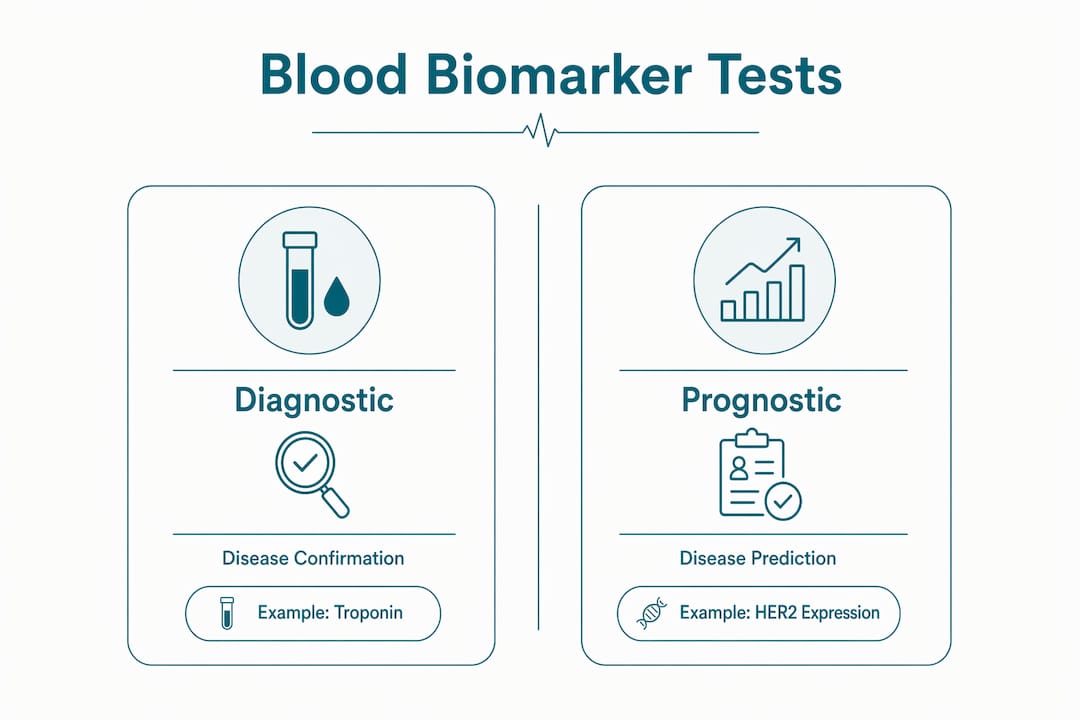
Diagnostic biomarkers confirm or rule out a disease at the time of testing. Troponin, for example, diagnoses acute myocardial infarction within hours of a cardiac event. HbA1c diagnoses type 2 diabetes by reflecting average blood glucose over three months.
Prognostic biomarkers predict the likely course of a disease in a patient already diagnosed. In oncology, HER2 expression in breast cancer tissue predicts how aggressively the tumor will grow. In cardiovascular disease, elevated NT-proBNP predicts heart failure progression.
Predictive biomarkers forecast how a patient will respond to a specific treatment. PD-L1 expression predicts response to immune checkpoint inhibitors in lung cancer. BRCA1/2 mutations predict sensitivity to PARP inhibitor therapy.
| Biomarker type | Primary purpose | Clinical example |
|---|---|---|
| Diagnostic | Confirm or exclude disease | Troponin for heart attack, HbA1c for diabetes |
| Prognostic | Predict disease progression | NT-proBNP for heart failure severity |
| Predictive | Forecast treatment response | PD-L1 for immunotherapy eligibility |
| Monitoring | Track treatment efficacy over time | PSA levels post-prostate cancer treatment |
Blood-based tumor markers detect specific proteins or genetic mutations essential for cancer diagnosis and targeted treatment, making them one of the most clinically validated applications of biomarker testing. Beyond oncology, emerging applications include neurological disease detection using blood-based Alzheimer’s markers like NfL and GFAP, and metabolic disorder profiling using amino acid and organic acid panels.
AI and foundation models now integrate genomics, proteomics, and imaging data to uncover disease signatures that no single-modality test can detect. This multi-omics approach is expanding the catalog of validated biomarkers faster than at any previous point in medical history. For individuals focused on longevity and metabolic health, the types of biomarkers available for personal health monitoring have never been more comprehensive.
What are the benefits and limitations of blood biomarker profiling?
Blood biomarker profiling delivers measurable advantages over conventional health screening, but it also carries real limitations that every informed user should understand.
Core benefits:
- Minimally invasive: A single blood draw or fingertip microsample provides data across dozens of biological systems without imaging, biopsies, or procedures.
- Early detection window: AI-integrated profiling detects cardiovascular and metabolic risk years before symptoms, enabling intervention at the most reversible stage.
- Personalized baselines: Your results are compared to your own historical data over time, not just population averages, making trends more meaningful than any single reading.
- Broad scope: One panel can simultaneously assess hormonal balance, nutritional status, inflammation, organ function, and metabolic health.
- At-home accessibility: Microsampling devices allow collection outside clinical settings, removing barriers of cost, geography, and scheduling.
Limitations to understand:
- Reference range variability: Biomarker ranges vary by lab, age, and sex, meaning a result flagged as abnormal at one laboratory may fall within normal limits at another. Context and trend analysis matter more than any single out-of-range value.
- Positive predictive value nuances: A positive result on a screening biomarker does not confirm disease. Sensitivity and specificity differ across markers, and false positives require follow-up testing to resolve.
- Cost and access: Comprehensive multi-omics panels remain expensive and are not universally covered by insurance, limiting access for some populations.
- Interpretation complexity: Raw biomarker data without clinical context or expert interpretation can lead to unnecessary anxiety or incorrect self-diagnosis.
Pro Tip: When reviewing your results, focus on patterns across multiple biomarkers rather than reacting to a single out-of-range value. A cluster of elevated inflammatory markers alongside low vitamin D and high cortisol tells a more complete story than any one number in isolation. Platforms like Biostarks provide personalized health insights that contextualize your data within your full profile.
The at-home microsampling model addresses several of these limitations directly. Collecting blood at home, away from the stress of a clinical environment, produces a more accurate biochemical state. Repeated sampling over weeks or months builds a longitudinal picture that single-visit testing cannot replicate.
Key takeaways
Blood biomarker profiling is the most direct method available for translating your internal biology into personalized, preventive health decisions.
| Point | Details |
|---|---|
| Core definition | Blood biomarker profiling analyzes proteins, metabolites, and genes to assess health and predict disease risk. |
| AI-driven prediction | Multi-omics AI models can identify cardiovascular disease risk up to 15 years before symptoms appear. |
| Testing methods | LC-MS and microsampling deliver higher resolution and greater convenience than standard lab panels. |
| Reference range context | Biomarker results vary by lab and demographics; trends over time matter more than single readings. |
| Personalized medicine | Profiling enables treatment and lifestyle decisions tailored to your individual molecular profile. |
Why biomarker profiling is the most underused health tool available
I have spent years reviewing health data from individuals who eat well, exercise consistently, and still develop metabolic dysfunction or cardiovascular disease in their 40s and 50s. The common thread is not lifestyle failure. It is the absence of molecular feedback. These people were flying blind because their annual checkup measured six markers and called it comprehensive.
What strikes me most about the current state of blood biomarker profiling is not the technology itself. The AI models, the mass spectrometry platforms, the multi-omics integration: all of that is genuinely impressive. What strikes me is how few people use it. Most health-conscious individuals spend more time optimizing their sleep tracking app than understanding what is happening inside their own cells.
The shift from trial-and-error medicine to precision medicine does not happen automatically. It requires individuals to demand more from their health data. A standard lipid panel tells you your total cholesterol. A full cardiovascular biomarker profile tells you your apolipoprotein B, Lp(a), homocysteine, and inflammatory markers, which together paint a far more accurate picture of your actual risk. The difference between those two panels could be the difference between catching a problem at 42 or managing a crisis at 55.
My view is that the biggest barrier is not cost or access. It is the belief that more data creates more anxiety. In practice, the opposite is true. When you understand your molecular baseline, you stop guessing. You stop following generic supplement advice and start responding to what your own biology is telling you. That is not anxiety. That is clarity.
The data-driven approach to personalized wellness is not a trend for biohackers. It is the logical next step for anyone who takes their long-term health seriously.
— Romain
Take control of your health with Biostarks
Biostarks, an AMR Labs SA company, offers precision blood biomarker profiling from the convenience of your home. Using advanced Swiss mass spectrometry, Biostarks analyzes vitamins, hormones, amino acids, lipids, minerals, and metabolic markers to deliver a detailed picture of your internal health status.

The process is straightforward: order your kit, collect your sample at home using a simple fingertip device, and receive a comprehensive report with clear, contextualized results. No clinic visit required. No ambiguous numbers without explanation. If you are ready to move from guesswork to data-driven health decisions, explore Biostarks’ profiling services and discover what your blood is telling you.
FAQ
What is blood biomarker profiling?
Blood biomarker profiling is the analysis of specific biological molecules in a blood sample, including proteins, metabolites, and genetic markers, to assess health status and predict disease risk. It provides a molecular-level view of how your body is functioning across multiple biological systems simultaneously.
What are the most common blood biomarkers tested?
Common biomarkers include glucose, HbA1c, CRP, lipid panels (LDL, HDL, triglycerides), thyroid hormones, vitamin D, ferritin, and cortisol. Advanced panels also measure amino acids, apolipoprotein B, and inflammatory cytokines for a more complete picture.
How accurate is blood biomarker profiling for disease prediction?
Accuracy depends on the biomarkers tested and the technology used. AI-driven multi-omics profiling analyzing thousands of proteins and metabolites can predict cardiovascular risk up to 15 years in advance, while integrating proteomics into diabetes models improves prediction accuracy by 42% over standard clinical scores.
Can I do blood biomarker profiling at home?
Yes. Microsampling devices allow you to collect a small blood volume from your fingertip at home. Platforms like Biostarks use this approach to make at-home biomarker testing accessible without sacrificing the analytical precision of laboratory-grade mass spectrometry.
How often should I test my blood biomarkers?
Testing frequency depends on your health goals. For general wellness monitoring, quarterly testing captures seasonal and lifestyle-driven changes. For active health optimization or managing a specific condition, monthly profiling provides the trend data needed to assess whether interventions are working.
This content is for educational purposes only and does not constitute medical advice. Always consult with a healthcare professional before making changes to your health regimen.


