

TL;DR:
- Proactive health monitoring uses wearables, at-home tests, and AI to detect issues early.
- It improves outcomes, reduces hospitalizations, and enhances personalized health optimization.
- It complements but does not replace reactive medical care for emergencies and complex diagnoses.
Waiting for symptoms to force your hand is an outdated strategy for anyone serious about long-term performance and longevity. Most people interact with healthcare only when something breaks down, turning what should be a continuous feedback loop into a series of crisis responses. Proactive health monitoring flips this model entirely, using wearables, at-home biomarker tests, and AI-powered analytics to surface insights before problems become emergencies. This guide walks through the evidence, the practical tools, and the real-world impact of shifting from reactive to proactive, so you can make decisions based on data rather than symptoms.
Table of Contents
- What is proactive health monitoring?
- Key benefits of proactive health monitoring
- Personalizing wellness: How biomarkers and at-home tests make a difference
- Beyond the hype: Nuances, limitations, and combining proactive with reactive medicine
- Our perspective: What most guides miss about proactive health monitoring
- Ready to take charge? Start your proactive health journey
- Frequently asked questions
Key Takeaways
| Point | Details |
|---|---|
| Reduced emergency incidents | Early intervention and monitoring greatly decrease hospitalizations and emergency visits. |
| Personalized wellness | At-home biomarker testing delivers actionable insights tailored to your unique needs. |
| Blending proactive and reactive | The best results come from combining early detection with professional medical support. |
| Data-driven optimization | Wearables and real-time tests empower continuous improvement and biohacker experimentation. |
What is proactive health monitoring?
Proactive health monitoring means tracking your body’s key signals continuously or regularly, without waiting for something to go wrong. Rather than scheduling a doctor’s visit after chest pain or fatigue sets in, you use technology to monitor trends and catch deviations early. As proactive monitoring shifts from reactive treatment to prevention and early detection via continuous surveillance using wearables, AI, and at-home tests, enabling personalized interventions before symptoms appear.
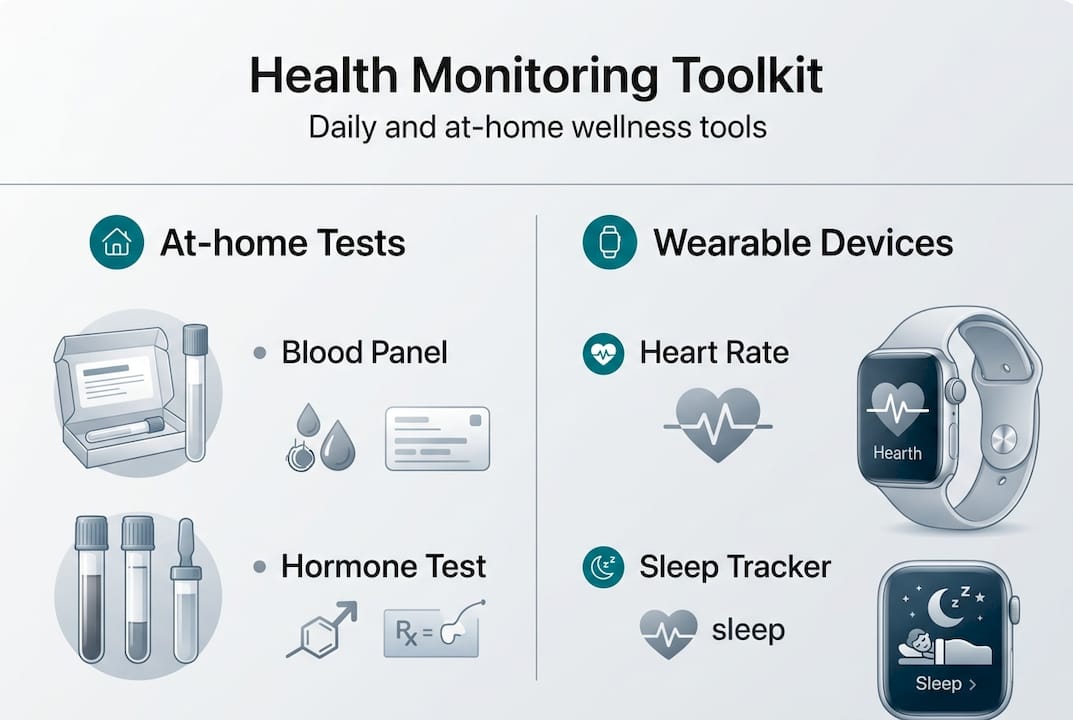
The toolkit is broad. At-home health testing now covers everything from dried blood spot panels to continuous glucose monitors, hormone kits, and gut microbiome analysis. Wearables like smartwatches track heart rate variability, sleep stages, and blood oxygen. AI platforms then synthesize this data into trends you can actually act on.
Understanding personalized care approaches matters here because no two people’s baselines are identical. What looks “normal” on a population-level chart may be suboptimal for you specifically.
Here is a clear contrast between the two approaches:
| Feature | Proactive monitoring | Reactive care |
|---|---|---|
| Timing | Continuous or scheduled | After symptoms appear |
| Goal | Prevention and optimization | Treatment and recovery |
| Tools | Wearables, biomarker tests, AI | Clinic visits, diagnostics |
| Cost over time | Lower (early intervention) | Higher (acute treatment) |
| Personalization | High (data-driven) | Moderate (general protocols) |
| User agency | High | Low |
The core technologies enabling this shift include:
- Wearable biosensors that track cardiovascular, sleep, and activity data in real time
- At-home blood and biomarker panels analyzing vitamins, hormones, lipids, amino acids, and metabolic markers
- Continuous glucose monitors (CGMs) showing real-time metabolic responses to food and stress
- AI analytics platforms that identify patterns across data streams
- Telehealth integration that connects data directly with clinical oversight when needed
Each of these tools adds a layer of visibility. Together, they create a picture of your health that a yearly check-up simply cannot match.
Key benefits of proactive health monitoring
The case for proactive monitoring is not theoretical. Real-world data shows measurable improvements in outcomes across clinical and consumer settings. A study on rapid response systems found that proactive monitoring reduced unplanned ICU transfers from 3.16 to 1.91 per 1,000 patient days, a statistically significant result (p=0.028). That translates directly to fewer emergencies, less trauma, and lower costs.
At scale, an NHS pilot study with wearables across 42,000 participants achieved a 31% reduction in emergency heart failure admissions through proactive interventions. These are not cherry-picked lab numbers. These are real patients, in a real healthcare system, experiencing fewer crises because data caught warning signs early.
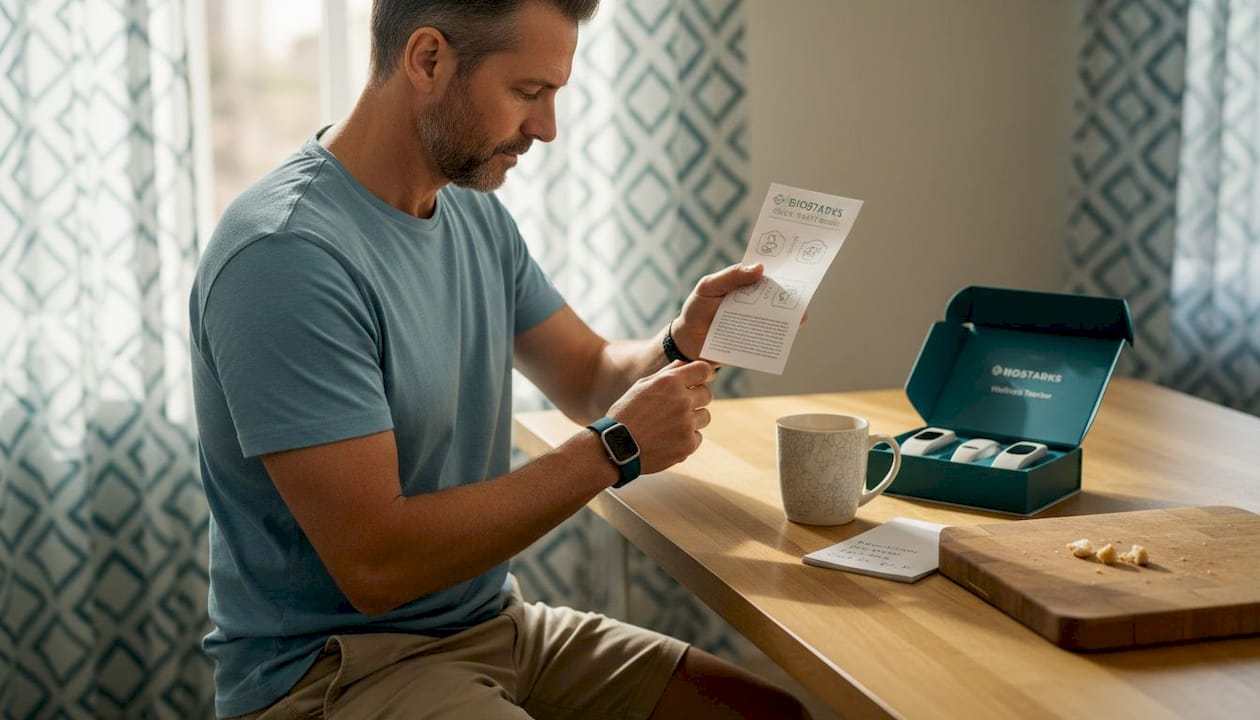
For chronic disease management specifically, the benefits of proactive approaches include reduced costs, improved outcomes, and earlier detection for conditions like diabetes and heart disease, where catching metabolic drift early determines everything.
Here is a snapshot of the measurable impact across key categories:
| Benefit area | Measured impact |
|---|---|
| ICU transfers | Reduced from 3.16 to 1.91/1000 patient days |
| Emergency admissions | 31% reduction (heart failure, NHS pilot) |
| Chronic disease cost | Significantly lower with early intervention |
| Metabolic health | Improved via continuous feedback loops |
| Patient outcomes | Better adherence, faster recovery |
For biohackers and performance-focused individuals, the top benefits stack up as follows:
- Early detection of nutrient deficiencies, hormonal imbalances, and metabolic dysfunction before they affect performance
- Personalized optimization using real biomarker data rather than general recommendations
- Cost reduction over time by preventing expensive acute interventions
- Behavioral motivation from seeing real-time data that responds to your choices
- Faster iteration on diet, sleep, training, and supplementation protocols
Exploring biomarker testing benefits reveals just how much you can learn from a single well-designed panel, particularly when you run it regularly and compare trends over time. When you layer that with tracking metabolic health through markers like fasting glucose, insulin sensitivity, and lipid fractions, the picture becomes genuinely actionable.
Pro Tip: Frequency matters more than perfection. Running a focused panel every 90 days and tracking changes over time gives you more useful signal than a single exhaustive test done once a year. Your biomarkers shift with seasons, training loads, and life stress, so treat monitoring as a rhythm, not a one-time event.
Personalizing wellness: How biomarkers and at-home tests make a difference
The general case for proactive monitoring is compelling enough. But for those aiming to truly optimize health and performance, the personalization made possible by biomarker data is where things get genuinely powerful. Biomarkers are measurable biological indicators, think cortisol levels, ferritin, testosterone, omega-3 index, or HbA1c, that reveal how your body is actually functioning beneath the surface. Generic advice cannot account for your unique physiology. Your data can.
For biohackers and health-conscious individuals, at-home tests like CGMs and advanced blood panels empower data-driven personalization, optimizing metabolism and longevity via real-time feedback. This is not about running every test available. It is about choosing the markers most relevant to your goals and tracking them systematically.
Some of the most impactful biomarker categories include:
- Metabolic markers: Fasting glucose, insulin, HbA1c, and triglycerides show how well your body processes energy
- Hormonal markers: Cortisol, DHEA, testosterone, estrogen, and thyroid hormones reveal stress response and reproductive health
- Nutrient status: Vitamin D, B12, magnesium, ferritin, and zinc are commonly deficient even in health-focused individuals
- Cardiovascular markers: ApoB, Lp(a), LDL particle size, and CRP provide a sharper cardiovascular risk picture than total cholesterol alone
- Performance markers: Creatine kinase, lactate, amino acid profiles, and VO2 proxies matter deeply for athletes
Real-world scenarios show how this plays out. Someone experiencing persistent afternoon energy crashes might test cortisol patterns, discover a blunted diurnal rhythm, and adjust their training timing and carbohydrate intake accordingly. An athlete plateauing despite consistent training might find low ferritin limiting oxygen transport, a fix as straightforward as targeted supplementation. A founder feeling cognitively flat might discover suboptimal omega-3 index and vitamin D, both addressable within weeks.
Understanding your biomarker insights helps you move past guessing and into deliberate action. And for athletes or biohackers specifically, biomarker testing provides competitive edge data that general wellness advice simply cannot replicate.
Pro Tip: When reviewing results, look at your personal trajectory first and population ranges second. A vitamin D level of 32 ng/mL falls “within range” but may still be well below your personal optimum, especially in winter months or with limited sun exposure. Trend your own data across time to identify your high-performance baseline.
Beyond the hype: Nuances, limitations, and combining proactive with reactive medicine
No approach is perfect, and proactive monitoring comes with genuine limitations worth addressing honestly. Understanding where these tools fit within the broader medical picture is essential for using them wisely rather than recklessly.
Direct-to-consumer (DTC) tests vary significantly in quality. Research published in Nature Communications highlights variable accuracy in DTC testing, including microbiome reproducibility issues and point-of-care test biases in lipid measurements, underscoring the need for validation and appropriate clinical oversight. Not every consumer-grade result should be treated as clinical truth.
Common pitfalls to avoid include:
- Overinterpreting single data points without context or trend data
- Ignoring pre-analytical variables like hydration, timing, and sample handling that affect results
- Self-diagnosing based on out-of-range values without professional guidance
- Analysis paralysis from tracking too many markers simultaneously without a clear framework
- Neglecting acute symptoms in favor of “optimizing” metrics, which can delay necessary care
The reactive model has a critical role that proactive monitoring does not replace. Acute injury, infection, surgical emergencies, and complex diagnoses still require clinical evaluation, imaging, and skilled medical judgment. The insight from comparative medicine research is clear: while proactive approaches are superior long-term, reactive care remains essential for emergencies, even if it is costlier when relied on exclusively.
“Proactive monitoring builds stronger trust and more positive health attitudes (mean scores 5.67 vs 4.28 for passive approaches), with particular strength in privacy-focused care contexts. It works best as a complement to reactive medicine for acute needs, not as a standalone system.” PMC research, 2025
This framing matters. Proactive and reactive are not competing philosophies. They are different tools for different situations. For chronic optimization, prevention, and performance, proactive wins. For acute trauma, sudden illness, or complex pathology, reactive medicine is irreplaceable.
Using biomarkers for disease prevention works best when paired with good clinical judgment, either your own informed by solid data, or your physician’s informed by the same. Biomarker analysis best practices include validating consumer tests against clinical references when possible and working with professionals who understand functional ranges, not just pathological cutoffs.
Technology in holistic care plays a supporting role, amplifying human judgment rather than replacing it. The smartest biohackers understand this distinction clearly.
Our perspective: What most guides miss about proactive health monitoring
Most articles on proactive health monitoring focus on the tools and the statistics. That’s useful, but it misses the deeper behavioral reality that determines whether any monitoring practice actually works.
The biggest gap we see is the assumption that data alone drives change. It doesn’t. People who get the most out of continuous monitoring share a specific trait: they stay curious without becoming obsessive. They treat each data point as a question rather than a verdict. Is this result repeatable? Does it correlate with how I feel? What one variable could I change to test this theory?
The real power is not in knowing your hs-CRP level. It is in knowing that your hs-CRP moved from 1.8 to 0.6 in 60 days after you cut processed seed oils and started sleeping seven and a half hours consistently. That is cause and effect at the individual level, which no population study can give you.
Hormonal health tracking is a perfect example. Most people who start tracking cortisol or testosterone discover that their levels tell a story about their lifestyle, not a diagnosis. Cortisol spikes when work stress compounds with poor sleep and missed meals. Testosterone dips when training volume exceeds recovery capacity. These patterns are invisible without data and obvious with it.
The uncomfortable reality is that proactive monitoring demands honesty. If your glucose spikes every time you eat what you believe is a healthy meal, that data is telling you something you may not want to hear. The willingness to update your beliefs based on evidence is ultimately what separates health optimization from health theater.
Pro Tip: Start with one area, one panel, one wearable metric, and sit with it for 90 days before adding more. The depth of insight from tracking one thing well beats the noise of tracking everything poorly.
Ready to take charge? Start your proactive health journey
You’ve seen the evidence, understood the tools, and recognized both the power and the limits of proactive health monitoring. The next step is making it real for your own body.
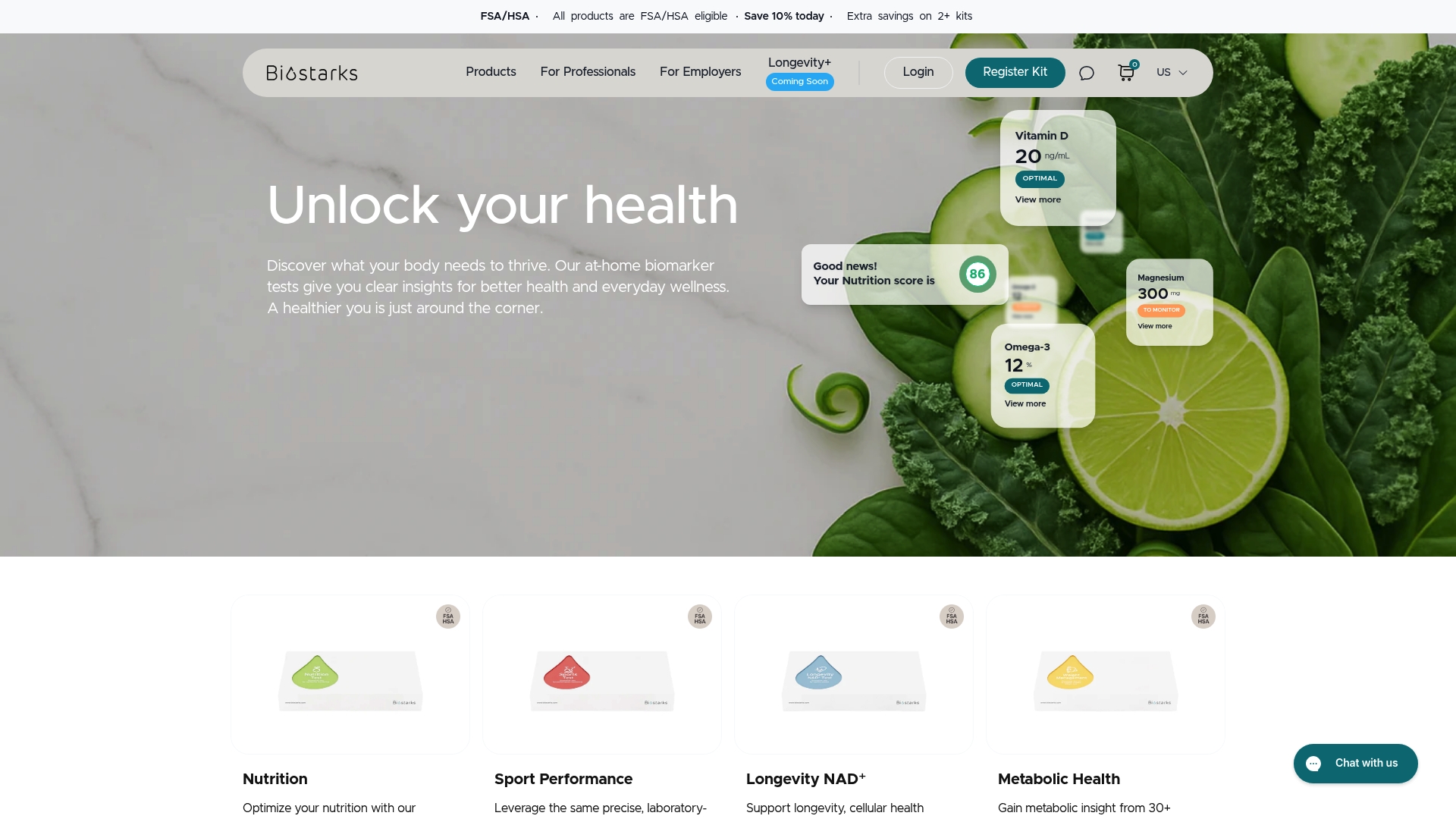
At Biostarks, we make at-home biomarker testing precise, accessible, and genuinely actionable. Our panels analyze vitamins, hormones, amino acids, lipids, minerals, and metabolic markers using advanced Swiss mass spectrometry, the same rigor you’d expect from clinical diagnostics, delivered directly to you. Every report translates complex data into clear, personalized insights so you know exactly what to act on. Whether you’re just starting to track your health or you’re a seasoned biohacker looking for higher-resolution data, Biostarks gives you the tools to stop guessing and start optimizing.
Frequently asked questions
How does proactive health monitoring reduce hospitalizations?
Proactive monitoring enables early intervention before conditions escalate, and a real-world NHS wearable pilot across 42,000 participants showed a 31% reduction in emergency heart failure admissions as a direct result. Catching warning signals early means intervening when options are broader and outcomes are better.
What types of at-home tests are most effective for proactive health?
CGMs, blood panels, and hormone tests consistently deliver the most actionable data for metabolic health, energy, and longevity optimization when paired with proper interpretation frameworks. Continuous glucose monitors are particularly powerful for anyone wanting to understand how food, stress, and sleep affect metabolism in real time.
Are direct-to-consumer health tests accurate?
Accuracy varies considerably across DTC products, with documented issues in microbiome reproducibility and lipid measurement at point of care. Using clinically validated testing platforms and confirming key results with a professional significantly reduces this risk.
Is proactive health monitoring a replacement for seeing a doctor?
Proactive monitoring powerfully complements medical care but does not replace it, since reactive medicine remains essential for acute emergencies, complex diagnoses, and conditions requiring intervention beyond lifestyle optimization. Think of proactive monitoring as the intelligence layer that makes your medical conversations far more productive.


