

TL;DR:
- A comprehensive wellness action plan is a personalized, data-driven roadmap that integrates biomarkers, behavioral patterns, and lifestyle factors. Building it involves phased steps focused on foundation, optimization, and resilience, with regular review and retesting to ensure ongoing progress. Success depends on objective data, strategic sequencing, micro-habits, environment design, and continuous adaptation to sustain long-term health improvements.
A comprehensive wellness action plan is a personalized, structured roadmap that guides you to improve your overall health through physical, mental, and lifestyle strategies grounded in holistic science. Unlike generic health advice, a true personal health improvement plan connects your unique biomarker data, behavioral patterns, and life circumstances into one coherent system. The wellness economy is projected to grow at 7.6% annually through 2029, with structured programs showing up to a 6-to-1 return on investment. That number reflects a shift in how serious people now treat their health. This guide gives you the exact framework to build yours.
What does a comprehensive wellness action plan actually require?
Before you write a single goal, you need a clear picture of where you stand. A holistic health plan built on assumptions fails faster than one built on data. The foundation is a thorough wellness assessment that combines advanced diagnostics, personal health history, and lifestyle intake.
The core assessment tools you need
The most reliable starting point is objective biomarker data. Advanced diagnostics in healthcare now include at-home lab panels covering vitamins, hormones, amino acids, lipids, minerals, and metabolic markers. These give you a precise internal snapshot before you make any changes. Bioenergetic scans and intake consultations add the behavioral and functional layer that lab work alone cannot capture.
Here is what a solid pre-plan assessment covers:
- Biomarker panel: Hormones, metabolic markers, micronutrients, and lipids via validated lab testing
- Intake consultation: A 15-minute structured conversation covering symptoms, stress load, sleep quality, and goals
- Lifestyle audit: Current movement patterns, dietary habits, and sleep schedule documented in writing
- Mental health baseline: Stress levels, mood patterns, and cognitive performance self-assessment
- Environmental scan: Work setup, social support, and daily routine friction points
Holistic wellness assessments start at $299 for foundational visits, with full 6–12 month personalized programs ranging from several hundred to several thousand dollars depending on diagnostics and coaching depth. That range reflects real variation in what you get. A $299 entry point gives you data. A multi-month program gives you guided iteration.
| Assessment Type | What It Measures | Estimated Cost |
|---|---|---|
| At-home biomarker panel | Vitamins, hormones, metabolic markers | $99–$399 |
| Holistic intake consultation | Symptoms, history, lifestyle | $0–$299 |
| Bioenergetic scan | Functional energy and stress patterns | $150–$350 |
| Full 6–12 month program | All of the above plus coaching | $500–$5,000+ |
Pro Tip: Choose practitioners and labs that use validated, clinically recognized testing methods. Swiss mass spectrometry, as used by Biostarks, delivers higher resolution biomarker data than standard immunoassay panels, which matters when you are making decisions based on the results.
How do you build a personalized wellness plan step by step?
The sequence of your wellness strategy guide matters as much as the content. Effective wellness plans must follow a phased sequence beginning with detoxification and foundation-building before moving to optimization. Skipping phases overloads the nervous system and kills adherence. Think of it as building a house: you pour the foundation before you install the roof.
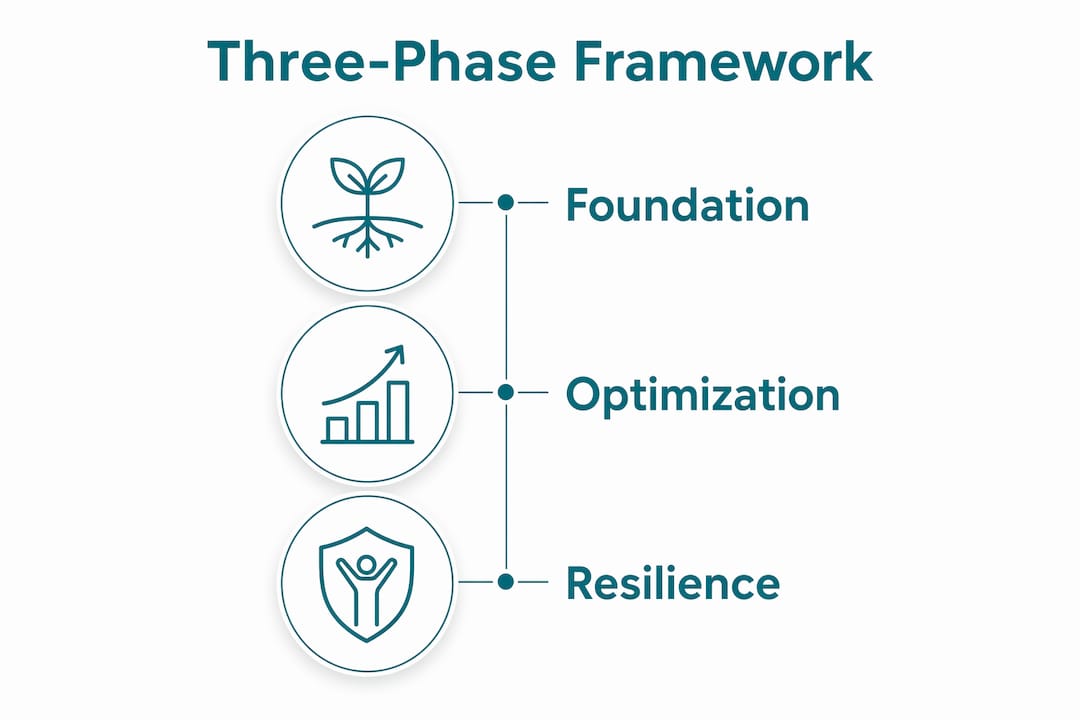
The three-phase framework
Phase 1: Foundation (Weeks 1–8) This phase focuses on sleep, detox support, and basic movement. Updated 2026 clinical guidelines recommend 7–9 hours of sleep nightly, 5–10 minutes of daily stress reduction such as paced breathing, and consistent daily movement. These are not optional extras. They are the biological prerequisites for every other intervention to work.
Phase 2: Optimization (Weeks 9–20) Once your foundation is stable, you layer in targeted nutrition changes, structured exercise programming, and micronutrient correction based on your lab results. This is where your personalized wellness strategies diverge from generic plans. Your biomarker data tells you whether to prioritize iron, vitamin D, cortisol regulation, or something else entirely.
Phase 3: Resilience (Weeks 21+) The final phase builds stress resilience, mindset durability, and long-term habit architecture. Mindfulness practices, social connection, and purpose-driven goal setting all belong here.
Here is the full phase summary:
| Phase | Focus Area | Key Actions | Duration |
|---|---|---|---|
| Foundation | Sleep, detox, movement | Sleep hygiene, breathing, daily walks | Weeks 1–8 |
| Optimization | Nutrition, exercise, biomarkers | Targeted diet, structured training, lab corrections | Weeks 9–20 |
| Resilience | Stress, mindset, longevity | Mindfulness, community, annual reviews | Week 21 onward |
How habit stacking makes the plan stick
Micro-habits integrated into existing routines outperform large lifestyle overhauls every time. A 5-minute breathing practice after your morning coffee is far more durable than a 45-minute meditation you never actually do. Habit stacking means attaching a new behavior to an existing one, which removes the decision fatigue that kills most plans.
Environment design is more effective than willpower for sustaining healthy choices. Meal prepping on Sundays, blocking calendar time for movement, and keeping your phone out of the bedroom are structural decisions that make the right choice the easy choice.
Pro Tip: Set your first 30-day milestone before you start. A single measurable target, such as sleeping 7.5 hours per night or walking 8,000 steps daily, gives you an early win that builds momentum for the harder phases ahead.
What are the most common wellness plan pitfalls?
The most frequent reason wellness plans fail is not lack of motivation. It is poor sequencing and ignoring early warning signals. Knowing what to watch for keeps your comprehensive health roadmap on track.
Signals that your plan needs adjustment
The Wellness Recovery Action Plan framework recommends documenting early warning signs such as minor sleep disruption, irritability, or negative thought patterns. These signals typically provide a 48–72 hour window to intervene before a full setback occurs. That window is your most valuable asset.
Watch for these specific red flags:
- Energy crashes after meals: May indicate blood sugar dysregulation or micronutrient gaps
- Persistent sleep disruption: Often signals cortisol imbalance or magnesium deficiency
- Motivational flatline after week 3: Classic sign of doing too much too fast in Phase 1
- Social withdrawal: A behavioral indicator that stress load is exceeding your current resilience capacity
- Plateau in physical performance: Signals the need for a biomarker retest, not more effort
Failing to retest biomarkers 3–6 months after interventions turns your plan into guesswork. Lab data collected at the start becomes outdated as your body responds to changes. Retesting is not optional. It is the mechanism that makes your plan iterative rather than static.
“A wellness plan without follow-up testing is like navigating with a map you drew six months ago. The terrain has changed. Update your data.” — Holistic Deep Dive
Work and social barriers are real obstacles, not excuses. Scheduling wellness time blocks the same way you schedule meetings is a proven structural fix. If your environment at work or home makes healthy choices harder, that is a design problem, not a willpower problem.
How do you monitor and sustain your plan long-term?
Long-term adherence separates a wellness action checklist from a genuine lifestyle transformation. The difference is systematic review. Without it, even the best-designed plan drifts.

Weekly and monthly review practices
Build these review habits into your routine:
- Weekly check-in (10 minutes): Rate sleep quality, energy, mood, and movement on a 1–10 scale. Note any early warning signals from the previous week.
- Monthly progress review (30 minutes): Compare current metrics against your Phase baseline. Adjust one variable at a time to isolate what is working.
- Quarterly biomarker retest: Use at-home testing to track changes in key markers. Biostarks panels, for example, measure hormones, metabolic markers, and micronutrients with the same Swiss mass spectrometry precision used in clinical labs.
- Annual full reassessment: Treat this as your yearly recalibration. Update your goals, reassess your environment, and set the next 12-month arc.
CEOs and high-performing individuals treat wellness as capital with measurable KPIs, not as a personal luxury. That framing matters. When you track your wellness metrics with the same rigor you apply to financial or professional goals, adherence improves because the stakes feel real.
Technology tools and coaching accelerate this process. A personalized wellness monitoring plan built around your biomarker data gives you objective checkpoints that subjective self-assessment cannot provide. Wearables like WHOOP or Oura Ring add continuous data on sleep stages, heart rate variability, and recovery. These tools do not replace lab testing. They complement it by filling the gaps between retests.
Community and accountability structures are underrated. Whether that is a health coach, a peer group, or a structured program like ShiftChange’s wellness framework, external accountability reduces the dropout rate at the critical 6–8 week mark when novelty fades and discipline is tested.
Key takeaways
A successful comprehensive wellness action plan requires phased sequencing, objective biomarker data, and iterative review to produce lasting results.
| Point | Details |
|---|---|
| Start with objective data | Run a biomarker panel before setting goals to avoid building on assumptions. |
| Follow the three-phase sequence | Foundation, optimization, and resilience must be built in order to protect adherence. |
| Use micro-habits, not overhauls | Attach 5–10 minute behaviors to existing routines to build consistency without burnout. |
| Retest biomarkers every 3–6 months | Follow-up lab work turns a static plan into a data-driven, iterative system. |
| Treat wellness as a capital investment | Tracking wellness KPIs with the same rigor as financial goals dramatically improves long-term adherence. |
Why most wellness plans miss the point
I have reviewed hundreds of wellness frameworks over the years, and the pattern is consistent. Most plans are built around what sounds good, not what the data shows. People spend weeks researching the perfect diet protocol while ignoring a magnesium deficiency that is wrecking their sleep and tanking their cortisol. The plan looks thorough on paper. The body tells a different story.
The behavioral science piece is where I see the biggest gap. Willpower is a finite resource. Designing your environment to make the healthy choice automatic is not a soft strategy. It is the most evidence-backed approach available. Yet most wellness guides still lead with motivation and discipline as if those are reliable long-term levers.
The other misconception I keep encountering is the idea that a wellness plan is something you do for a season and then stop. The people who see lasting results treat their plan as a living document. They retest, they adjust, and they view the data as feedback rather than judgment. That mindset shift, from temporary fix to ongoing system, is what separates the people who transform their health from those who cycle through the same interventions every January.
The tools available now, particularly at-home biomarker testing with clinical-grade precision, remove the biggest historical barrier: not knowing your actual internal status. You no longer need to guess. Use the data.
— Romain
Start your plan with precision health data from Biostarks
Building a personal health improvement plan without objective data is like training for a race without knowing your starting fitness level. Biostarks, an AMR Labs SA company, gives you the internal picture your plan depends on.

Biostarks uses advanced Swiss mass spectrometry to analyze vitamins, hormones, amino acids, lipids, and metabolic markers from a simple at-home sample. The results come with clear, personalized reports that tell you exactly where to focus first. Whether you are in Phase 1 of your foundation or recalibrating after a plateau, the data removes the guesswork. Visit Biostarks to explore at-home biomarker testing and start your plan with the precision it deserves.
FAQ
What is a comprehensive wellness action plan?
A comprehensive wellness action plan is a personalized, phased roadmap combining physical, mental, and lifestyle strategies to improve your overall health. It is grounded in objective data such as biomarker testing and structured around measurable goals and iterative review.
How long does it take to see results from a wellness plan?
Most structured programs use 6-month intensive pathways as the standard for meaningful health restoration. Early improvements in sleep and energy are typically noticeable within the first 4–8 weeks of the foundation phase.
How often should i retest my biomarkers?
Retesting every 3–6 months after starting interventions is the standard recommendation. Follow-up lab work is what converts a static plan into a data-driven system that actually adapts to your progress.
What is the difference between a wellness plan and a holistic health plan?
A wellness plan typically focuses on specific health goals like weight or fitness. A holistic health plan addresses physical, mental, emotional, and environmental factors together, making it more comprehensive and more durable over time.
Do i need a professional to build a wellness action plan?
You do not need a professional to start, but validated testing and expert interpretation significantly improve outcomes. An intake consultation combined with biomarker data gives you a precision baseline that self-assessment alone cannot match.
This content is for educational purposes only and does not constitute medical advice. Always consult with a healthcare professional before making changes to your health regimen.


