

Many people assume hormone testing is straightforward, limited to checking a single marker like testosterone or estrogen. In reality, hormone profiling is a comprehensive assessment that measures multiple hormones and their metabolites simultaneously, offering a complete picture of your endocrine health. For health-conscious individuals and biohackers seeking to optimize performance, energy, and longevity, understanding hormone profiling unlocks personalized strategies that go far beyond generic wellness advice. This guide explains what hormone profiling truly involves, the science behind testing methods, its benefits and limitations, and how you can apply these insights to elevate your health outcomes.
Table of Contents
- Key takeaways
- Understanding hormone profiling: definition and purpose
- How hormone profiling is performed: methods and technologies
- Benefits and limitations of hormone profiling for wellness optimization
- Applying hormone profiling insights for personalized wellness and performance
- Explore personalized hormone profiling solutions with Biostarks
- Frequently asked questions
Key Takeaways
| Point | Details |
|---|---|
| Multi Hormone Profiling | Profile measures multiple hormones and their metabolites to reveal how endocrine systems interact and identify imbalances. |
| Mass Spectrometry Advantage | Mass spectrometry improves accuracy by eliminating cross reactivity and enabling simultaneous measurement of many hormones. |
| Wide Health Applications | Used for diagnosing imbalances, monitoring fertility, preventive screening, and biohacking for performance. |
| Careful Interpretation | Interpretation requires understanding limitations and context to avoid misreading results. |
Understanding hormone profiling: definition and purpose
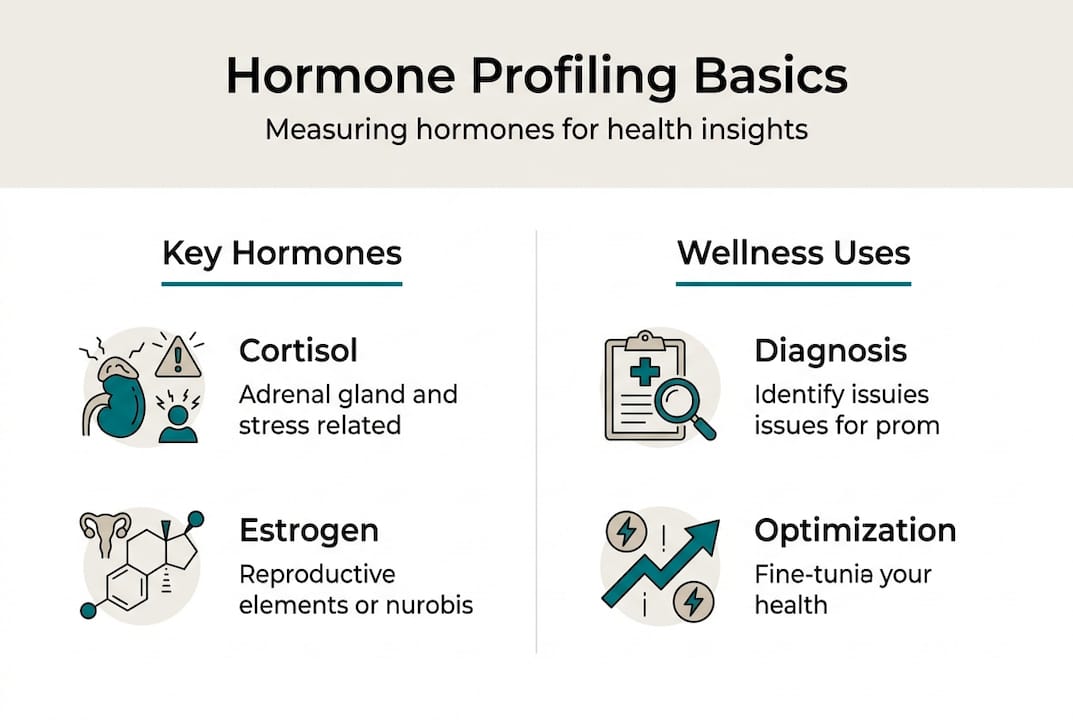
Hormone profiling is a comprehensive assessment of multiple hormone levels and their metabolites to evaluate endocrine function. Unlike simple single-hormone tests that offer limited snapshots, profiling examines how various hormones interact and influence each other, revealing patterns that single markers cannot detect. This multi-hormone approach is essential for diagnosing imbalances, monitoring fertility, preventive health screening, and biohacking for performance enhancement.
A typical hormone profile includes adrenal hormones like cortisol and DHEA, thyroid hormones such as T3 and T4, sex hormones including testosterone, estrogen, and progesterone, plus their metabolites. These metabolites are breakdown products that provide additional context about how your body processes and eliminates hormones, offering clues about enzyme activity and metabolic pathways. By measuring these together, practitioners gain nuanced insight into bodily functions that affect energy, mood, sleep quality, muscle growth, fat metabolism, and cognitive performance.
The uses of hormone profiling extend across multiple health domains:
- Diagnosing hormonal imbalances that cause fatigue, weight gain, mood swings, or reproductive issues
- Monitoring fertility and tracking hormonal shifts during menstrual cycles, pregnancy, or menopause
- Preventive health screening to catch subtle imbalances before they escalate into clinical conditions
- Biohacking for performance optimization by fine-tuning hormone levels to enhance physical and mental capabilities
For health-conscious individuals and biohackers, this comprehensive view enables personalized interventions tailored to your unique hormonal landscape. Instead of guessing which supplement or lifestyle change might help, you can make data-driven decisions that target specific imbalances. Understanding hormone balance matters because hormones regulate nearly every physiological process, from metabolism and immune function to stress response and recovery. When you track hormonal health for wellness, you gain the ability to optimize these processes systematically rather than relying on trial and error.
How hormone profiling is performed: methods and technologies
The accuracy of hormone profiling depends heavily on the testing methodology used. Common hormone testing often relies on immunoassays, which use antibodies to detect and quantify hormones in blood, saliva, or urine samples. While immunoassays are cost-effective and widely available, they have significant limitations. Cross-reactivity occurs when antibodies bind to structurally similar molecules, causing false positives or inflated readings. For example, an immunoassay for testosterone might also detect DHEA or other androgens, leading to inaccurate results that misrepresent your actual hormone levels.

Mass spectrometry resolves immunoassay flaws by identifying and quantifying hormones and metabolites with exceptional precision. This technology separates molecules based on their mass-to-charge ratio, eliminating cross-reactivity and enabling simultaneous measurement of multiple analytes. Mass spectrometry reduces false positives and negatives inherent in immunoassays, providing reliable data that clinicians can trust for diagnosis and treatment decisions. For biohackers seeking to optimize hormone levels within narrow ranges, this accuracy is critical.
Despite technological advances, serial testing and clinical context remain important for interpreting results reliably. Hormones fluctuate throughout the day, menstrual cycle, and in response to stress, sleep, and nutrition. A single test captures only one moment in time, which may not represent your typical hormonal state. Serial testing over weeks or months reveals trends and patterns that inform more accurate interventions.
| Method | Accuracy | Cost | Turnaround time | Limitations |
|---|---|---|---|---|
| Immunoassay | Moderate | Low | 1-3 days | Cross-reactivity, false positives, limited metabolite detection |
| Mass spectrometry | High | Higher | 3-7 days | Requires specialized equipment, higher cost, longer processing |
| Saliva testing | Variable | Low | 2-5 days | Limited hormone range, collection timing critical |
| Urine metabolite testing | Moderate to high | Moderate | 5-10 days | Reflects hormone metabolism, not blood levels |
Pro Tip: When choosing a hormone profiling service, prioritize labs that use mass spectrometry for critical markers like sex hormones and cortisol. The increased accuracy justifies the higher cost, especially if you plan to make significant lifestyle or supplement changes based on the results. For a step-by-step hormone analysis guide, look for providers that explain their methodology transparently and offer clinical support for interpretation.
Benefits and limitations of hormone profiling for wellness optimization
Hormone profiling is used for diagnosing imbalances, preventive health, fertility, and optimization in biohacking. The benefits extend across multiple dimensions of health and performance. Early detection of hormone imbalances enables timely interventions that improve mood, energy, sleep quality, and metabolic health before symptoms become severe. For example, identifying low thyroid function early allows you to address it with nutrition, supplements, or medication before experiencing significant fatigue or weight gain.
Hormone profiling supports fertility planning by tracking hormonal shifts during menstrual cycles, identifying ovulation windows, and detecting issues like luteal phase defects or polycystic ovary syndrome. For women navigating perimenopause or menopause, profiling reveals how estrogen, progesterone, and testosterone change over time, informing hormone replacement therapy decisions or natural interventions to ease symptoms.
Biohackers gain data to fine-tune nutrition, exercise, and lifestyle for enhanced performance. If your cortisol pattern shows elevated evening levels, you can adjust stress management practices, reduce evening screen time, or modify training intensity to support better sleep and recovery. If testosterone is suboptimal, you can experiment with resistance training protocols, specific nutrients like zinc and vitamin D, or sleep optimization to naturally boost levels. These biomarker testing benefits for biohackers transform vague wellness goals into precise, measurable targets.
Key benefits include:
- Early detection and prevention of hormonal imbalances before clinical symptoms emerge
- Personalized interventions based on your unique hormonal profile rather than generic advice
- Tracking effectiveness of lifestyle changes, supplements, or therapies over time
- Enhanced performance through targeted optimization of energy, recovery, and body composition
- Informed fertility planning and reproductive health management
However, hormone profiling has inherent limitations. Assay variability means results can differ between labs or testing methods, making it important to use the same lab for serial testing to ensure comparability. Clinical interpretation is essential because hormone levels exist on a spectrum, and optimal ranges vary by individual. A level considered normal for one person may be suboptimal for another based on symptoms, age, and health goals. Without comprehensive context including symptoms, medical history, and lifestyle factors, hormone data can be misleading.
Pro Tip: For dynamic hormones like cortisol, estrogen, and progesterone, serial testing captures meaningful trends rather than single snapshots. Test at the same time of day and menstrual cycle phase when applicable to reduce variability. This approach provides a clearer picture of your hormonal patterns and how they respond to interventions, supporting more effective wellness optimization strategies.
Applying hormone profiling insights for personalized wellness and performance
Once you have your hormone profiling results, the next step is translating data into actionable strategies that optimize your health and performance. A stepwise approach ensures you make informed decisions rather than reacting impulsively to numbers on a report.
- Review results with a healthcare provider or specialist experienced in hormone optimization. They can interpret levels in the context of your symptoms, health history, and goals, identifying specific imbalances or targets for intervention.
- Identify specific imbalances or targets based on the profile. For example, if cortisol is elevated in the evening, focus on stress management and sleep hygiene. If testosterone is low, prioritize resistance training, adequate dietary fat, and sleep quality.
- Adjust lifestyle factors like diet, sleep, and stress management first. Hormones respond powerfully to foundational habits. Optimizing sleep to 7-9 hours, managing chronic stress through mindfulness or breathwork, and eating nutrient-dense foods can shift hormone levels significantly without supplements or medications.
- Incorporate supplements or therapies when needed, guided by clinical evidence and professional advice. For example, vitamin D and magnesium support testosterone production, while adaptogenic herbs like ashwagandha can modulate cortisol. Hormone replacement therapy may be appropriate for significant deficiencies that lifestyle changes cannot address.
- Repeat testing to monitor progress and refine interventions. Serial testing every 3-6 months shows whether your strategies are working and allows you to adjust course if needed. This iterative process is central to effective health optimization with biomarkers.
| Hormone | Impact on wellness | Possible interventions |
|---|---|---|
| Cortisol | Stress response, energy, sleep, immune function | Stress management, sleep hygiene, adaptogenic herbs, meditation |
| Testosterone | Muscle growth, libido, mood, energy, body composition | Resistance training, adequate dietary fat, zinc, vitamin D, sleep optimization |
| Estrogen | Reproductive health, bone density, mood, cardiovascular health | Phytoestrogens, fiber for estrogen metabolism, strength training, stress reduction |
| Thyroid hormones (T3, T4) | Metabolism, energy, weight regulation, cognitive function | Iodine, selenium, avoiding goitrogens, managing autoimmune triggers |
| Progesterone | Menstrual cycle regulation, mood, sleep, fertility | Vitamin B6, magnesium, stress reduction, adequate caloric intake |
| DHEA | Adrenal function, immune support, mood, energy | Stress management, sleep, resistance training, targeted supplementation |
This data-driven approach to optimizing metabolic function transforms hormone profiling from passive observation into active optimization. You move from wondering why you feel tired or struggle with body composition to implementing specific, measurable interventions that address root causes.
Pro Tip: Work with practitioners experienced in hormone optimization and biohacking for tailored strategies. Hormone interactions are complex, and interventions that benefit one hormone may affect others. For example, lowering cortisol through stress management can improve testosterone production, while optimizing thyroid function enhances overall metabolic rate and energy. An experienced practitioner helps you navigate these interactions and prioritize interventions for maximum impact.
Explore personalized hormone profiling solutions with Biostarks
If you’re ready to move beyond guesswork and optimize your health with precision, Biostarks offers comprehensive hormone profiling and personalized wellness solutions designed for health-conscious individuals and biohackers. Their at-home biomarker testing uses advanced Swiss mass spectrometry to deliver accurate, detailed insights into your hormonal status, metabolic markers, vitamins, minerals, and more. Biostarks empowers you to translate hormone insights into actionable wellness plans, supported by clear reports and scientific resources.
Whether you’re tracking fertility, optimizing performance, or preventing age-related decline, Biostarks provides the tools and data you need to make informed decisions about your health. Explore their offerings and discover how personalized hormone profiling can elevate your wellness journey. Visit Biostarks today to start optimizing your hormonal health with confidence.
Frequently asked questions
What is hormone profiling?
Hormone profiling is a comprehensive test that measures multiple hormones and their metabolites simultaneously to assess endocrine function. It provides a holistic view of how your hormones interact, revealing patterns that single-hormone tests cannot detect. This approach is used for diagnosing imbalances, preventive health, fertility monitoring, and performance optimization in biohacking.
How often should you do hormone profiling?
Testing frequency depends on your goals, hormone variability, and clinical guidance. For tracking interventions or managing specific conditions, serial testing every 3-6 months is common. This frequency captures meaningful trends and shows whether lifestyle changes, supplements, or therapies are working. For general wellness monitoring, annual or biannual profiling may suffice unless symptoms change.
What hormones are typically measured in hormone profiling?
Comprehensive hormone profiles commonly measure adrenal hormones like cortisol and DHEA, thyroid hormones including T3 and T4, and sex hormones such as testosterone, estrogen, and progesterone. Many profiles also include hormone metabolites, which reveal how your body processes and eliminates hormones. The specific hormones tested vary based on the test purpose and your individual health status.
Can hormone profiling help with biohacking and performance?
Yes, hormone profiling provides data-driven insights that allow you to customize lifestyle, nutrition, and training for better performance. By identifying specific imbalances or suboptimal levels, you can target interventions like sleep optimization, stress management, resistance training, or supplementation to enhance energy, recovery, muscle growth, and cognitive function. It is a cornerstone tool for informed biohacking strategies that go beyond generic wellness advice.


