

TL;DR:
- Subclinical vitamin deficiencies can impair energy, immunity, and cognition despite normal blood tests.
- Testing, personalized nutrition, and retesting are essential for optimal vitamin levels.
- Whole foods should be prioritized over supplements, which should target proven deficiencies.
Fatigue, brain fog, and a sluggish immune system are easy to blame on stress or poor sleep. But for a surprising number of health-conscious people, the real culprit is a subclinical vitamin deficiency sitting just below the detection threshold of a routine checkup. Subclinical issues impact energy, immunity, and cognition even when blood results look perfectly fine. The good news: improving your vitamin levels is not about guessing or grabbing the nearest supplement off the shelf. It requires a precise, data-driven approach that starts with testing, moves through targeted nutrition, and ends with verified results.
Table of Contents
- Understanding vitamin levels: Why they matter and what’s optimal
- Step 1: Assess your current vitamin status
- Step 2: Improve vitamin levels through diet-first strategies
- Step 3: Supplementation, biohacking, and advanced strategies
- Why chasing ‘normal’ vitamin levels isn’t enough and what truly works
- Get started on your vitamin optimization journey
- Frequently asked questions
Key Takeaways
| Point | Details |
|---|---|
| Test, don’t guess | Regular personalized testing reveals hidden deficiencies even when symptoms are mild. |
| Food comes first | Whole foods provide the best-absorbed vitamins plus essential co-factors for synergy. |
| Optimize not just normalize | Aim for optimal—not just average—vitamin ranges to support true wellness and performance. |
| Supplements have a role | Use supplements strategically if you’re deficient or at risk, not as a general solution. |
| Stay flexible | Adjust your approach and retest as your life, diet, and health goals evolve. |
Understanding vitamin levels: Why they matter and what’s optimal
Vitamins are not just nutrients. They are co-factors, signaling molecules, and regulators that touch almost every biological system you care about: immune defense, mitochondrial energy output, neurotransmitter synthesis, and cellular repair. When your levels are off, even slightly, the downstream effects compound quickly.
The critical distinction most people miss is the difference between normal and optimal. Lab reference ranges are built from population averages, which means they reflect what is common, not what is best. A result flagged as “within range” simply means you are not in the bottom or top 2.5% of the population tested. That is a low bar for someone who wants to perform at their best.
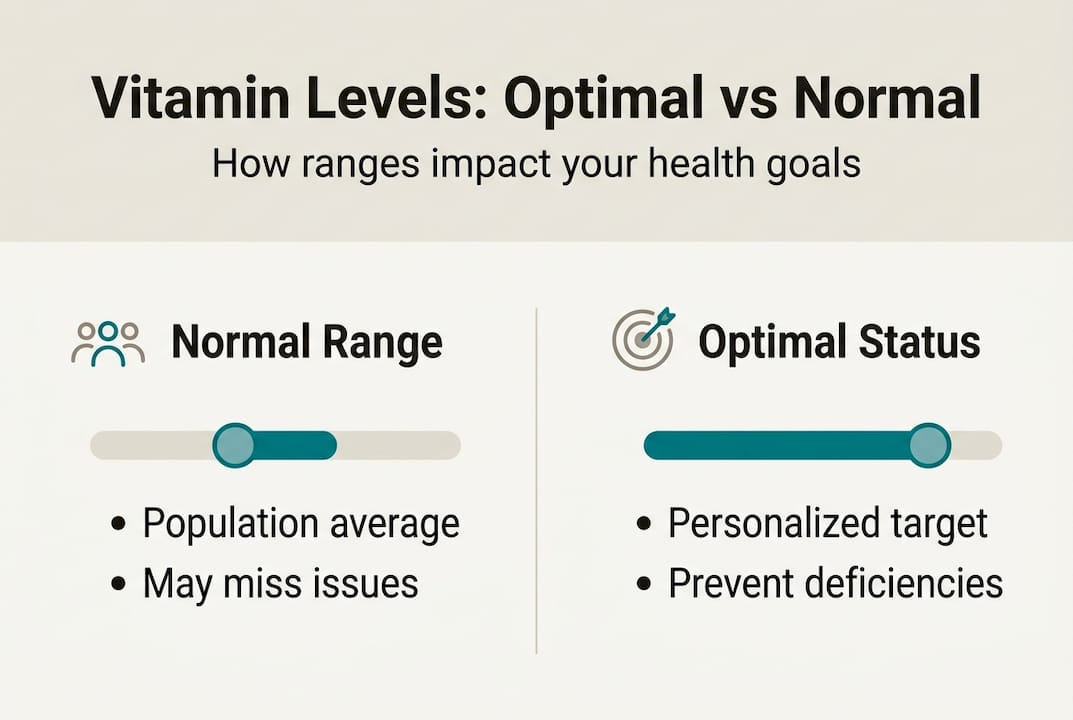
Take Vitamin D as a clear example. A result above 20 ng/mL is technically “sufficient” by many clinical standards. But optimal Vitamin D levels for wellness and disease risk reduction sit between 40 and 60 ng/mL. Many people walking around at 22 ng/mL feel chronically tired and wonder why. The answer is hiding in plain sight inside their lab report.
Here is what suboptimal vitamin status can silently affect:
- Energy and endurance: B vitamins and Vitamin D directly support mitochondrial function
- Immune resilience: Vitamins A, C, D, and E regulate immune cell activity
- Cognitive sharpness: B12, folate, and D influence neurotransmitter pathways
- Mood stability: Low B12 and D are consistently linked to depressive symptoms
- Longevity markers: Antioxidant vitamins protect against oxidative damage over time
“Many subclinical deficiencies go undetected but can meaningfully impact focus, energy, and immunity, even when standard lab panels show no red flags.”
Understanding micronutrient deficiency basics is the first step. The second is knowing why test for deficiencies matters more than relying on symptoms alone. Research consistently shows that food sources over supplements deliver better outcomes for most micronutrients, but you cannot optimize what you have not measured.
Step 1: Assess your current vitamin status
Knowing what is optimal, it is vital to assess where you stand right now. Symptoms are useful signals, but they are not reliable enough to guide precise action. Fatigue could mean low B12, low iron, poor sleep, or a dozen other things. You need data.
The most actionable approach is biomarker testing. Here is a quick overview of the key vitamins worth measuring and their performance-oriented benchmarks:
- Vitamin D (25-OH): Optimal 40 to 60 ng/mL; reduces risks of cancer, multiple sclerosis, and immune dysfunction
- Vitamin B12: Aim for above 400 pg/mL if borderline; deficiency causes neurological symptoms and fatigue
- Folate (B9): Critical for DNA repair and methylation; low levels affect mood and cognition
- Vitamin A (retinol): Supports immune function and vision; excess is toxic, so testing matters
- Vitamin E (alpha-tocopherol): Antioxidant protection; low in people with fat malabsorption
- Vitamin K2: Often overlooked; essential for calcium metabolism and cardiovascular health
| Vitamin | Test type | Optimal range | Retest frequency |
|---|---|---|---|
| Vitamin D | Serum 25-OH | 40 to 60 ng/mL | Every 6 months |
| B12 | Serum or active B12 | Above 400 pg/mL | Every 12 months |
| Folate | Serum or RBC folate | 10 to 25 ng/mL | Every 12 months |
| Vitamin A | Serum retinol | 30 to 65 mcg/dL | Annually |
| Vitamin E | Serum alpha-tocopherol | 12 to 20 mg/L | Annually |
Interpreting results for wellness goals means looking beyond the “normal” flag. You want to know where you land within the optimal zone, not just whether you cleared the minimum threshold. Tools like natural vitamin tracking and at-home vitamin analysis make this process far more accessible than it used to be.

Also consider that multivitamin effectiveness is limited if you do not know your baseline. Supplementing blindly can mask deficiencies or create imbalances.
Pro Tip: Pair your vitamin panel with metabolic and hormonal markers. Vitamin levels do not operate in isolation, and a fuller biomarker picture reveals patterns that a single-vitamin test would miss.
Step 2: Improve vitamin levels through diet-first strategies
With your vitamin status established, it is time to boost your levels starting with what you eat. Food is not just a delivery vehicle for vitamins. It is a complex matrix of co-factors, enzymes, and fiber that dramatically improves how your body absorbs and uses those nutrients.
Here are the best food sources for the vitamins that matter most to performance:
- Vitamin D: Fatty fish (salmon, mackerel), egg yolks, fortified dairy
- Vitamin B12: Beef liver, sardines, clams, eggs, dairy
- Folate: Dark leafy greens (spinach, kale), lentils, asparagus, avocado
- Vitamin A: Liver, sweet potato, carrots, red bell peppers
- Vitamin C: Bell peppers, kiwi, citrus, broccoli, strawberries
- Vitamin E: Sunflower seeds, almonds, olive oil, spinach
- Vitamin K2: Natto, hard cheeses, egg yolks, grass-fed butter
Whole foods deliver vitamins alongside fiber, phytonutrients, and minerals that work synergistically. Vitamin C, for example, dramatically boosts non-heme iron absorption. Fat-soluble vitamins (A, D, E, K) absorb far better when eaten with healthy fats. These synergies simply do not exist in most supplement formulas.
| Approach | Pros | Cons |
|---|---|---|
| Whole foods | Better absorption, synergies, lower toxicity risk | Requires planning and variety |
| Supplements | Convenient, targeted for deficiencies | Risk of excess, lower bioavailability for some nutrients |
| Fortified foods | Easy to access, consistent dosing | Often lower quality forms of vitamins |
The evidence is clear: supplements only when deficient or at risk, such as vegans needing B12 or people with limited sun exposure needing D. Food is superior due to better absorption, natural synergies, and a much lower risk of hypervitaminosis.
For nutrition tips tailored to biomarker optimization, and to understand which biomarkers for optimal wellness you should be tracking alongside your vitamins, it helps to see the full picture.
Pro Tip: Rotate your protein and vegetable sources weekly. Eating the same meals repeatedly creates blind spots in your vitamin intake. Variety is the most underrated nutritional strategy.
Step 3: Supplementation, biohacking, and advanced strategies
Sometimes, even a world-class diet is not enough. Here is how to approach supplements and advanced interventions without falling for the hype.
Supplementation makes sense in specific, test-confirmed situations:
- Confirm the deficiency first. Never supplement based on symptoms alone. Get tested, then act.
- Choose the right form. Vitamin D3 outperforms D2. Methylcobalamin is better absorbed than cyanocobalamin for B12. Form matters.
- Match dose to deficit. A mild deficiency needs a maintenance dose. A severe deficiency may need a short therapeutic course under supervision.
- Retest after 8 to 12 weeks. This confirms the intervention is working and prevents over-correction.
- Taper or stop when levels normalize. Continuing high-dose supplementation past the optimal range creates new problems.
Biohacking trends like IV vitamin drips and mega-dosing have attracted serious attention. The appeal is understandable: higher bioavailability, faster results, and a sense of doing something cutting-edge. But IV therapy offers high bioavailability mainly for people with diagnosed malabsorption conditions. For healthy individuals, the evidence for routine IV vitamin use is thin.
“Evidence for routine mega-dosing or IV vitamins in healthy people is weak. Focus on the basics: test, eat well, supplement only where gaps exist, and retest.”
For monitoring mineral impacts alongside vitamins, and learning how to track metabolic health as part of a broader strategy, the data tells a consistent story. Established sources confirm that multivitamins show minimal chronic disease prevention benefit, and that food-first approaches remain the gold standard. Advanced testing can reveal gaps that standard panels miss, but it works best when paired with the fundamentals. If you want to optimize metabolic function, vitamins are one piece of a larger, interconnected puzzle.
Why chasing ‘normal’ vitamin levels isn’t enough and what truly works
Having covered the practical steps, here is the philosophy behind why personalizing your approach matters more than following generic guidelines.
The “normal” range on a lab report is a statistical artifact. It is built from a population that includes sedentary, chronically stressed, and nutritionally average individuals. If you are optimizing for performance, longevity, or cognitive sharpness, you are not that population. Aiming for the middle of a bell curve built from average health outcomes is not a strategy. It is a ceiling.
What actually works is iterative, data-driven adjustment. You test, you intervene, you retest. Over time, you learn how your body responds to specific foods, supplements, and lifestyle changes. That feedback loop is what separates true optimization from guessing.
Standard clinical advice often misses subclinical deficiencies entirely because the system is designed to catch disease, not build peak function. Biohackers and performance-focused individuals who use advanced testing consistently find issues that routine panels overlook. That is not a flaw in the system. It is just a different goal.
The path to optimizing metabolic function runs through personalized data, not population averages.
Pro Tip: Retest every 6 to 12 months even when you feel great. Seasonal changes, stress, aging, and shifting activity levels all affect your vitamin status in ways that symptoms alone will never reveal.
Get started on your vitamin optimization journey
Ready to apply what you have learned and take control of your vitamin levels? Understanding the theory is one thing. Seeing your own data is where real change begins.
Biostarks vitamin testing gives you precise, at-home biomarker analysis using advanced Swiss mass spectrometry, so you can see exactly where your vitamin levels stand and what to do about it. No guesswork, no generic advice. Just your data, clearly explained and actionable. Whether you are starting fresh or fine-tuning an existing routine, learning more about micronutrient deficiencies is a smart first step toward building a health strategy that actually fits you.
Frequently asked questions
How often should I test my vitamin levels for optimal health?
Test every 6 to 12 months as a baseline, or more frequently after major diet or supplement changes. Regular testing reveals subclinical issues that symptoms and routine checkups routinely miss.
Can a multivitamin fill all my nutritional gaps?
Multivitamins can help bridge minor gaps, but multivitamins show minimal impact on chronic disease prevention, and whole foods remain the more effective and safer source for most vitamins.
Is IV vitamin therapy better than oral supplements?
IV therapy offers meaningful advantages only for people with diagnosed malabsorption. For most healthy individuals, oral supplements and food are both safer and better supported by evidence.
What foods naturally boost vitamin levels the fastest?
Fatty fish, leafy greens, eggs, liver, colorful vegetables, and dairy provide a broad spectrum of vitamins in highly bioavailable forms. Food is superior because of natural absorption synergies and a lower risk of excess intake.
What are signs I need to improve my vitamin levels?
Low energy, frequent illness, brain fog, slow recovery, and mood dips are common signals. Subclinical issues impact performance even when your results appear within the normal range on a standard panel.
Recommended
- Optimize metabolic function for peak health i… | Biostarks
- Functional health biomarkers list for optimal… | Biostarks
- How to Track Vitamin Levels Naturally for Bet… | Biostarks
- Top metabolic health tips: boost energy and o… | Biostarks
- How to Optimize Your Home Sauna Sessions for Maximum Health Benefits – Marterra Elements


